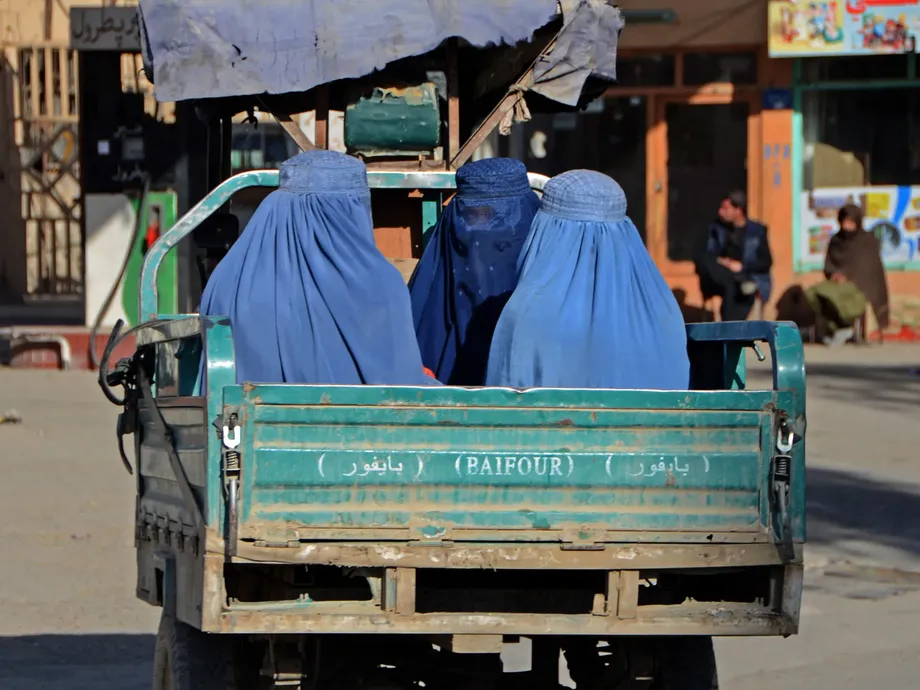
A 72 kilometre limit on independent travel
Afghanistan's Taliban authorities told drivers on December 26, 2021, not to transport women travelling more than 72 kilometres unless a close male relative accompanied them. The guidance placed responsibility on transport providers to restrict women's movement, adding another barrier to daily life four months after the Taliban seized Kabul on August 15.
Contents
- A 72 kilometre limit on independent travel
- What drivers were told to do
- A medical worker describes the loss of independence
- Why a family escort may not provide safety
- Women in Kabul demanded the restriction be withdrawn
- Travel restrictions followed limits on school, work and television
- How the measures unfolded
- Restrictions arrived during a hunger crisis
- Later enforcement brought the same concerns into sharper focus
- Key Points
The Ministry for the Promotion of Virtue and Prevention of Vice also instructed drivers to refuse women who did not meet its requirements for Islamic covering, stop playing music, avoid using or transporting drugs, and stop somewhere suitable for prayers. The clothing requirement applied to women seeking transport, while the male companion requirement specified journeys beyond 72 kilometres, approximately 45 miles.
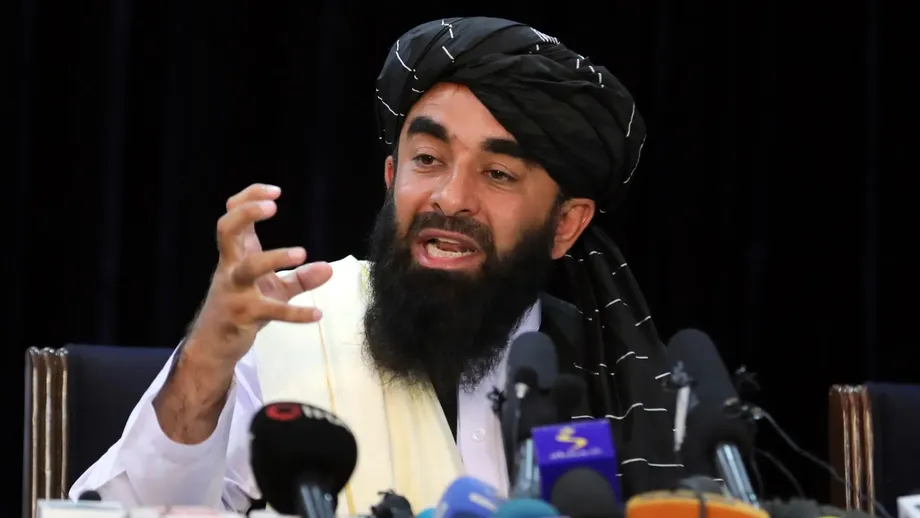
Ministry spokesman Sadeq Akif Muhajir said the companion had to be male and a close family member. His explanation meant that finding another passenger to accompany a woman would not satisfy the requirement.
Taliban spokesman Ahmadullah Wasiq described the guidance as a recommendation rather than an order. The ministry's instructions nevertheless told drivers to withhold rides, making their decisions central to whether women could travel.
For women needing to reach another city for work, medical care or family support, the practical change was straightforward: access to a vehicle would also depend on the availability of a male relative. Human Rights Watch warned that the restriction could block women trying to escape violence at home.
What drivers were told to do
The ministry circulated its guidance among drivers, and copies spread through social media. Rather than addressing women alone, it directed the people operating passenger vehicles to control access to transport.
Muhajir, the ministry spokesman, described the distance rule and specified that the family companion must be male:
Women travelling for more than 72km (45 miles) should not be offered a ride if they are not accompanied by a close family member.
The instructions also required Islamic covering, or hijab. Hijab can refer to different forms of dress, from covering the hair to covering the face or the whole body. Most Afghan women already wore headscarves, but the ministry did not clearly identify which form of covering drivers should accept.
The music restriction extended to vehicles generally. It was presented alongside rules about prayer and drugs, rather than being limited to journeys carrying female passengers. Together, the instructions put several aspects of public transport under the ministry's supervision.
A medical worker describes the loss of independence
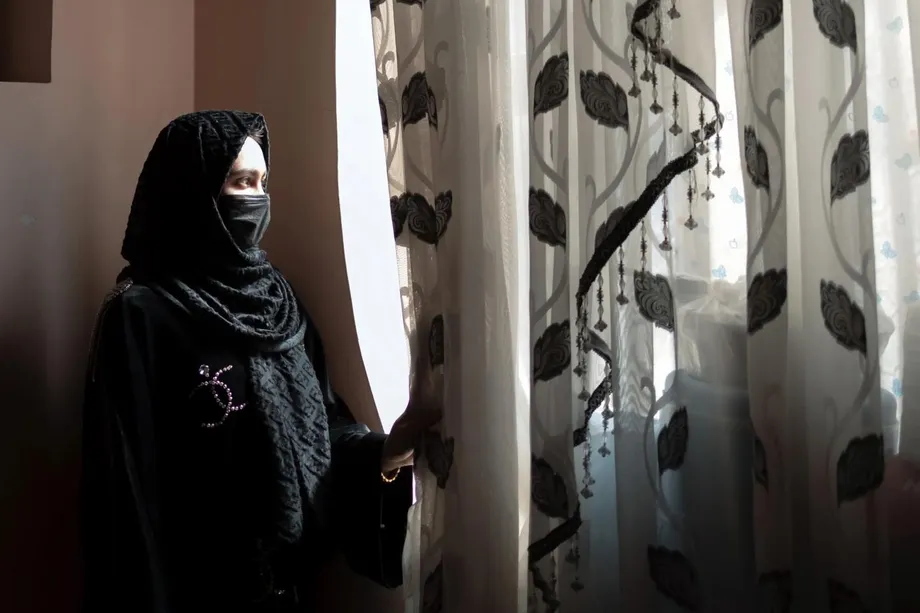
Fatima, a midwife living in Kabul, described the travel guidance through the ordinary needs of her household. Her concern was how to get help if she or her child became ill when her husband was unavailable.
Fatima said the announcement left her feeling unable to make decisions about going out independently:
I cannot go out independently. What should I do if either I or my child is sick and my husband is not available?
Her reaction showed how a rule governing transport could affect decisions made before a journey even began. A woman planning a trip beyond the distance limit would have to arrange a relative's time as well as transport, even when the reason for travelling was urgent.
Fatima also described an emotional cost. Losing the ability to travel on her own meant losing a part of the independence she had previously exercised. For someone whose work involved caring for others, the possibility of being unable to arrange care for her own family was especially immediate.
Why a family escort may not provide safety
Taliban authorities defended restrictions on women's work and education as temporary measures intended to make workplaces and learning environments safe. Women responding to the transport guidance challenged the idea that requiring a relative would resolve the dangers they faced.
Another Afghan woman said some women might feel more comfortable with an escort, but she argued that relatives could not guarantee protection from violence or harassment. She cited an attack in Paghman, which she dated to 2015, in which four women were abducted at gunpoint from a family group and subjected to rape.
The woman called on the authorities to make public places safe for women:
[The Taliban] have to create an environment around the country in such a way that women feel safe.
Heather Barr, associate director of women's rights at Human Rights Watch, focused on the danger inside some homes. She warned that the order restricted opportunities to move freely, travel to another city, conduct business or leave an abusive household.
Barr described the direction of the policy in stark terms:
This new order essentially moves … further in the direction of making women prisoners.
A woman seeking to leave an abusive household may need to travel without involving the relatives around her. Requiring a male family companion makes that route dependent on securing help from someone within the family.
Women in Kabul demanded the restriction be withdrawn
Women gathered in Kabul on December 27, the day after the guidance became public, to protest restrictions on movement alongside unemployment, rising prices, hunger and the loss of education and work opportunities. The Afghanistan Women's Political Participation Network helped organise the meeting.
Participants issued a resolution containing 10 demands. Its ninth provision called for the removal of restrictions on women's movement in urban passenger vehicles. Their demands reached beyond the ministry's stated distance threshold to the wider problem of access to public transport.
The women also demanded that girls' schools reopen across Afghanistan, that women be allowed to work and that women have an active role in government. The resolution defended freedom of expression and the right to advocate publicly for citizens' demands.
The protesters linked restrictions on rights to the economic crisis. Their resolution described families facing poverty and hunger, selling household belongings and resorting to desperate measures, including marriages involving children. They called for continued international humanitarian assistance and for qualified people to manage economic institutions.
Travel restrictions followed limits on school, work and television
The December transport guidance arrived after the Taliban had already barred many women employed in public institutions from returning to work. Most secondary schools remained closed to girls, while boys and male teachers had been allowed back.
On December 26, girls above the sixth grade had been excluded from school in most provinces for 100 days. That milestone gave the authorities' description of restrictions as temporary a concrete meaning for families: months of education had already been lost.
In November, the virtue ministry had also instructed television channels to stop showing dramas featuring female actors and required female journalists and presenters to wear headscarves on screen. Women faced restrictions across several connected parts of public life, including earning a living, studying, appearing in the media and travelling.
Higher Education Minister Abdul Baqi Haqqani said on December 26 that the authorities were discussing women's education and wanted separate learning arrangements for women and men.
Haqqani explained the administration's position:
The Islamic Emirate is not against women's education but it is against co-education.
He said work was continuing to create an Islamic environment for women to study. No date was given for girls and women to return to school and university classes across the country.
How the measures unfolded
The transport guidance was part of a sequence of restrictions introduced after the collapse of the previous government. The dates show how quickly the conditions governing women's public lives changed.
- August 15, 2021: The Taliban seized Kabul and returned to power.
- November 2021: The virtue ministry issued television guidance excluding female actors from dramas and requiring female presenters to wear headscarves.
- December 26, 2021: The ministry's transport guidance required a close male relative for women travelling more than 72 kilometres and set clothing and conduct rules for vehicles.
- December 27, 2021: Women meeting in Kabul demanded the removal of movement restrictions, the reopening of girls' schools and the right to work.
The Taliban had imposed even broader restrictions during their previous rule in the 1990s. Women were barred from education and work, required to wear a burqa, which covers the body and face, and prevented from leaving home without a male companion. The December 2021 transport guidance specified a distance threshold while again making women's mobility dependent on male relatives.
Restrictions arrived during a hunger crisis
The United Nations estimated in December 2021 that 22 million people in Afghanistan faced acute food shortages and warned of an "avalanche of hunger" during the winter. Acute food shortages mean people lack enough food to meet their immediate needs, putting health and survival at risk.
Afghanistan's economic crisis had deepened after international support was withdrawn following the Taliban takeover. Major donors repeatedly made respect for women's rights a condition for restoring financial assistance, while the authorities were seeking renewed support and international acceptance.
The women protesting in Kabul called for humanitarian aid to continue reaching the population. Their demands placed food, income and rights together: women needed assistance during the emergency, while also seeking the ability to work, study and move around their country.
For a household already short of money, arranging a male companion could require coordinating another person's work and responsibilities. The transport rule added that dependency at a time when many families were struggling to secure basic necessities.
Later enforcement brought the same concerns into sharper focus
The consequences of rules governing clothing and male accompaniment continued beyond the initial announcement. In October 2026, the United Nations Assistance Mission in Afghanistan described detentions over dress rules involving at least 52 women and one girl in Kabul and Herat between July and September that year. Alleged violations included visible hair, colourful scarves, makeup and appearing in public without a male guardian.
The mission said the women were released after several hours and warned that fear and social stigma could prevent other incidents from being reported. Those later findings show how requirements concerning dress and accompaniment became matters of enforcement affecting women's presence in public places.
The concern about escaping abuse also continued. An August 2026 investigation into deadly abuse against women documented 231 killings of women and girls in 10 provinces since the Taliban returned to power. Arrests were documented in 58 cases. Families described difficulties obtaining investigations and protection as institutions that once helped women escape violence disappeared.
The December 2021 guidance placed transport providers between women and the journeys they needed to make. Women's responses, from Fatima's concern about medical care to the Kabul protesters' demands for work and education, explained the central issue in practical terms: mobility determines which services, opportunities and sources of help a person can reach.
Key Points
- The December 26, 2021, guidance told drivers to refuse women travelling more than 72 kilometres without a close male relative.
- Drivers were also instructed to require Islamic covering, stop music, avoid drugs and stop for prayers.
- A Taliban spokesman called the guidance a recommendation, while the ministry instructed drivers to withhold rides.
- Women and Human Rights Watch warned of barriers to medical care, work, independent travel and escape from domestic violence.
- Women protesting in Kabul on December 27 demanded freedom of movement, education, work and participation in government.
- The restrictions arrived as the UN estimated that 22 million Afghans faced acute food shortages.