A licence no longer guarantees a meaningful defence
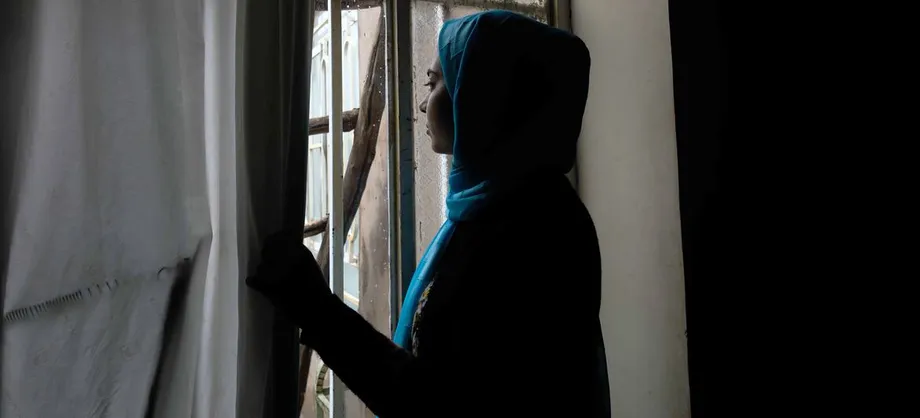
Nearly 1,500 women were registered as lawyers and legal advocates in Afghanistan before the Taliban takeover, accounting for about a quarter of the independent bar association's membership. Four years later, Amnesty International said most had been forced into hiding or exile. Male lawyers who can still obtain permission to practise face a different barrier: being licensed does not necessarily mean they can see detained clients, examine case files or argue effectively in court.
Contents
- A licence no longer guarantees a meaningful defence
- How the independent bar lost control of licensing
- Women excluded from representation and judgment
- Judges gain authority as prosecutors lose their role
- Religious texts replace predictable legal rules
- What defendants lose when lawyers are sidelined
- The sequence of institutional changes
- Professional exclusion also carries personal danger
- What restoration would require
- The Bottom Line
The restrictions extend beyond the removal of individual legal professionals. Since taking Kabul on 15 August 2021, the Taliban have suspended the 2004 Constitution, removed judges, taken control of the lawyers' licensing system and transferred investigative duties to courts. Religious scholars now occupy judicial positions, while the Taliban's interpretation of Islamic law has displaced the Republic's legal framework.
Defence lawyers describe restricted access to case documents, limited opportunities to present arguments and, in some cases, hostility, intimidation or detention when they challenge judicial decisions. These obstacles weaken the practical work of a defence: checking an accusation, testing evidence and seeking a review of detention or punishment.
In its fourth anniversary assessment, published on 15 August 2025, Amnesty International called for the restoration of a formal constitutional and legal framework. Samira Hamidi, its regional campaigner for South Asia, described the legal order that had emerged under Taliban rule:
After four years of Taliban rule, what remains is a deeply opaque, coercive legal order that prioritizes obedience over rights, and silence over truth.
The central problem is the combination of weakened representation, uncertain rules and concentrated judicial power. A lawyer may remain in practice while lacking the access and independence needed to protect a client's rights.
How the independent bar lost control of licensing
Before the takeover, the Afghanistan Independent Bar Association licensed and regulated private defence attorneys outside direct government control. Its loss of independence removed an institution intended to protect lawyers' ability to act for clients without interference.
UN independent experts Margaret Satterthwaite and Richard Bennett, responsible respectively for the independence of judges and lawyers and human rights in Afghanistan, dated the takeover of the association to November 2021. Their joint statement, issued on 20 January 2023, said the Taliban broke up an association meeting and announced its incorporation into the de facto Ministry of Justice.
The cabinet then required lawyers to renew their licences through a process open only to men. Thousands of existing licences were revoked, and lawyers seeking permission to practise faced examinations focused primarily on Islamic jurisprudence. The Institute of South Asian Studies at the National University of Singapore describes the requirement as an oral test administered by the Ministry of Justice.
Official accounts differ on the timing. The US State Department's 2023 Afghanistan report attributes the placement of the association under ministry control to a November 2022 decree. The UN statement places the incorporation in November 2021. Neither account establishes whether these were separate steps, so the dates should not be treated as interchangeable.
Women excluded from representation and judgment
The licensing changes effectively barred women from practising within the Taliban court system. The UN experts said women could not seek licence renewal and could appear in court only when they were themselves parties to a dispute, rather than as legal professionals.
The removal of women also affected the judiciary. The January 2023 UN statement said more than 250 women judges had been removed, representing over 10% of the bench before the takeover. Amnesty's August 2025 account put women's former share of the judiciary at between 8% and 10%. The estimates differ, but both describe the elimination of a substantial body of female judicial experience.
For women seeking legal help, the loss reaches beyond the number of professionals available. Amnesty says Family Courts, Juvenile Justice Units and Violence Against Women Units have been dismantled. These institutions had provided dedicated routes for disputes and cases involving people who may struggle to obtain protection through ordinary proceedings.
Some female lawyers have continued working outside formal courtroom roles. The UN experts described women advising clients, drafting documents for male colleagues and working in legal aid organizations or law offices. Such arrangements varied widely between provinces and were vulnerable to further restrictions on women's employment, including those imposed in late December 2022.
Informal legal assistance does not restore the right to represent a client before a judge. It also leaves women dependent on whether a male colleague can submit their work and whether local authorities permit the arrangement at all.
Judges gain authority as prosecutors lose their role
The restructuring has changed who investigates allegations and who decides them. The Institute of South Asian Studies' legal institutions study describes courts generally consisting of a judge, a mufti and a clerk. A mufti is a religious scholar qualified to give an opinion on Islamic law; the clerk handles administrative work.
According to that study, the Taliban's court rules reserve questioning of claimants, defendants and witnesses to the judge. The rules also assign investigative authority to judges rather than prosecutors. That concentrates functions previously divided between different legal actors.
The UN experts reported that muftis were becoming involved in investigations and advising on punishment, with judges largely following their advice. When judicial personnel investigate an accusation and then decide the same case, the separation intended to support impartial judgment is weakened.
The accounts also record changes in prosecutors' position over time. The academic study described their role as unclear and said the Taliban had not yet dismissed prosecutors appointed under the Republic. The January 2023 UN statement said all prosecutors were initially fired, some men were subsequently reinstated, and those still working were ordered in 2022 to stop and transfer investigations to courts. European Union asylum guidance later reported substantial regional variation in their legal and operational status.
Religious texts replace predictable legal rules
The academic study says the Taliban Supreme Court instructed courts not to rely on laws from the Republic, while a committee within the Afghanistan National Academy reviewed legislation for compliance with Sharia. It also describes courts relying heavily on the Majjalah, an Ottoman compilation of Hanafi Islamic jurisprudence.
Hanafi jurisprudence is a school of Islamic legal interpretation. Its use does not, by itself, explain every problem identified in Afghanistan's courts. The specific concerns are the Taliban's exclusion of other legal approaches, the suspension of procedural protections and the discretion left to individual judicial officials.
Amnesty described trials conducted by a qazi, or judge, with a mufti advising on religious verdicts. A former judge interviewed by the organization said courts in some districts used Bada’i al-Sana’i, while others referred to Fatawa-i Qazi Khan, producing different verdicts for the same crime. For theft, Amnesty said outcomes could range from public flogging to detention depending on the interpretation applied.
This is not simply an absence of written material. Religious compilations, court rules, decrees and directives exist. The problem identified by the UN experts is the absence of standardized procedures and substantive criminal and civil statutes that police, judges and lawyers can consistently follow. Without a dependable framework, counsel cannot confidently explain the applicable charge, likely procedure or available remedy.
What defendants lose when lawyers are sidelined
The State Department reported that defence lawyers were frequently unable to access clients in detention facilities and were often sidelined during proceedings. Restricted access prevents private consultations and makes it harder to establish what happened during arrest, interrogation or detention.
Its 2023 report described defendants being denied a broad range of fair trial rights, including prompt information about charges, adequate time to prepare a defence, access to counsel of their choice, the ability to present evidence and witnesses, and protection against compelled testimony or confession. It also said the Taliban eliminated the appeals process.
These are separate protections with a shared purpose: allowing an accusation to be examined before punishment is imposed. Access to a lawyer matters less if counsel cannot inspect evidence, question an allegation or seek correction of an error.
The academic study also cautioned that the formal criminal justice system handled only a small number of cases at the time it examined developments. Fighters and local commanders sometimes imposed punishment directly. The UN experts described alleged offenders being detained, sentenced and punished on the same day by police or other security agencies, leaving no meaningful opportunity for legal preparation or judicial review.
The sequence of institutional changes
The changes were introduced through appointments, directives and successive restrictions, rather than a single replacement law. Several dated developments show how professional exclusion and judicial concentration advanced together:
- 15 August 2021: The Taliban took Kabul, bringing the Republic's political and legal order to an end.
- November 2021: According to the UN experts, the independent bar association was incorporated into the Ministry of Justice, and mandatory licence renewal excluded women.
- 2022: The UN experts said remaining prosecutors were ordered to stop work and transfer investigations to courts.
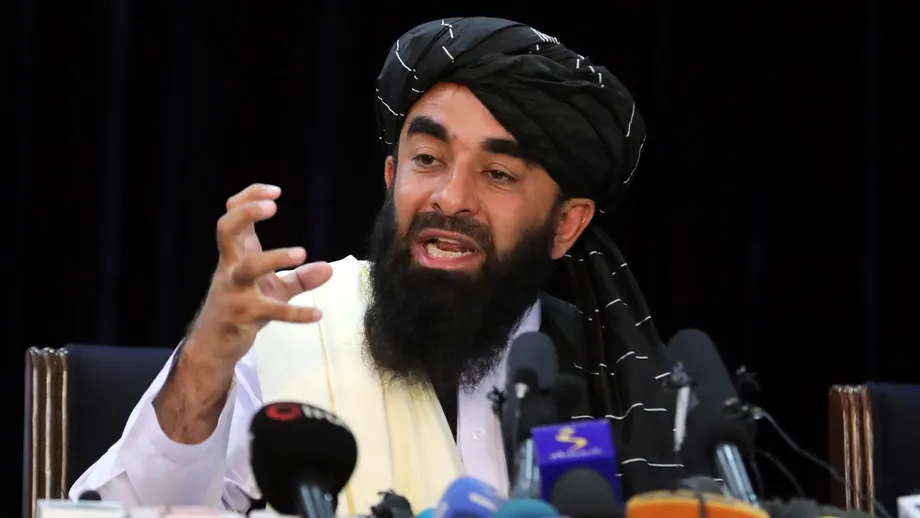
- 13 November 2022: Spokesperson Zabihullah Mujahid said Taliban leader Haibatullah Akhundzada had reminded judges that hudud and qisas sentences were compulsory when Sharia conditions were met.
- 20 January 2023: Satterthwaite and Bennett issued their warning ahead of the International Day of the Endangered Lawyer on 24 January.
- May 2024: European Union asylum guidance said former judges, prosecutors and defence lawyers remained mostly excluded from the justice system.
- 15 August 2025: Amnesty called for restoration of a formal legal framework after four years of Taliban rule.
Hudud refers to offences carrying prescribed punishments under Islamic law. Qisas concerns retribution for murder or intentional bodily injury. The November 2022 instruction matters because severe punishment was being demanded within a system where independent experts had identified major gaps in defence rights and judicial independence.
Professional exclusion also carries personal danger
Loss of employment is only part of the danger facing former judicial personnel. The European Union Agency for Asylum's May 2024 guidance describes house searches, harassment, death threats and killings. Many judges and prosecutors, particularly women, had gone into hiding or left Afghanistan.
Some threats came from people previously prosecuted or sentenced who were released after the takeover. Others concerned prior work on Taliban cases. Relatives, friends and neighbours were reportedly pressed to reveal judges' whereabouts, extending the danger beyond the professionals themselves.
The January 2023 UN statement said more than a dozen prosecutors had reportedly been killed by unknown individuals in Kabul and other provinces, and warned that this was probably an undercount. EUAA later cited reports of at least 28 former prosecutors and family members killed since the takeover. Those figures cannot be treated as a direct measure of increase: they cover different reporting periods and different groups.
EUAA concluded that reported acts such as killing, torture and enforced disappearance were severe enough to amount to persecution. It said a well founded fear of persecution would generally be substantiated for judges, prosecutors and former court personnel. Defence lawyers and others still require assessment of their particular roles and circumstances.
What restoration would require
The calls from Amnesty and the UN experts extend beyond issuing lawyers new licences. They seek protection for legal professionals, an end to women's exclusion, independent judicial institutions and procedures that secure a fair trial for everyone.
The UN experts urged international actors to provide flexible financial support for lawyers and legal aid providers, alongside protection and safe passage for those at risk of reprisals. Amnesty called for diplomatic pressure and engagement directed at restoring a formal legal system consistent with Afghanistan's international human rights obligations.
The former system was not free of serious weaknesses. The academic study describes corruption, impunity and low public trust before 2021, as well as public use of informal dispute resolution and Taliban shadow courts. Recognizing those failures does not resolve the present loss of independent representation or the exclusion of women.
There is no confirmed timetable here for reopening legal practice to women, restoring the bar's independence or reintroducing effective appeals. Nor is there a verified current nationwide count of practising defence lawyers. The practical test of any reform would be whether counsel can meet clients, inspect files, challenge evidence and seek review without intimidation, while women can participate as lawyers and judges rather than only as parties to disputes.
The Bottom Line
- The Taliban brought lawyers' licensing under Ministry of Justice control, ending the bar association's independence.
- Women were excluded from licence renewal, removing about a quarter of the former legal profession from formal practice.
- Practising lawyers face restrictions on client access, case files and courtroom participation.
- Judges and muftis have assumed investigative functions previously assigned to prosecutors.
- Official assessments describe inconsistent legal procedures, weak defence protections and serious threats to former judicial personnel.
- Amnesty and UN experts call for independent institutions, women's participation, fair trial guarantees and protection for legal professionals.