Seconds to reach a driver trapped on Buchanan Road
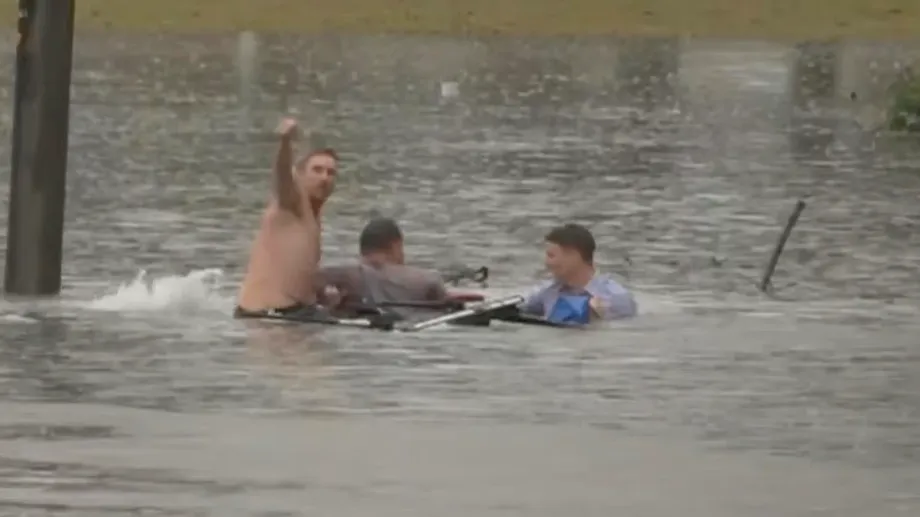
ABC reporter Will Murray and bystander Daniel Hainey pulled a driver from a sinking vehicle on Buchanan Road at Morayfield, north of Brisbane, on Thursday, October 22, 2026, after intense rain flooded the area. Murray said the emergency unfolded within 15 to 20 seconds, with water reaching the driver's chin before he escaped.
Contents
- Seconds to reach a driver trapped on Buchanan Road
- A moving window revealed someone inside
- The rear door became the escape route
- How the rescue unfolded
- The water looked less dangerous than it was
- Rainfall figures show the intensity of the storm
- Why even a modest current is dangerous
- A rescue that carried risks for everyone
- Relief for the rescuers as more storms threatened
- Key Points
The grey ute, which had two rows of seats and four wheel drive, stalled after entering the flooded road and began floating downstream. Murray called Triple Zero, Australia's emergency number, then handed his phone to camera operator Liz Pickering and swam towards the vehicle as the driver disappeared from his view.
The rescue came amid downpours that brought 168 millimetres of rain to Morayfield in the three hours to 7.30am. Across southeast Queensland, flash flooding closed roads and schools, restricted access to a shopping centre and generated hundreds of calls for emergency help on Thursday and Friday.
Murray and Hainey reached the vehicle, struggled to open it and eventually freed the driver through a rear passenger door. The ute then disappeared beneath the water. No serious injuries were reported.
A moving window revealed someone inside
Hainey was out with his family when he noticed the ute. At first, he did not realise anyone was inside. Movement at a window alerted him to the trapped driver as the vehicle sank deeper and drifted downstream.
Murray, who was covering the heavy rain with Pickering, saw the driver enter the water. He described the moment he called for help:
I saw him drive in and immediately his car started floating downstream so I rang Triple Zero.
The emergency operator asked Murray whether he could see the driver and whether he thought the man could escape. Murray initially could see him, but that changed within seconds.
Murray explained why he went into the water:
Initially I could see him, but he disappeared from my sight within seconds so I made the call to jump in.
Pickering remained beside the flooded road with the phone and recorded the rescue. Her footage showed the men making their way through water that reached their necks as they tried to find a way into the vehicle.
The rear door became the escape route
Murray and Hainey first tried the nearest door, but it would not open. They moved to the back of the ute and considered breaking the rear window. Hainey said he tried the hatch and kicked at the windows. He later explained that he removed his shorts to wrap around his knuckles while trying to break a window.
Murray then tried the rear door on the passenger side. He described bracing himself against the vehicle to pull it open:
I thought to try the passenger side rear door first and put my feet against the car and pulled as hard as I could and with some luck the door swung open.
Murray thought water rushing into the vehicle might have helped the door open. Once it did, the driver moved towards the opening, and the two rescuers pulled him out and helped him reach shallow water.
Hainey described the driver as very lucky and said he appeared shocked but thankful. Murray recalled the relief immediately afterwards:
All three of us gave each other a big hug and were just so relieved.
How the rescue unfolded
The danger developed much faster than the emergency response could arrive. Murray said emergency services reached the scene about 10 minutes after the driver had been brought to safety.
The sequence shows how quickly an attempted crossing became a rescue:
- Thursday morning: Heavy rainfall floods Buchanan Road at Morayfield while Murray and Pickering are covering the weather.
- The ute enters the water: Its engine stalls, and the vehicle begins floating downstream and sinking.
- Murray calls Triple Zero: He loses sight of the driver within seconds and hands the phone to Pickering.
- Murray and Hainey reach the ute: Attempts to open the nearest door fail before the rear passenger door opens.
- The driver escapes: The men pull him out and reach shallow water before the ute disappears beneath the surface.
- About 10 minutes later: Emergency services arrive, according to Murray.
Pickering, the ABC camera operator who filmed the rescue, said the intervention saved the driver's life:
The pair of them definitely saved that man's life.
The water looked less dangerous than it was
The driver later told Murray that he had not seen warning signs and had not realised how deep the water was. Murray said he, too, could not judge its depth simply by looking at the road.
The vehicle's disappearance made the depth visible in a way the water's surface had not. From the roadside, the flooding had not appeared particularly severe to Murray. Once the ute moved into deeper water, it floated, sank and became completely submerged.
The Bureau of Meteorology's flood safety guidance warns that motorists can struggle to assess water depth, the strength of a current and damage to the road hidden below. A familiar route can therefore present several hazards at once: deep water, moving water and a road surface that is no longer intact.
Murray urged motorists to avoid the situation he had just witnessed:
I just witnessed how quickly it can go south and it is terrifying. Please don't drive into floodwaters.
Rainfall figures show the intensity of the storm
Morayfield recorded 168 millimetres of rain in the three hours to 7.30am, while nearby Caboolture received 159 millimetres over the same period. At Morayfield, that amounts to an average of 56 millimetres an hour across those three hours.
Bureau of Meteorology meteorologist Angus Hines said the Caboolture area bore the heaviest rain, with 200 millimetres falling in six hours. The Caboolture Water Treatment Plant recorded a total of 263 millimetres over 24 hours.
The different measurement periods describe both the sustained rainfall and the shorter bursts that rapidly flooded roads. A daily total shows how much water accumulated, while a total over three hours helps explain how quickly conditions changed during the morning.
Beerburrum, at the southern end of the Sunshine Coast hinterland, recorded its wettest October day on record with 170.8 millimetres. Its average rainfall for the entire month of October is 81.4 millimetres. In one day, it received about 2.1 times that monthly average.
Severe thunderstorm warnings covered areas including Brisbane, Caboolture and Ipswich. Flooding disrupted travel and access to services across the region, while further storms threatened places already soaked by the overnight and morning rain.
Why even a modest current is dangerous
The Queensland Fire Department's floodwater safety guidance defines swiftwater as water moving faster than 2 kilometres an hour. The department says water moving at that speed can sweep people and vehicles from roads.
Two kilometres an hour may sound slow compared with a vehicle's speed. The danger comes from the force of moving water against a person or vehicle, combined with uncertain footing and hidden depth. At Buchanan Road, the ute began floating downstream almost as soon as it entered the floodwater, according to Murray.
The department says swiftwater can occur during small, local rain events as well as major weather emergencies such as cyclones. Roads crossed by water, swollen creeks and rivers are common places where people encounter it.
Queensland authorities advise residents to stay out of floodwater, including avoiding swimming in it. The department's public warning is simple: "If It's Flooded, Forget It." For motorists, that means taking another route and following road closure signs rather than attempting a crossing.
A rescue that carried risks for everyone
Murray and Hainey entered deep floodwater to reach a man who was disappearing inside his vehicle. Their successful rescue came with serious danger to themselves, the reason Queensland's fire authorities also warn against swimming into floodwater.
Queensland has more than 400 firefighters trained as level 2 swiftwater rescue technicians, according to the fire department's safety page, last updated on March 13, 2025. More than 120 of those technicians are also trained to operate motorised rescue craft.
The technicians responded to more than 70 rescue incidents during the 2022 to 2023 severe weather season. Queensland Fire and Rescue says it responds to more swiftwater incidents than any other type of rescue. These figures describe the demands placed on specialist crews whenever heavy rain turns roads and waterways dangerous.
Murray said the experience gave him greater respect for emergency workers who regularly face such conditions. Even after a shower and lunch, he described still feeling the effects of the rescue:
The adrenaline is still very, very high. I don't know how people do this regularly.
Relief for the rescuers as more storms threatened
Murray said on Friday that watching someone almost drown had been terrifying. He had not obtained the survivor's name or phone number and hoped the man was doing well. The driver's identity and any later medical assessment were not made public.
Murray described the embrace after the rescue as one of the best moments of his life. Hainey said the seriousness of what had happened struck him more fully when he returned home and watched the footage.
Emergency services continued handling hundreds of distress calls across Thursday and Friday. Meteorologist Jess Miskelly said wet weather could persist until Tuesday, October 27, with the busiest periods for storms expected from Thursday into Friday and again on Monday, October 26.
Buchanan Road's rescue brought the danger into sharp focus: a vehicle entered water, lost power and drifted away while its driver was still inside. For residents travelling through the affected region, the immediate priority was to check current warnings, respect closures and choose routes that avoided flooded roads.
Key Points
- Will Murray and Daniel Hainey rescued a driver from a sinking ute at Morayfield on Thursday, October 22.
- The vehicle stalled and floated downstream after entering floodwater on Buchanan Road.
- The men freed the driver through a rear passenger door before the ute became submerged.
- Liz Pickering filmed the rescue, and no serious injuries were reported.
- Morayfield received 168 millimetres of rain in three hours; regional flooding closed roads and schools.
- Queensland fire authorities warn people not to drive or swim through floodwater.