Stronger safeguards win support over a blanket ban
More than 80 per cent of parents and nearly 70 per cent of youths consulted in Singapore support introducing children to social media in stages, as the government prepares legislation for 2027 requiring platforms to check users' ages and provide stronger protections for teenagers.
Contents
- Stronger safeguards win support over a blanket ban
- What access could look like at different ages
- Age checks bring privacy into the debate
- Why parents and youths worry about different things
- Three default settings attract the strongest support
- Young people describe why family discussions matter
- App store testing exposes another layer of risk
- Digital habits lessons begin before social media access
- How Singapore's plans fit the regional shift
- Key Points
The Ministry of Digital Development and Information (MDDI) published the findings in its social media access factsheet on October 23, 2026. More than 2,000 parents and youths took part in engagements between June and August, including focus groups, school dialogues and a survey on the government feedback platform CrowdTaskSG.
The proposed approach would give younger children tighter protection while allowing greater independence as they mature. Platforms would have to apply effective age assurance measures and make changes addressing inappropriate content, unwanted contact and features that encourage prolonged use.
Parents and youths broadly agreed on the direction, but their priorities differed. Inappropriate content concerned 84 per cent of parents, compared with 37 per cent of youths, a gap of 47 percentage points. Screen addiction and overuse concerned 71 per cent of youths and 59 per cent of parents.
Those differences help explain why the discussion extends beyond deciding when children can open an account. Families want controls over what children encounter, who can contact them and how easily a short visit becomes an extended scrolling session. Many also want room to adjust restrictions around schoolwork, maturity and family circumstances.
Community organisations contributing further perspectives included TOUCH Community Services, Fei Yue Community Services, YouthTechSG and Singapore Children's Society. The findings will inform legislation planned for early 2027.
What access could look like at different ages
Parents and youths supported no social media access for children aged zero to six, followed by access suited to their age for those aged seven to 15. The more difficult discussion concerned older teenagers.
Youths generally favoured greater access from age 16, seeing young people at that stage as more capable of managing their use independently. Parents continued to favour access with protections for those aged 16 and 17. Both groups supported full access from age 18.
MDDI said participants wanted access to support education and digital literacy, meaning the ability to use online services, assess information and recognise risks. Parents favoured gradual introduction so children could practise those skills in a safer setting. Some youths warned that very strict restrictions could make social media more attractive precisely because it was forbidden.
Participants also cautioned against using age alone to judge maturity. Two children of the same age may need different support, which helps explain parents' interest in retaining control over some default settings. The age bands describe preferences expressed during the engagements; the government has yet to announce the final legal requirements or a precise introduction date for the bill.
Age checks bring privacy into the debate
Close to 80 per cent of parents agreed that age verification, age estimation or both should be introduced. Age assurance is the broad term for methods used to establish whether a person belongs to a particular age group, so the right safeguards can be applied.
Verification checks age against a reliable source, such as verified identity documentation. Estimation predicts a person's likely age or age range, potentially using artificial intelligence and facial analysis. Self declaration simply asks users to enter their own age.
Parents and youths considered verification more viable than estimation or self declaration. Some participants preferred a government administered identity verification scheme rather than one run by platforms. Estimation was seen as a possible supplement, although participants raised concerns about accuracy and ways of bypassing checks.
MDDI said age assurance measures must comply with the Personal Data Protection Act 2012 and relevant Personal Data Protection Commission guidelines. Parents wanted checks that protected privacy and avoided excessive collection of personal information. The practical task is to establish which protections a user needs while limiting the information collected to carry out that check.
Why parents and youths worry about different things
Parents placed inappropriate content first among their concerns, at 84 per cent, followed by screen addiction and overuse at 59 per cent and interaction with strangers at 52 per cent. Cyberbullying concerned 36 per cent, while physical and mental wellness concerned 30 per cent.
Youths put screen addiction and overuse first, at 71 per cent. Misinformation, fake news and scams followed at 55 per cent, then privacy issues at 48 per cent, inappropriate content at 37 per cent and cyberbullying at 24 per cent.
The figures show a shared concern about excessive use alongside different views of danger. Parents were especially focused on what might reach their children and who might approach them. Youths gave greater priority to managing their own attention, identifying misleading information and protecting personal data.
Both groups raised concerns about autoplay, infinite scrolling and targeted feeds. Autoplay starts the next piece of media without a fresh request. Infinite scrolling keeps adding material as a user moves down the screen. Targeted feeds select posts based on signals about a person's interests or behaviour. Together, these features can make it harder to find a natural stopping point.
Three default settings attract the strongest support
The three most supported proposed default safeguards were disabling autoplay, at 76 per cent, disabling direct messaging, at 75 per cent, and introducing a daily screen time limit, also at 75 per cent. A default is the setting that applies automatically unless someone authorised to change it chooses otherwise.
Minister for Digital Development and Information Josephine Teo said in an August 28 interview that the government was considering requiring platforms to turn autoplay off by default, with parents able to adjust that setting. A Ministry of Health expert panel report dated July 30 had identified direct messaging, infinite scrolling, autoplay and algorithmically curated feeds as features carrying potential safety risks.
Parents generally supported daily limits but wanted flexibility. Youths said rigid limits could interfere with schoolwork or extracurricular activities. There was also broad support for disabling algorithmic feeds, although some youths valued their ability to recommend educational material.
These preferences put platform design at the centre of the proposal. An account could remain available while having fewer automatic prompts to keep watching, tighter contact settings and limits that families can adjust. MDDI said parents wanted such flexibility to reflect children's development, maturity and household circumstances.
Young people describe why family discussions matter
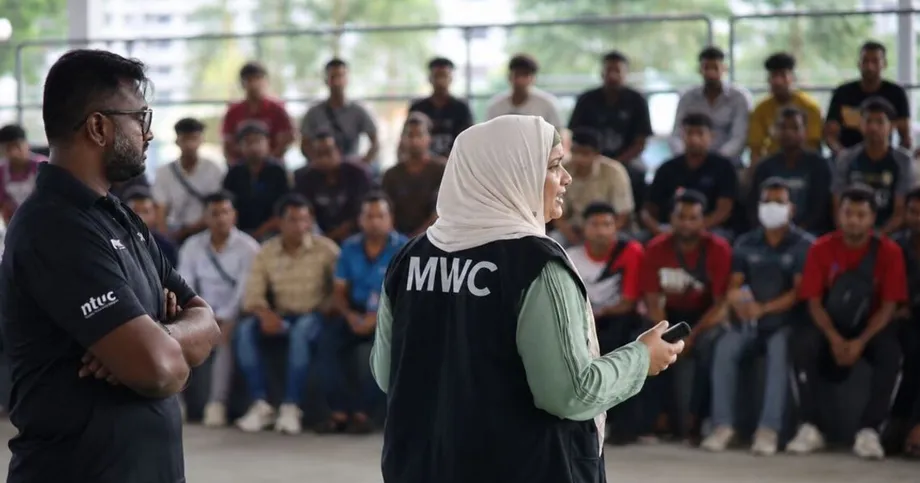
About 75 participants aged 13 to 35 attended an MDDI engagement session at Suntec convention centre on July 4. Their experiences illustrated why age rules and platform controls are being discussed alongside support for parents.
Xander Lee, an 18 year old pursuing a diploma in film, sound and video at Ngee Ann Polytechnic, received his first phone in Primary 1. By Primary 3, he was spending hours on Instagram and Telegram instead of doing homework or sleeping. He described how the habit developed:
I was unaware that I was actually getting addicted, so I started relying a lot on social media for the dopamine high,
Xander said his parents had not understood the risks. After his grades slipped and he developed insomnia, he asked his mother in Secondary 1 to set screen time limits because he found it difficult to reduce his use alone.
Aiden Chua, 15, a Catholic High School student, had a different experience. His parents gave him a phone in Secondary 1 but blocked its use after 7pm on schooldays. The rule caused tension when activities kept him at school late. Discussions with his parents led to a more flexible arrangement.
Eric Law, 22, an information systems undergraduate at Singapore Management University, supported stricter safeguards for children under 14 while favouring family discussion about how to apply them. He explained his reasoning:
Then you are able to actually have these conversations to say, what is allowed and what's not, because every family has their own different circumstances,
Minister of State for Digital Development and Information Rahayu Mahzam said young participants showed awareness of online harms, privacy concerns and misinformation. She also stressed the need to equip parents to support their children, alongside legislation.
App store testing exposes another layer of risk
The social media findings accompanied the October 24 release of the Infocomm Media Development Authority's (IMDA) first Online Safety Assessment Report on designated app distribution services. Its assessment covered April 1 to December 31, 2025.
The five designated services were Apple App Store, Google Play Store, Huawei AppGallery, Microsoft Store, comprising five storefronts, and Samsung Galaxy Store. IMDA assessed age assurance, protections for children, removal of harmful apps, age ratings and the handling of user reports.
Testing of more than 7,000 apps found 65 containing harmful content that breached the stores' own policies and 24 with incorrect age ratings. Of the 65 harmful apps, 59 contained sexual content, four contained violent content and two contained material facilitating vice and organised crime. Sexual content therefore accounted for about 91 per cent of the harmful apps identified.
Among the 24 apps with incorrect ratings, 14 contained sexual content, three contained violent content and seven contained material facilitating vice and organised crime. The stores removed or changed the ratings of the apps after IMDA notified them.
IMDA found baseline safety measures across all five services, but a small percentage of Huawei AppGallery users could bypass its age assurance method. Huawei committed to working with the authority to address the issue. The assessment drew on annual reports from the services, testing by people posing as ordinary users, direct testing and operational data.
The findings connect two parts of the government's work: protections within a social media service and safeguards at the app store through which a child obtains it. IMDA said the designated services had acknowledged identified weaknesses and had either corrected them or were working on solutions.
Digital habits lessons begin before social media access
IMDA is also working with government supported preschools on lessons about healthy digital habits. The curriculum covers setting boundaries online, thinking before acting, reporting inappropriate content, and parental engagement and support.
An initial pilot involved more than 100 Kindergarten 2 pupils at E-Bridge. From December 2026, the curriculum is due to reach nearly 3,000 Kindergarten 1 and 2 pupils across all 30 E-Bridge centres. Skool4Kidz delivered the curriculum to 800 Kindergarten 2 children across 35 centres in September.
The lessons sit alongside participants' preference for no social media access at ages zero to six. Young children can learn basic habits around devices, boundaries and asking for help before they begin using social platforms themselves.
IMDA plans to continue engaging the Early Childhood Development Agency and approach more preschool operators in 2027. Families can also access digital parenting resources through the Digital for Life portal. Rahayu said community partners and individuals have a role in helping families develop the skills they need.
How Singapore's plans fit the regional shift
Singapore is developing graduated access while nearby countries adopt broader age restrictions. Indonesia restricted social media use for children under 16 in March 2026, becoming the first country in Southeast Asia to do so. Malaysia followed in June with rules preventing children under 16 from holding social media accounts. Australia introduced its restriction for those under 16 in December 2025.
Singapore's proposed approach focuses on age checks and changes to services, with access increasing as children mature. Its recent measures also include the Online Safety Commission, launched on June 29 to help victims of online harms obtain content takedowns and restrictions on offender accounts.
The main dates show how consultation, assessment and education are feeding into the proposed legislation:
- June to August 2026: MDDI engaged more than 2,000 parents and youths about social media use, risks and graduated access.
- July 4, 2026: About 75 young people attended a discussion at Suntec convention centre.
- September 2026: Skool4Kidz delivered digital habits lessons to 800 Kindergarten 2 children.
- October 23, 2026: MDDI published its factsheet on parents' and youths' views.
- October 24, 2026: IMDA released its first assessment of designated app stores.
- December 2026: E-Bridge is due to expand digital habits lessons across 30 centres.
- Early 2027: The government plans to introduce legislation on age assurance and safer social media features.
For families, the central issue is how protections will work in daily life: whether age checks respect privacy, whether default settings reduce unwanted exposure and prolonged use, and how parents can adjust controls as children grow.
Key Points
- More than 80 per cent of parents and nearly 70 per cent of youths consulted supported tiered social media access.
- Participants favoured no access at ages zero to six and protected access at ages seven to 15.
- Youths generally supported greater access from 16, while parents preferred continued safeguards for older teenagers.
- Legislation planned for early 2027 will focus on effective age assurance and safer platform features.
- Disabling autoplay and direct messaging, together with daily screen time limits, attracted the strongest support among proposed defaults.
- IMDA testing found 65 harmful apps and 24 incorrectly rated apps across designated app stores.
- Preschool digital habits lessons are due to reach nearly 3,000 E-Bridge pupils from December 2026.