Police seek power to act when victims are afraid
Bangladesh is considering changes to its criminal law that would allow police to bring extortion cases without waiting for frightened victims to file complaints. The proposals include mandatory cameras worn by officers, the use of recordings as evidence in court and prosecution through regular courts.
Contents
- Police seek power to act when victims are afraid
- What the proposed law would change
- Cameras would become part of the evidence system
- Regular courts and stronger punishment are proposed
- Community policing faces its own accountability test
- Khulna meeting puts public trust at the centre
- Joint operations accompany the legal proposals
- The crime assessment and the sequence of decisions
- Key Points
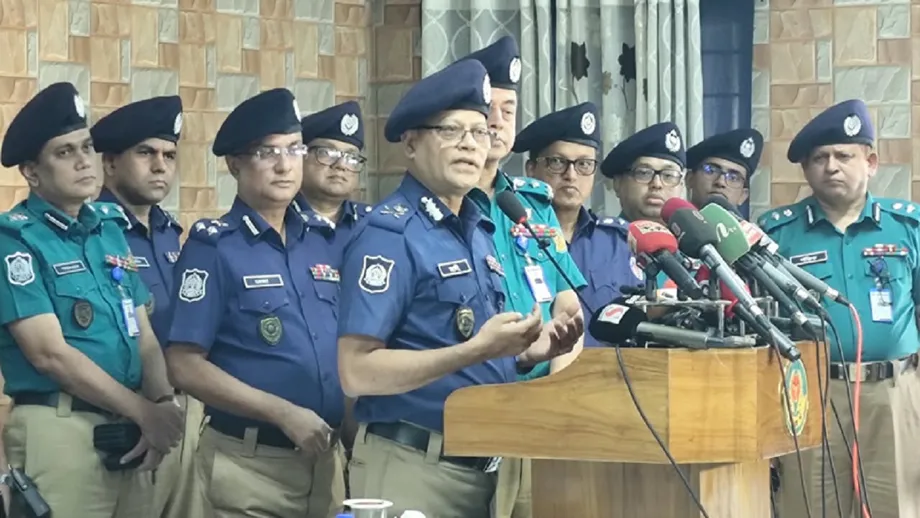
Inspector General of Police Md Ali Hossain Fakir outlined the initiative on Saturday, October 24, after a community policing meeting at the Khulna Metropolitan Police Lines in Boyra. He said he had asked the home minister for a new law enabling police to initiate cases using digital evidence or other evidence of extortion.
The announcement followed an October 15 parliamentary committee discussion at which Home Minister Salahuddin Ahmed described two possible routes: changing the existing Penal Code or introducing a dedicated law against extortion. The central aim is to let an investigation begin even when the person being threatened is unwilling to approach a police station.
Fakir said influential people, criminals and people connected to power were involved in extortion, leaving victims afraid both to complain and to testify. Extortion means forcing someone to hand over money or something else of value through threats or intimidation.
For a person facing such demands, the proposed change would move responsibility for starting a case toward the police. Officers would be able to act on evidence they obtain, rather than depend on that person taking the first formal step.
What the proposed law would change
Fakir said he had raised the proposal with the home minister before travelling to Khulna. He expected legislation soon and described a system in which police could become the complainant and pursue action themselves.
In practical terms, the complainant is the person or authority formally bringing an alleged crime to the attention of the justice system. Under the proposed arrangement, an officer could take that role in an extortion case, using evidence gathered during police work.
The October 15 discussion took place at the Jatiya Sangsad Bhaban during a meeting of the Parliamentary Standing Committee on the Ministry of Home Affairs, chaired by Joynul Abedin. Ahmed told the committee that reform would address limitations in the existing Penal Code.
The government was considering both an amendment and a separate law. No final legislative route, published bill, precise sentencing provision or date for passage was given in the announcements. Fakir's expectation of action soon therefore leaves the timetable open.
Cameras would become part of the evidence system
Ahmed described a proposal to make cameras worn on the body mandatory for law enforcement personnel. Officers would record audio and video of extortion activities, with the recordings submitted directly to courts as primary forensic evidence.
Forensic evidence is material examined to help establish what happened and who was involved. In this proposal, recordings would give investigators and courts an account of events that they could examine alongside other evidence.
The minister said the footage would be used to identify people making demands on the ground and the influential patrons behind them. The intended reach is therefore broader than the person who physically collects money.
Fakir's explanation in Khulna was wider than the camera proposal. He said digital evidence and other forms of evidence should allow police to take action. Together, the announcements describe a shift toward gathering evidence that enables officers to proceed when fear has silenced the victim.
Regular courts and stronger punishment are proposed
The parliamentary discussion also addressed how extortion cases would be prosecuted. Ahmed described plans to use regular judicial courts and seek the maximum imprisonment allowed by law, rather than rely on light summary proceedings and small fines imposed by mobile courts.
Summary proceedings are a shorter form of legal process. Mobile courts can deal with certain offences outside a conventional courtroom setting. The government's stated concern was that minor penalties offered too little deterrence and that repeat offenders could quickly return to criminal activity.
Fakir raised the same concern in Khulna, saying some offenders resumed their activities after being brought under the law. Police were developing policies to prevent that return, he said.
The proposals address different stages of the same problem: starting a case when nobody feels safe enough to complain, collecting usable evidence and pursuing punishment through the courts. Their practical effect would depend on how those stages are written into law and carried out.
Community policing faces its own accountability test
Fakir also announced work on a legal framework that would allow community policing to operate as a branch of the police. He said the home and finance ministries had approved the framework being developed to make police activity more effective.
Community policing brings police and local residents into closer contact over neighbourhood safety. In Khulna, however, Fakir acknowledged allegations that some people involved in community policing had themselves harassed innocent residents, used intimidation and collected money through threats.
The police chief said those activities would be governed by a legal framework intended to prevent abuse. Explaining how the proposed structure would address the allegations, he said:
"Such incidents must not happen again. Community policing activities will be conducted within a legal framework to prevent these abuses," he said.
The allegations make supervision a concrete issue for the reform. Residents facing extortion need protection from criminals, while people participating in local policing must also be held accountable for how they use their position. Fakir said attempts to harass people or collect money through community policing powers would face strict oversight.
Khulna meeting puts public trust at the centre
Khulna Metropolitan Police Commissioner Md Shazzadur Rahman chaired the meeting, which focused on drugs, terrorism, extortion, juvenile gangs and extremism. Khulna Range Deputy Inspector General Md Rezaul Karim and Police Training Centre commandant Deputy Inspector General AKM Musharraf Hossain Miaze attended as special guests, alongside local dignitaries and civil society representatives.
Fakir said police activity over the previous 17 years had created distance between the force and the public. Restoring confidence was one of the purposes of his visit. He described the relationship police wanted to build:
"We want to rebuild public confidence in the police and establish a relationship of trust with people. Our goal is to become a more humane and people-friendly police force," he said.
The police chief also acknowledged public fear in Khulna, referring to killings involving people he described as criminals. He said police faced criticism as authoritarian when they used force and as weak when they did not.
His proposed response combined more effective enforcement with a closer relationship with residents. That matters directly to the extortion initiative: a law can allow officers to start a case, while public cooperation can still help them understand threats, identify suspects and investigate events.
Joint operations accompany the legal proposals
Fakir said joint operations were already taking place nationwide against juvenile gangs, extortionists, drug dealers and terrorists. He described a government policy of zero tolerance toward drugs and called for cooperation to tackle these crimes.
Responding to questions about security, he referred to the disruption after August 5, 2024, saying police had been absent while criminal activity spread. He said the force had since regained its footing and was carrying out duties across the country.
Fakir argued that conditions had improved, while acknowledging that problems, including unemployment, could not be resolved overnight. His account linked the current enforcement campaign to the wider effort to rebuild police operations and public confidence.
Drug use was also discussed at the parliamentary committee. Referring to minutes of a previous session, Fakir warned that students in medical and engineering university dormitories were being drawn into Yaba use through claims that the drug helped them study through the night. He urged preventive campaigns and targeted enforcement on campuses.
The crime assessment and the sequence of decisions
The Home Ministry presented the parliamentary committee with a crime index covering January through September 2026, comparing that period with the same months in the previous year. It recorded decreases in murder, dacoity, robbery, violence against women and assaults on police.
Dacoity is a legal term used for robbery committed by a group. The ministry's assessment also recorded increases in cases involving rape allegations, drug offences and burglaries. The committee expressed satisfaction with the broader security situation despite those increases.
The figures described crime categories moving in different directions. Extortion remained a specific legislative priority because officials said intimidation was preventing victims from bringing complaints. The announcements developed through the following sequence:
- January to September 2026: The Home Ministry compiled the crime assessment later presented to the parliamentary committee.
- October 15: The committee discussed changing the Penal Code or introducing a dedicated extortion law, alongside camera evidence and prosecution proposals.
- October 24: Fakir outlined police powers to initiate cases at the Khulna meeting and discussed the proposed community policing framework.
For residents, the central promised change is straightforward: police would take responsibility for starting an extortion case when evidence is available, even if fear prevents the victim from filing it. The parallel promise is that people involved in policing would face rules and oversight designed to stop them from intimidating the same communities they are meant to protect.
Key Points
- Bangladesh is considering a Penal Code amendment or a dedicated law allowing police to initiate extortion cases without a victim's complaint.
- Proposals include mandatory cameras worn by officers and submission of recordings as evidence in court.
- The government wants regular court proceedings and stronger punishment for extortion.
- Fakir acknowledged allegations of intimidation and extortion by some community policing members and promised stricter oversight.
- No firm date for passage or final legislative text was announced.