New rules reshape spending on free meal program
Indonesia's National Nutrition Agency says it has returned about Rp44 trillion (US$2.4 billion) from the budget for its Free Nutritious Meal program to the state treasury, after changing how kitchens are paid and reclaiming money held by kitchens that were not operating. Agency head Sudaryono announced the figure during a visit to Jambi on Nov. 20, 2026, describing the reforms as part of the MBG 2.0 transformation.
Contents
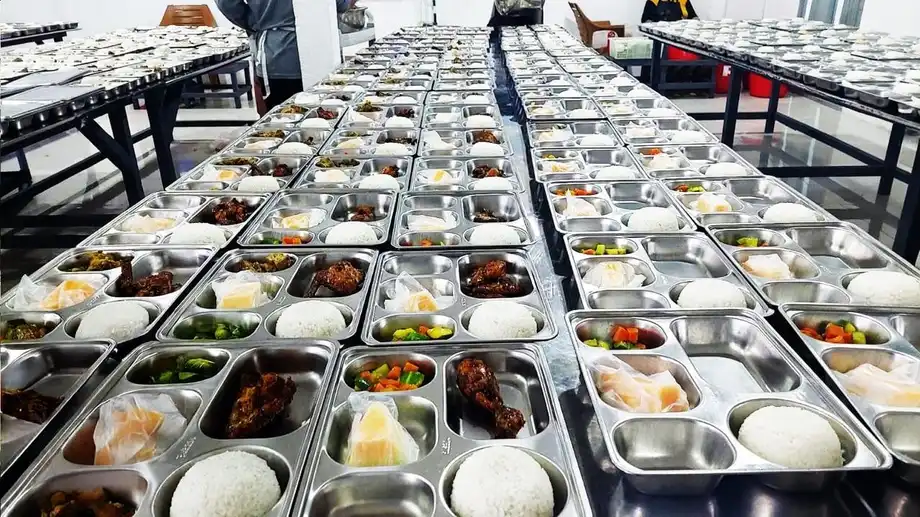
The changes affect thousands of Nutrition Fulfillment Service Units, known as SPPGs, which prepare and distribute meals. A kitchen that once received a fixed Rp6 million a day, regardless of how many meal trays it delivered, now receives Rp2,000 for each tray. Another incentive component, previously more than Rp3,000, is capped at Rp3,000.
Sudaryono said the new incentive rules are expected to save about Rp5.5 trillion by the end of the school term in December 2026. The agency has also recovered around Rp480 billion from accounts belonging to kitchens that had not begun operating. These amounts are parts of the wider savings and recovery effort, not figures to add to the Rp44 trillion headline as though they were separate totals.
The government says the reforms are intended to keep money tied to actual meal service and make spending easier to check. They also put pressure on kitchen operators to document purchases and explain unusually fast spending, while leaving unresolved how the full program budget will be reconciled across different published totals.
How did the agency reach Rp44 trillion?
Food Minister Zulkifli Hasan has described the Rp44 trillion efficiency figure as a combination of changes to the agency's own budget, foundation incentives, kitchen operating funds and problematic or possibly duplicated virtual accounts. His breakdown was about Rp38 trillion in internal budget adjustments, Rp2.5 trillion in foundation incentives, Rp3 trillion in kitchen operating costs and Rp500 billion from addressing virtual accounts.
That breakdown explains the scale of the announced efficiency effort, while Sudaryono's account describes some of the steps kitchens will experience directly. A fixed daily payment gave a kitchen the same incentive whether it sent out many meal trays or few. The replacement rate ties that payment to the number of trays distributed. The separate incentive cap also limits the amount that can be claimed under that component.
Sudaryono said the changes should not leave SPPG partners with a loss, while the government would not guarantee unusually large profits. Kitchen partners build facilities and provide equipment, so the program also involves private investment. The agency's May description of MBG funding included about Rp166.5 billion a day in returns to foundation partners for their investment in kitchen facilities and equipment.
The amount returned to the treasury is substantial, but it needs to be read alongside the program's continuing costs. A separate MBG budget realization figure stood at Rp139.77 trillion as of Sept. 16, equal to 63.89% of a stated 2026 allocation of Rp218.77 trillion. By October, spending was put at Rp173.2 trillion. These are snapshots from different dates, as the program continued to operate and expand.
Why published budget totals differ
In May, BGN Vice Head Sony Sonjaya discussed a 2026 agency budget of Rp268 trillion. The later Rp218.77 trillion figure was described as the MBG program's 2026 allocation. The figures refer to different stated totals, and the information released with them does not explain how the agency budget and program allocation relate to one another.
The May statement also described changes to meal delivery intended to lower costs without reducing the stated value of each meal. Distribution was reduced from six days a week to five, with meals no longer provided on holidays or during activities outside school. The nominal food benefit remained Rp10,000 per portion in Java and nearby areas, with adjustments for staple food costs in disadvantaged, frontier and outermost areas, known as 3T regions.
Sony said holiday food bundles had also been discontinued. In his words, the program would provide meals while students were at school, rather than during holidays or activities outside school. The BGN's May statement put daily MBG operating costs at about Rp942 billion, including Rp128.9 billion for honorariums for roughly 1.28 million volunteers and workers and Rp58.7 billion for operating expenses.
The agency said the largest part of the daily spending supports the food supply chain, including rice, fish, chicken, eggs, vegetables and fruit supplied by traders, cooperatives, small businesses and village enterprises. That means a reduction in waste or inactive accounts can matter to public finances, while the continuing meal service also creates regular demand for local suppliers.
Who receives the meals?
As of Aug. 31, the program had reached 56.99 million people, or 76.45% of a target of 74.56 million, according to figures Sudaryono presented to the House of Representatives' Commission IX on Sept. 17. The beneficiary count was described as temporary while officials reviewed distribution lists and removed schools or other recipient units that no longer met program criteria.
Schoolchildren accounted for Rp125.45 trillion of the Rp139.77 trillion in reported spending through Sept. 16, while pregnant women, breastfeeding mothers and toddlers accounted for Rp14.32 trillion. The schoolchildren's share was about 90% of the total, calculated by dividing Rp125.45 trillion by Rp139.77 trillion.
The listed spending included Rp55.13 trillion for primary school pupils, Rp25.34 trillion for middle school, Rp21.64 trillion for high school and vocational students, and Rp14.65 trillion for early childhood education. Spending was also recorded for toddlers, religious students, breastfeeding mothers and pregnant women. The figures show that school meals make up most reported spending, while the program also serves families with very young children and mothers.
Later operational counts were lower than the May snapshot. In May, BGN cited 27,757 operating kitchens serving 62.5 million people. A later provisional status covered 26,885 active SPPGs serving 58,374,945 beneficiaries. The counts were published at different times and under different program status descriptions, as the agency reviewed kitchen operations and beneficiary records.
Daily reports give BGN a spending check
Every kitchen must submit a Daily Fund Utilization Report, known by its Indonesian initials LPDH. The report is meant to list how much money was spent, what was bought, where it was purchased and the amount paid. BGN can use the details to compare spending with the kitchen's expected operating needs.
Sudaryono gave a simple example: if a kitchen uses money meant to cover 10 days in only seven, the agency will check why. The early review can help identify an unusual purchase pattern or another reason that needs explanation. Zulkifli Hasan has said that an SPPG that fails to submit its daily report can have further disbursements stopped.
For kitchens, that makes reporting a condition of keeping funds flowing, rather than paperwork that can be completed later. The system also depends on accurate records from operators and on BGN having the staff and procedures to follow up when spending does not match expectations.
Sudaryono said the reforms take account of recommendations from Indonesia's Audit Board, the Financial and Development Supervisory Agency, the Corruption Eradication Commission, the Attorney General's Office and the National Police. He acknowledged that program governance was not yet fully orderly, while saying it was being directed toward improvement.
Targeting and kitchen oversight are also changing
BGN says MBG 2.0 includes a review of who qualifies, not just how kitchens spend money. The agency plans to update beneficiary records and remove fictitious entries, while taking account of the economic conditions of educational institutions. It says expansion should prioritize 3T areas, places with high stunting rates and pregnant women, breastfeeding mothers and children under five, a group often shortened to 3B.
Later stages of provisional kitchen approvals are expected to use updated education records to check student beneficiaries. Another stage is intended to confirm 3B recipients using validated records that identify people by name and address. These checks are meant to help the government direct meals to eligible people and identify areas where service is still missing.
For 3T areas and urban clusters, BGN had activated 2,413 SPPGs in three stages, but only 31 were described as ready to operate. The rest still needed work on facilities and equipment. The government planned to inaugurate units that were ready in the second week of December 2026.
The agency is also preparing a digital purchasing system for kitchens with the Ministry of Primary and Secondary Education, with a nationwide rollout targeted for January 2027, subject to system readiness and trial results. Other measures under discussion include local inspections, CCTV linked to artificial intelligence tools and buffet style meal service at schools. These plans are intended to strengthen checks on kitchen operations and food safety; the rollout and inspection details are still being developed.
Key dates in the reform effort
May 2026: BGN described a five day school meal schedule and gave figures for daily operating costs and kitchen activity.
Aug. 31, 2026: The beneficiary count reached 56.99 million against a target of 74.56 million.
Sept. 16 and 17, 2026: Reported spending reached Rp139.77 trillion; Sudaryono presented program figures to lawmakers the next day.
October 2026: MBG spending was put at Rp173.2 trillion.
Nov. 20, 2026: Sudaryono announced the Rp44 trillion return to the state treasury in Jambi.
December 2026 and January 2027: The government planned to open ready SPPGs in the second week of December, while nationwide digital purchasing was targeted for January.
What to Know
BGN says MBG 2.0 returned about Rp44 trillion to the state treasury through budget adjustments and tighter program controls.
Kitchen incentives changed from Rp6 million per day to Rp2,000 for each meal tray, with another incentive component capped at Rp3,000.
BGN recovered about Rp480 billion from accounts of kitchens that were not operating, and projects another Rp5.5 trillion in savings by December.
Kitchens must report daily spending; Zulkifli Hasan said disbursements can be stopped when a kitchen fails to file its report.
The program served 56.99 million people by Aug. 31, while officials continued reviewing recipient lists and expanding service to priority areas.