Online shopping anchors a $119 billion economy
Indonesia's digital economy is projected to reach $119 billion in 2026, with online shopping accounting for $85 billion, or about 71% of the total. The forecast puts Indonesia at nearly a third of Southeast Asia's projected $368 billion digital economy, as consumers increasingly use artificial intelligence to compare products and search for better prices.
Contents
- Online shopping anchors a $119 billion economy
- Four sectors explain the growth
- Why consumers keep shopping under pressure
- AI moves from recommendations toward checkout
- Trust depends on privacy and control
- An Indonesian travel platform tests AI advertising
- Investment shifts toward the infrastructure behind AI
- Lending grows as overdue loans increase
- What the forecasts say about 2030 and 2035
- Key Points
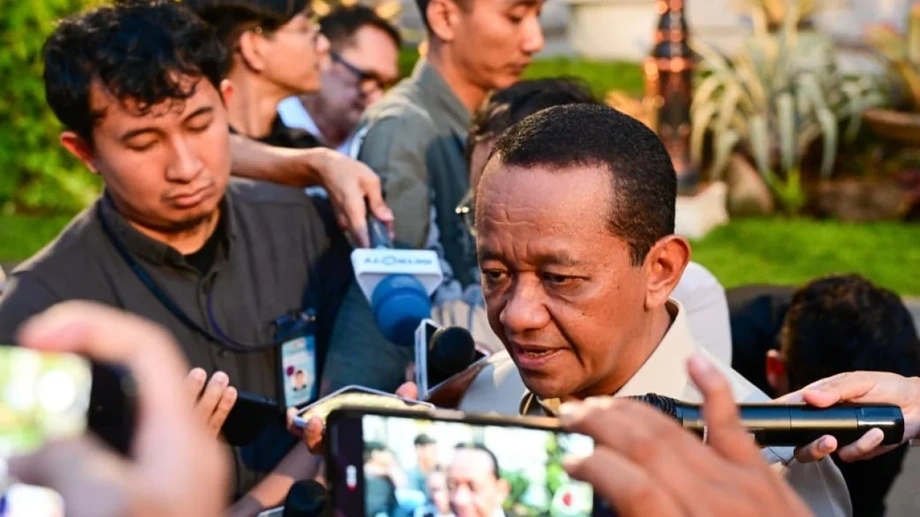
The Indonesian estimate, presented at a briefing in South Jakarta on November 11, represents reported growth of 16% from 2025. Google Indonesia Country Director Veronica Utami said strong growth in commerce and online media reflected continuing consumer demand despite pressure from living costs and uncertainty in the wider economy.
The expansion also brings financial risks. Digital lending balances are forecast to grow 22% to $16 billion, while Indonesia's Financial Services Authority, known as OJK, recorded a rise in overdue loans at online lending platforms in September.
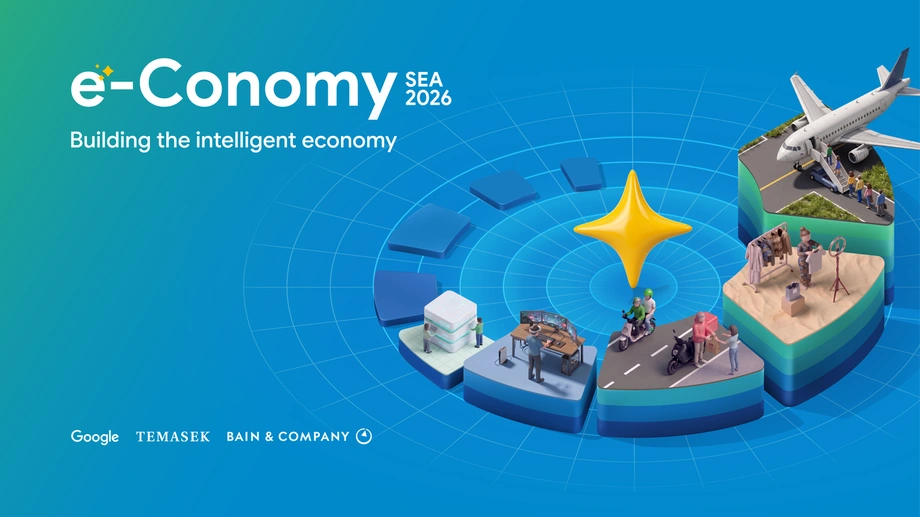
Google, Temasek and Bain & Company's e-Conomy SEA 2026 report, published on October 21, describes a regional economy increasingly shaped by AI, from shopping recommendations to investment in data centres. Indonesia illustrates both sides of that change: a large consumer market adopting new tools and a financial sector facing growing demands on credit assessment and consumer protection.
The $119 billion estimate measures the scale of activity across the main digital sectors tracked by the research. Gross merchandise value, or GMV, means the value of transactions passing through a platform. A customer's payment includes money going to the seller and other participants; the platform earns its own fees or commissions from that activity.
Four sectors explain the growth
E-commerce remains Indonesia's largest digital sector by a wide margin. Its projected $85 billion value in 2026 is up 16% from the previous year. Online media, including video, music, games and digital advertising, follows at $12 billion, with growth of 28%, the fastest among the four main sectors.
Transport and food delivery are projected to contribute $11 billion, growing 10%. Online travel is expected to contribute another $11 billion, up 6%. Together, those three smaller categories total $34 billion, compared with $85 billion for e-commerce.
Indonesia's online media growth exceeds the regional rate of 22%, while its commerce, travel, and transport and food delivery sectors grow more slowly than their regional equivalents. Southeast Asian e-commerce is projected to expand 18%, online travel 10%, and mobility and food delivery 15%.
Those comparisons show why the size and speed of a sector need to be considered together. Online media is expanding fastest in Indonesia, but e-commerce has a much larger starting base. Changes in shopping activity therefore carry particular weight in the country's digital growth.
Why consumers keep shopping under pressure
Veronica linked continued online spending to convenience, video commerce and the so-called lipstick effect. The term describes consumers buying relatively affordable treats or lifestyle products during difficult economic periods, even while becoming more careful with larger purchases.
Video commerce connects products with videos or live demonstrations that can lead directly to a purchase. Veronica described it as one of the forces supporting e-commerce, alongside the ability to shop from anywhere at any time.
Bain & Company Partner Willy Chang said the strength of e-commerce had surprised him while the research was being prepared, given pressure from living costs and other economic conditions. He linked its resilience to consumers becoming more selective, comparing prices and seeking transparent prices and official products.
Veronica also described AI as a practical shopping aid: consumers can quickly compare models, prices and product reviews. For a household trying to stretch its budget, that makes online shopping a place to investigate value as well as make a purchase. For sellers, it increases the importance of clear product information and competitive pricing.
AI moves from recommendations toward checkout
Indonesia's willingness to delegate shopping tasks stands out. At the November briefing, 84% of Indonesian users were described as open to letting an AI agent find the best price and complete a purchase. The official regional research puts willingness across the six markets studied at 75%, a gap of nine percentage points.
An AI agent is software that can carry out a task through several steps. In shopping, that could mean finding products, comparing prices and making a purchase within limits set by the customer. A chatbot that simply answers a product question performs a smaller part of that process.
The report estimates that 243 million people across the six Southeast Asian markets use generative AI, equivalent to 58% of their working population. Generative AI produces responses such as text or images from a user's instructions. Across the region, 69% of consumers use AI to compare products, and 93% trust the recommendations they receive.
Google's consumer insights analysis adds an important detail about what happens next: more than 90% of users conduct further research or consult reviews after an AI recommendation. Among those shoppers, 55% use online search, 54% consult customer reviews and 44% use social media. The channels overlap because a shopper can use several.
The Google and YouGov survey behind those findings covered 9,006 AI users in July 2026. Its results describe a shopping process in which AI helps narrow the choices, while search results, reviews and social content remain part of the decision.
Trust depends on privacy and control
Consumers across Southeast Asia are becoming more confident in AI: 62% said they trusted the tools more than a year earlier. Google's regional findings link that change to familiarity, better results and a stronger record of completing tasks successfully.
Shoppers also named specific conditions for allowing software to act for them. Privacy safeguards mattered to 44%, clear information about AI's abilities and limits to 36%, and the ability to reverse transactions to 30%.
Those expectations affect the design of an automated purchase. Customers need to understand what the agent may buy, how much it may spend and how to undo an unwanted transaction. The report identifies transparency, safeguards and reversibility as conditions for wider acceptance.
Indonesia's high willingness to try agents gives retailers and platforms a potential market for these services. Turning that interest into regular use will depend on tools that provide practical value while keeping customers in control of their money and personal information.
An Indonesian travel platform tests AI advertising
Indonesian travel agency tiket.com offers a concrete example of how AI is being used on the business side. Google says the company tested AI Max for Search against advertising campaigns managed through manual keyword selection.
The pilot increased paid hotel orders by 141% and gross booked value by 94%, while reducing the cost per paid order by 47%, according to Google's account. Gross booked value is the total value of the bookings generated.
The test addressed a specific problem: the company's manual advertising approach was missing detailed searches from people ready to book. AI helped match advertisements to the intent behind those searches, allowing the platform to reach more potential customers.
The pilot's order growth was faster than its growth in booking value, showing why both measures matter when businesses assess performance. Indonesia's wider online travel sector, meanwhile, is projected to grow 6% in 2026. The company test concerns a particular advertising campaign; the sector forecast covers activity across the market.
Investment shifts toward the infrastructure behind AI
Willy said investment was broadening beyond e-commerce platforms into infrastructure such as data centres and supporting networks. Data centres house the computers that run digital services, store information and process AI requests.
Across Southeast Asia, digital economy deals reached $8 billion, according to Bain's report. Companies focused on AI received 80% of private capital deployed over the latest six months covered by the research, compared with 30% in the second half of 2024.
Regional digital infrastructure investment reached $20 billion over the preceding 12 months. An $11 billion acquisition involving ST Telemedia Global Data Centre accounted for 55% of that amount, showing how a single large transaction can shape the investment total.
Google's regional report overview projects that data centre capacity will need to roughly triple over the next five years to support AI demand. The research also describes a potential increase in regional AI usage of up to 60 times by 2030.
Electricity supply and efficiency are part of that expansion. Google cites Singapore's Digital Infrastructure Bill and Malaysia's Corporate Renewable Energy Supply Scheme as national approaches relevant to data centre efficiency and access to cleaner energy. These are regional examples of the physical requirements behind services that consumers experience through a phone screen.
Lending grows as overdue loans increase
Indonesia's projected $16 billion in digital lending balances sits alongside rapid growth in online financial services. The country has 17 digital banks, the highest number in Southeast Asia, according to the research. Some have developed within large app ecosystems combining shopping, transport, food ordering and financial services.
Veronica said transaction information from those ecosystems could help banks understand customers and develop suitable financial products. Such information can show patterns in spending and service use, making data management and lending decisions closely connected.
OJK's figures show pressure in the regulated online lending industry. Outstanding financing reached Rp106.48 trillion in September 2026, up 17.02% from a year earlier. The share of financing overdue by more than 90 days, known as TWP90, rose from 4.73% in August to 5.36% in September.
That increase was 0.63 percentage points in one month. The industry ratio moved above 5%, the maximum bad financing ratio specified for individual operators under OJK rules. TWP90 gives readers a simple view of repayment stress: a higher share means more financing has remained unpaid for over three months.
Agusman, OJK's chief executive responsible for supervising financing institutions and other financial services, said at a November 5 press conference that funding quality remained under attention:
Perkembangan kualitas pendanaan industri LPBBTI ini terus menjadi perhatian.
His statement referred to continuing scrutiny of funding quality in the regulated technology based lending industry. Economist Nailul Huda, director of digital economy at the Center of Economic and Law Studies, linked rising bad loans to pressure on borrowers' repayment capacity and lending that was not always supported by adequate credit assessment.
The $16 billion forecast covers digital lending more broadly, while OJK's Rp106.48 trillion figure covers the regulated online lending industry. Each describes a different part of Indonesia's financing market.
What the forecasts say about 2030 and 2035
Indonesia's digital economy is projected to reach $227 billion in 2030, compared with $119 billion in 2026. That would put it close to twice its current projected size within four years.
The longer forecast puts Indonesia at roughly $446 billion to $450 billion by 2035. The projection was also described at the November briefing with an upper estimate of $550 billion; the reason for the different upper limits was not explained. At $446 billion, the market would be about 3.7 times its projected 2026 size.
Google, Temasek and Bain place Southeast Asia on a course to exceed $1 trillion by 2035, from $368 billion in 2026. Indonesia's $119 billion represents about 32% of the regional total this year, making the country's consumer demand, business investment and financial stability central to that trajectory.
The main dates trace how the growth story and its risks developed:
- July 2026: Google and YouGov surveyed 9,006 AI users across Southeast Asia.
- September 2026: Indonesia's online lending TWP90 ratio reached 5.36%.
- October 21, 2026: The e-Conomy SEA 2026 report was published.
- November 5, 2026: OJK discussed lending figures and funding quality.
- November 11, 2026: Indonesia's digital economy estimates were presented in South Jakarta.
- 2030 and 2035: Indonesia's projections reach $227 billion and roughly $446 billion or more, respectively.
The regional report also identifies November 2026 as the expected timing for ASEAN's Digital Economy Framework Agreement, a proposed framework for digital trade. Alongside infrastructure investment, consumer safeguards and the cost of running AI, regional rules form part of the conditions the research identifies for continued expansion.
Key Points
- Indonesia's digital economy is projected to reach $119 billion in 2026, with reported growth of 16%.
- E-commerce contributes $85 billion, about 71% of the total; online media grows fastest at 28%.
- Willingness to let AI agents find prices and complete purchases reaches 84% among Indonesian users, compared with 75% regionally.
- Southeast Asian digital infrastructure investment reached $20 billion over the preceding 12 months.
- Indonesia's online lending TWP90 ratio rose to 5.36% in September, from 4.73% in August.
- The Indonesian digital economy is projected to reach $227 billion by 2030, with much larger expansion forecast by 2035.