Sumatra Plan Targets 40 Extra Days of Oil Supply
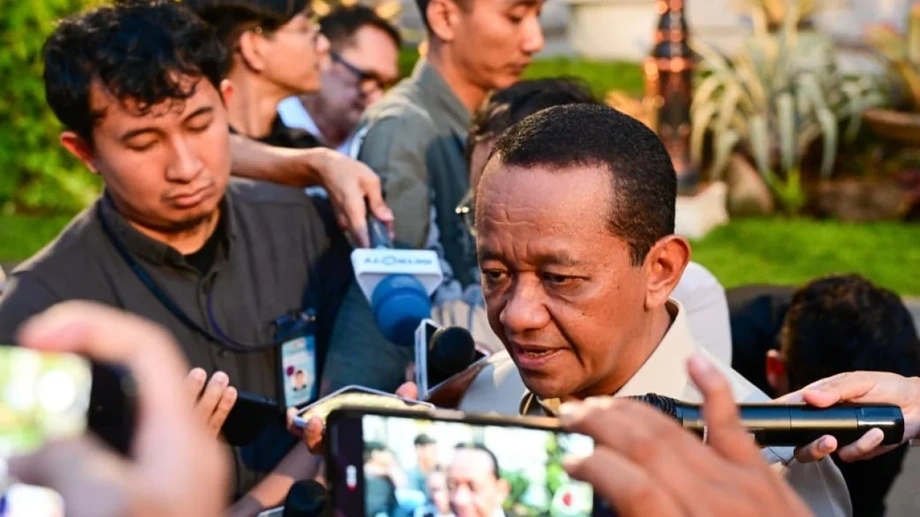
Indonesia plans to build crude oil storage facilities at several locations in Sumatra, aiming to increase storage capacity from the equivalent of 20 days of supply to 60 days. Energy and Mineral Resources Minister Bahlil Lahadalia outlined the plan on November 3, 2026, after a meeting with President Prabowo Subianto at the presidential palace complex in Jakarta.
Contents
The proposed expansion would give Indonesia more room to hold imported crude oil and a larger cushion against interruptions in international deliveries. On the government's stated measure, the target would triple existing storage capacity and add 40 days of supply coverage.
Bahlil said a feasibility study had been completed and that the government would examine potential locations for earthquake exposure, other disaster risks and local security. The next stage is expected toward the end of 2026, although his remarks described both site inspections and a target to begin construction during that period.
The minister also connected the storage expansion to Indonesia's B50 biodiesel policy and efforts to strengthen domestic energy supplies during geopolitical uncertainty. The same presidential meeting addressed plans for bioethanol blends ranging from E20 to E50, bringing oil storage and alternative fuels into a wider discussion about supply security.
What Would a 60-Day Buffer Change?
Indonesia's stated starting point is storage equivalent to 20 days of domestic oil needs. Raising that figure to 60 days would create space for three times as much oil, assuming the same daily consumption level is used in both calculations.
A larger buffer gives the country more time to respond when imported supplies are delayed. Oil held in storage can help bridge a gap between scheduled deliveries and the arrival of replacement shipments. The practical benefit depends on how much oil is actually stored and how quickly it can reach the facilities that process or distribute it.
Bahlil described 90 days, or roughly three months, as the international minimum benchmark Indonesia wants to approach. A 60-day target would reach two thirds of that figure, leaving another 30 days of capacity to reach the minister's longer term reference point.
The announcement measures the ambition in days of supply rather than barrels. Storage capacity describes how much a facility can hold; the reserve available during a disruption depends on how much oil has been purchased and placed inside it. Building tanks and filling them are separate tasks, both necessary for a usable supply buffer.
From a May Proposal to a Completed Study
Bahlil had already described a Sumatra storage project on May 11, 2026. At that stage, the feasibility study was still underway, and the proposed storage area was to be integrated with a Special Economic Zone, known in Indonesia as a KEK.
A Special Economic Zone is a designated area operating under particular investment and business arrangements. Bahlil presented the proposed zone as a location for energy storage that would also serve as a national strategic reserve, holding supplies for use when the country needs a cushion.
By November, he said the feasibility study was finished. Such a study examines whether a project can be built and operated, including its technical requirements and potential risks. The change from an ongoing study in May to a completed study in November marks a concrete step in the project's preparation.
- May 11, 2026: Bahlil described a Sumatra storage area linked to a Special Economic Zone and said the feasibility study was underway.
- November 3, 2026: After meeting Prabowo, Bahlil said the study was complete and set out the ambition to expand storage from 20 to 60 days of supply.
- Late 2026: The government expects further site checks, while Bahlil also identified the period as a target for starting construction.
Site Safety Comes Before Final Locations
Sumatra is the region identified for the facilities, but selecting individual sites requires more detailed checks. Bahlil said officials would consider earthquake resilience and local security, alongside technical requirements, safety and the risk of other natural disasters.
Bahlil, who also spoke in his capacity as coordinating minister for downstreaming and energy transition, described the location review after the presidential meeting:
Kita ngecek lokasinya, dari sisi keamanan baik dalam kontes gempanya, maupun keamanan lokalnya,
His remarks referred to checking locations for safety in relation to earthquakes and local security. For a project intended to protect national energy supplies, the ability of the storage facilities themselves to withstand disruption is central to their purpose.
Bahlil did not disclose the precise sites, planned capacity in barrels, investment cost, financing arrangements or a detailed construction and completion timetable. The immediate milestone is therefore the work expected at the end of 2026, when site assessment and the proposed start of construction will need to be put into a clearer sequence.
How Crude Storage Connects With B50
Bahlil described the Sumatra facilities as places to store imported crude oil. He also presented the expansion as support for the B50 mandate, which the government intends to maintain.
Crude oil is the raw petroleum that refineries process into fuels and other products. B50 refers to a diesel blend containing 50 percent biodiesel, a fuel made from biological material, with the remaining share supplied by petroleum diesel. Crude storage and biodiesel blending therefore operate at different stages of the fuel supply chain.
The connection is energy security. More crude storage would provide additional room for imported petroleum, while the B50 policy seeks to increase the use of domestic fuel resources and reduce dependence on imported fossil fuels. Indonesia is pursuing both a larger buffer for imports and a change in the fuel mix used at home.
Bahlil linked the decision to maintain B50 to uncertainty in global politics. Referring to the biodiesel policy after the meeting, he said:
B50 tetap kita pertahankan. Karena ini adalah geopolitik, yang tidak pernah kita tahu ujungnya kemana,
The minister's message was that B50 would continue because the direction of geopolitical developments is unpredictable. He presented additional storage as another way to prepare for that uncertainty.
Bioethanol Plans Extend From E20 to E50
Prabowo also asked about readiness for E20 bioethanol during the November meeting. Bahlil said the government had prepared a strategic plan for development in stages, from E20 through E50.
E20 describes a gasoline blend containing 20 percent ethanol, while E50 contains 50 percent. Ethanol is an alcohol that can be produced from agricultural material and blended into gasoline. These plans concern gasoline, while B50 concerns diesel.
Bahlil said the Energy and Mineral Resources Ministry would work with the Agriculture Ministry on the supply of raw materials. That places agricultural production alongside fuel processing and distribution in the preparations needed for bioethanol development.
The three policies address different parts of Indonesia's energy needs. Crude storage concerns the quantity of imported oil the country can hold. B50 changes the composition of diesel supplies. The E20 to E50 plans concern the composition of gasoline. Their shared objective, as described by the government, is a more reliable supply system with greater use of domestic resources.
A National Reserve Alongside an ASEAN Idea
Bahlil's May remarks placed the Indonesian project in a regional context. He said the country had begun preparing its own storage plan before an idea emerged for an ASEAN energy storage hub.
At that time, he described the ASEAN proposal as preliminary and said it had not entered formal discussions between governments. He welcomed the regional idea while maintaining that Indonesia's feasibility work was already in progress.
The distinction concerns who the facilities would serve and how they would be organised. Bahlil described the Sumatra project as a national reserve to protect Indonesia's supplies. The ASEAN concept involved a possible regional storage role that would require discussion among participating countries.
The Special Economic Zone proposal gives the Sumatra plan an investment and industrial setting as well as a reserve function. Its development has progressed from a study underway in May to the completed study announced in November, with safety reviews and implementation now the next practical steps.
Key Points
- Indonesia plans crude oil storage facilities at several locations in Sumatra, targeting an increase from 20 to 60 days of supply.
- The proposed expansion would triple capacity on the government's stated measure and add 40 days of coverage.
- Bahlil said the feasibility study was complete on November 3, 2026. Site checks and a proposed construction start were discussed for late 2026.
- Location reviews will consider earthquakes, other disaster risks, technical requirements and local security.
- The project was described in May as part of a proposed Special Economic Zone serving as a national strategic reserve.
- The government plans to maintain B50 biodiesel and has prepared a strategy for bioethanol development from E20 to E50.
- Bahlil identified 90 days of supply as the longer term benchmark Indonesia aims to approach.