Bank scrutiny expands to accounts sharing an identity number
Indonesia's Financial Services Authority (OJK) has directed banks to investigate and block accounts among 39,923 suspected of involvement in online gambling, extending scrutiny to other accounts registered under the same National Identity Number (NIK). The total is 1,127 higher than the 38,796 accounts identified in OJK's October 5, 2026 update.
Contents
- Bank scrutiny expands to accounts sharing an identity number
- How the account total has grown
- Why banks are checking the NIK
- Rp86.8 trillion moved through gambling networks
- Gambling dominates the digital cleanup
- A separate fraud campaign has frozen Rp967.5 billion
- Consumer complaints bring warnings and sanctions
- Bank lending continues to grow during the crackdown
- Key Points
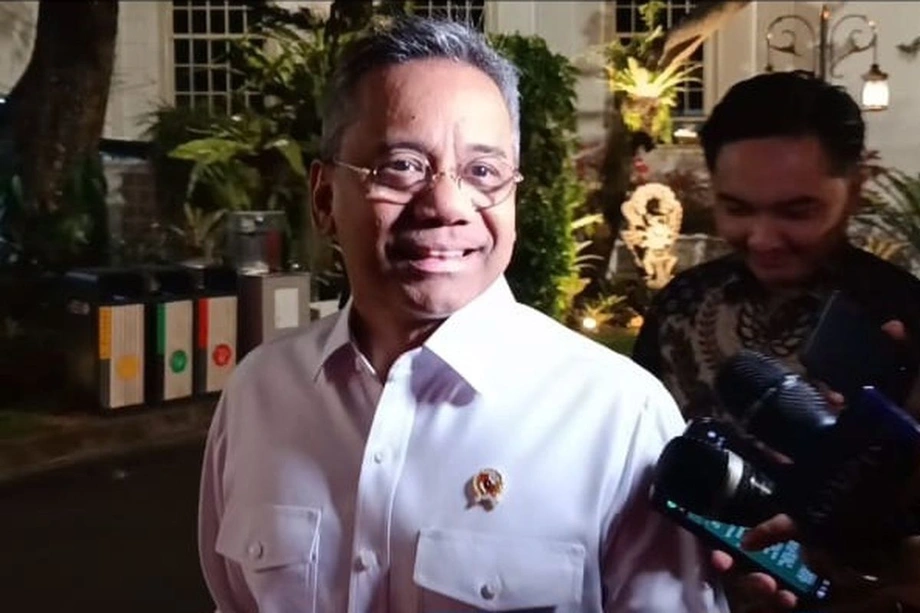
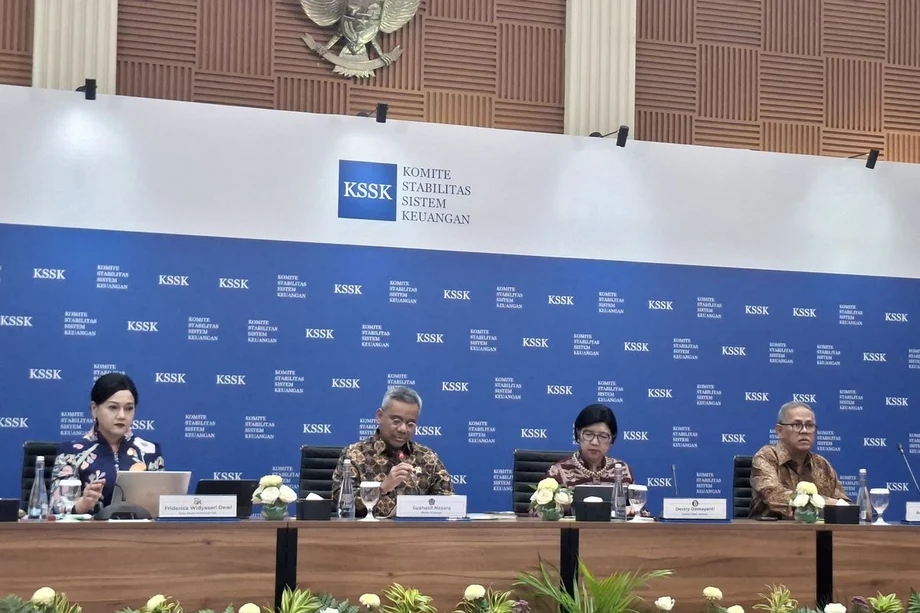
Dian Ediana Rae, OJK's chief executive of banking supervision, announced the action on November 5 at a virtual press conference following the regulator's October 2026 Monthly Board of Commissioners Meeting. The Ministry of Communication and Digital Affairs supplied the account information used for the action.
Dian described the instruction to banks in direct terms:
The OJK has instructed banks to perform enhanced due diligence,
Enhanced due diligence, or EDD, means taking a closer look at a customer considered to present a higher risk. Banks examine the customer's profile and transaction patterns more thoroughly to understand how an account is being used.
OJK's latest figure covers accounts referred for deeper examination and/or blocking. The regulator also requested the closure of other accounts sharing an NIK with people suspected of involvement. No completion date or final total of accounts closed under the latest instruction was given.
The identity checks make the action broader than a list of individual account numbers. A person may hold several bank accounts, so checking the NIK gives banks a way to find related accounts beyond those initially identified by the ministry. For customers whose accounts are flagged, that can mean scrutiny across several accounts rather than a single banking relationship.
How the account total has grown
OJK's November total is about 2.9% higher than its October 5 figure. A longer comparison shows an increase of 6,671 accounts, or about 20.1%, from the 33,252 suspected accounts recorded in April.
The Indonesian National Police's April enforcement statement recorded that earlier total, up from 32,556. It said the blocking followed OJK requests for banks to conduct enhanced due diligence.
The main dated developments show how referrals, investigations and closures have progressed:
- April 6, 2026: An official police statement recorded 33,252 suspected gambling accounts, compared with a previous 32,556.
- July 14, 2026: The communication ministry said about 32,500 accounts had been closed after examination, from approximately 38,000 accounts reported.
- October 5, 2026: OJK recorded 38,796 suspected accounts.
- November 4, 2026: Deputy Communication and Digital Affairs Minister Nezar Patria called for cooperation to disrupt gambling payments.
- November 5, 2026: OJK announced follow up action covering 39,923 suspected accounts and related accounts sharing an NIK.
The July figures put completed closures at roughly 86% of the approximately 38,000 accounts reported at that point. They also show the work between identifying an account and completing action against it: banks must process the information, examine the customer and carry out the required restrictions.
An additional enforcement announcement recorded 17,026 suspected accounts ordered blocked, using information from the communication ministry, but did not specify its timeframe. That announcement also called for identity verification, continued monitoring and reports of suspicious activity to the Indonesian Financial Transaction Reports and Analysis Center (PPATK).
Why banks are checking the NIK
Indonesia's NIK identifies an individual, while an account number identifies a particular bank account. OJK's instruction uses that difference to expand investigations from an account already flagged to other accounts associated with the same person.
Banks have been asked to examine those related accounts and take action, including closure, through the follow up process. The work involves matching identity information and reviewing account activity, rather than checking only whether an account number appears on the ministry's list.
For a gambling network using several accounts, restrictions on one account can leave other payment routes available. Searching by identity is intended to reach more of the accounts connected to the people under investigation.
OJK has also called on banks to monitor accounts for potential financial crime and send suspicious transaction reports to PPATK. Those reports give the financial intelligence agency information it can use to trace the movement of money and support further investigation.
Rp86.8 trillion moved through gambling networks
PPATK data presented by the National Police's Criminal Investigation Agency (Bareskrim) in September put online gambling turnover in the first half of 2026 at approximately Rp86.8 trillion, equivalent to about US$4.79 billion in the figures accompanying the announcement.
Turnover measures the money moving through the activity. Funds can move repeatedly as people deposit, bet, receive payments and transfer money again. Measuring the total flow helps investigators understand the scale of the payment activity they are trying to interrupt.
Bank accounts are part of that payment system. Restricting them targets the movement of money, while the communication ministry's work targets access to gambling content. Police investigations and PPATK's tracing of financial flows address the people and transactions behind those services.
Nezar Patria's November 4 call for cooperation named OJK, Bank Indonesia, PPATK and the National Police. Their responsibilities meet at different points: bank supervision, payment oversight, financial intelligence and criminal investigation. Coordinating those tasks is central to the government's effort to sever gambling payment routes.
Gambling dominates the digital cleanup
The Ministry of Communication and Digital Affairs said it handled 4.03 million items of gambling content between October 20, 2024 and September 11, 2026. The figure appeared in ministry data dated October 19, 2026.
Gambling represented about 78.3% of the 5.15 million items of negative online content handled during that period. In practical terms, nearly four out of every five items in that total concerned gambling, leaving approximately 1.12 million in other categories.
The ministry's content work and its account referrals connect the online and financial sides of the campaign. Removing access to content tackles how gambling services reach users. Passing suspected bank account information to OJK gives financial institutions a starting point for checking how payments are collected and moved.
The two workloads are measured differently. The ministry counts pieces of content, while OJK tracks accounts requiring financial action. Following both helps explain why the campaign involves millions of online items but tens of thousands of suspected gambling accounts.
A separate fraud campaign has frozen Rp967.5 billion
At the same November 5 briefing, Dicky Kartikoyono, OJK's chief executive responsible for financial services business conduct supervision, education and consumer protection, outlined the scale of its response to scams. By the end of October 2026, authorities had blocked Rp967.5 billion in victims' funds and returned Rp208.9 billion.
The amount returned was equivalent to about 21.6% of the funds blocked. Blocking restricts access to money identified during an investigation; returning money puts it back into a victim's possession. The two figures track different stages of the response.
The Indonesia Anti-Scam Centre received 737,686 complaints from its launch on November 22, 2024 through the end of October 2026. Those complaints involved 1,471,112 reported and verified accounts, of which 743,589 had been blocked.
That puts the blocked share at approximately 50.5% of the reported and verified scam accounts. The centre's figures cover its fraud response, while the 39,923 account figure concerns OJK's gambling enforcement. Keeping the two totals separate gives readers a clearer picture of the work being carried out in each programme.
For victims, the Rp208.9 billion returned is the most direct measure of money recovered. For the agencies handling complaints, the much larger volume of accounts shows the scale of identification, verification and coordination required before recovery can take place.
Consumer complaints bring warnings and sanctions
OJK's consumer protection workload also extended beyond the anti scam centre. Between January 1 and October 12, 2026, its Consumer Protection Portal Application received 600,101 service requests, including 94,363 consumer complaints. Complaints accounted for about 15.7% of all requests.
From January 1 to October 15, the regulator issued 150 written warnings to 98 financial services providers, six written instructions to six providers, and 51 sanctions to 44 providers. These actions form part of its enforcement of consumer protection requirements.
By September 13, a further consumer redress measure had produced Rp84.34 billion in compensation from 157 financial services providers. OJK presented that compensation figure separately from the Rp208.9 billion returned through the anti scam response.
Earlier in the year, OJK also revoked the business licences of six People's Economic Banks (BPR) between January and March. Two named institutions were PT BPR Koperindo Jaya in Central Jakarta and PT BPR Pembangunan Nagari in Agam Regency, West Sumatra.
The regulator said it coordinates with the Deposit Insurance Corporation (LPS) on issues involving BPRs and their Islamic banking counterparts, BPRS, under Law No. 4 of 2023 on Financial Sector Development and Strengthening. Its action against illegal financial activity has also been described as work alongside 16 other government institutions under that law.
Bank lending continues to grow during the crackdown
Indonesia's banking sector was still expanding as OJK tightened scrutiny of gambling payments. Bank credit reached Rp9,245 trillion in September 2026, an increase of 13.26% from a year earlier.
OJK reported a gross nonperforming loan ratio of 2.07% and a net ratio of 0.82%. A nonperforming loan is one on which the borrower is having serious repayment problems. The net measure accounts for provisions banks have made against potential losses.
The broader loan at risk ratio stood at 8.50%. This measure includes more loans showing signs of repayment difficulty than the narrower nonperforming category, giving supervisors another way to assess pressure on borrowers.
Banking return on assets was 2.43%, while the capital adequacy ratio was 24.30%. Return on assets measures profit relative to the assets banks use in their business. The capital ratio measures the financial cushion banks hold against risks.
OJK is therefore pursuing two tasks at once: supervising a growing lending sector and requiring banks to identify accounts that may be supporting illegal activity. The November instruction makes identity matching a central part of the second task, extending the response beyond the account numbers first submitted by the communication ministry.
Key Points
- OJK ordered deeper checks and/or blocking involving 39,923 suspected gambling accounts, up 1,127 from October 5, 2026.
- Banks must also trace accounts sharing an NIK with suspected participants and carry out follow up action, including closure.
- PPATK recorded approximately Rp86.8 trillion in online gambling turnover during the first half of 2026.
- The communication ministry handled 4.03 million gambling content items, about 78% of all negative content handled during the stated period.
- In its separate scam response, OJK recorded Rp967.5 billion blocked and Rp208.9 billion returned to victims by the end of October 2026.