Thirty Two Properties Stand Between Pakistan and a Long Awaited Payment
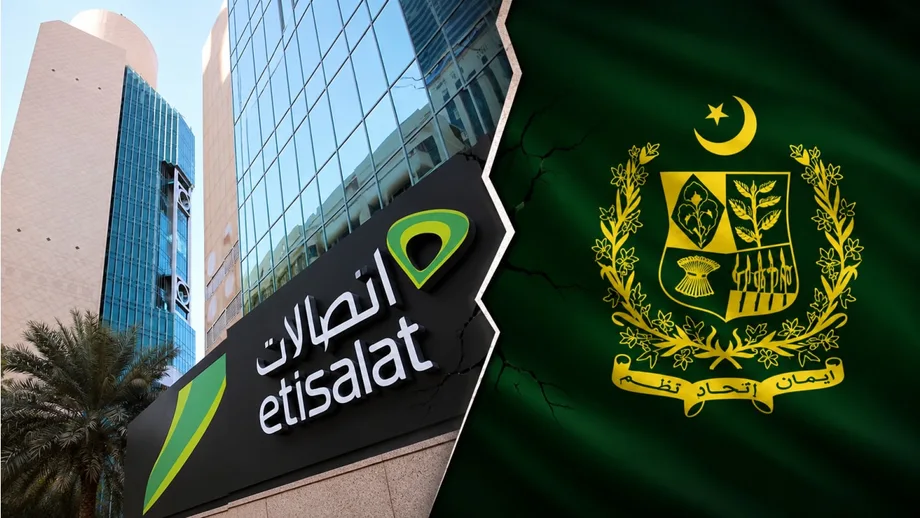
Pakistan is weighing international arbitration to recover about $800 million from Etisalat over the privatisation of Pakistan Telecommunication Company Limited, with officials saying 3,214 of the 3,246 properties covered by the transaction have been transferred. Ownership of the remaining 32 properties remains the central obstacle in a payment dispute stretching back to 2008.
Contents
- Thirty Two Properties Stand Between Pakistan and a Long Awaited Payment
- What Pakistan Sold, and When the Deal Closed
- The Payment Schedule Changed Before Completion
- The Official Record of the Missing $800 Million
- Why the Remaining Properties Matter
- Settlement Efforts Have Spanned Several Governments
- What Pakistan Could Ask Arbitrators to Award
- What Must Happen Before Proceedings Begin
- From Negotiating Tables to a Contractual Test
- Key Points
A parliamentary committee member described preparations for legal proceedings as complete. The procedural account is more cautious: arbitration remains under review, with an assessment by the attorney general expected before the prime minister or federal government approves a notice of intent. No filing date or arbitration timetable has been announced.
The proposed claim against the United Arab Emirates telecommunications group, now known as e&, could extend beyond the unpaid purchase price. A government committee formed in July 2026 recommended seeking compensation for the financial returns Pakistan could have earned on the money since 2008, along with applicable damages.
The dispute combines two obligations under the same transaction: the buyer's payment for a 26 percent stake and management control, and Pakistan's transfer of properties included in the agreement. Pakistan points to the large number of completed transfers. Etisalat has withheld the balance because some ownership titles remain unresolved. The wording of the sale agreement will determine how those obligations fit together.
What Pakistan Sold, and When the Deal Closed
The Privatisation Commission's official privatisation notice, published on May 9, 2006, records a winning bid of $2,598,960,000 for the PTCL stake and management control. It identifies Etisalat International Pakistan LLC as the contracting party and gives April 12, 2006, as the completion date.
The transaction is commonly described as the 2005 privatisation because bidding took place that year. The notice gives a more detailed sequence: Etisalat won the auction on June 18, 2005, signed an initial agreement on June 30, and completed the purchase under revised terms the following April.
The government offered 1.326 billion Class B shares, representing 26 percent of PTCL. Those shares carried four votes each in elections for directors, compared with one vote for each Class A share. For dividends and other shareholder rights, the notice said the two classes ranked equally.
That voting arrangement helps explain how a buyer acquiring roughly a quarter of PTCL could also take management control. The transaction covered management of PTCL and its group companies, including mobile operator Ufone and internet business Paknet. It was a sale of a strategic stake with control, rather than a sale of the entire company.
The Payment Schedule Changed Before Completion
Etisalat's original purchase agreement lapsed in September 2005 after it failed to pay the balance within the required period, according to the Gazette notice. The buyer requested changes to the transaction structure, and the Cabinet Committee on Privatisation approved revised terms during the following months.
The Privatisation Commission's financial adviser approached the other qualified bidders, China Mobile and Singapore Telecom, about their interest under the revised terms. Neither was willing to enter a new bidding process, the notice records. Further negotiations with Etisalat then produced the payment arrangement used to complete the transaction.
The revised terms required $1.4 billion at completion and a remaining $1.199 billion in nine equal instalments, payable every six months. A revised sale purchase agreement was signed on March 12, 2006. Management transferred on April 12 after Etisalat made the full initial payment.
Pakistan therefore agreed to receive a substantial part of the purchase price after management had changed hands. That deferred payment structure is central to the present dispute: Etisalat took control in 2006, while the government continued waiting for instalments that later stopped.
The Official Record of the Missing $800 Million
The Senate Standing Committee on Privatisation examined the unpaid balance on July 18, 2023. Its committee meeting statement recorded an initial payment of $1.4 billion in April 2006, followed by three instalments totalling $400 million. It said no instalment had been paid since January 2008, leaving $800 million pending.
The official records contain a difference in the stated purchase price. The 2023 Senate statement gives a total bid of $2.538 billion, while the contemporaneous Gazette notice records $2,598,960,000. The Gazette also supplies the precise share count and winning price of $1.96 per share.
The latest briefing puts receipts at approximately $1.76 billion, compared with approximately $1.8 billion represented by the payments listed in the 2023 statement. The central demand remains about $800 million, with the proposed claim also seeking compensation for the years Pakistan has waited for payment.
The Privatisation Commission told senators in 2023 that it had held high level meetings and was pursuing an amicable solution. The renewed arbitration proposal shows that negotiations have continued without resolving the balance.
Why the Remaining Properties Matter
Pakistan says it has transferred 3,214 properties out of 3,246, or about 99 percent by number. The remaining 32 account for roughly 1 percent. The legal dispute concerns what the contract requires when some properties cannot be transferred and how their value should affect the outstanding payment.
Some assets included in the transaction reportedly had ownership problems from the outset. They included properties that were partly owned, rented, occupied by government departments despite belonging to provincial authorities, or not owned by PTCL. A property title is the legal record identifying its owner. Occupying or using a building does not necessarily give an organisation ownership that it can transfer.
The parliamentary committee member attributed the original failure to the government's inclusion of properties without first adequately establishing whether their ownership could legally be transferred. That leaves Pakistan trying to complete commitments involving assets whose legal status was uncertain when the agreement was made.
The sale agreement is therefore crucial. Arbitrators would need to examine whether transferring every property was a condition for payment, how the agreement deals with missing titles, and what remedies either party can seek. Officials said the transaction involved a sovereign guarantee, a commitment backed by the state, but the parliamentary committee had not received a copy of the original agreement.
Settlement Efforts Have Spanned Several Governments
Pakistan has used negotiations and successive government committees to pursue the money, with committee efforts dating back to at least 2015. Disagreements over property valuations and exchange rates have complicated attempts to agree on a deduction for assets that could not be transferred.
The main milestones show how the dispute moved from a deferred payment arrangement to a possible international legal claim:
- June 18, 2005: Etisalat won the auction for a 26 percent PTCL stake and management control.
- April 12, 2006: The privatisation was completed after revised payment terms were agreed.
- January 2008: The point since which the 2023 Senate briefing said no instalment had been paid.
- 2019: Pakistan explored deducting about $60 million for properties whose titles could not be transferred.
- January 2020: Etisalat reportedly offered about $275 million to settle the dispute, without a resulting agreement.
- February 2022: Then finance minister Shaukat Tarin sought an early settlement in a meeting with Etisalat International Group chief executive Hatem Dowidar.
- July 18, 2023: The Senate committee reviewed the outstanding $800 million.
- July 2026: Prime Minister Shehbaz Sharif formed another committee, which recommended pursuing arbitration.
The 2019 deduction proposal and the 2020 settlement offer illustrate the distance between the negotiating positions. A $60 million deduction from an $800 million balance would leave about $740 million. The reported $275 million offer was about 34 percent of the outstanding principal. Neither proposal produced a settlement.
What Pakistan Could Ask Arbitrators to Award
The committee formed in July 2026, chaired by the prime minister's adviser on privatisation, recommended arbitration under the sale purchase agreement. Its proposed demand includes the outstanding principal, the opportunity cost of that money since 2008, and applicable damages.
Opportunity cost means the benefit lost because money was unavailable for another use. Pakistan's proposed argument is that receiving the payment on time would have allowed it to earn returns or use the funds elsewhere. Turning that argument into a financial award would require a contractual and legal basis, a calculation method and a period for which compensation is sought.
The proposed additional compensation has not been quantified in the account of the committee's recommendation. No interest rate, total damages figure or calculation method was specified. The principal demand is therefore the clearest amount at stake, while any larger award would depend on the claim presented and the tribunal's decision.
Etisalat's property objections would also form part of the case. Pakistan would need to explain how its demand for payment fits with the unresolved transfers and the remedies set out in the agreement. The tribunal would assess the parties' contractual obligations alongside evidence of payments, transfers and outstanding titles.
What Must Happen Before Proceedings Begin
The attorney general is expected to assess the strength of Pakistan's case, its prospects of success and the legal consequences of arbitration. A favourable assessment would then require approval from the prime minister or federal government before a notice of intent is issued.
International arbitration allows a dispute to be decided by an appointed tribunal under rules accepted by the parties, usually through their contract. Here, the proposed route is the sale purchase agreement. A notice of intent would be a step toward that process, distinct from a tribunal deciding who owes what.
The difference between completed legal preparations and an authorised claim matters for Pakistan's finances. Officials have indicated that recovery is unlikely soon without progress through the legal process. The money remains an unresolved privatisation receipt rather than an announced payment available to the government.
From Negotiating Tables to a Contractual Test
Pakistan's proposed move would shift the dispute from repeated attempts to negotiate a compromise toward a formal examination of the contract. The same documents would connect the main issues: the purchase price, the instalment schedule, the property commitments and any state guarantee.
The 2006 Gazette notice records that bidders were required to conduct legal, financial and technical checks, received draft transaction documents, and accepted final agreements before bidding. The present property dispute brings attention back to how ownership was checked and how the parties allocated responsibility for unresolved assets.
For the government, the immediate task is to secure legal assessment and approval for the next step. For Etisalat, the unresolved property transfers remain central to its withholding of payment. After years of unsuccessful settlement efforts, the outcome will turn on the agreement's terms and the evidence each side presents.
Key Points
- Pakistan is considering arbitration over about $800 million in unpaid PTCL privatisation proceeds; proceedings have not been confirmed as filed.
- Officials say 3,214 of 3,246 properties have been transferred, leaving 32 unresolved.
- The official Gazette records a winning bid of $2,598,960,000 and completion on April 12, 2006.
- A 2023 Senate statement said no instalment had been paid since January 2008.
- The proposed claim could include compensation for lost use of the money and applicable damages.
- An attorney general assessment and government approval are expected before a notice of intent.