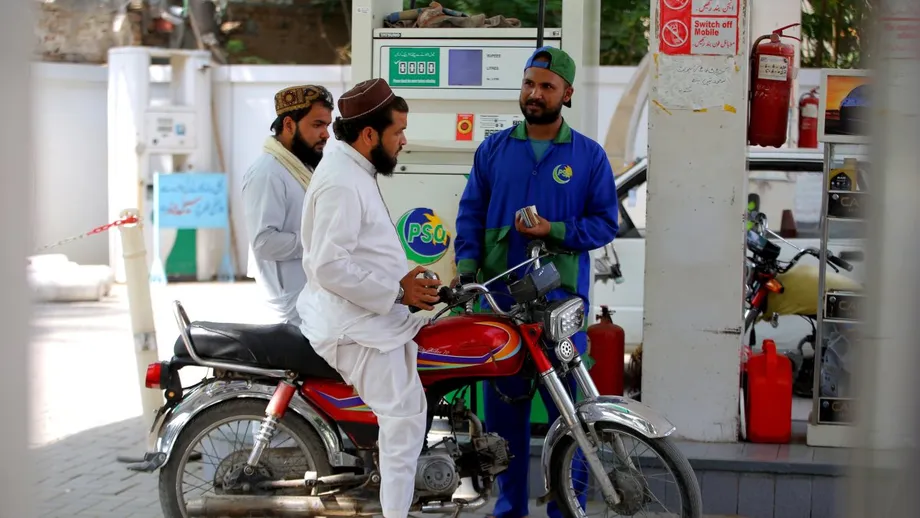
Motorcycles dominate a rapidly expanding subsidy programme
Pakistan's fuel relief scheme recorded 11.82 million registrations and 25.2 million redeemed subsidy tokens by October 14, 2026, according to the Ministry of Information Technology and Telecom. Motorcycles and three-wheelers accounted for approximately 11.41 million registrations, making them the main recipients of assistance intended to reduce transport costs for households with limited incomes.
Contents
- Motorcycles dominate a rapidly expanding subsidy programme
- How much assistance does each token provide?
- Who qualifies, and what rules have changed?
- Registration remains a gatekeeper
- What the registration and token totals tell us
- How the programme grew through September and October
- Where motorists were using the scheme
- Petrol station payments and complaints shape daily access
- A continuation pledge and a wider household estimate
- Key Points
The ministry said 27.64 million tokens had been issued, with a reported redemption rate of 91.18%. A token is a digital authorisation for a fixed amount of fuel assistance. Issuing one makes the subsidy available; redeeming it means the beneficiary has used it at a participating petrol station.
Eligible motorcycle and three-wheeler users receive 500 Pakistani rupees per token, valid for seven days. Drivers of cars with engines of up to 800 cubic centimetres receive 1,000 rupees per token, valid for 10 days. The engine limit determines which small cars qualify.
The latest figures show registrations have roughly doubled since September 26, when Information Technology and Telecommunication Minister Shaza Fatima Khawaja announced about 5.91 million registered citizens. Redeemed tokens rose from approximately 4.8 million to 25.2 million over the same period, an increase of about 5.3 times.
Prime Minister Shehbaz Sharif has pledged to continue the programme, backed by a government allocation of 75 billion rupees. Its expansion has brought three practical issues into focus: helping eligible users register, making tokens usable at petrol stations and reimbursing those stations promptly.
How much assistance does each token provide?
The Economic Coordination Committee approved the 75 billion rupee allocation on September 14 at a meeting chaired by Finance Minister Muhammad Aurangzeb. The programme was designed to target lower income motorists affected by higher petroleum prices, with the IT ministry responsible for deploying and managing the digital Fuel Pass System.
The original approval described assistance for motorcycles and three-wheelers as 500 rupees a week, calculated as five litres receiving a subsidy of 100 rupees per litre. For cars up to 800cc, it provided 1,000 rupees for 10 days, based on 30 litres a month receiving the same subsidy per litre.
Those amounts describe the government's contribution toward fuel costs. The 100 rupees per litre figure was the subsidy used in the calculation, rather than the full selling price of petrol. For a household using a motorcycle for regular journeys, the practical benefit is a reduction in what it pays from its own pocket.
The October figures put the two token values at approximately $1.80 for motorcycles and three-wheelers and $3.60 for eligible small cars. Their value to a household depends on how much fuel it buys and how regularly it can obtain and redeem assistance.
Who qualifies, and what rules have changed?
The September 14 approval restricted the scheme to non-commercial users and limited assistance to one vehicle per user or owner. Its vehicle categories included motorcycles, three-wheelers and cars with engines no larger than 800cc.
Khawaja announced changes at a September 26 news conference with Minister of State for Finance and Railways Bilal Azhar Kayani. She said the five-litre limit for motorcycles, rickshaws and Qingqi vehicles had been removed following public feedback. Qingqi vehicles are a type of three-wheeler commonly used for local transport.
The minister also said motorcycle and rickshaw users with rented vehicles no longer needed to meet the ownership requirement. That change addressed a concrete barrier: a person using a rented vehicle might need fuel assistance while the registration remained in somebody else's name.
The October update continued to describe assistance through fixed token values and validity periods. The announcements leave the precise treatment of commercial rickshaw and Qingqi operations unclear alongside the original restriction to non-commercial users.
Registration remains a gatekeeper
Vehicle records are central to the scheme because the digital system checks eligibility against verified registrations. For users whose vehicles are missing from provincial records, gaining access can require action by an Excise Department before a fuel token becomes available.
Economic Affairs Minister Senator Ahad Khan Cheema examined that problem at a September 24 review meeting. The Economic Affairs Division's September review statement said some rickshaw and loader owners were experiencing difficulties, particularly where their vehicles were not registered with provincial Excise Departments.
Provincial representatives told the meeting that rickshaw registration had begun and eligible owners would be able to receive assistance once their vehicles were registered. Cheema, who chaired the meeting, described the government's assessment of progress:
On the Prime Minister's directions, the Fuel Relief Scheme is progressing successfully across the country,
Cheema also asked the Pakistan Digital Authority to include vehicle registration and token payment complaints in a dedicated portal. The authority said it would work to launch the portal as soon as possible. His instructions focused on ensuring that eligible owners were not excluded because of registration difficulties.
What the registration and token totals tell us
The October 14 figures recorded 11.71 million unique users, alongside 11.82 million registrations. The ministry also counted nearly 15.93 million tokens issued to returning beneficiaries, showing that repeated use had become a large part of the programme.
Returning beneficiaries accounted for about 58% of the 27.64 million tokens issued. A person can receive assistance more than once as the programme continues, so token totals grow faster than the number of individual users.
Motorcycles and three-wheelers represented roughly 96.5% of registrations, using the ministry's approximately 11.41 million figure against the 11.82 million total. Around 412,000 registrations were for eligible small cars. The distribution places most of the programme's activity among users of smaller vehicles.
About 2.44 million issued tokens had not been redeemed at the October 14 snapshot, calculated by subtracting 25.2 million redemptions from 27.64 million issued tokens. Each token has a limited validity period, making the time between issue and use important for beneficiaries.
How the programme grew through September and October
The scheme's expansion followed a funding decision, an early review of registration problems and a series of public updates. The main milestones were:
- September 14, 2026: The Economic Coordination Committee approved 75 billion rupees and assigned digital management to the IT ministry.
- September 24: A government review recorded more than five million registrations and examined access problems for rickshaw and loader owners.
- September 26: Khawaja announced about 5.91 million registrations, 6.19 million generated tokens and 4.8 million redemptions.
- October 12: Reimbursements to petrol stations reached approximately 12.34 billion rupees across nearly 214,000 claims.
- October 14: Registrations reached 11.82 million, with 27.64 million tokens issued and 25.2 million redeemed.
The redemption rate also increased as the programme expanded. The September 26 totals of 4,797,734 redeemed tokens from 6,189,568 generated tokens imply a rate of about 77.5%. By October 14, the ministry reported 91.18%, a rise of approximately 13.7 percentage points.
The change means a larger share of issued assistance had been used by the later reporting date. It also shows why registrations alone give an incomplete picture of delivery: a registered user still needs a token and a successful transaction at a petrol station.
Where motorists were using the scheme
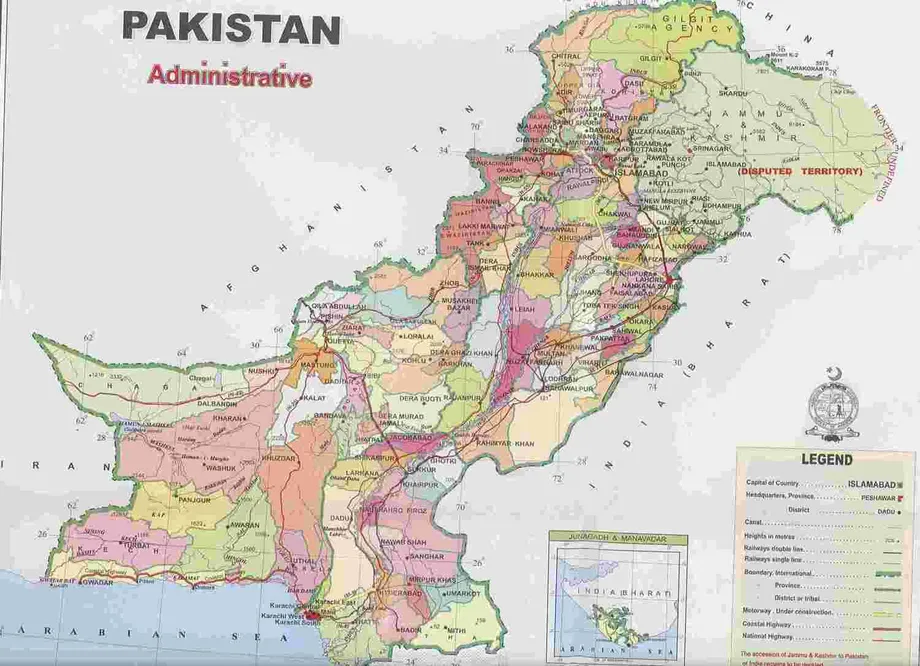
Punjab and Sindh accounted for most redemptions in the regional figures presented on September 26. Punjab recorded approximately 3.08 million redeemed tokens, followed by Sindh with about 1.22 million.
Khyber Pakhtunkhwa recorded 267,460 redemptions, while Islamabad Capital Territory recorded 210,032. The figures for Azad Jammu and Kashmir, Balochistan and Gilgit-Baltistan were 23,796, 6,761 and 4,845 respectively.
Those figures show transactions taking place across all the listed provinces and regions, but with large differences in volume. Punjab's total was more than twice Sindh's, while Islamabad recorded a substantial number despite its much smaller geographic area.
Khawaja said provincial governments and local administrations were helping oversee implementation. Information and Broadcasting Minister Attaullah Tarar told the September 24 review that awareness efforts were taking place through media and outreach on the ground, aiming to inform more citizens about the scheme.
Petrol station payments and complaints shape daily access
Authorities had reimbursed petrol stations approximately 12.34 billion rupees across nearly 214,000 claims by October 12, with further payments being processed. Reimbursement is the step through which a station recovers the subsidy it has accepted when a motorist redeems a token.
The amount paid was equivalent to about 16.5% of the 75 billion rupee allocation. The allocation is the funding approved for the programme, while the reimbursement total records payments made to stations by a particular date.
Payment timing had already attracted attention at the September 24 review. State Bank representatives expected pending payment issues to be resolved within a day or two, and Cheema said delays should not disrupt implementation. On September 26, Khawaja said petrol stations were being paid within a cycle of 24 hours.
The IT ministry established a control room operating around the clock to monitor registration, token generation and redemption. Khawaja said officials held around three monitoring meetings daily and used a live geographic information system map to track petrol stations and identify problems. Such a map connects information about activity to the location of each station.
Users seeking help were directed to helpline 9771 and the scheme website, pmfuelrelief.pk. Between September 25 and October 13, dedicated support lines handled thousands of complaints, with reported resolution rates exceeding 96% for motorists and 98% for petrol station operators.
A continuation pledge and a wider household estimate
Shehbaz said the scheme would continue when direct beneficiaries passed 10 million. He credited federal and provincial governments and other institutions for implementing it, and announced a national award for Khawaja. Other contributors were to receive commemorative shields.
The prime minister estimated that around 50 million people benefited directly or indirectly, using an average household size of five for the more than 10 million direct beneficiaries. His estimate included family members who could share in the benefit of lower household transport costs; the ministry's unique user count measures people recorded individually in the system.
For beneficiaries, continued assistance means repeated reductions in fuel spending within the programme's rules. For the government, sustaining delivery requires the registration system, token service, petrol stations and payment process to keep working together as participation grows.
The latest figures put successful token use above 25 million transactions. The next practical test is maintaining that access for existing users while resolving registration problems for eligible people still seeking entry.
Key Points
- Pakistan recorded 11.82 million fuel relief registrations and 25.2 million redeemed tokens by October 14, 2026.
- Motorcycles and three-wheelers accounted for approximately 11.41 million registrations, about 96.5% of the total.
- Tokens provide 500 rupees for eligible motorcycles and three-wheelers, or 1,000 rupees for cars up to 800cc.
- The government approved 75 billion rupees for the programme and reimbursed petrol stations approximately 12.34 billion rupees by October 12.
- Officials removed the five-litre limit and relaxed ownership requirements for motorcycle and rickshaw users with rented vehicles.
- Prime Minister Shehbaz Sharif pledged to continue the scheme, while registration access and prompt station payments remain central to delivery.