Investors face the full cost of securing electricity
Malaysia is tightening the terms of its data centre expansion, requiring investors to pay market electricity tariffs, cover transmission upgrades and pay for power capacity reserved for them even when their facilities use less. The policy addresses a growing gap between the electricity operators book and the amount they actually draw from the grid.
Contents
- Investors face the full cost of securing electricity
- Why unused power capacity carries a charge
- The gap between booked and actual demand
- Grid protection extends beyond the electricity bill
- Water approvals become a state responsibility
- Local purchasing is central to the economic bargain
- Large investment totals bring different economic returns
- Jobs depend on skills rather than spending alone
- Efficiency and renewable power remain separate challenges
- How the policy debate developed
- Key Points
Investment, Trade and Industry Minister Johari Abdul Ghani outlined the conditions in the Dewan Rakyat on October 15, 2026. He said the country should gain more from hosting the facilities without putting electricity supplies for households and existing industries under pressure.
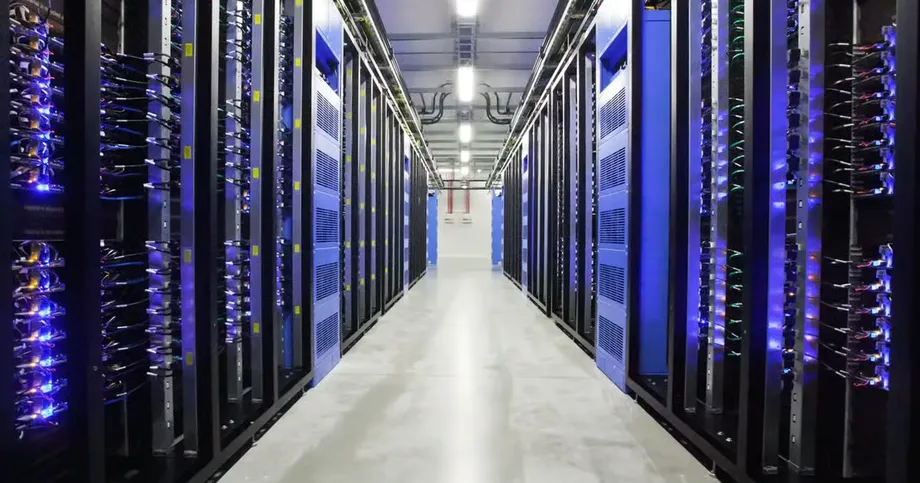
The scale is substantial: the government's latest figures put the number of operating data centres at 57, with an electricity supply requirement of about 6,237 megawatts (MW). Another 60 projects, at different stages of approval and construction, require 11,172MW. Together, those figures amount to approximately 17.4 gigawatts (GW) of electricity requirements, with 1GW equal to 1,000MW.
Johari also described a minimum local content target of 30% for new data centres, alongside requirements for water recycling and efforts to give Malaysian universities and businesses access to computing resources. The measures seek to turn large investment announcements into contracts, skills and technology that remain useful within Malaysia.
The minister was answering Ampang MP Rodziah Ismail, who asked about the sector's net economic contribution after accounting for electricity, water, land, infrastructure, incentives and the opportunities forgone when national resources are allocated to these projects. That question connects the new electricity conditions with a broader concern: how much Malaysia keeps from its digital infrastructure boom.
Why unused power capacity carries a charge
Johari used a simple example: an operator reserves 200MW but uses only 100MW once its facility is ready. Tenaga Nasional Bhd (TNB) must still keep the remaining capacity available because the operator may need it later.
Johari, the minister responsible for investment, trade and industry, explained how the unused portion would be treated:
The other 100MW that you do not use, we assume you have used it," he said. "We charge you. That is our policy now.
Reserving electricity is a commitment by the utility to supply it when required. TNB therefore has less freedom to promise that same capacity to another factory or business. Charging for the reservation makes the data centre investor responsible for maintaining that access, including during a gradual expansion of operations.
Johari said electricity requirements for data centres would be treated separately from those of households and other industries, without subsidies. Where electricity generation relies on gas, the market price of gas should be reflected in the cost of supply.
Investors must also include necessary transmission upgrades in their project expenditure, with TNB advising on what is needed. Transmission lines move large quantities of electricity across the network. A facility requiring hundreds of megawatts can create substantial work beyond its own boundary.
The gap between booked and actual demand
The Energy Commission is examining data centres' actual electricity needs. As of August 2026, 45 of the 62 facilities with electricity supply agreements were operating. Those operating facilities had a combined maximum load of 6GW, while actual electricity use stood at about 1.37GW, approximately 23% of that maximum.
An earlier snapshot showed an even wider gap. Sara Loo, Associate Research Officer with the Malaysia Studies Programme at ISEAS–Yusof Ishak Institute, wrote in her June 2025 study that 38 projects had secured electricity supply agreements by December 2024. Their maximum demand was 5.9GW, against actual load use of 405MW, about 7%.
Facilities bring servers and customers online in stages, so electricity use can rise after an agreement is signed. For the utility, however, planning starts earlier: lines, substations and generation arrangements must be ready when demand arrives. The reservation charge places a cost on booking capacity ahead of use.
The operating counts also vary across the parliamentary descriptions. Johari's latest national figure was 57, while another October 15 account put the number receiving TNB supply at 36; the August figures identified 45 operating facilities among those with supply agreements. The coverage and counting basis behind those totals were not explained.
Grid protection extends beyond the electricity bill
Johari said electricity supply applications would be examined with the Ministry of Energy Transition and Water Transformation, known as PETRA, and the Energy Commission, with the Finance Ministry informed. The purpose is to protect electricity reserves needed by other consumers and economic activities.
Reserve capacity is the spare generating capability available when demand rises or equipment fails. In a January 14, 2025 energy impact study, Khazanah Research Institute researcher Khoo Wei Yang illustrated how quickly a large new load could use up that cushion.
Using a scenario based on Peninsular Malaysia's 2021 power system, Khoo calculated that an additional 7.7GW of demand, with generation capacity unchanged, could reduce the reserve margin to around 0.8%. The calculation held supply constant to show how much pressure such an addition could create; future demand and generating capacity would both change.
The institute cited projections of data centre demand reaching 7.7GW by 2030 and 20.9GW by 2040. Loo's later ISEAS study cited a different projection of more than 5GW by 2035. These planning estimates use different trajectories, making the review of actual requirements especially relevant to decisions about new infrastructure.
Malaysia was already preparing substantial network investment. Loo recorded TNB's planned grid and distribution capital expenditure of RM26.5 billion for 2025–2027, compared with RM20.55 billion for 2022–2024. Assigning project related upgrade costs to investors addresses who pays as that network expands.
Water approvals become a state responsibility
Johari warned state governments to check available water resources before committing supplies to investors. Water falls under state jurisdiction, so the decisions made by states can determine how much pressure a new cluster of facilities places on nearby communities and industries.
Speaking in Parliament, Johari described the risk of approving projects before measuring the available supply:
"Sometimes state governments get excited about calling in data centres and give them everything, but they don't calculate how much water is actually available," he said.
Operators must adopt water recycling technology. Data centres need cooling because computer equipment produces heat continuously; water can be used to remove that heat. Recycling allows some water to be used again, reducing demand for fresh supplies.
Bank Negara Malaysia's data centre analysis illustrates the scale: a facility rated at 50MW uses daily electricity equivalent to roughly 22,000 households and water equivalent to about 2,200 households. The central bank warned that poorly coordinated expansion could compete with housing, industrial parks, agriculture and public amenities for infrastructure and resources.
Deputy Energy Transition and Water Transformation Minister Abdul Rahman Mohamad said on October 13 that the government was also considering requiring facilities near ponds or other water sources to develop their own water supply systems. He proposed that operators generate their own electricity, with options including solar power and battery storage. Those ideas remained proposals, separate from Johari's stated requirements on tariffs, reserved capacity, grid upgrades and recycling.
Local purchasing is central to the economic bargain
The Data Centre Task Force has agreed on a minimum local content level of 30%, according to Johari's parliamentary statements. He identified construction, engineering services, cooling systems and electrical equipment as areas where Malaysian suppliers could participate.
A 3% minimum for locally sourced services, including consultancy, contracting, engineering and legal work, has also been cited in the policy description. The relationship between that services figure and the broader 30% local content target has not been clarified.
Bank Negara explains why local purchasing matters. Operators import large quantities of specialised equipment because domestic alternatives are limited. When Malaysian firms supply equipment or services, a larger part of project spending supports activity within the country.
The central bank identified opportunities in server racks, modular racks and cooling distribution units. It also proposed a database of local suppliers to help operators find Malaysian businesses and help the government identify gaps in domestic production.
Johari wants major technology companies, including Amazon Web Services, Microsoft, Google and Alibaba, to give local businesses and universities access to computing resources and share artificial intelligence and cloud computing technologies. That would extend the benefits beyond constructing buildings and maintaining equipment, supporting research and the development of services using the facilities.
Large investment totals bring different economic returns
Reported investment in the sector has reached RM385.7 billion, including about RM271 billion in foreign investment and RM114 billion in domestic investment. Bank Negara's earlier measure put approved data centre investment at RM144.4 billion between 2021 and the first half of 2025. ISEAS recorded RM184.7 billion in investment in related projects between 2021 and 2024, using a broader project category.
The central bank estimated the sector's direct contribution to gross domestic product at RM14.1 billion in 2025, up from RM900 million in 2021, almost sixteen times as much. GDP measures economic activity generated within the country. Bank Negara's estimate includes construction, operations and replacing some services previously bought abroad, while accounting for the offsetting effect of imported equipment.
Malaysia's capital imports averaged RM17.8 billion a month from January to September 2025, compared with RM13.9 billion in 2024 and RM10.7 billion in 2022. Bank Negara linked the data centre expansion to growing demand for specialised imports, placing pressure on the current account, which records trade, income and other flows with the rest of the world.
Income from exporting digital services can provide a counterweight once facilities operate. ICT services exports rose 9% to RM16.8 billion in January–September 2025, from RM15.5 billion a year earlier. Bank Negara described tentative signs of a positive data centre contribution to that growth.
Local users can gain through shorter distances between their systems and the computers processing their data. This reduces latency, the delay before a response arrives, which matters for services requiring rapid decisions. Hosting within Malaysia also gives national authorities greater oversight of sensitive banking, healthcare and government information.
Jobs depend on skills rather than spending alone
Human Resources Minister R Ramanan said in a written parliamentary reply that jobs created for Malaysians were not proportional to the investment announced. Most spending goes into equipment, electricity infrastructure and cooling systems, while the jobs typically require specialised technical skills.
Ramanan gave no total for jobs created so far. TalentCorp held industry workshops in May and October 2025 to identify roles, qualifications and training needs across data centre operations.
The exercise identified 12 occupations in high demand, including electrical and mechanical engineers, IT project managers, IT systems design specialists, network security engineers and data centre technicians. Eight required degrees, one required a diploma and two required technical and vocational education and training qualifications.
The remaining role, an electrical chargeman, was open to holders of the Sijil Pelajaran Malaysia school qualification who also had Energy Commission competency certification. This creates a route into the sector through vocational training as well as university study.
Bank Negara similarly found that data centres generally create fewer jobs than manufacturing because of automation and remote operations, although the roles can be well paid. Its recommendations include access to training from cloud providers and accredited vocational programmes that match the skills employers need.
Efficiency and renewable power remain separate challenges
Malaysia has introduced benchmarks for Power Usage Effectiveness (PUE) and Water Usage Effectiveness (WUE), including criteria for investment incentives. PUE compares a facility's total electricity use with the electricity used by its computing equipment. A PUE of 1.4 means 1.4 units of electricity enter the facility for every unit used by the computers, with the remainder supporting cooling and other systems.
Loo's study recorded a December 2024 National Investment Council recommendation of PUE 1.4 or lower for hyperscale facilities above 21MW seeking tax incentives. She described those guidelines as recommendations rather than enforceable requirements. Bank Negara later said a Framework for Sustainable Data Centre Industry Development in Malaysia was being prepared to coordinate policy.
The electricity source also shapes environmental costs. ISEAS recorded renewable energy at 8.3% of TNB electricity production in 2023. By September 1, 2026, renewables accounted for nearly 32% of Malaysia's installed generating capacity, about 14,000MW. Production measures electricity actually generated; installed capacity measures the rated capability of equipment, and the figures also cover different systems and dates.
Abdul Rahman said Malaysia was targeting renewables at 35% of installed capacity by 2030 and 70% by 2050, with another 10,000MW to 11,000MW expected by 2030. Connecting that expansion to facilities needing continuous electricity will require network planning, storage and other dependable supply.
How the policy debate developed
Malaysia's resource debate has progressed from warnings about future demand to conditions affecting investors' electricity bills and infrastructure costs. The main milestones show how the economic and environmental concerns came together:
- December 2024: Thirty eight projects held electricity supply agreements covering 5.9GW of maximum demand, against actual load use of 405MW.
- January 14, 2025: Khazanah Research Institute published its assessment of grid and ecological pressures.
- June 12, 2025: ISEAS published Loo's study recommending that data centres cover their full electricity service costs.
- August 2026: Forty five operating facilities with supply agreements recorded actual electricity use of about 1.37GW against 6GW of maximum load.
- October 13, 2026: Abdul Rahman proposed electricity generation by operators and outlined a review of resource needs.
- October 15, 2026: Johari outlined market tariffs, charges for reserved capacity, investor funded grid upgrades and greater local participation.
Investors now face a more demanding economic bargain: secure the resources their facilities need, pay the associated costs and create opportunities for Malaysian suppliers and workers. For households and existing businesses, the government's stated priority is to preserve access to electricity and water as the industry expands.
Key Points
- Data centres must pay market electricity tariffs and for reserved power capacity even when some remains unused.
- Investors must cover necessary transmission upgrades and adopt water recycling technology.
- Johari described a 30% minimum local content target; a separately cited 3% services threshold remains unexplained.
- The sector's estimated direct GDP contribution rose from RM900 million in 2021 to RM14.1 billion in 2025.
- Electricity generation by operators and dedicated water supply systems were proposals under consideration.
- Local procurement, computing access and technical training are central to increasing Malaysia's economic returns.