Household relief and a new approach to major electricity users
Malaysia is reviewing electricity tariffs for 2027 to distribute supply costs more fairly between households and major industrial users, including data centres, as higher fuel prices push up generation costs in Peninsular Malaysia.
Contents
- Household relief and a new approach to major electricity users
- What the tariff review would change
- Who qualifies for protection through December
- Why fuel costs are reaching electricity bills
- Hot weather puts pressure on both supply and demand
- Two different consumption thresholds
- Smart meters offer another route to savings
- Data centres face separate supply requirements
- What Malaysia wants from RM385.7 billion in investment
- Dates that shape the next decisions
- Key Points
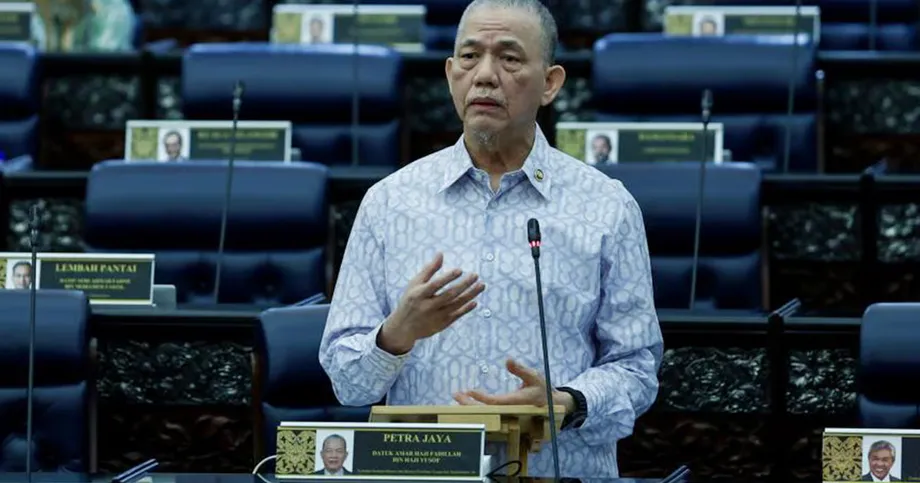
Deputy Prime Minister Fadillah Yusof told the Dewan Rakyat on October 15, 2026, that the government was considering charges more closely tied to consumption. The Energy Commission has been tasked with studying the revised structure, with different treatment for domestic consumers and industries that use large amounts of electricity.
The review comes alongside temporary protection for about eight million domestic consumers, representing 90% of households served in Peninsular Malaysia. From September 1 through December 31, 2026, consumers using up to 800 kilowatt hours (kWh) a month qualify for exemptions from specified fuel adjustments, taxes and retail charges.
Fadillah, who is also energy transition and water transformation minister, was answering Shah Alam MP Azli Yusof about rising household bills and an earlier assurance that most domestic consumers would be shielded from tariff adjustments.
What the tariff review would change
Fadillah described a consumption based approach under which those using more electricity would pay more, particularly data centres and industries with heavy energy requirements. The aim is to allocate supply costs more fairly while protecting domestic users.
Households and large industrial operations place different demands on the electricity system. A data centre runs equipment that stores and processes information, while a household uses electricity for activities such as cooling, cooking and lighting. The review would examine how those different uses should be reflected in charges.
The government has identified 2027 as the target year for the new approach, but has not announced the final rates, consumption bands, detailed supply arrangements or an implementation date. The Energy Commission's study will shape those decisions.
Who qualifies for protection through December
Prime Minister Anwar Ibrahim announced an expansion of household electricity bill protection on September 18, with effect for consumption from September 1 to December 31, 2026. The monthly consumption ceiling rose from 600 kWh to 800 kWh.
The increase gives qualifying households an additional 200 kWh of monthly consumption within the protected range, a rise of one third from the earlier ceiling. Fadillah put the estimated bill associated with the new limit at RM328 or less.
Consumers within that threshold are exempt from the Automatic Fuel Adjustment (AFA) surcharge adjustment, Sales and Service Tax (SST), and retail charges. Electricity consumed still carries a cost, so a household can receive a higher bill when it uses more power even while qualifying for these exemptions.
Fadillah explained the government's purpose during his parliamentary response:
The government's main priority since the onset of the global supply crisis has been to ensure that the increase in costs is not borne entirely by the people.
The projected coverage of 90% compares with the Energy Commission's April 2026 assurance that at least 85% of domestic consumers would remain protected. The current estimate is five percentage points above that earlier level.
Why fuel costs are reaching electricity bills
Gas and coal prices during the second and third quarters of 2026 rose well above the baseline prices used to calculate electricity tariffs, Fadillah said. Those benchmarks were set under the Incentive-Based Regulation framework for Regulatory Period 4, known as RP4, covering 2025 to 2027.
A baseline is the fuel price assumed when charges are planned. When actual fuel purchases become more expensive, the cost of producing electricity rises. The AFA mechanism reflects changes in fuel costs in electricity bills, subject to government protection measures.
Fadillah described how the increase reaches consumers:
The surge in fuel prices has increased electricity generation costs in Peninsular Malaysia, which is reflected in the Automatic Fuel Adjustment (AFA) surcharge rates in consumers' electricity bills.
Middle East tensions and security disruptions in the Strait of Hormuz were central to his explanation. Fadillah said the shipping route carries about 20% of global crude oil and liquefied natural gas trade and serves as a transit route for 40% of Malaysia's fuel supply.
Liquefied natural gas, or LNG, is natural gas cooled into liquid form so it can be transported by ship. Malaysia's exposure to that trade means disruption along an overseas shipping route can affect the cost of fuel bought for domestic electricity generation.
Hot weather puts pressure on both supply and demand
Prolonged hot weather has increased the frequency and duration of air conditioner use, Fadillah told Parliament. Households can therefore consume more electricity at the same time that power producers face higher fuel costs.
Hydropower generation has also fallen during the prolonged heat. Hydropower stations use moving water to produce electricity, so reduced output leaves other power stations to meet more of the country's needs.
Planned outages at plants burning coal have added to the pressure. With some generating capacity unavailable and hydropower producing less electricity, the system has relied more heavily on imported LNG.
Fadillah said fuel procurement costs during the crisis were consequently higher than projected under RP4. For households, the combination matters: longer hours of cooling raise the amount of electricity consumed, while more expensive generation affects the cost of supplying it.
Two different consumption thresholds
Domestic consumers using less than 1,000 kWh a month are eligible for rebates under the Energy Efficiency Incentive, introduced with the tariff structure that took effect on July 1, 2025. The scheme aims to encourage efficient electricity use.
The incentive and the temporary bill protection have different limits. The rebate threshold is below 1,000 kWh monthly, while the exemptions running through December apply to consumption of up to 800 kWh.
A household using 900 kWh a month therefore falls within the stated eligibility range for the efficiency rebate but above the ceiling for the temporary exemptions. A household using 800 kWh falls within both consumption limits.
The figures help explain why protection can cover most households without producing identical outcomes for every bill. Monthly consumption determines which measures apply, and greater appliance use can move a household into a different eligibility range.
Smart meters offer another route to savings
Tenaga Nasional Berhad (TNB) offers a Time of Use programme that gives consumers with smart meters access to cheaper electricity during designated hours. Fadillah pointed to the programme as another way households could manage costs.
On weekdays, peak hours run from 2 p.m. to 10 p.m. The cheaper period runs from 10 p.m. until 2 p.m. the following day. All electricity use on Saturdays and Sundays counts as outside peak hours.
A smart meter records when electricity is consumed as well as how much is used. That allows charges to vary by time, rather than treating every hour in the same way.
Fadillah suggested that consumers could schedule activities requiring substantial electricity, including charging electric vehicles, during the cheaper periods. For a household able to shift that consumption, the programme offers a different way to reduce costs from simply using fewer units of electricity.
Data centres face separate supply requirements
Investment, Trade and Industry Minister Johari Abdul Ghani described a related policy to separate data centre electricity provision from ordinary supply arrangements. He said the purpose was to ensure that data centre operations did not benefit from subsidies intended for the wider domestic economy.
Johari told the Dewan Rakyat that data centres in Malaysia serve customers abroad as well as domestic users. He said their energy requirements should therefore be handled separately from the electricity supply used by households and other industries.
The Energy Commission, the Investment, Trade and Industry Ministry, and the Finance Ministry would oversee the arrangements centrally. Investors applying for approval would be expected to negotiate and accept the separate supply condition.
Johari also said that where data centre electricity is generated using gas, the market price of gas should determine the supply cost. His remarks connect the investment approval process with the wider tariff debate: the government wants major new demand to come with arrangements for paying its energy costs.
Using an example, Johari cited TNB capacity of 28,000 megawatts (MW) and industrial demand varying between 22,000 MW and 26,000 MW. He said the remaining capacity served as a reserve for industry, households and other domestic economic activity.
A megawatt measures power at a particular moment, while kWh measures energy consumed over time. In Johari's example, subtracting the stated demand from capacity leaves between 2,000 MW and 6,000 MW. He argued that this reserve should remain available for existing economic needs, with data centre requirements provided for separately.
What Malaysia wants from RM385.7 billion in investment
Approved data centre investments since 2021 total RM385.7 billion. Ampang MP Rodziah Ismail asked how the government measures the value these projects add after accounting for electricity, water, land, infrastructure, incentives, employment, local content and other possible uses of national resources.
The question links the value of investment with its demands on Malaysia's resources. A large investment commitment brings capital, but the benefits available to Malaysians also depend on jobs, skills, technology access and the costs of supplying the project.
Johari named Amazon Web Services, Microsoft, Google, Oracle, ByteDance and Alibaba in discussing the technology sector. He said their presence should give Malaysians access to technologies including cloud computing, artificial intelligence, data storage and cybersecurity.
Local university collaboration was another priority. Johari called for companies to work with Malaysian universities and help develop technology that Malaysians could eventually build themselves.
His position brings two government objectives together: securing technology investment and ensuring that electricity provision, public support and local benefits are considered when projects are approved.
Dates that shape the next decisions
The tariff debate involves an existing regulatory framework, temporary household support and a proposed change for next year. The main dates are:
- July 1, 2025: The tariff structure containing the Energy Efficiency Incentive took effect.
- April 2026: The Energy Commission gave an assurance that at least 85% of domestic consumers would be protected from tariff adjustments.
- September 1, 2026: Consumption became eligible for the expanded protection covering up to 800 kWh monthly.
- September 18, 2026: The government announced the expanded protection.
- October 15, 2026: Fadillah answered parliamentary questions about rising bills and the tariff review.
- December 31, 2026: The current temporary protection period ends.
- 2027: The government is considering a revised approach to electricity charges.
The Dewan Rakyat sitting runs for 37 days until December 8, placing parliamentary scrutiny before the household protection period expires. For consumers, the immediate measure is the 800 kWh ceiling through December; for major electricity users, the longer term issue is how the reviewed tariffs and separate data centre supply requirements will allocate costs.
Key Points
- Malaysia is reviewing electricity tariffs for 2027, with different treatment for households and industries using large amounts of power.
- About eight million domestic consumers in Peninsular Malaysia are covered by temporary protection through December 31, 2026.
- Households using up to 800 kWh monthly qualify for exemptions from specified fuel adjustments, SST and retail charges.
- Higher fuel prices, prolonged heat, lower hydropower output and planned coal plant outages have increased supply costs.
- Consumers with smart meters can access cheaper Time of Use periods overnight, before 2 p.m. on weekdays and throughout weekends.
- The government wants separate electricity provision for data centres, alongside greater technology access and university collaboration for Malaysians.