Takaichi opens the door to a major naval debate
Japan is considering whether to put a study of nuclear propulsion into three security documents due for revision by the end of 2026, as Prime Minister Sanae Takaichi calls for stronger surveillance across the Pacific. The proposal would begin examining a technology that could cost about 1 trillion yen per submarine and take more than a decade to introduce.
Contents
- Takaichi opens the door to a major naval debate
- How the discussion moved toward a formal study
- Patrol vessel or platform for missile strikes?
- What nuclear propulsion would change underwater
- Missile launch systems are already under study
- The price could reach trillions of yen
- Finding enough sailors and reactor specialists
- Japan's nuclear law presents a separate decision
- Partner countries offer examples, not a quick delivery route
- Other power sources remain part of the choice
- Key Points
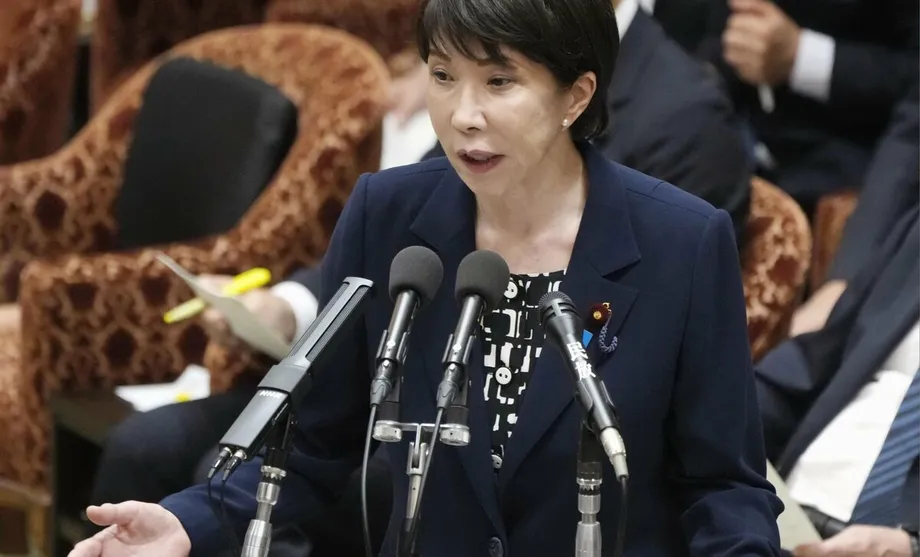
Takaichi told the House of Representatives on Wednesday that increased military activity by neighboring countries required Japan to examine its options. Addressing the possibility of nuclear submarines for the Self-Defense Forces, she said:
We will seriously consider (the possibility) in a concrete and realistic manner.
The prime minister described strengthening Japan's defenses as an urgent task, pointing to limited intelligence gathering and surveillance capabilities in the Pacific. Earlier in the month, she had told parliament that nothing had been decided about how future Japanese submarines should be powered.
The leading proposal inside the government is to authorize research rather than commit to purchasing nuclear submarines. One possible formulation would call for studying next generation power sources, explicitly including nuclear power, for submarines fitted with vertical launch systems carrying missiles with long ranges.
Japan therefore faces several decisions at once: what its future submarines should do, how much power those missions require, whether nuclear propulsion fits existing law, and whether enough money and trained personnel can be found. No acquisition decision or delivery timetable has been announced. Consultations with the governing parties could begin as early as November, ahead of the planned revisions by the end of the year.
How the discussion moved toward a formal study
The debate has developed from an expert recommendation about submarine performance into a political discussion about nuclear propulsion. The wording has mattered throughout: recommending a new source of power leaves more choices open than recommending a nuclear reactor.
At the Defense Ministry's September 2025 briefing, then Defense Minister Gen Nakatani confirmed that an expert panel had submitted its report on September 19. Asked about next generation propulsion for submarines with vertical launch systems, he said nothing had been decided and no concrete examination was underway.
Nakatani also said at that time that the ministry had no plan to bring forward a revision of the Defense Buildup Program or shorten its planning period. The current discussion goes further by considering an explicit commitment to research in the revised security documents.
- September 19, 2025: A Defense Ministry expert panel submitted recommendations that included future submarine capabilities and propulsion options.
- September 26, 2025: Nakatani said no decision or concrete study of next generation propulsion was underway.
- June 2026: The Liberal Democratic Party proposed examining next generation power sources, while the Japan Innovation Party advocated early introduction of nuclear submarines.
- July 6, 2026: Japan's Acquisition, Technology & Logistics Agency awarded a contract for research into the design of a future submarine with vertical launch systems.
- October 2026: Takaichi promised serious consideration, while the government weighed wording for security documents due for revision by the end of the year.
Patrol vessel or platform for missile strikes?
Japan's government has yet to agree on the main purpose of a nuclear submarine fleet. Two missions dominate the discussion: finding and tracking other vessels across the Pacific, and carrying missiles that could strike distant targets.
For patrol missions, the central concern is China's expanding naval activity in the western Pacific. A Self-Defense Forces official has pointed to the difficulty conventional submarines face in conducting searches as far away as the waters around Guam. Traveling there consumes battery energy that a submarine also needs for its mission and return journey.
For strike missions, supporters want submarines carrying missiles with long ranges as part of Japan's counterstrike capability. This means the ability to attack an adversary's military facilities in response to an attack, under Japan's defense policy. A submarine able to remain hidden, launch missiles and move away quickly would give commanders another option alongside weapons carried by surface ships.
Masashi Murano, a Japan defense specialist at the Hudson Institute, has described uncertainty within the defense establishment over whether supporters primarily want better submarine operations or a stronger retaliatory strike capability. Choosing the mission matters because it determines the required weapons, hull size, propulsion and crew.
What nuclear propulsion would change underwater
Japan's current Taigei-class submarines use diesel engines and lithium-ion batteries. While submerged, they draw on stored electrical energy. To recharge their batteries using diesel engines, they must approach the surface and raise a snorkel that takes in air and releases exhaust, creating another opportunity for detection.
A nuclear submarine uses a reactor to supply power without drawing air from above the water. It can remain submerged for months and combine long journeys with sustained speed. Food, crew endurance, maintenance and mission requirements still shape how long a deployment can last.
Comparisons used in the debate put nuclear submarine speeds above 50 kilometers per hour, against about 35 kilometers per hour for conventional vessels. Actual performance varies by design and operating conditions. The operational attraction is the ability to maintain speed over distance without rapidly exhausting batteries.
Adm. Akira Saito, chief of staff of the Maritime Self-Defense Force, has described the potential benefit as a:
dramatic improvement in capabilities.
Defense Minister Shinjiro Koizumi has also argued that longer submerged operations and greater speed could help protect crews while they carry out missions. He has acknowledged drawbacks, including expense, specialized expertise, larger hulls and potentially greater underwater noise. A vessel's ability to avoid detection depends on its design and how it operates, as well as its source of power.
Missile launch systems are already under study
Japan is already paying for work on a future submarine with a vertical launch system, or VLS. Such a system holds missiles in dedicated upright tubes inside the hull, giving a submarine more space for weapons than relying only on torpedo tubes.
On July 6, 2026, the Acquisition, Technology & Logistics Agency awarded Mitsubishi Heavy Industries a contract worth 3.9 billion yen for research into the integrated design of a future VLS submarine. The work is scheduled to continue through fiscal 2029.
Kawasaki Heavy Industries presented a submarine concept with a VLS in 2023, placing the launch system between the sail, the structure rising above the hull, and the bow. Weapons discussed for future submarines include a variant of Japan's Type 12 missile and American Tomahawk cruise missiles.
Jeffrey Hornung, a Japan defense specialist at the RAND Corporation, explained the attraction of dedicated launch tubes:
A VLS would enable Japan's next-gen subs to fire both more, larger (and longer-range) weapons than they can now, turning them into more lethal strike platforms.
Larger weapons compartments can require a larger hull, while advanced sonar and underwater drones can add to electricity demand. Designers must balance those needs against speed, endurance and quiet operation. The funded design research gives Japan a way to examine those tradeoffs while the propulsion debate continues.
The price could reach trillions of yen
A nuclear submarine is estimated to cost about 1 trillion yen to construct. Maintaining continuous operational readiness could require at least three vessels, allowing for maintenance and crew training. At that indicative price, three boats would imply roughly 3 trillion yen in construction spending before operating costs and supporting facilities.
Japan's latest conventional submarine offers a useful comparison. Mitsubishi Heavy Industries launched Shogei, the seventh Taigei-class boat, at its Kobe shipyard on October 8. Its construction cost is about 80.5 billion yen, with delivery scheduled for March 2028.
The estimated 1 trillion yen price for a nuclear submarine is about 12.4 times Shogei's construction cost. The vessels would have different capabilities, but the figures show the scale of the financial choice. Nuclear propulsion would also require arrangements for reactor safety, maintenance, specialist training and operation over many years.
Shogei measures 84 meters in length and 9.1 meters across, with a standard displacement of about 3,000 tonnes. It uses Kawasaki 12V 25/31 diesel engines and the lithium-ion battery technology adopted by the Taigei class. Its launch shows that conventional fleet construction is continuing while Japan considers a possible change in propulsion.
Finding enough sailors and reactor specialists
The Self-Defense Forces already face personnel shortages, and submarine assignments are among the positions that are difficult to fill. Nuclear propulsion would add demand for people with specialized knowledge of reactors, alongside the sailors needed to navigate, maintain and fight the vessel.
A Virginia-class nuclear submarine uses a crew of about 140, compared with roughly 70 aboard a Japanese Taigei-class submarine. That is twice as many people per boat in this comparison. A future Japanese nuclear design could have a different crew requirement, but staffing would remain a major part of the planning.
Japan would have to recruit specialists, establish training and retain experienced personnel throughout the vessels' service. Crews and shore organizations would need the skills to operate and maintain naval reactors safely.
Murano has described nuclear submarines as a natural operational option while warning that they add to the broader staffing pressures facing the Self-Defense Forces. More endurance at sea would come with a larger human commitment on shore and aboard the boats.
Japan's nuclear law presents a separate decision
The Atomic Energy Basic Law limits Japan's use of nuclear energy to peaceful purposes. Past governments have maintained that this prevents nuclear power from being used to propel Self-Defense Forces submarines.
Chief Cabinet Secretary Yoshimasa Hayashi previously explained the government's legal position:
If we follow the current interpretation (of the law), it would be difficult for Japan to possess nuclear submarines.
Nuclear propulsion concerns the energy that moves a submarine. Nuclear weapons concern its armament. Japan's three nonnuclear principles prohibit possessing, producing or allowing the introduction of nuclear weapons. A submarine powered by a reactor can carry conventional weapons, including torpedoes and missiles with conventional warheads.
The propulsion proposal would therefore require Japan to address the peaceful use restriction in its nuclear law, alongside its existing weapons policy. Takaichi has previously expressed a favorable view of nuclear submarines while acknowledging that legal and policy issues require resolution.
The governing parties also approach the issue differently. The Liberal Democratic Party's June recommendations referred to next generation power sources without naming nuclear propulsion. Its coalition partner, the Japan Innovation Party, urged early introduction of nuclear submarines. Cautious voices within the LDP question both the cost and the military need. The final wording will depend on consultations within the governing bloc and discussions involving experts.
Partner countries offer examples, not a quick delivery route
Takaichi said Japan would consider developments in Australia and South Korea. Australia has committed to acquiring nuclear submarines, while South Korea has pursued its own plans following American approval for construction.
Japan could examine domestic development or acquisition from abroad. Some officials have suggested obtaining vessels from the United States, following Australia's approach. Such a choice would also increase dependence on American equipment, industrial capacity and support.
Murano has estimated that developing a Japanese nuclear submarine could take around a decade. Other estimates put introduction at more than a decade, with domestic construction potentially taking longer. Leasing American vessels would face constraints from an already strained shipbuilding industry and existing commitments to Australia.
Murano's estimate places possible leased deliveries in the middle to latter part of the 2030s. Nuclear submarines would therefore be a project for a future fleet, while Japan must address present surveillance requirements with the vessels and other equipment it can deploy sooner.
Other power sources remain part of the choice
The expert panel's recommendation used broad language about next generation power rather than selecting a reactor. Advanced batteries and fuel cells remain among the technologies discussed for future submarines.
Japan already has experience moving beyond traditional submarine batteries through the Taigei class. Solid-state batteries are another possible development path. South Korea has also fielded submarines with vertical missile launch systems using diesel engines, lithium-ion batteries and air independent propulsion, which provides underwater power without repeatedly taking in outside air.
Each approach addresses the same practical problem: supplying enough energy for travel, sensors and weapons while keeping the submarine difficult to find. A larger battery store, a fuel cell system and a reactor bring different demands for space, maintenance, personnel and funding.
Japan's immediate choice is the scope of the study to be written into its security documents. The design research running through fiscal 2029, the continuing construction of conventional submarines and the debate over patrol and strike missions will all shape that examination. A decision to study nuclear propulsion would begin a longer process of choosing a mission, resolving legal questions and funding a workable fleet.
Key Points
- Takaichi says Japan will seriously consider nuclear submarines, citing limited surveillance capabilities in the Pacific.
- The leading proposal is to study nuclear propulsion in security documents due for revision by the end of 2026.
- Officials have yet to agree whether patrol operations or missile strikes should be the main mission.
- Construction is estimated at about 1 trillion yen per nuclear submarine, with at least three potentially needed for continuous readiness.
- Japan must address nuclear law, personnel shortages, reactor expertise and maintenance requirements.
- A 3.9 billion yen study of a future submarine with vertical launch systems is scheduled to run through fiscal 2029.
- Introducing nuclear submarines could take more than a decade, while conventional fleet construction continues.