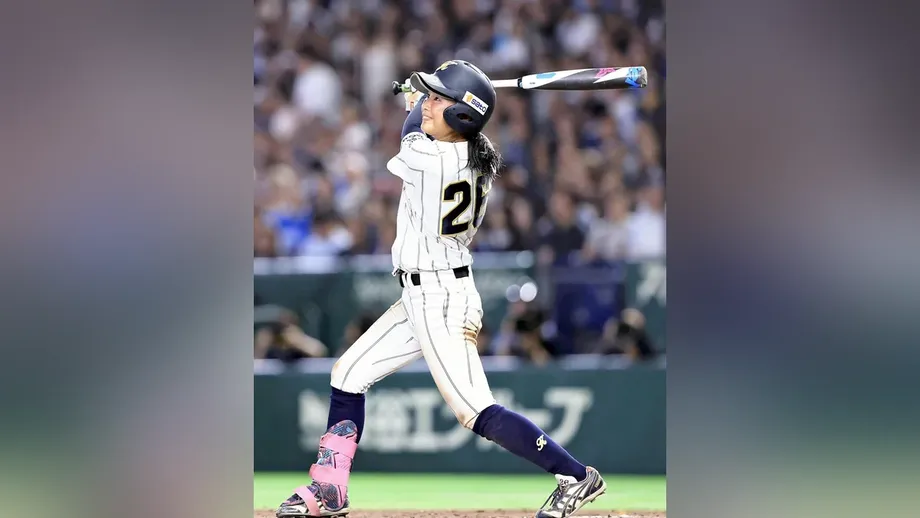
Three of the five hits belonged to Fukuda
Rin Fukuda accounted for three of the five hits Ichiro Suzuki allowed in a 7-0 shutout at Tokyo Dome on September 13. The third year student at Kobe Koryo High School in Hyogo Prefecture started at shortstop and led off for Japan's high school girls select team, facing one of the country's most celebrated baseball players.
Contents
Ichiro struck out 17 batters, threw 127 pitches and faced 33 hitters for his Kobe Chiben team. Fukuda nevertheless singled to center, right and left field, showing that she could send the ball to different parts of the field against a pitcher whose fastest delivery reached 136 kilometers per hour.
Her three hits represented 60 percent of the select team's total of five. The rest of the lineup managed two hits combined. For a player hoping to bring more attention to women's baseball, that performance provided a memorable introduction to a wider audience.
Ichiro, the starting pitcher and leader of the opposing team, praised the presence Fukuda brought to the batter's box. Speaking after the game, he described how some hitters change the atmosphere when they step up to face a pitcher:
There are players who change the atmosphere when they step into the batter's box. She is exactly that kind of player. For a pitcher, it is a really uncomfortable feeling.
Fukuda had set herself a simpler goal before her first encounter with the baseball great: getting a hit. After finishing with three, she expressed her surprise:
Getting a hit off Ichiro was one of my goals. I never imagined I would get three.
The achievement came between two other defining moments in her final school season: a national high school championship at Koshien in the summer and an October defeat that ended her playing career at Kobe Koryo.
How she found three ways through
Fukuda's first hit came in the opening inning, when she sent an off speed pitch on the outside part of the plate into center field. An outside pitch passes farther from the batter's body, making the ability to reach it cleanly and control the direction of the hit especially useful.
The left handed batter responded with a smile and a fist pump toward her bench. On the first pitch to the next hitter, she stole second base, advancing from first while Ichiro delivered the ball to home plate. The sequence showed both the contact hitting and speed that had earned her a place at the top of the batting order.
In her second plate appearance, in the third inning, Fukuda singled to right. In her fourth appearance, in the eighth, she singled to left. Hitting successfully to all three areas of the outfield gave her performance a range that stood out alongside the total of three hits.
The leadoff position carries a practical responsibility: reach base and give the hitters who follow a chance to bring a runner home. Fukuda fulfilled the first part repeatedly. Ichiro and his teammates kept the select team from converting its opportunities into runs, so her individual success took place within a difficult team result.
A demanding exhibition at Tokyo Dome
The September game, called SATO presents High School Girls Select versus Ichiro Select KOBE CHIBEN, brought selected high school players together against a team led by Ichiro. His involvement is part of his support for the development of women's baseball.
Ichiro completed the shutout himself. A shutout means that the opposing team scores no runs; completing it means the same pitcher stays on the mound through the end. His 17 strikeouts accounted for more than half of the 33 batters he faced.
The combination of 127 pitches, five hits allowed and a fastest pitch of 136 kilometers per hour explains the demanding setting for Fukuda's success. She was finding openings against a pitcher who repeatedly prevented other hitters from putting the ball into play.
Ichiro also offered a shorter assessment of Fukuda after the encounter:
You got me. It feels like a star has been born.
Fukuda later received congratulations through social media from people she did not know. People also approached her during the All Japan championship in October. The attention followed her beyond the exhibition and into her final tournament with her school.
The daily work behind the performance
Fukuda grew up in Aioi, Hyogo Prefecture, and began playing baseball in her second year of elementary school. Her father, Shinji, had played for Kobe Koryo, while her brother, Hayate, who is one school year older, went on to Asia University. Both influenced her decision to take up the sport.
Kobe Koryo became the place where she developed into a player valued for batting, running and defense. She made the squad for the summer competition in her first year of high school and secured a regular position that autumn.
Her improvement involved a daily exchange with her father. After morning practice, Fukuda sent him messages through LINE describing the batting problems she had noticed. She then worked on those specific problems during practice that day.
At night, she called him for advice. Visits home also included individual training. That routine connected observation, practice and feedback: identify something that was going wrong, work on it and discuss how the session had gone.
The three hits against Ichiro were the most visible outcome of her final school season, but the work described by Fukuda extended across her years at Kobe Koryo. Her place in the lineup had been established long before she stepped into the batter's box at Tokyo Dome.
A championship summer, then one last tournament
Kobe Koryo won the National High School Girls Hardball Baseball Championship in the summer, with the final played at Koshien. Hardball baseball uses the standard hard baseball, distinguishing it from softball and forms of baseball played with a softer ball.
The summer title gave Fukuda and her classmates a major achievement before their regular high school season ended. Among the three major national high school tournaments, it was the championship this graduating group secured.
The All Japan Women's Hardball Baseball Championship offered the third year players a limited return to competition after retiring following the August championship. Unlike a tournament restricted to high schools, it brings together leading teams from different levels, including universities, clubs and companies.
Fukuda's closing months at school followed this sequence:
- August: Kobe Koryo won the national high school championship, with the final at Koshien.
- September 13: Fukuda collected three hits against Ichiro at Tokyo Dome as Kobe Chiben won 7-0.
- October 11: She hit a triple in Kobe Koryo's 12-5 defeat by Hatsukaichi Sunblaze in the second round of the All Japan championship.
Kobe Koryo had reached the final of the All Japan competition three times in the preceding four years, winning the tournament two years before this edition. That record gave the school a recent history of competing successfully against teams beyond the high school level.
A triple in her final high school game
Fukuda opened Kobe Koryo's October 11 game against Hiroshima's Hatsukaichi Sunblaze with a triple over the right fielder. A triple allows the batter to reach third base on the hit, putting her close to scoring. Her opening hit helped create the team's first run.
The game took place on the second day of the 22nd All Japan Women's Hardball Baseball Championship, staged at venues including Botchan Stadium. Kobe Koryo brought 15 third year players, seven of whom appeared in the starting lineup.
Fukuda, recalling her slide into third base, explained the emotion behind the hit:
It was my last tournament, so I hit with determination.
Starting pitcher Yuna Yamato, the team's former captain, initially held Sunblaze scoreless. Her outing unraveled in the third inning, and she was charged with five earned runs. Earned runs are runs attributed to the pitcher under scoring rules, rather than runs resulting from fielding errors.
Sunblaze came from behind to win 12-5. Kobe Koryo coach Koji Ishihara said the team had approached the competition with less determination after winning the summer championship. He contrasted that mood with the previous year, when disappointment at missing the summer title had preceded a runner up finish at the All Japan event.
Ishihara's assessment of the defeat was direct:
We were beaten on ability.
The 15 graduating players shed tears but also smiled for a commemorative photograph. Their last tournament ended early, closing a season that had included both a national title and a highly visible meeting with Ichiro.
Fukuda wants people to keep watching
Fukuda said her high school experience had included disappointment as well as joy. After the loss to Sunblaze, she described what it meant to play once more alongside younger teammates:
I experienced both frustration and happiness in high school baseball. It is over now, but I am glad I could enjoy playing with the younger players.
Yamato also looked back warmly on the championship summer, saying she was glad she had joined Kobe Koryo. Both she and Fukuda intend to continue playing baseball. Their next teams and the timing of those moves were not specified.
Fukuda's ambition extends beyond collecting hits. She wants her performances to help women's baseball reach more people and to make spectators feel invested in the players they watch.
Describing the kind of player she hopes to become, Fukuda said:
I want to become a player who can show people, 'Baseball is this much fun,' and a player people want to support.
Her September performance gave that ambition a concrete starting point. Three hits against Ichiro brought unfamiliar people into contact with her story. Her October triple then provided a final contribution to the school where she had built her game through daily practice.
Key Points
- Rin Fukuda collected three of the five hits Ichiro allowed at Tokyo Dome on September 13.
- Ichiro threw 127 pitches and struck out 17 batters in Kobe Chiben's 7-0 victory.
- Fukuda singled to center, right and left field and stole second base in the opening inning.
- Kobe Koryo won the summer national high school championship, with the final at Koshien.
- Fukuda hit an opening triple in her final school game, a 12-5 loss to Hatsukaichi Sunblaze on October 11.
- She plans to continue playing and hopes her performances will attract more support for women's baseball.