A 96 minute win ends the wait for another trophy
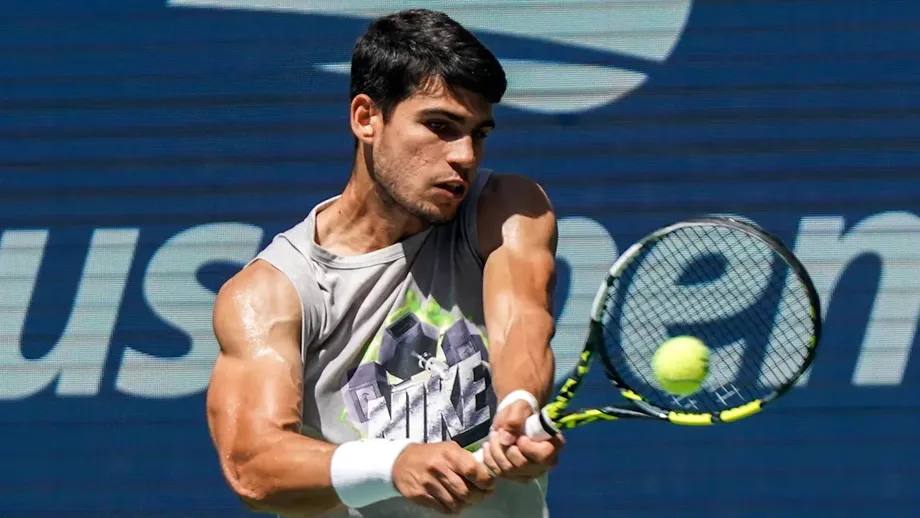
Carlos Alcaraz won his first title since February on Tuesday, October 6, 2026, defeating Jiri Lehecka 7-6(4), 6-4 at Ariake Coliseum in Tokyo. The 23 year old Spaniard became the first man since Pete Sampras in 1994 to successfully defend the Japan Open title, completing the victory in 96 minutes after recovering from an early break of serve.
Contents
- A 96 minute win ends the wait for another trophy
- Five points changed the opening set
- A demanding route against opponents in form
- The injury made success feel uncertain
- A rare title defence and a longer winning streak
- Ranking gains and a larger winner's cheque
- Tokyo also marked Nishikori's farewell
- Injuries shaped the wider Asian swing
- How the comeback unfolded
- Key Points
The result carried particular weight after a right wrist injury kept Alcaraz away from competition for about four and a half months. Tokyo was his second individual tour tournament since returning at the US Open in late August, although he also played in the Laver Cup team event in London before travelling to Japan.
The world No. 3 collected his third title of 2026 and the 27th of his career. His most decisive work came under pressure: trailing 4-2 in the opening set tiebreak, he won five consecutive points, then secured the only break of the second set in its seventh game.
The ATP's Tokyo final report recorded another measure of his control. Alcaraz won 33 of 39 points behind his first serve, or 85%, leaving Lehecka little room to build on his strong start.
Alcaraz, the defending champion and top seed, said the victory mattered because it followed months of uncertainty rather than a smooth run of form.
I'm really happy to be able to lift a trophy again.
He described the final as his best, or at least most consistent, match of a week in which finding answers at critical moments proved more valuable than playing at his highest level throughout.
Five points changed the opening set
Lehecka, the Czech world No. 19, immediately put Alcaraz under pressure. He created three break points in the opening game and converted the third, later establishing a 3-1 lead. That opening showed why a final against an unseeded opponent was no simple assignment for the defending champion.
Alcaraz recovered the break in the sixth game, finishing it with a clean backhand winner to level at 3-3. Neither player could establish a lasting advantage before the tiebreak, where Lehecka again moved ahead.
From 2-4, Alcaraz produced the decisive sequence of the match. He dealt with a difficult ball at his feet after a net cord, struck a forceful forehand return and used a forehand drop shot to disrupt Lehecka. Two missed backhands from the Czech helped complete the five point run that gave Alcaraz the set.
The second set was settled by a narrower opening. Alcaraz broke in the seventh game to lead 4-3, then protected that advantage. Serving at 5-4, he held without losing a point to finish the match.
He converted two of his four break opportunities, a 50% success rate. His first serve numbers were equally telling: Lehecka won only six of the 39 points played behind Alcaraz's first delivery. Together, those figures explain how Alcaraz could lose serve immediately yet concede no further breaks.
A demanding route against opponents in form
The final followed a tournament in which Alcaraz repeatedly had to recover his rhythm. He needed three sets against Alex Michelsen and again against fellow Spaniard Jaume Munar, rather than moving through the draw without resistance.
Against qualifier Munar in the semifinal, Alcaraz lost 16 consecutive points during a difficult stretch and dropped the opening set. He recovered to win 5-7, 6-3, 6-1, converting six of 10 break opportunities and winning 77% of his first serve points, compared with Munar's 61%.
His quarterfinal against Denis Shapovalov ended differently. Alcaraz took the first set 7-6(3), but the Canadian retired through injury with Alcaraz leading 2-1 in the second. Earlier, Alcaraz had beaten Matteo Arnaldi 7-6(6), 6-1 in the second round.
Lehecka arrived in the final with six consecutive match wins. Before winning four matches in Tokyo, he had won both of his singles matches as the Czech Republic defeated the United States to qualify for the Davis Cup Final 8.
His Tokyo run included a recovery from a set down against Ugo Humbert, a 6-1, 6-1 quarterfinal victory over Adolfo Daniel Vallejo and a 6-4, 6-2 semifinal win against Valentin Vacherot. Against Vacherot, Lehecka served 10 aces and did not face a break point.
Alcaraz led their career meetings 3-1 before the final, but Lehecka had won their 2025 Doha quarterfinal. The Spaniard therefore faced an opponent with both recent momentum and direct experience of beating him.
The injury made success feel uncertain
Alcaraz did not compete between Barcelona in April and the US Open in late August, missing the French Open and Wimbledon. Since returning, he has worn a compression sleeve on his right arm.
His comeback began with a run to the US Open quarterfinals, where Ben Shelton defeated him in five sets in a match that finished at 3:33 a.m. Tokyo then delivered the first trophy of the return, rather than merely another indication that he could compete again.
In the Olympics tournament account, Alcaraz explained that he had not assumed a title would arrive before the season ended.
I don't want to take anything for granted to be honest,” he said. “I just really wanted to win everything. I didn't know if I was going to win the tournament this soon or if I was going to win a tournament this season.
The doubts went beyond results. Speaking after the final, Alcaraz described wondering whether his wrist would allow him to return to his previous style of play.
Obviously a lot of negative thoughts come to your mind,” Alcaraz said. “If you are going to come back healthy, if you are going to come back the same as I was before. If I will be able to hit the ball normally without pain at all. A lot of thoughts came to my mind, but I tried to put those thoughts away all the time.
His account makes the distinction between winning and feeling secure enough to strike freely. He said he trusted his team and himself to return healthy and commit fully to each shot. The title was evidence that approach could produce a result, although it does not establish how his wrist will respond to every remaining tournament.
A rare title defence and a longer winning streak
Alcaraz became only the third man to successfully defend the Tokyo title. Stefan Edberg won three consecutive editions from 1989 through 1991, while Sampras won in 1993 and 1994. The 32 year gap since Sampras gives Alcaraz's repeat victory a place in the tournament's history beyond its value to his comeback.
His first Tokyo title came in 2025, when he defeated Taylor Fritz 6-4, 6-4 in the final. That debut also involved physical difficulty, with Alcaraz injuring his ankle in his opening match before going on to win the tournament.
The latest victory extended his winning streak at ATP 500 events to 21 matches. His last defeat at that level was against Holger Rune in the 2025 Barcelona final. ATP 500 identifies a tournament category in which the singles champion receives 500 ranking points.
Tokyo joined the Australian Open and Doha on his list of 2026 titles. His Australian Open victory was his seventh Grand Slam championship and completed the career Grand Slam, meaning he had won each of the four major tournaments at least once.
That achievement followed a 2025 season in which he beat Jannik Sinner in the US Open final and became the youngest man to win multiple major titles on all three surfaces: hard courts, clay and grass. Alcaraz and Sinner contested three major finals that year.
Ranking gains and a larger winner's cheque
The ATP confirmed that Alcaraz moved ahead of Shelton into third place in the Live Race to Turin. He had already qualified for the ATP Finals. The Race measures points earned during the current season, while the regular world rankings generally reflect results across a rolling 52 week period.
Reported live ranking totals after Tokyo put Alcaraz third with 5,560 points, behind Sinner on 11,000 and Alexander Zverev on 9,720. His 500 points from the 2025 Tokyo title had reportedly dropped from the calculation the previous week, allowing the new victory to add 500 to his live total. Defending a title therefore does not necessarily mean an immediate net gain over the same stage of the previous season.
Lehecka reportedly earned 305 points to reach 2,425 and move to No. 15 in the live rankings. There is a discrepancy in the description of that rise: he entered the final as world No. 19, but the ranking account describes an eight place jump. No. 19 to No. 15 is four places, and the different starting positions are not reconciled.
The reported winner's prize was $437,955, compared with $416,365 in 2025. That is an increase of $21,590, or approximately 5.2%. Lehecka received $235,685 as runner up.
Alcaraz's reported prize money before Tokyo stood at $5,145,354 for 2026 and $65,595,871 across his career. Adding the winner's payment brings those figures to $5,583,309 and $66,033,826 respectively. These are tournament prize money figures, not a measure of sponsorship income or total personal earnings.
Tokyo also marked Nishikori's farewell
The tournament set an attendance record for the second consecutive year, according to the Olympics account, although no attendance total was given. Alcaraz's repeat victory shared the week with Kei Nishikori's final Japan Open appearance.
Nishikori, who was retiring at the end of the season, lost 6-4, 6-4 to world No. 8 Frances Tiafoe in the first round on October 1. Japanese singles players Rei Sakamoto and Sho Shimabukuro also exited in the opening round. Sakamoto took the first set against Arnaldi before losing 2-6, 6-4, 6-4; Shimabukuro lost 7-5, 6-1 to Shapovalov.
There was a longer run in doubles for Japan's Kaito Uesugi and Australia's Rinky Hijikata. They defeated the defending champions, Hugo Nys and Edouard Roger Vasselin, in the quarterfinals before losing a deciding match tiebreak 12-10 to Theo Arribage and Albano Olivetti in the semifinals.
Austin Krajicek and Nikola Mektic won the doubles title, defeating Arribage and Olivetti 7-6(5), 5-7, 10-6. Their victory completed a tournament whose main singles draw ran from September 30 to October 6 at Tokyo's Ariake venues.
Injuries shaped the wider Asian swing
Alcaraz's return to winning came on a day when injury was also central to developments elsewhere on the tour. World No. 1 Sinner announced that he would miss the rest of the 2026 season because of knee inflammation.
Sinner's team said treatment was being undertaken on medical advice to allow recovery before preparations for 2027. His absence removed a major rival from the remaining schedule, but it did not by itself settle the final ranking order.
In Beijing, Novak Djokovic won his seventh China Open title after Alex de Minaur retired. Djokovic had won the first set in a tiebreak; de Minaur took the opening game of the second set before ending the match after receiving treatment and returning with strapping on his left thigh.
The victory gave Djokovic, 39, his 102nd tour title and extended his run of winning at least one title in a season to 21 years. His success and Alcaraz's comeback contrasted with the interruptions affecting Sinner and de Minaur, making fitness a central part of the closing weeks of the season.
How the comeback unfolded
Reports differ over whether Tokyo was Alcaraz's second or third tournament since returning. Alcaraz and the ATP described it as his second individual tour tournament. Accounts calling it his third also noted his participation in the Laver Cup team competition between New York and Tokyo.
The sequence of events places the Japan Open result in context:
- January 2026: Alcaraz won the Australian Open, his seventh major title, completing the career Grand Slam.
- February: He won in Doha, his last title before Tokyo.
- April to late August: A right wrist injury interrupted his season after Barcelona.
- Late August and September: He returned at the US Open and reached the quarterfinals, losing to Shelton.
- The week before Tokyo: He played in the Laver Cup in London.
- October 6: He defeated Lehecka to retain the Japan Open title.
At the time of the Tokyo final, Alcaraz was scheduled to begin his Shanghai Masters campaign on Wednesday, with Paris, the ATP Finals and Davis Cup also on his calendar. He subsequently lost in Shanghai. The Tokyo victory therefore marked a successful step in the return, not an uninterrupted run of wins through the rest of the Asian swing.
The tight turnaround also differed from 2025, when he withdrew from Shanghai after winning in Tokyo, citing physical issues and criticising the packed schedule. No firm dates for his Paris, ATP Finals or Davis Cup matches were specified in the accounts of this victory.
Key Points
- Alcaraz beat Lehecka 7-6(4), 6-4 in 96 minutes on October 6, 2026.
- He became the first man since Sampras in 1994 to defend the Tokyo title.
- The victory was his third title of 2026, his 27th career title and his first since returning from a wrist injury.
- He won five consecutive points from 2-4 in the first set tiebreak and 33 of 39 points behind his first serve.
- His winning streak at ATP 500 events reached 21 matches.
- Already qualified for the ATP Finals, he moved into third place in the season Race to Turin.