A fleet deal tied to Vietnam's manufacturing ambitions
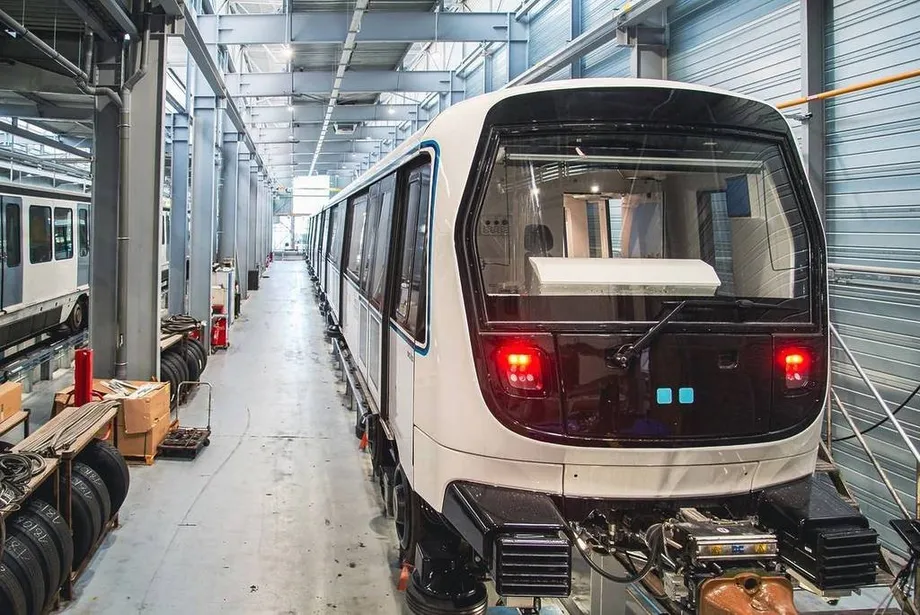
Vingroup and France's Alstom signed an agreement in Hanoi on October 6, 2026, combining plans for 200 metro trains with a technology licence to assemble 117 of them in Vietnam. The proposed fleet would consist of five car Metropolis trains for the capital's expanding urban railway network, with the initial production handled in France.
Contents
- A fleet deal tied to Vietnam's manufacturing ambitions
- What will the technology licence bring?
- Which Hanoi routes would receive the trains?
- How would the driverless trains work?
- Alstom already supplies Hanoi's railway
- Two European partners, two kinds of railway
- A wider push to build trains in Vietnam
- South Korea offers a useful production comparison
- What must happen before passengers can board?
- Key Points
Alstom's agreement announcement describes a supply arrangement for up to 83 trains, designed and manufactured at its Valenciennes Petite-Forêt site, alongside a licence supporting assembly of 117 additional trains using components delivered by Alstom. Vingroup's contract announcement describes the programme as a total of 200 trains. Alstom says it expects to record the order at financial close, the stage when the financing arrangements are completed.
Vinhomes, Vingroup's property subsidiary, is the group's partner in the agreement and serves as general contractor for its Hanoi metro projects. The signing took place at Vingroup headquarters in the presence of Alstom chief executive Martin Sion and French Ambassador to Vietnam Didier Le Bret.
Hanoi's ambition reaches far beyond this fleet. According to both companies, the Capital Master Plan envisages 979 kilometres of urban railway across 18 lines by 2045. Two lines are currently in service, making the proposed expansion a large undertaking in construction, operations and industrial training.
The arrangement also changes where much of the production work would happen. Of the planned 200 trains, 117, or 58.5%, would be assembled in Vietnam, while 83, or 41.5%, would come from France. At five cars per train, the full programme would provide 1,000 passenger cars.
What will the technology licence bring?
Alstom will design and manufacture the French portion of the fleet at Valenciennes Petite-Forêt, its centre of expertise for metro trains. For the Vietnamese portion, Vingroup says the French company will provide technology, engineering expertise, equipment support and important components to enable local production and assembly.
A technology licence gives a company permission to use another company's technology under agreed conditions. Here, the announced work centres on building and assembling Alstom's train design in Vietnam, with continued supplies from the French manufacturer. Vietnamese teams would need to learn how to turn those components into complete trains that meet the required quality and safety standards.
Nguyen Viet Quang, Vingroup's vice chairman and chief executive, described the partnership as a way to develop skills progressively, in a statement published by Alstom.
Our partnership with Alstom will create an opportunity for Vietnam to access and progressively develop capabilities in advanced rail technologies.
Quang also placed the agreement within Vingroup's strategy to make infrastructure a new business pillar. The group's stated interests include urban rail, high speed rail, bridges, ports and logistics. Local assembly would give its industrial teams a practical role in supplying the transport projects it is developing.
Which Hanoi routes would receive the trains?
The fleet is intended for five planned Hanoi metro lines, numbered 1, 2, 8, 10 and 14, with a combined length of about 303.5 kilometres. Their proposed routes connect the city centre with the airport, suburban districts and development areas to the west and east.
- Line 1: Thuong Tin to Noi Bai International Airport, passing through central Hanoi.
- Line 2: Noi Bai International Airport to Dan Hoa.
- Line 8: Hoa Lac to Duong Xa, linking western and eastern parts of the city.
- Line 10: Dong Anh to Times City and back to Dong Anh.
- Line 14: Thang Long Bridge to Gia Lam.
The five lines account for about 31% of the 979 kilometres envisaged in the capital's wider plan. The calculation compares their stated 303.5 kilometres with the city's target; it gives a sense of the programme's size within the proposed network.
Noi Bai appears on two of the routes, while Line 8 would connect Hoa Lac, home to a technology hub, with areas across Hanoi. Together, the routes would extend rail access beyond the central districts and create more connections between places where people live, work and travel.
How would the driverless trains work?
Vingroup says the Metropolis trains will operate at Grade of Automation 4, or GoA4, the highest grade of metro automation. In everyday language, this means the trains are designed to run without an onboard driver, using automatic controls for normal operation.
Automated train control manages movements along the line and stops at stations. A railway using this level of automation also needs coordinated signalling, station equipment and operational supervision. The train is one part of that connected system, which must be ready before passengers can use the service.
Each train will have five cars with bodies made from aluminium alloy. Vingroup says the lighter structure is intended to reduce axle loads, meaning the weight carried through each axle onto the rails. Less weight can reduce the energy needed to move a train and limit mechanical wear on the track.
The planned trains also have a wide body design intended to provide more interior space and passenger capacity. That matters for a network intended to carry large numbers of commuters, especially on routes connecting central Hanoi with the airport and growing suburban areas.
Braking will combine disc brakes with regenerative braking. During regenerative braking, electric motors act as generators as the train slows, recovering some of its movement energy as electricity for reuse. Disc brakes provide mechanical braking as part of the system. The companies describe energy efficiency as a design benefit, without publishing a numerical saving for this metro fleet.
Alstom already supplies Hanoi's railway
Alstom has worked in Vietnam for more than 30 years. Its existing contribution to Hanoi Metro Line 3 includes ten Metropolis trains with four cars each, the Urbalis 400 signalling system, power supply and depot equipment. Those trains were designed and manufactured in France.
The planned fleet is much larger and uses longer trains. The 200 proposed sets would total 1,000 cars, compared with 40 cars in Alstom's ten existing Line 3 sets. This comparison shows the scale of the new manufacturing programme, while the trains' actual passenger capacity will depend on their final interior layout.
Alstom's experience in Vietnam also extends beyond metro trains. The company says it modernised signalling and telecommunications on the Hanoi–Vinh regional railway in two phases and supplied signalling and telecommunications systems for Ninh Binh station.
Two European partners, two kinds of railway
Vingroup's Alstom agreement followed a September 23, 2026, contract between another subsidiary, VinSpeed, and Germany's Siemens Mobility. The Siemens package, valued at up to €1 billion, covers ten Velaro Novo trains and communications and electrification systems for two railway projects.
Those routes are Hanoi–Quang Ninh, described as 121 kilometres in the project account, and Ben Thanh–Can Gio in Ho Chi Minh City, at 54 kilometres. Together, they total 175 kilometres. VinSpeed is responsible for project development, tracks and civil construction under the described division of work.
The two train programmes serve different travel needs. The Alstom Metropolis trains are intended for urban services, with an operating speed reported at 80 kilometres per hour. The Siemens Velaro Novo trains have a design speed of up to 350 kilometres per hour and are intended for the separate high speed projects.
The agreements also involve different Vingroup businesses: Vinhomes for the Hanoi metro programme and VinSpeed for high speed rail. Their sequence shows how the group is developing several railway activities at once:
- December 2025: VinSpeed and Siemens Mobility signed a strategic cooperation and technology transfer agreement in Hanoi.
- September 23, 2026: VinSpeed signed the Siemens package for the Hanoi–Quang Ninh and Ben Thanh–Can Gio routes.
- October 6, 2026: Vingroup, through Vinhomes, signed the Alstom supply and technology licence agreement.
- 2045: Hanoi's master plan targets 18 urban rail lines covering 979 kilometres.
A wider push to build trains in Vietnam
Vietnam's effort to establish railway manufacturing capacity involves more than the Vingroup agreement. In January 2026, the government assigned national railway operator VNR to develop a rolling stock manufacturing complex and allocated a site of 250 hectares in Hanoi's suburbs. Rolling stock is the industry term for railway vehicles, including trains and carriages.
South Korea's Hyundai Rotem also signed an agreement with Vietnamese vehicle manufacturer Thaco in 2026 to build production facilities in Vietnam. These initiatives place the Alstom programme within a wider effort to bring railway production into the country.
The 117 trains planned for Vietnamese assembly would provide repeated production work through which engineers and technicians could develop practical experience. Assembly, equipment installation, quality checks and testing are all tasks that must be performed consistently across a fleet, rather than completed once for a demonstration vehicle.
Alstom chief executive Martin Sion said the partnership was intended to support both Hanoi's transport network and industrial capacity.
By combining Alstom's global expertise with Vingroup's industrial strength and long-term vision, we are creating a unique partnership that supports both the expansion of Hanoi's metro network and the development of local rail capabilities.
South Korea offers a useful production comparison
South Korea's early high speed railway programme used a similar division between imported trains and production under licence. Its original order for 46 French TGV trains assigned 12 to production in France and 34 to Rotem and Korean partners. The agreement required more than 50% of the added value to come from South Korea.
That local production share, 34 of 46 trains, was about 74%, compared with 58.5% for the proposed Vietnamese metro programme. The Korean requirement concerning domestic added value measured something different: how much of the production value came from work and inputs within the country.
South Korea also funded a separate research programme to develop its own designs. Between 1996 and 2002, investment of nearly $250 million supported the HSR-350X experimental train, which became a testing platform for later generations. The country's subsequent KTX-Sancheon trains reached a reported domestic content level of 87%.
The Korean experience helps explain the stages involved in building a rail industry. Licensed assembly gives teams manufacturing experience. Producing more components locally, developing new designs and taking responsibility for their safety require further work, investment and testing. Vingroup's announced agreement places local assembly at the centre of its first large metro production programme.
What must happen before passengers can board?
Alstom identifies financial close as the next commercial milestone for recording the order. The announcements do not give a date for that milestone, a price for the metro agreement, delivery or service opening dates, a Vietnamese assembly location, or a numerical requirement for domestic component content. They also leave the detailed licence terms and allocation of trains among the five routes unpublished.
Vingroup's immediate industrial task is to establish the production arrangements needed for the 117 trains. The transport task runs alongside it: the metro routes need completed tracks, stations, power supply, signalling and operating facilities to receive the fleet.
Hanoi's 2045 network target provides the longer planning horizon. The proposed trains would support part of that expansion, while the technology licence would move much of their assembly into Vietnam. For residents, the intended result is more rail connections across the capital. For industry, it is sustained experience building railway vehicles with an established international manufacturer.
Key Points
- Vingroup and Alstom signed their Hanoi metro agreement on October 6, 2026.
- Alstom describes up to 83 trains made in France and a licence for 117 additional trains assembled in Vietnam.
- The planned fleet consists of five car Metropolis trains with GoA4 automation, aluminium bodies and regenerative braking.
- The trains are intended for five planned routes totalling about 303.5 kilometres.
- Hanoi's wider master plan envisages 979 kilometres across 18 urban rail lines by 2045.
- Alstom expects to record the order at financial close; delivery dates and the Vietnamese assembly location have not been announced.