Licence Sales Face a New Legal Test
Malaysia plans to bring legislation against rent seeking and Ali Baba business arrangements to Parliament in 2027, extending a timetable that previously targeted the end of 2024 and then the end of 2025. Economy Minister Akmal Nasrullah Mohd Nasir said the government is considering either a dedicated law or amendments to existing legislation, with the legal approach and penalties still undecided.
Contents
- Licence Sales Face a New Legal Test
- What Ali Baba Arrangements Involve
- Why Existing Restrictions Are Not Enough
- Fines and Imprisonment Remain Undecided
- Consent Does Not Resolve the Economic Concern
- Parliamentary Questions Put Scope Under Scrutiny
- Consultation Must Cross Several Authorities
- How the Timetable Has Changed
- Key Points
The central problem, according to the minister, is that selling licences or operating through Ali Baba arrangements is not currently defined as a specific criminal offence. An Economy Ministry study found that existing provisions, including local authority rules restricting licence transfers, have limited reach and are insufficient to curb the practices.
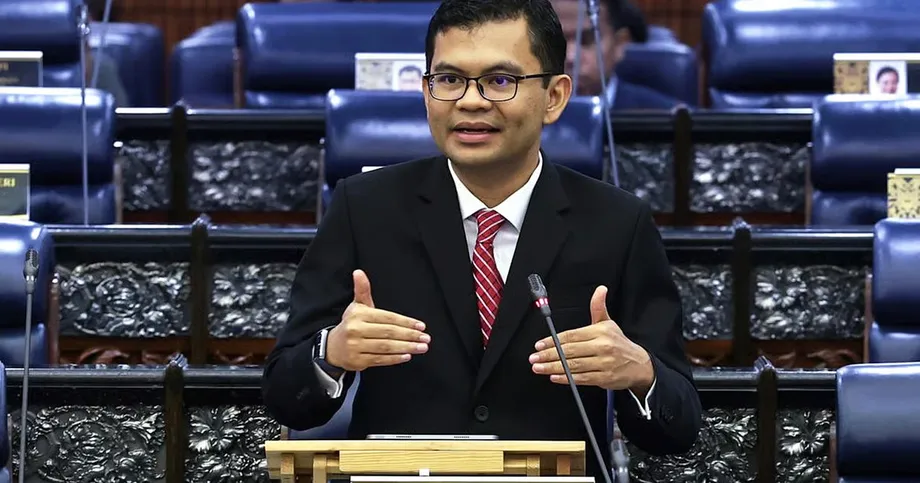
Speaking during questions in the Dewan Rakyat on October 14, Akmal Nasrullah described the proposed legislation as an effort to close gaps affecting the allocation of licences, contracts and other facilities. The government says those gaps can create unfair competition, weaken local businesses and slow national productivity growth.
The 2027 target is for presenting legislation to Parliament, not a confirmed date for its passage or enforcement. Before that, the ministry must complete its study, coordinate with other authorities and obtain consideration and approval through the National Planning and Development Committee and the Cabinet.
Akmal Nasrullah, the economy minister and Johor Bahru MP, set out the current timetable in his parliamentary response:
Based on current plans, the Ministry of Economy intends to table new legislation or amendments to laws relating to anti-rent-seeking in Parliament in 2027,
His wording leaves two decisions open: whether Malaysia needs a separate Act, and how much of the problem can be addressed by changing provisions already in force. Neither route has been finalised.
What Ali Baba Arrangements Involve
In the practices under examination, a business owner or holder of a government permit, licence, contract or business premises lets another party use that entitlement while taking little or no active role in running the operation. The holder receives income from access to the licence or contract rather than from managing the business itself.
The term Ali Baba has traditionally described arrangements in which Malays act as the named owners of enterprises while non Malays conduct the actual operations. The current policy discussion also concerns the illegal transfer of licences and contracts to foreigners. These descriptions overlap, but they are not identical: a third party operating a business is not necessarily a foreign national.
Rent seeking, in this context, means earning money by controlling access to an entitlement rather than by doing the productive work that entitlement was intended to support. The ministry is examining the sale or lease of licences, as well as similar arrangements involving contracts and other facilities.
The final legal definition will matter. The government has not published the proposed wording in these announcements, so it is not yet possible to establish precisely which transactions, participants or business relationships would fall within a new offence. The minister's description of the problem should not be treated as a completed statutory definition.
Why Existing Restrictions Are Not Enough
The Economy Ministry's study identified local authority rules that already prohibit licence transfers. Those restrictions show that some conduct is regulated today, even though the ministry says licence selling and Ali Baba arrangements are not specifically defined as criminal offences.
The distinction is between an existing restriction on transferring a particular licence and a broader offence covering the rent seeking practice itself. Akmal Nasrullah said the limitations of current laws have prevented them from adequately addressing the problem across licences, contracts and facilities.
The minister explained the legal gap during his parliamentary answer:
The challenge at present is that the practice of selling licences or operating through 'Ali Baba' arrangements is not defined as a criminal offence,
That does not mean every related transaction is lawful or that misconduct cannot already be prosecuted. Akmal Nasrullah said corruption and other offences covered by existing legislation should continue to be dealt with under those laws. The proposed measures would address conduct that is not sufficiently captured by the present framework.
Fines and Imprisonment Remain Undecided
The ministry is examining both civil and criminal approaches with stakeholders. Its stated objective is deterrence: making the consequences strong enough to discourage businesses and licence holders from continuing the practice.
A civil approach and a criminal offence have different legal consequences. Civil measures generally impose obligations or remedies without a criminal conviction, while criminal measures allow prosecution and punishment under the relevant law. The ministry has not announced how those approaches might be combined or which conduct would attract each response.
Akmal Nasrullah said the government had not settled whether punishment would include fines, imprisonment or other measures. He explained that the decision would follow completion of the framework and consideration of legal advice:
Hence regarding the specific form of punishment, whether in the form of fines or imprisonment, and so on, that will only be known once we complete this framework after gathering all viewpoints, including from a legal perspective.
No fine amounts, prison terms or enforcement commencement date have been announced. The stated ambition to criminalise the practice is therefore a policy direction, not a published schedule of offences and penalties.
Consent Does Not Resolve the Economic Concern
Akmal Nasrullah said rent seeking can weaken local businesses even when the parties enter an arrangement voluntarily and agree to its terms. His argument is that agreement between a licence holder and an operator does not establish that the arrangement serves the wider purpose of allocating the licence.
The ministry's study points to leakage in the distribution of licences, contracts and facilities. In practical terms, the government is concerned that access intended to support one business or recipient can be passed to someone else, while the original holder collects a payment without developing the capacity to operate.
This helps explain why the proposal extends beyond corruption. A transaction may involve willing participants and still, in the minister's assessment, weaken business capability or produce a misleading picture of the strength of local traders. Whether such a transaction becomes an offence will depend on the eventual legal wording.
Akmal Nasrullah connected those concerns to the government's economic objectives:
The government is committed to eradicating rent-seeking because it can affect market efficiency, create unfair competition, and hinder the country's productivity growth,
The announcements do not quantify the losses, estimate how many businesses are involved or provide a national count of transferred licences. The ministry's stated economic concerns explain the purpose of the proposal, but they do not yet establish the scale of the problem in numerical terms.
Parliamentary Questions Put Scope Under Scrutiny
Bangi MP Syahredzan Johan, of Pakatan Harapan, asked about progress in drafting legislation and the timetable for bringing it to Parliament. His question covered both a new Act and amendments to existing laws, reflecting the two options the ministry continues to assess.
Temerloh MP Salamiah Mohd Nor, of Perikatan Nasional, asked a supplementary question about closing channels for rent seeking and the effectiveness of related legislation against corruption involving civil servants and politicians. That brought the relationship between the proposed offences and existing corruption laws into the discussion.
Reports differ on the format of part of the response. Several describe an oral question and answer session on October 14, while another describes a written ministry reply to Syahredzan on Wednesday. They agree on the principal points: a study is underway, a new law or amendments are being considered, and 2027 is the target for tabling legislation.
One account describes the target as next year without giving an absolute year in its text. The other accounts identify 2027 explicitly. The timetable is best understood as the government's stated 2027 objective, rather than a fixed parliamentary sitting date.
Consultation Must Cross Several Authorities
The ministry is gathering views from industry players, enforcement agencies, relevant ministries, state governments and other stakeholders. Local authorities are also part of the consultation process, particularly because existing restrictions on licence transfers operate at that level.
Rent seeking touches responsibilities held by several ministries and agencies. The government therefore needs agreement on an approach that can be implemented across those boundaries, rather than treating every licence, contract or facility as if it were administered by one body.
The proposal must pass through coordination and approval stages, including the National Planning and Development Committee, identified in the Malay account as JPPN, and the Cabinet, before it reaches Parliament. The announcements do not give separate deadlines for completing those stages.
Akmal Nasrullah also called for cooperation across political lines and levels of government:
We need support from all parties, including the opposition, because we need to consult state governments and local governments so that rent-seeking practices can, and must, be eliminated,
How the Timetable Has Changed
The initiative began with a public commitment by Prime Minister Anwar Ibrahim on July 10, 2023, following a National Economic Action Council meeting. Akmal Nasrullah's predecessor, Rafizi Ramli, then led work on the framework through late 2023 and 2024.
The sequence shows a longer legislative preparation period than initially envisaged:
- July 10, 2023: Anwar announced plans for policy and legislation against rent seeking and Ali Baba practices.
- Late 2023 and 2024: Rafizi led the Economy Ministry's framework work.
- End of 2024: The government's initial target for tabling legislation.
- End of 2025: A later target after the original timetable was delayed.
- 2027: The current target announced by Akmal Nasrullah for a new law or amendments to reach Parliament.
The current target is three calendar years later than the original 2024 target and two later than the revised 2025 target. The ministry now points to the study, legal scrutiny, consultation and coordination needed before the proposal can be finalised. It has not provided a separate explanation for each previous delay.
A separate Government Procurement Bill 2025 was passed to address such practices in public procurement. It introduced tougher penalties covering parties including former civil servants, retirees, contractors and ministers. That measure deals with government purchasing, while the current proposal also concerns licences and other facilities.
Passage of the procurement bill therefore does not settle the wider licensing issue described by Akmal Nasrullah. The next decisions are the choice between a dedicated Act and amendments, the definition of prohibited conduct, and the penalties and enforcement arrangements. No hearing date, parliamentary vote or consultation deadline has been announced.
Key Points
- Malaysia targets 2027 to table legislation against rent seeking and Ali Baba arrangements.
- The government is considering either a dedicated law or amendments to existing provisions.
- The Economy Ministry says current restrictions do not adequately address licence sales and transfers.
- Fines, imprisonment and the balance between civil and criminal measures remain undecided.
- Consultation and approvals involving several authorities must precede parliamentary tabling.
- The timetable has moved from the end of 2024 to the end of 2025 and now to 2027.
- The Government Procurement Bill 2025 is a separate measure focused on public procurement.