Pakistan faces a test beyond raising more tax
Pakistan's Federal Board of Revenue has increased its tax collection relative to the economy from 8.8% to 10.3%, Finance Minister Muhammad Aurangzeb said, as the International Monetary Fund urged the country to bring undertaxed sectors into the system and review tax concessions. The challenge now is to collect revenue more fairly while supporting investment and lasting economic growth.
Contents
- Pakistan faces a test beyond raising more tax
- What would a broader tax base change?
- Enforcement accounts for most of the recent improvement
- Businesses want fewer budget surprises
- Why federal and provincial coordination matters
- From economic recovery to growth that lasts
- Reserves have recovered, but their quality matters
- Public investment and social spending enter the equation
- What happens at the workshop's conclusion?
- Key Points
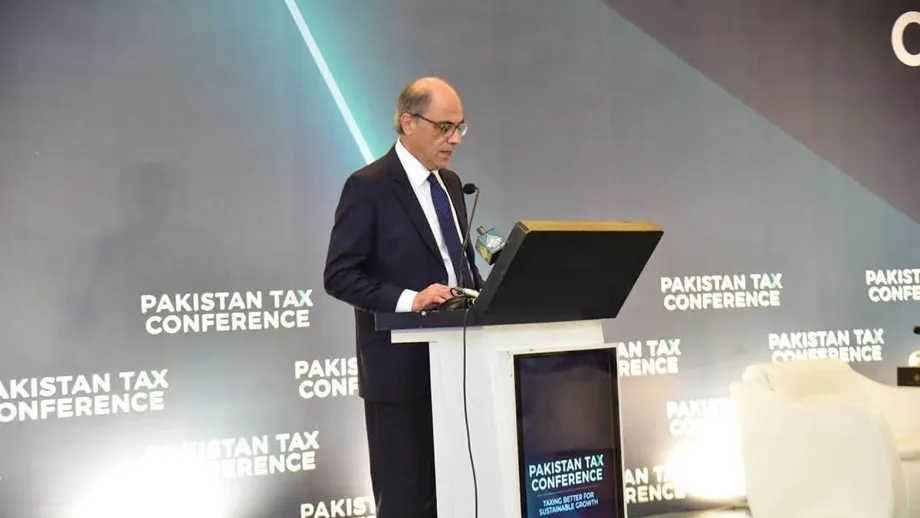
Speaking at a tax reform workshop in Islamabad on October 20, 2026, Aurangzeb said enforcement accounted for 0.9 percentage points of the 1.5 percentage point increase in the FBR's tax to GDP ratio. New policy measures contributed the remaining 0.6 points. In other words, stronger enforcement delivered 60% of the improvement, compared with 40% from policy changes.
Jihad Azour, director of the IMF's Middle East and Central Asia Department, called for changes that would spread the tax burden more evenly. He said:
Addressing under-taxed sectors, rationalising concessions, and reducing disproportionate burden are elements of a fair tax system.
The Ministry of Finance and IMF workshop runs on October 20 and 21. The government's workshop announcement, published by the Press Information Department, sets out six sessions covering growth, tax modernisation, sales tax coordination, income tax, administration and provincial revenues.
Aurangzeb and Azour delivered opening remarks alongside Rodrigo Valdés, director of the IMF's Fiscal Affairs Department. Government officials, IMF and World Bank representatives, tax specialists, academics and private sector leaders are taking part. Their discussions connect three practical concerns: how much Pakistan collects, who pays, and whether the rules help businesses plan and expand.
What would a broader tax base change?
Azour's proposal centres on bringing more economic activity into the tax system and reviewing concessions. A tax base is the income, spending, property or other activity on which tax is charged. Broadening it means collecting from a wider range of taxable activity, rather than relying so heavily on those already paying.
Tax concessions give selected activities or taxpayers more favourable treatment, such as exemptions or reduced rates. Reviewing them means examining which preferences still serve a useful purpose and which leave an uneven burden on others.
Azour linked fairness to compliance and private sector growth. A more neutral system aims to let businesses make decisions mainly on their economic merits, rather than on whether a particular activity receives a tax advantage. Simpler rules can also make it easier for taxpayers to understand their obligations.
The proposals remain at the discussion stage. No list of sectors facing additional tax, specific concessions to be removed, new rates or implementation deadlines was announced in the workshop details or opening remarks. The immediate task is to turn broad goals into recommendations that governments and tax authorities can carry out.
Enforcement accounts for most of the recent improvement
Aurangzeb said tax revenues had increased by 40% over the last two fiscal years. He attributed the improvement to both stronger enforcement and new policy measures, and said deeper enforcement would become increasingly important in the next phase of reform.
The minister described the government's enforcement efforts in direct terms:
"We stopped leakage, theft and corruption," Aurangzeb said.
The FBR's rise from 8.8% to 10.3% of GDP means it collected an additional 1.5 rupees for every 100 rupees of economic output. GDP measures the value of goods and services produced in an economy. Comparing tax receipts with GDP helps show the scale of collection relative to the economy that supports it.
The FBR's Revenue Division Year Book 2024-25 confirms that the ratio rose from 8.8% in FY 2023-24 to 10.3% in FY 2024-25, excluding federal non-tax receipts. FBR tax collection increased from Rs. 9,299,080 million to Rs. 11,744,288 million over the same period. The yearbook identifies marginal increases in tax rates, measures to broaden the tax base and more efficient enforcement as contributing factors, but does not quantify their respective contributions to the 1.5 percentage point increase.
The yearbook records enforcement recoveries of Rs. 874 billion in FY 2024-25, up from Rs. 105 billion in FY 2023-24. Real-time production monitoring recovered an additional Rs. 25 billion from sugar and Rs. 12.8 billion from cement, while expedited dispute resolution brought in Rs. 255 billion from legal settlements. The Customs Single Enforcement Entity collected Rs. 321 billion from smuggling-prone items, an increase of 19.7%.
Income tax collection on demand also rose from Rs. 127 billion, or 3% of income tax receipts, in FY 2023-24 to Rs. 267 billion, or 5%, in FY 2024-25. Withholding tax receipts increased from Rs. 2,739 billion to Rs. 3,382 billion, although their share fell from 60% to 59%. Advance tax receipts rose from Rs. 1,530 billion to Rs. 1,894 billion, while their share declined from 34% to 33%.
Aurangzeb's breakdown gives enforcement a central place in the next debate. With 0.9 percentage points of the recent gain attributed to enforcement and 0.6 to policy, the government is presenting better collection of existing obligations as a major source of revenue. That makes the performance and credibility of the tax authority as important as the design of tax laws.
Businesses want fewer budget surprises
Aurangzeb said private investment depends on policy continuity. Companies deciding whether to build a factory, purchase equipment or expand operations need to estimate costs and returns over several years. Frequent tax changes can make those calculations harder.
The finance minister told participants:
We cannot continue to give surprises to private-sector investment at every single budget.
Aurangzeb also identified political consensus, stronger institutions and taxpayer trust as conditions for lasting reform. He placed restoring credibility in the FBR among the government's priorities and called for a better relationship between taxpayers and the administration.
The workshop's administration session connects digitalisation, compliance and taxpayer trust. Digitalisation means using electronic systems to manage processes such as tax records, filing and payments. Its place alongside trust in the programme reflects the practical scope of the reform discussion: taxpayers need both workable procedures and confidence in how the authority applies them.
Why federal and provincial coordination matters
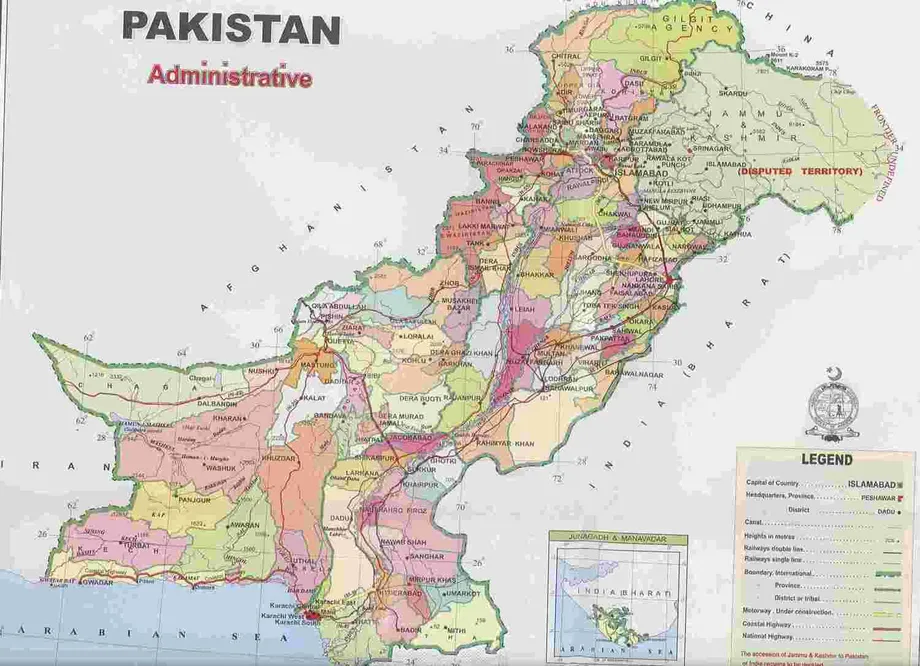
Pakistan's federal and provincial governments are both part of the proposed changes. One workshop session examines a unified sales tax regime across the federation and provinces, while another addresses fiscal federalism and provincial tax revenues.
Sales tax is charged on taxable transactions. A unified regime would seek a more coordinated framework across different levels of government. For businesses operating across provincial boundaries, the practical issue is how consistently those tax obligations are designed and administered.
Fiscal federalism concerns how different levels of government divide responsibility for raising money and paying for public services. Provincial revenues therefore form part of the same discussion as federal collection: a broader tax system requires cooperation across the authorities that set and administer its rules.
Aurangzeb called for federal and provincial cooperation to build wider agreement on tax policy. The workshop brings that issue into the reform agenda alongside a simpler and more neutral income tax system. Together, those sessions address both the structure of taxation and the coordination needed to make it work.
From economic recovery to growth that lasts
Aurangzeb said Pakistan's economy had moved from a contraction of about 0.3% to growth of roughly 3.7%. He argued that the quality of the recovery matters as much as its speed and called for growth led by exports.
His concern is the return of a familiar cycle: a burst of spending and easily available money boosts activity, but the expansion later gives way to a downturn. A strategy led by exports instead aims to increase production for overseas buyers and generate foreign currency earnings alongside domestic growth.
Azour said Pakistan had made progress in restoring macroeconomic stability, rebuilding confidence, strengthening external buffers and supporting recovery. Macroeconomic stability describes conditions across the economy, including manageable public finances and a more secure ability to pay for imports and other external obligations.
The IMF official described the next objective:
"The next milestone is to turn this stabilisation into stronger and more durable growth," Azour said.
Tax policy sits at the centre of that transition. The government needs revenue to fund services and meet its obligations, while businesses need rules that leave room for productive investment. Aurangzeb said economic value should guide tax design, even as the government continues to meet its revenue requirements.
Reserves have recovered, but their quality matters
Aurangzeb said Pakistan's foreign exchange reserves had increased from the equivalent of around two weeks of imports to more than three months. Import cover expresses reserves as the length of time they could pay for imports, making the size of the foreign currency cushion easier to understand.
The minister also said the way reserves are accumulated matters alongside their size. His point parallels his argument about growth: a larger headline figure is more useful when the underlying improvement can last.
Azour listed several risks to the recovery, including higher energy and food prices, disruption to trade and supply chains, weaker external demand and a sudden tightening in global financing conditions. For Pakistan, those pressures can affect import costs, sales abroad and access to funding at the same time.
Protecting stability while supporting recovery therefore remains part of the tax debate. A wider and more dependable revenue base would give the government greater capacity to fund priorities when external conditions become less favourable.
Public investment and social spending enter the equation
Azour said fiscal policy must do more than meet primary balance targets and protect debt sustainability. A primary balance compares government revenue with spending before interest payments. Debt sustainability concerns the government's ability to meet its debt obligations over time.
The IMF official called for fiscal policy that also strengthens confidence in government decisions, supports recovery and makes room for public investment and social spending. Those demands explain why the workshop is examining how taxes are collected as well as how much they raise.
Pakistan and IMF staff reached a staff level agreement earlier in October on the fourth review of the $7 billion Extended Fund Facility and the third review of the Resilience and Sustainability Facility, alongside completion of the 2026 Article IV consultation. Programme reviews assess progress under financing arrangements, while an Article IV consultation is the IMF's regular examination of a country's economy.
Azour said the IMF remained committed to supporting a more productive Pakistani economy led by a stronger private sector. He also argued that tax policy and administration must move together: simpler rules make administration easier, while effective administration gives policy changes practical force.
What happens at the workshop's conclusion?
The Islamabad meeting is scheduled to end with a senior panel that will consolidate recommendations, identify priority actions and establish arrangements for continued engagement. The sequence places implementation after the initial policy discussions:
- Earlier in October 2026: Pakistan and IMF staff reached agreement on programme reviews alongside completion of the Article IV consultation.
- October 20, 2026: The tax workshop opened in Islamabad with remarks from Aurangzeb, Azour and Valdés.
- October 20 and 21, 2026: Six sessions examine tax design, collection, growth and federal and provincial responsibilities.
- October 21, 2026: The concluding panel is scheduled to bring together recommendations and priority next steps.
Azour said successful reform requires ownership, coordination, engagement and communication. For Pakistan's taxpayers and businesses, the practical outcome will depend on how those recommendations become clearer obligations, more consistent administration and a fairer distribution of the burden.
Key Points
- The IMF urged Pakistan to review tax concessions, include undertaxed sectors and reduce uneven burdens.
- Aurangzeb said the FBR's tax to GDP ratio rose from 8.8% to 10.3%, with enforcement contributing 60% of that increase.
- The finance minister reported a 40% rise in tax revenues over the last two fiscal years.
- The October 20 and 21 workshop covers income tax, coordinated sales taxation, administration, taxpayer trust and provincial revenues.
- Aurangzeb called for predictable policy and sustainable growth led by exports.
- A concluding panel is scheduled to identify recommendations, priority actions and arrangements for continued engagement.