A $942 Million Drop in Trade Across a Closed Border
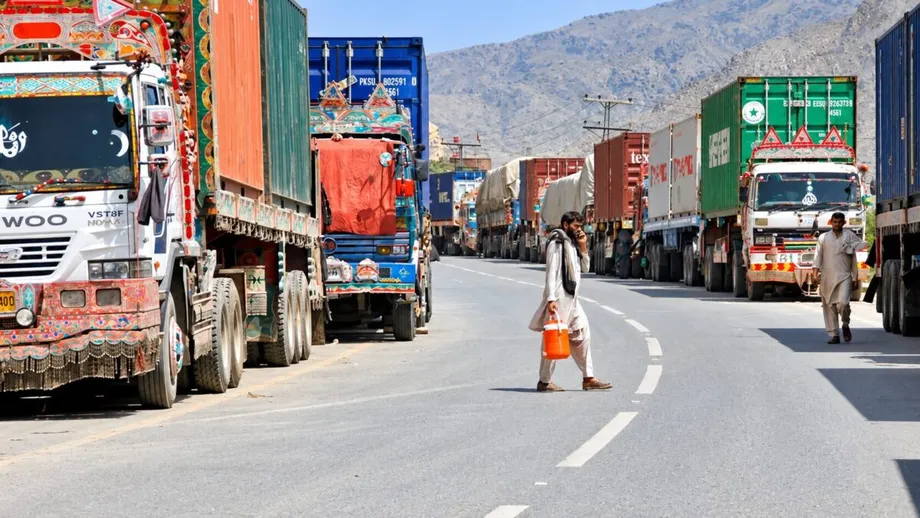
Trade between Pakistan and Afghanistan fell to $358 million in the 2025-26 financial year from $1.3 billion in 2024-25, according to figures attributed to the Trade Development Authority of Pakistan. The $942 million contraction has left vegetable shipments halted, transport operators selling trucks and pharmaceutical manufacturers losing access to a major market.
Contents
- A $942 Million Drop in Trade Across a Closed Border
- How the Shutdown Became a Prolonged Crisis
- Afghanistan Faces Greater National Exposure
- Transit Cargo Falls as Traders Seek Other Routes
- Why Khyber Pakhtunkhwa Feels the Loss So Sharply
- Medicine Manufacturers Lose a Major Customer
- Potato Traders Face Losses Now and Smaller Harvests Later
- Truck Owners Cannot Easily Replace Afghan Routes
- Security Demands Divide Business Leaders
- Key Points
The decline has been described as 74 percent in accounts citing the authority, while a 95 percent figure has also circulated alongside the same dollar totals. Calculating directly from $1.3 billion and $358 million gives a fall of about 72.5 percent, leaving trade at slightly more than a quarter of its previous value.
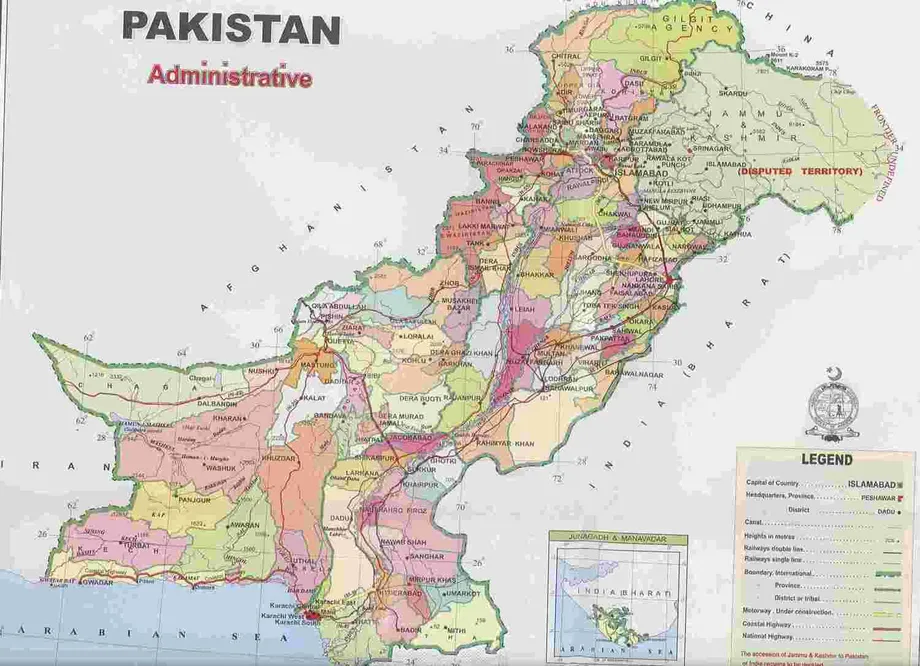
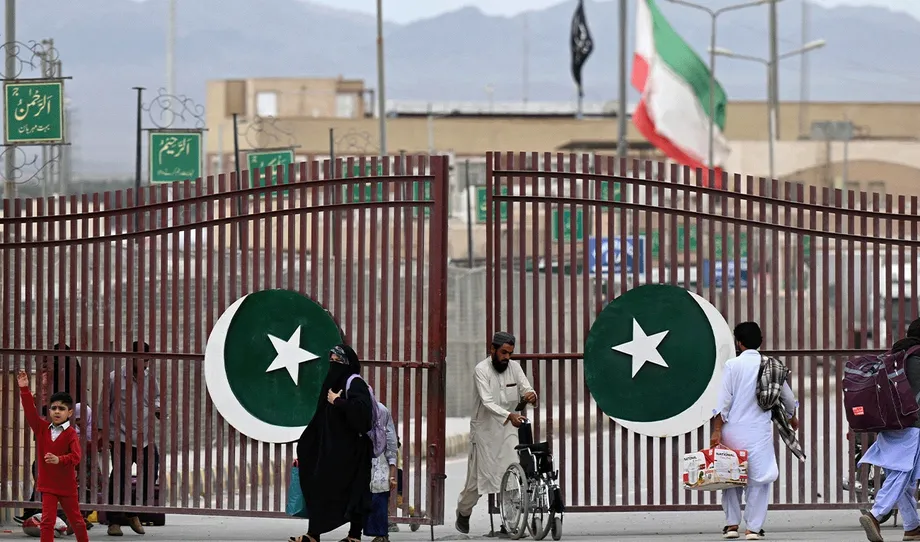
Torkham, one of the busiest crossings, closed on October 12, 2025, following deadly clashes. Commercial traffic has also been stopped or restricted at Kharlachi, Ghulam Khan and Angoor Adda in Khyber Pakhtunkhwa, and at the Chaman-Spin Boldak crossing connecting Balochistan with southern Afghanistan.
Pakistan says normal trade depends on action against armed groups it accuses of operating from Afghan territory. Taliban authorities reject those allegations. Businesses caught between the two governments face losses that stretch beyond the border itself, affecting factories, farms and routes to Central Asia.
The figures are presented as covering 2025-26, although their precise reporting cutoff has not been specified. No firm date for restoring normal commercial traffic has been announced. For traders handling fresh produce or paying to maintain idle trucks, an uncertain reopening date makes it difficult to decide what to plant, buy or transport next.
How the Shutdown Became a Prolonged Crisis
The commercial disruption grew out of a security confrontation that has continued through several rounds of fighting and unsuccessful diplomacy. The October border clashes closed major crossings and stranded thousands of cargo trucks, turning a military dispute into an immediate problem for traders and border communities.
Earlier figures tracked Pakistan's wider trade crackdown from October 10, while the closure date given for Torkham is October 12. By early January, the suspension had lasted nearly three months. Fighting then escalated again in February, when Pakistani airstrikes reached Kabul and other Afghan locations.
- October 10, 2025: The wider trade crackdown began, according to the figures used to track the initial export losses.
- October 12, 2025: Torkham closed following deadly clashes between the two countries.
- Early November 2025: Pakistan declared negotiations effectively over after unsuccessful mediation involving Turkiye and Qatar.
- January 3, 2026: The suspension had approached three months, with more than 11,500 trucks reported stranded.
- February 26-27, 2026: Fighting expanded to Pakistani strikes on Kabul, Kandahar and Paktia, followed by Pakistan's declaration of open war.
The February military escalation deepened a dispute already disrupting commerce. Reopening now depends on decisions about border security as well as the practical work of allowing cargo, vehicles and traders to move again.
Afghanistan Faces Greater National Exposure
Afghanistan depends more heavily on the relationship than Pakistan does. Figures described in January showed that Pakistan received nearly 46 percent of Afghan exports, while Afghanistan accounted for about 3.46 percent of Pakistan's global exports.
Those shares help explain the unequal economic losses recorded during the initial shutdown. Afghanistan had lost approximately 10 percent of its export value, compared with about 0.6 percent of Pakistan's total exports. These were measures of the early disruption, rather than the later bilateral trade totals.
Pakistan's smaller national exposure still leaves particular places and industries facing severe pressure. A country can lose a relatively small share of its total exports while a transporter, farmer or manufacturer loses its main customer. Khyber Pakhtunkhwa is especially exposed because its businesses have long served the nearby Afghan market.
Transit Cargo Falls as Traders Seek Other Routes
Afghan transit trade through Pakistan has contracted even more sharply in value than bilateral commerce. Before the Taliban returned to power in 2021, the flow stood at nearly 89,000 containers carrying goods worth about $5 billion. The latest figures put it at 11,592 containers worth $367 million.
Using those totals, container numbers have fallen by roughly 87 percent, while cargo value has dropped by about 93 percent. The comparison spans several years, covering a longer period than the change in bilateral trade between 2024-25 and 2025-26.
Transit trade means goods pass through one country on their way to another. For landlocked Afghanistan, Pakistani ports and roads provide a route to overseas suppliers. Bilateral trade, by contrast, concerns goods bought and sold between Pakistan and Afghanistan themselves.
Afghanistan had already begun shifting more trade toward alternative routes, particularly through Iran, before the latest closures. The reduction therefore reflects both the recent shutdown and an earlier change in how Afghan businesses move goods. Pakistani exporters using Afghanistan as a route to Central Asian markets have also been affected.
Why Khyber Pakhtunkhwa Feels the Loss So Sharply
Junaid Altaf, a former president of the Sarhad Chamber of Commerce and Industry, said the prolonged closure had deepened economic difficulties for businesses, workers and border communities in Khyber Pakhtunkhwa. He pointed to the province's distance from major seaports and international shipping routes, which already raises logistics costs.
Altaf described the damage as extending beyond the interruption of a single route:
"For a province already facing structural economic disadvantages, the closure has not merely disrupted a trade route, it has further weakened the economic opportunities on which its businesses, workers and border communities depend," he said.
For businesses far from the coast, transport costs influence which markets are practical to serve. Losing nearby Afghan customers can mean seeking buyers much farther away, with longer journeys and higher delivery expenses. That makes replacing the lost business more difficult than simply sending the same goods elsewhere.
Medicine Manufacturers Lose a Major Customer
Pakistan exported about $130 million worth of pharmaceutical products to Afghanistan in 2023-24, according to Pakistan Bureau of Statistics figures. The scale of those sales shows why the loss of Afghan market access matters to manufacturers, alongside the damage to transport and agriculture.
Taliban authorities ordered a halt to pharmaceutical imports from Pakistan in November 2025. Taliban health minister Noor Jalal Jalali has said Pakistan supplied 60 to 70 percent of Afghanistan's medicines. Medicine exporters therefore face a policy restriction as well as the physical interruption of border traffic.
Manufacturers that previously supplied Afghan buyers must find other customers or adjust production. Lower sales can put pressure on investment and employment, although no quantified total for factory job losses or cancelled pharmaceutical investment has been given.
Pakistan's other exports to Afghanistan include cement, plastics, rice, fruit and vegetables. Afghan sales to Pakistan include onions, tomatoes, agricultural seeds, grapes, dried apricots, apples, coal and unwrought lead, meaning lead that has not yet been made into finished products. The closures affect both industrial supplies and everyday food trade.
Potato Traders Face Losses Now and Smaller Harvests Later
Malik Sohni, president of the All Pakistan Agricultural Produce Traders Federation, said as many as 50 trucks carrying potatoes and 25 carrying fresh vegetables previously travelled from Pakistan to Afghanistan each day. Those daily shipments have stopped, removing an outlet for up to 75 truckloads of produce.
Sohni said he had suffered losses of 180 million Pakistani rupees after hostilities disrupted trade and potato prices fell. Fresh produce creates a particularly urgent problem because traders cannot hold it indefinitely while waiting for a border decision. A missed sale can quickly become spoiled stock or a much lower price.
Potato cultivation had declined by almost half, according to Sohni, who warned that reduced supply could later push prices higher. His account describes two stages of the same disruption: prices fall when harvested potatoes lose their export market, then farmers plant less because the previous crop brought poor returns.
Consumers may therefore experience different effects at different times. Produce left in domestic markets can initially become cheaper. A later harvest reduced by lower planting can tighten supply and raise prices. The cultivation estimate comes from a trade representative rather than a national agricultural survey.
Truck Owners Cannot Easily Replace Afghan Routes
A transporter identified as Azeemullah said he had sold three of his five trucks because the prolonged closure made it economically unviable to redirect them elsewhere in Pakistan. His fleet shrank by 60 percent, showing how a stalled trade route can force an operator to sell assets built up over years.
Truck owners need enough paying cargo to cover the costs of keeping vehicles in service. Moving to another domestic route requires customers and commercially workable rates. A vehicle that previously served Afghanistan cannot automatically earn the same income somewhere else.
The transport losses also reach exporters beyond the immediate border economy. Pakistani businesses selling to Central Asia face disruption when their goods depend on passage through Afghanistan. The commercial damage therefore includes lost Afghan customers, reduced transit business and interrupted access to markets farther north.
Security Demands Divide Business Leaders
Islamabad says trade restrictions will remain until Taliban representatives take practical, verifiable action against armed groups operating from Afghan territory. Pakistan's accusations include Tehrik-i-Taliban Pakistan, or TTP, which carries out attacks inside Pakistan.
Taliban authorities reject the allegations that Afghan territory is being used for attacks against neighbouring countries. They have described insecurity inside Pakistan as a matter for Islamabad to resolve. The dispute leaves security conditions at the centre of decisions about commercial access.
Fuad Ishaq, a Peshawar businessman and former chamber president, argues that national security should take priority and that Pakistani exporters can seek alternative markets. Other business representatives in Khyber Pakhtunkhwa have called for secure borders alongside regulated trade and lasting measures to prevent the region's economic isolation.
Both positions address the same immediate choice: whether commerce should remain suspended while security demands are unresolved, or whether controlled movement of goods can resume. For manufacturers, farmers and transporters, the concrete stakes are access to customers, the ability to plan production and the income needed to keep businesses operating.
Key Points
- Trade figures attributed to Pakistan's trade authority show bilateral commerce falling from $1.3 billion to $358 million, a loss of $942 million.
- The decline is widely described as 74 percent; the stated dollar totals calculate to about 72.5 percent.
- Torkham closed on October 12, 2025, and several other major crossings remain closed or restricted for commercial traffic.
- Afghan transit cargo through Pakistan fell from nearly 89,000 containers before 2021 to 11,592 in the latest figures.
- Medicine exporters, produce traders and truck owners face heavy losses, with particularly concentrated pressure in Khyber Pakhtunkhwa.
- Taliban authorities ordered a halt to Pakistani pharmaceutical imports in November 2025.
- Pakistan links normal trade to action against armed groups; Taliban authorities reject its allegations.
- No firm date for restoring normal commercial traffic has been announced.