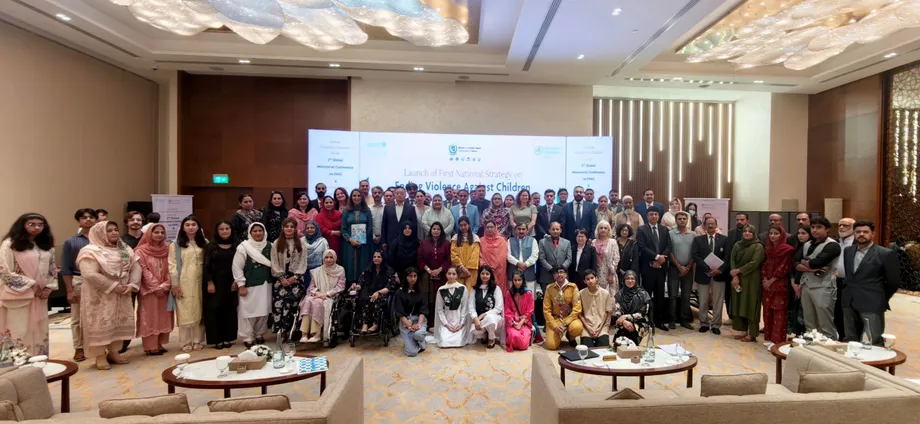
A national plan for children facing violence
Pakistan launched its first National Strategy to End Violence Against Children on 14 October 2026 in Islamabad, setting out a framework for protecting the country's 120 million children over the period 2026 to 2031. The Ministry of Human Rights and the World Health Organization (WHO) presented the strategy as Pakistan prepared for a global ministerial conference in Manila in November.
Contents
- A national plan for children facing violence
- Children describe fear at home, school and online
- Prevention starts before a child is hurt
- What the INSPIRE framework brings
- How the strategy developed
- Earlier figures show gaps in the national picture
- What the funding and pledge record shows
- Who will turn the framework into action?
- Violence is also a public health issue
- Key Points
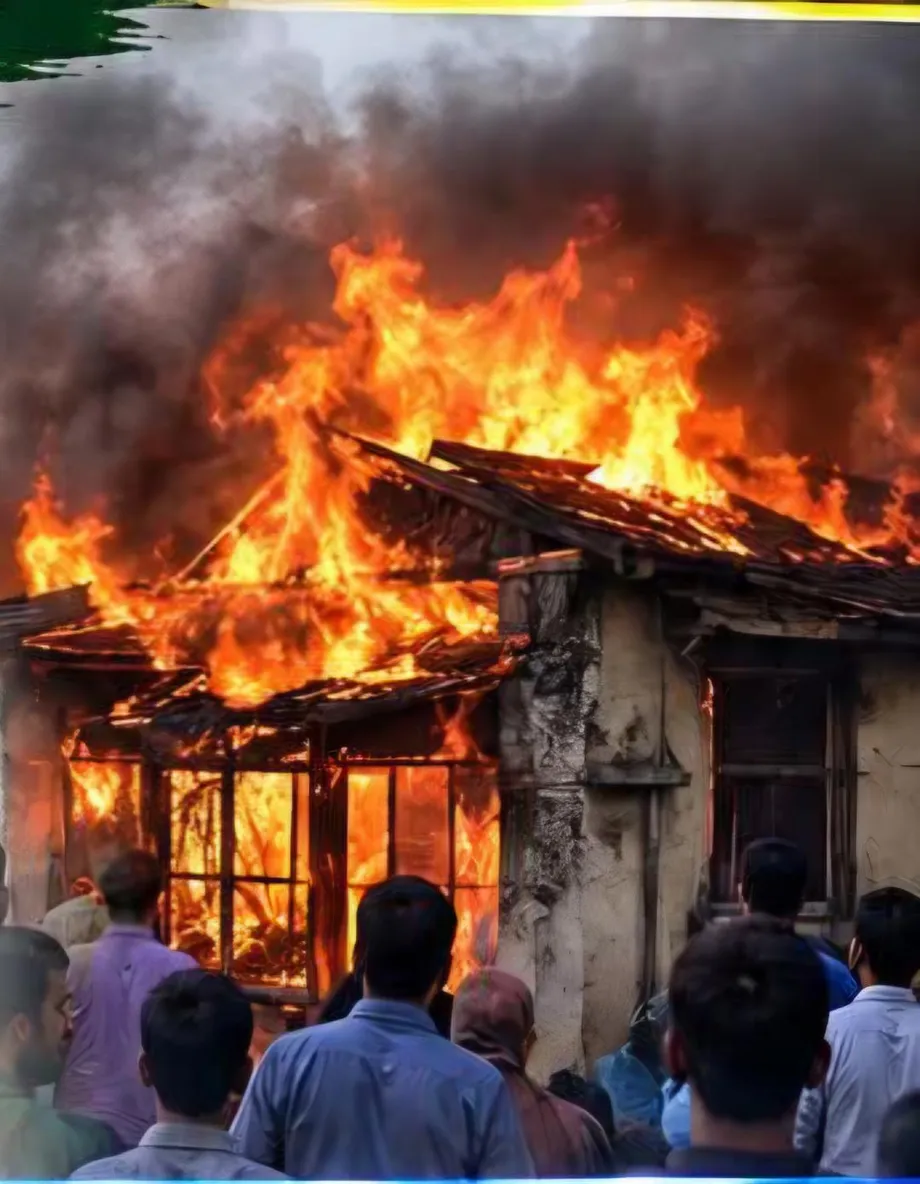
The figures accompanying the launch show how widely harm reaches into childhood. Up to eight in 10 children experience violent discipline, according to the strategy. Among internet users aged 12 to 17, one in 16 experiences exploitation or abuse through technology. Some 840,000 children aged 10 to 17 have ever been married, and 8.6 million children are engaged in child labour.
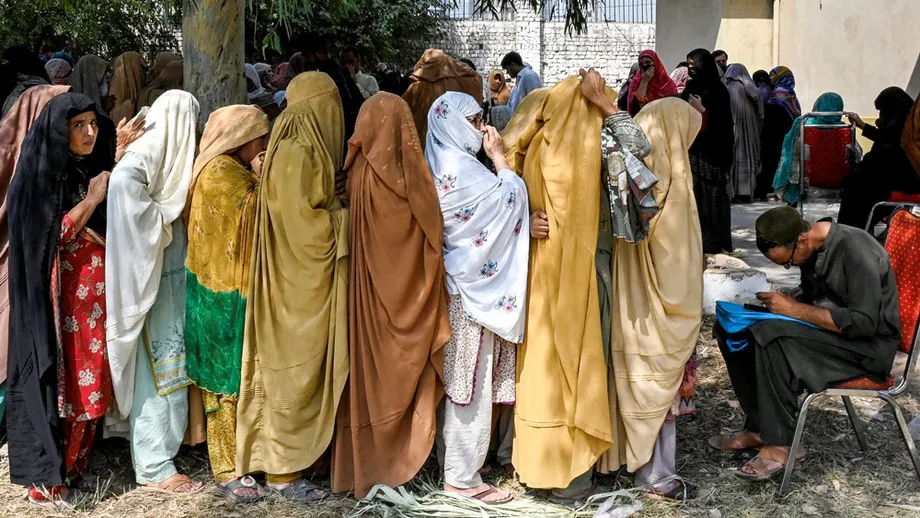
The UN launch statement also says more than 57% of children younger than five are not registered with a civil authority. Without an official record, children face greater difficulty accessing protection and essential services, adding another layer of vulnerability.
The strategy brings prevention, protection, response, recovery, reintegration and justice into one national framework. In simple terms, it aims to stop violence before it happens, help children when they are harmed, support their recovery and provide a route to justice. Its stated goal is to reach every child, regardless of family income or social status.
Federal Secretary for Human Rights Abdul Khalique Shaikh said the launch would be judged by what followed. He described the strategy as the beginning of the government's work:
This strategy is just the beginning. Success will be measured by our actions and our ability to save children from violence,
Children describe fear at home, school and online
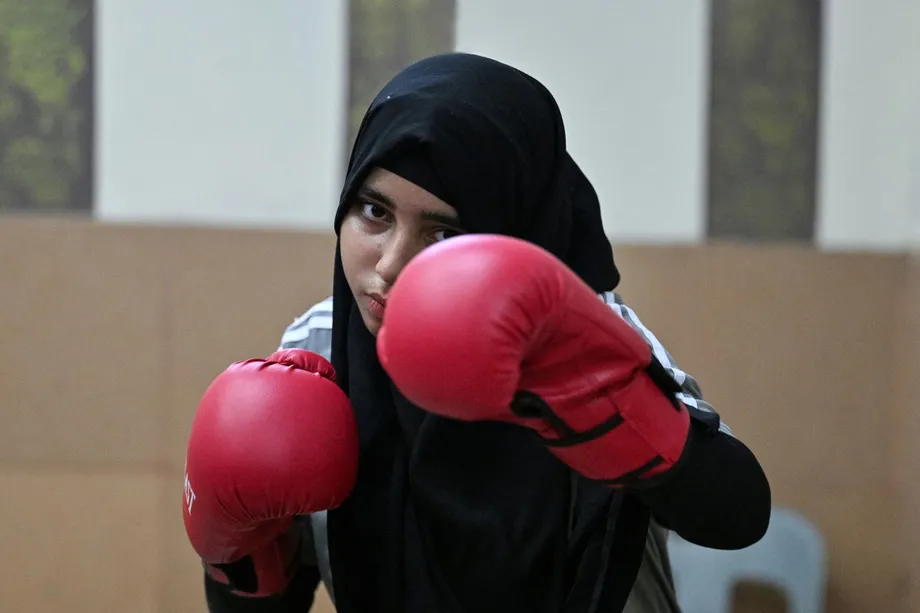
Girl Guide Qurat Ul Ain Safdar Khan put children's daily experiences at the centre of the launch. She described bullying at school, punishment that causes pain and humiliation, harassment, threats on phone screens, forced work and marriage during childhood.
Her message also addressed the difficulty of seeking protection when the person causing harm is familiar. She said most children face abuse from someone they know and trust, making the ability to speak safely especially important.
Khan called for help during childhood, rather than promises aimed at a distant future:
We often hear that children are the future, but our childhood is happening now. The safety and protection we deserve and the support we need cannot wait until we grow up,
The strategy addresses violent killing, physical violence, sexual violence, psychological violence and neglect, as well as violence, exploitation and abuse involving technology. This scope connects harms that can occur in different places but affect the same child, from home and school to work and online spaces.
Prevention starts before a child is hurt
UNICEF Deputy Representative a.i. in Pakistan Jennifer Melton focused on a message raised by children: violence is still considered discipline. With up to 80% of children experiencing violent discipline, changing everyday treatment is central to the strategy's purpose.
Melton said prevention requires support for parents and caregivers, safe and positive learning environments, action on harmful social norms, and children knowing their rights and where to seek help. Harmful norms are shared beliefs that allow damaging behaviour to seem acceptable, including the belief that causing pain is a necessary way to teach a child.
Parents, schools and protection services therefore have connected roles. Support for caregivers can help address behaviour before punishment becomes violent; safe learning environments can reduce exposure to harm; and accessible services can help children who need protection. These are the areas UNICEF identified as necessary for ending violence, alongside responding after abuse occurs.
What the INSPIRE framework brings
Pakistan's strategy draws on the Convention on the Rights of the Child and INSPIRE, a package developed by 10 international agencies under WHO's leadership. INSPIRE groups approaches that have reduced violence against children in many countries into seven areas.
- Laws that protect children.
- Social norms that support safety rather than violence.
- Safe environments where children live and spend time.
- Support for parents and caregivers.
- Financial stability for families.
- Response and support services.
- Life skills that help children navigate risks.
The framework connects public services with family circumstances. A child facing exploitation may need protection from an abuser, help returning to education and support for a household under financial pressure. A child facing violence at home may need both immediate safety and continuing assistance.
Pakistan's stated approach covers recovery and reintegration as well as prevention and response. Recovery means helping children regain health and well-being after harm. Reintegration means supporting their return to safe family, school or community life.
How the strategy developed
The October 2026 launch followed consultations involving authorities and partners from across Pakistan. The process also connects the new strategy to commitments made at the first Global Ministerial Conference on Ending Violence Against Children in Bogotá, Colombia, in 2024.
- 1 November 2024: The Ministry of Human Rights submitted pledges covering child protection resources, legal and policy frameworks, response services, and support for parents and caregivers.
- 1 October 2025: The main child protection pledge received an update in the conference tracking record.
- November 2025: Consultations began in Karachi and concluded in Islamabad on 14 November, with participation from all provinces and self-governed areas.
- 14 October 2026: The ministry and WHO launched the national strategy in Islamabad.
- 14 to 15 October 2026: A national preparatory consultation brought together more than 100 participants to review progress and identify measurable action.
- November 2026: The second global ministerial conference is scheduled for Manila, the Philippines.
- 2027: The main pledge lists this year as its delivery timeline, while the national strategy extends through 2031.
The ministry led the October consultation in partnership with UNICEF and WHO. Participants included federal and provincial authorities, experts, civil society representatives, youth organisations and children. Their task included reviewing Pakistan's earlier pledges and identifying practical solutions.
Earlier figures show gaps in the national picture
WHO's November 2025 consultation statement described a planned Strategic Action Plan intended to protect 112 million children. The October 2026 launch puts the child population at 120 million.
The 2026 strategy gives a child labour figure of 8.6 million; WHO's 2025 statement cited more than 12.5 million. On registration, the launch says over 57% of children under five are not registered with a civil authority, while the earlier WHO statement said only one in three was registered at birth.
The statements do not provide the underlying dates, definitions or methods needed to explain these differences. A consistent statistical baseline will matter when authorities measure progress against the strategy's goals.
Both statements identify displaced children, migrant children and children in informal or poor urban settlements as facing disproportionately high risks. Those risks include exploitation, early marriage, trafficking and child labour. Reaching these groups is therefore a concrete test of the strategy's promise to protect children regardless of where they live or their economic circumstances.
What the funding and pledge record shows
Pakistan's conference pledge record marks the Ministry of Human Rights' main commitment as "On Track", with a timeline of 2027. Its topics cover human, financial and infrastructure resources, legal and policy frameworks, and response and support services.
The record lists 10,170,000 beneficiaries and estimated investment of US$4.53 million. It leaves both the total number reached and the amount allocated to date as "Not reported". The financial figure is listed as estimated investment for that pledge; the national strategy covers a broader population and runs to 2031.
The listed beneficiaries equal about 8.5% of the 120 million children identified at the strategy's launch, calculated by dividing 10.17 million by 120 million. The figures show the different scales of the recorded pledge and the national strategy's ambition to protect every child.
A second pledge, also submitted on 1 November 2024, concerns support for parents and caregivers. It has no updates, no specified timeline and no reporting narrative. Its status is listed as "Not allocated".
The contrast matters because caregiver support is one of INSPIRE's seven areas and a central part of UNICEF's prevention message. The pledge record provides a place to follow whether that commitment receives a timetable and reported results.
Who will turn the framework into action?
Federal Secretary Shaikh set out the intended working arrangements during the 2025 consultations. He called for education, health, law enforcement and community systems to work together, supported by measurable targets, clear institutional responsibilities, and monitoring and evaluation.
For families, coordination means the services involved in a child's safety need to connect. A child who needs medical care may also need protection, support at school and access to justice. Clear responsibilities help identify which institution must act at each stage.
Dr Muhammad Arif, Director of International Cooperation at the Ministry of Human Rights, said the consultations were part of developing a coordinated approach aligned with Pakistan's Constitution, the Sustainable Development Goals and international human rights commitments. He called for existing legal and institutional frameworks to be strengthened and integrated.
At the 2026 launch, Parliamentary Secretary for Human Rights Saba Sadiq said the government under Prime Minister Shehbaz Sharif was committed to stronger child protection. She identified effective policies, strong institutions and collective efforts as necessary to safeguard children's rights, dignity and future.
Violence is also a public health issue
WHO Representative in Pakistan Dr Luo Dapeng said the consequences of violence can continue long after an immediate injury. He identified effects on mental health, development, education and relationships that can last into adulthood.
Luo described the reach of that harm:
The consequences of violence can extend far beyond immediate injury. They can affect a child's mental health, development, education and relationships, and continue to influence health and well-being into adulthood.
WHO estimates that one billion children worldwide experience physical, sexual or emotional violence each year. A child dies as a result of violence every five minutes. WHO says these deaths and the lasting harm caused by violence are preventable.
Pakistan's next scheduled international milestone is the Manila conference in November 2026, followed by the main pledge's 2027 timeline. The strategy provides a framework through 2031; reported spending, service coverage and progress against measurable targets will show how that framework changes children's daily lives.
Key Points
- Pakistan launched its first National Strategy to End Violence Against Children on 14 October 2026, covering 2026 to 2031.
- The strategy aims to protect 120 million children through prevention, protection, response, recovery, reintegration and justice.
- It cites violent discipline affecting up to 80% of children and child labour involving 8.6 million children.
- WHO's 2025 statement used different population, labour and registration figures; the underlying methods were not detailed.
- The main conference pledge lists 10.17 million beneficiaries, US$4.53 million in estimated investment and a 2027 timeline, with allocations and numbers reached unreported.
- The next global ministerial conference is scheduled for Manila in November 2026.