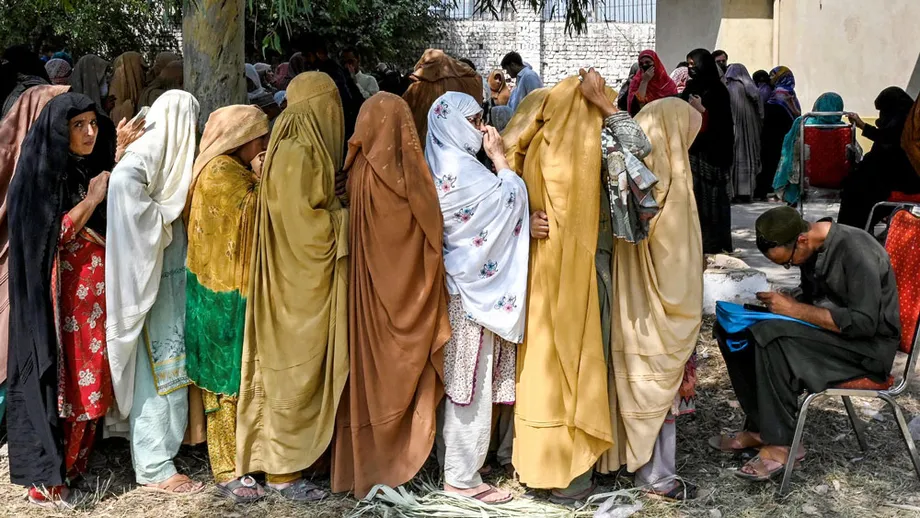
Pakistan ranks behind only Afghanistan in South Asia
Pakistan ranks 106th among 122 countries in the 2026 Global Hunger Index, with 16.1% of its population undernourished and 33.6% of children younger than five affected by stunting. Its score of 25.5 places the country in the serious hunger category, above both the South Asian average of 23.5 and the global average of 18.1.
Contents
- Pakistan ranks behind only Afghanistan in South Asia
- What the hunger score measures
- Why the trend depends on the starting year
- More people lack calories as child indicators diverge
- Floods and drought damage food and incomes
- Why food can be available but unaffordable
- What neighbouring countries reveal
- A regional crisis under global pressure
- Where Pakistan's response can act
- Key Points
Afghanistan has the region's highest score, at 28.6, making Pakistan the second worst among the South Asian countries assessed. Higher scores indicate greater hunger. Pakistan's score has risen from a recalculated 24.0 in 2018, even though it remains substantially below its 2000 level of 36.2.
The worsening since 2018 reflects two developments: a larger share of people consuming too few calories and more young children suffering from wasting, or low weight for their height. Improvements in child survival and stunting have continued, leaving Pakistan with progress on some measures and reversals on others.
A United Nations February hunger update, published on February 18, 2026, said 7.5 million people in Pakistan faced high levels of food insecurity and malnutrition after heavy monsoon floods, prolonged drought, dry spells and a surge in violence.
Food prices, damaged farmland and weak household incomes connect these national indicators to daily life. Families can face hunger while food remains in markets because the money needed to buy it has run out. Children also need varied diets, clean water and health care to grow well.
What the hunger score measures
The Global Hunger Index combines four indicators: undernourishment, child stunting, child wasting and mortality before the fifth birthday. Together, they describe access to sufficient food and the nutritional and health conditions affecting young children.
Undernourishment means that a person regularly consumes too few calories. Stunting means a child is too short for their age, reflecting prolonged nutritional deprivation and illness. Wasting means a child weighs too little for their height and can signal a more immediate nutritional crisis.
Pakistan's latest figures put wasting at 9.8% among children younger than five and mortality before age five at 5.6%. The index's stunting estimate is 33.6%; the World Food Programme has separately cited an estimate of 40%. Survey periods and measurement methods are needed to reconcile those estimates.
The 2026 assessment draws on figures collected across periods between 2021 and 2025. Its publication year therefore sits later than much of the evidence used to calculate the score. Scores from 20 to 34.9 fall in the serious category; scores from 35 to 49.9 are classified as alarming.
Why the trend depends on the starting year
Pakistan's score fell by 10.7 points between 2000 and 2026, from 36.2 to 25.5, a reduction of about 30%. Over the shorter period since 2018, it rose by 1.5 points, or about 6.3%. Both changes matter: decades of improvement have been followed by a more recent setback.
The 2025 assessment placed Pakistan 106th among 123 countries, with a score of 26.0. A historical data series also listed 27.9 for 2024. For the latest assessment's comparison over time, the relevant benchmark is its recalculated 2018 score of 24.0.
Several dates help explain how the present situation developed:
- 2000: Pakistan's hunger score stood at 36.2, in the alarming category.
- 2018: The recalculated score was 24.0, with undernourishment at 10.9%.
- Late 2024 and early 2025: About 11 million people in districts affected by floods were projected to face crisis levels of food insecurity.
- 2025: Monsoon rains and flash floods affected more than 6 million people.
- February 18, 2026: The United Nations highlighted high food insecurity and malnutrition affecting 7.5 million people.
- 2026 assessment: Pakistan's score reached 25.5, with undernourishment at 16.1%.
The figures describe different periods and populations. The latest emergency estimate concerns people facing acute shortages, while the national index brings together several measures of nutrition and child health.
More people lack calories as child indicators diverge
Pakistan's undernourishment rate rose from 10.9% in 2018 to 16.1% in the latest assessment, an increase of 5.2 percentage points. Put simply, the share of people regularly eating too little moved from roughly one in nine to roughly one in six.
Child wasting increased from 7.1% to 9.8%, a rise of 2.7 percentage points. At the same time, stunting fell from 38.1% to 33.6%, and mortality before age five declined from 6.8% to 5.6%.
These measures track different experiences. A decline in stunting reflects improvement in accumulated conditions affecting children's growth. Rising wasting points to more children facing inadequate nutrition or illness that leaves them dangerously thin. Better child survival can occur alongside growing pressure on family diets.
Women and young children face particular risks. Pregnant and breastfeeding women need nutritious food and health care, while babies born with low weight can begin life with greater nutritional needs. Malnutrition is linked to nearly half of deaths among children younger than five in Pakistan.
Treatment remains difficult to obtain in some districts. Coverage for severe acute malnutrition is low, and supplies of therapeutic food, specially formulated food used to treat malnourished children, are sometimes unavailable or dependent on temporary donor support. Families facing a nutritional emergency need both a diagnosis and a reliable course of treatment.
Floods and drought damage food and incomes
Pakistan's recent weather disasters have struck crops, livestock, roads and household earnings. The 2022 and 2023 monsoon floods damaged farmland across Sindh, Balochistan and southern Punjab. Heavy rains and flash floods in 2025 affected more than 6 million people and damaged agricultural land and infrastructure.
A damaged harvest reduces the food available for sale and the income available to buy it. Agricultural workers can lose wages, livestock owners can lose animals, and broken roads can make deliveries more expensive. Recovery also requires money for seed, repairs and the next planting season.
The World Food Programme has cited 7.5 million people facing crisis levels of acute food insecurity or worse under the Integrated Food Security Phase Classification, known as IPC. Within that total, it identified 1.25 million facing critical conditions, about one person in six.
IPC assessments describe how urgently people need help obtaining food and protecting their livelihoods. The United Nations' February update connects Pakistan's acute needs to both excessive rainfall and prolonged dry conditions, alongside insecurity that can disrupt work, travel and assistance.
Why food can be available but unaffordable
Pakistan's poverty rate rose from about 22% in 2018–19 to 29% in 2024–25, affecting approximately 70 million people, according to World Bank estimates cited in the economic assessment. Rural poverty remained more than twice the urban rate.
For households buying flour, pulses, milk and cooking oil, the key calculation is how much food their income can purchase. A smaller wage or a higher shop price can force a family to reduce portions or replace varied meals with cheaper staples.
FAO price monitoring cited for September found wheat flour costing 19% to 37% more than a year earlier in the markets tracked. The International Monetary Fund's World Economic Outlook projected inflation of 9.9% for fiscal year 2026–27, compared with 7.1% in 2025–26. That forecast concerns general consumer prices, while individual food items can rise at different rates.
Wheat production also weakened. The area planted fell 6.5% in 2024–25, while production declined 8.9%, with weather contributing to the fall. Changes in government purchasing arrangements added uncertainty for farmers deciding how much to plant and spend.
In October 2025, the government announced a procurement price of Rs 3,500 per 40 kilograms. Public procurement means the state buys crops under specified arrangements. Farmers need prices that cover production costs, while consumers need affordable food. Many rural families occupy both positions: they earn from agriculture and buy much of what they eat.
What neighbouring countries reveal
South Asia's latest rankings place Sri Lanka 53rd with a score of 10.2, Nepal 72nd with 14.5, Bangladesh 84th with 19.2, India 100th with 24.1, Pakistan 106th with 25.5 and Afghanistan 108th with 28.6. Sri Lanka, Nepal and Bangladesh fall in the moderate category; India, Pakistan and Afghanistan face serious hunger.
Bangladesh provides a useful comparison because its indicators point in different directions from Pakistan's. Its undernourishment rate is 8.2%, compared with Pakistan's 16.1%, and its stunting rate is 24%, compared with 33.6%. Bangladesh's wasting rate, however, is higher, at 12.9% against Pakistan's 9.8%.
Bangladesh reduced stunting from 54.9% in 2000 to 24%, a fall of 30.9 percentage points. Its continuing wasting burden shows why governments need to track several nutritional measures and maintain services even after substantial progress.
Dr Khondaker Golam Moazzem, research director at Bangladesh's Centre for Policy Dialogue, described how household finances affect nutrition:
Rising food prices and stagnant household purchasing power can force low-income families to compromise on dietary diversity, making nutritious food increasingly unaffordable and worsening the risk of child malnutrition.
Dr Mehbuba Nur Protha, district technical coordinator at FIVDB, called for stronger maternal and child nutrition services, affordable varied diets, safe water, sanitation and health care. Those needs closely match the pressures facing families in Pakistan.
A regional crisis under global pressure
South Asia's hunger score has fallen from 37.5 in 2000 to 23.5, but most of that improvement occurred before 2018. Pakistan and Afghanistan are the region's two countries whose scores have worsened since that year.
The region's child wasting rate is 15.8%, the highest worldwide, while stunting affects 29.8% of young children. FAO estimates put undernourishment across South Asia, including Iran for that calculation, at 218 million people during 2023–2025, roughly one third of the global total.
Globally, the hunger score rose from 17.6 in 2018 to 18.1 in 2026. Hunger increased in 32 countries, and 57 countries are on course to miss even low hunger levels by 2030. An estimated 645 million people worldwide faced undernourishment in 2025.
The assessment links the reversal to conflict, economic pressure and extreme weather. It identifies war in Iran and disruptions through the Strait of Hormuz and the Bab al-Mandab Strait as pressures on fuel, transport and fertiliser costs. Russia's war in Ukraine and restrictions affecting Black Sea exports threaten wheat affordability.
These costs reach households through several routes. More expensive fertiliser raises farming expenses. Higher fuel prices increase irrigation and transport costs. Imported wheat can become more costly when shipping is disrupted. Pakistan's domestic food crisis therefore also depends on events far beyond its farms.
Where Pakistan's response can act
Pakistan already has the Benazir Income Support Programme and its Nashonuma nutrition initiative. More adequate and predictable assistance could help eligible families maintain purchasing power when floods or price increases disrupt their budgets.
Agricultural policy has a separate task: making production more reliable without transferring every cost to consumers. Section 7.4 of the Punjab Water Policy 2018 called for a rational support price structure and equitable water distribution between farmers near the beginning and end of canals. Farmers receiving water late or unreliably can face lower yields and higher pumping costs.
Nutrition services must reach beyond staple food supplies. Children need protein and varied diets, while maternal health, vaccination, safe water and sanitation affect how well their bodies use the food they eat. Reliable therapeutic food supplies are also necessary for children already suffering severe malnutrition.
International food security spending has fallen to levels last seen in 2016–2017, leading to cuts in assistance programmes and emergency rations. The hunger assessment calls on governments to reverse reductions in humanitarian assistance and data collection. Better monitoring can help identify deteriorating conditions before families exhaust their food, savings and productive assets.
Key Points
- Pakistan ranks 106th of 122 countries in the 2026 Global Hunger Index, with a serious hunger score of 25.5.
- Afghanistan, at 28.6, has South Asia's highest score; Pakistan has the second highest.
- Pakistan's score improved from 36.2 in 2000 but worsened from a recalculated 24.0 in 2018.
- Undernourishment affects 16.1% of the population, while 33.6% of children younger than five are stunted and 9.8% are wasted.
- The United Nations highlighted 7.5 million people facing high food insecurity and malnutrition in February 2026.
- Floods, drought, weak incomes, expensive food and gaps in nutrition treatment are central pressures on families.
- Existing income support, dependable farming arrangements and accessible nutrition services provide concrete areas for action.