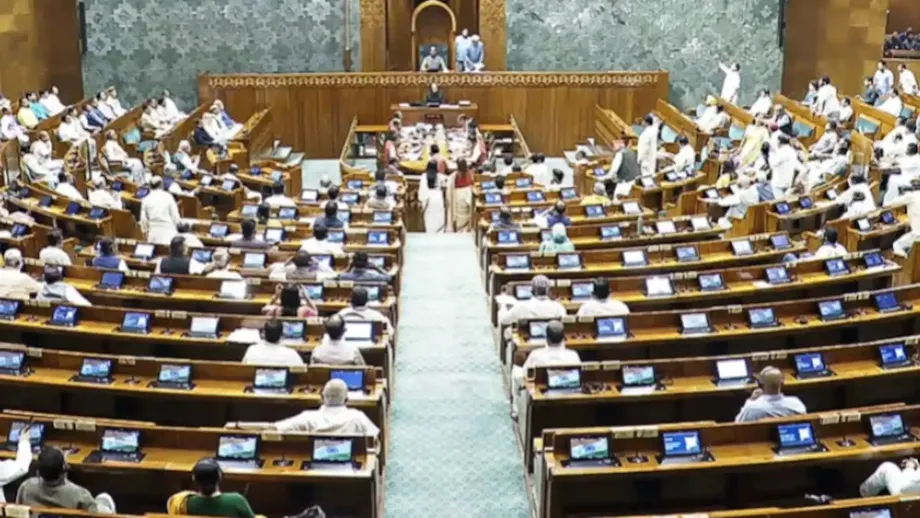
A fresh push after April's parliamentary defeat
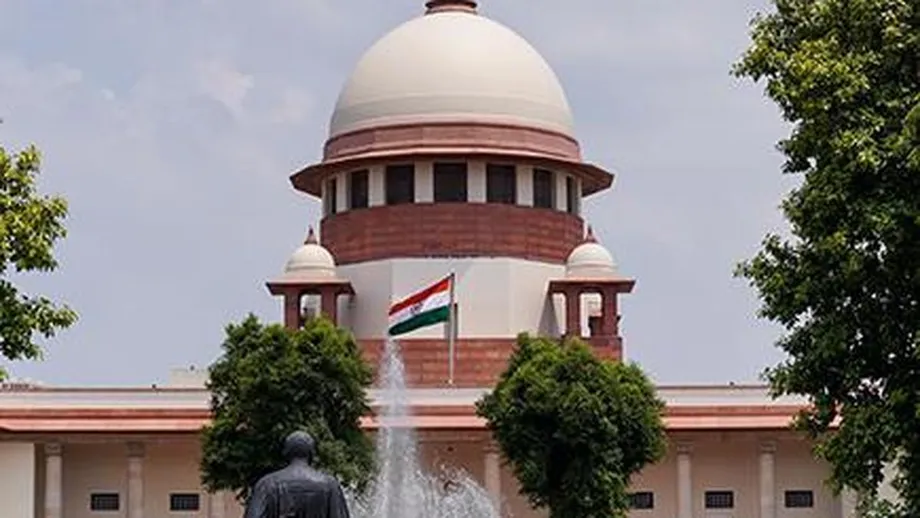
India's government is considering a special sitting of Parliament toward the end of October 2026 to revive legislation linking women's reservation to a redistribution of parliamentary seats. The renewed push follows the defeat of the Constitution (131st Amendment) Bill, 2026, in the Lok Sabha on April 17, despite more members voting for it than against it.
Contents
- A fresh push after April's parliamentary defeat
- When could Parliament meet?
- Why an ordinary majority is not enough
- What the April package would change
- Why southern states are concerned
- What a 50% seat guarantee would mean
- Why the census timetable matters for women
- Who would redraw the electoral map?
- Protests and the people awaiting the quota
- Key Points
Government sources say the Centre believes it can now assemble the support needed, helped by reported shifts toward the ruling side and talks with regional parties. Among those being approached is the Dravida Munnetra Kazhagam (DMK), whose 22 MPs could be important to the outcome. The party has strongly opposed delimitation, the process of deciding how many constituencies each state receives and redrawing their boundaries.
The stakes extend beyond the government's ability to win a vote. The April package proposed using the 2011 census to redistribute seats, raising the constitutional ceiling for Lok Sabha membership from 550 to 850, and changing the conditions for introducing the reservation of one third of seats for women.
Women's reservation became law through the 106th Constitutional Amendment in 2023. Its implementation, however, depends on a later census and delimitation exercise. The government wants to bring the quota into operation before the 2029 Lok Sabha election. Opposition parties have challenged the decision to tie that goal to changes in the distribution of political power among states.
When could Parliament meet?
As of October 16, no final sitting dates or revised legislative text had been announced. Government sources indicated that a notification could come the following week, with about a week's notice before Parliament meets.
The timetable must also accommodate the 12th BRICS Parliamentary Forum, scheduled for October 26 and 27 at Samvidhan Sadan. That gathering is a practical consideration as the Centre works out the programme for a possible sitting in the last week of the month.
The Monsoon Session ended on August 13 but has not been prorogued. Prorogation formally ends a parliamentary session. Because that step has not occurred, Parliament could resume sittings within the existing session, even if the gathering is publicly described as a special session.
The main dates show how the legislation has moved from an unsuccessful vote to another possible attempt:
- 2023: Parliament passed the 106th Constitutional Amendment, providing for reservation of one third of Lok Sabha and state assembly seats for women.
- April 16, 2026: The government introduced three bills covering constitutional changes, delimitation and related provisions for Union Territories.
- April 17, 2026: The constitutional amendment failed to secure the special majority required in the Lok Sabha.
- August 13, 2026: The Monsoon Session ended without being formally prorogued.
- October 26 and 27, 2026: Samvidhan Sadan is scheduled to host the BRICS Parliamentary Forum.
- March 1, 2027: The reference date for the next census, which matters for the existing route to women's reservation.
Why an ordinary majority is not enough
A constitutional amendment requires more support than ordinary legislation. In each House, it must win a majority of the total membership and the votes of at least two thirds of members present and voting. An ordinary numerical advantage for the ruling National Democratic Alliance (NDA) therefore does not guarantee passage.
The Lok Sabha currently has 540 members, according to the account of the government's preparations. If all 540 vote, the two thirds requirement would be 360 votes. The precise threshold depends on attendance and voting, while the requirement for a majority of the total membership also applies.
The April defeat came on the motion to consider the Constitution (131st Amendment) Bill. The measure had more supporters than opponents but fell short of the special majority. That explains why the government is seeking commitments beyond its usual parliamentary supporters before trying again.
Government sources say 20 Trinamool Congress MPs and six Shiv Sena (UBT) MPs have moved toward the ruling side since the last session. Together, those reported shifts involve 26 MPs. The Centre's confidence in the Lok Sabha still leaves a separate task: any constitutional amendment must also secure the required majority in the Rajya Sabha.
What the April package would change
PRS Legislative Research, an independent institution that examines legislation, lists three measures in its Delimitation Bill analysis: the Constitution (131st Amendment) Bill, 2026; the Union Territories Laws (Amendment) Bill, 2026; and the Delimitation Bill, 2026. All were introduced on April 16 and marked infructuous in the Lok Sabha on April 17, meaning the package could no longer proceed in that form after the constitutional amendment failed.
The constitutional proposal would allow Parliament to decide by law when delimitation takes place and which census it uses. The accompanying Delimitation Bill specified the latest published census when the commission is constituted. Under the timetable examined by PRS, that would mean using the 2011 census.
The package would also remove the requirement that women's reservation be based on the first census after the 2023 amendment. Related provisions would apply to the assemblies of Delhi, Puducherry and Jammu and Kashmir through the Union Territories legislation.
The proposed ceiling of 850 Lok Sabha members included up to 815 representatives from states and 35 from Union Territories. The existing constitutional ceiling is 550, comprising up to 530 from states and 20 from Union Territories. These ceilings are different from the Lok Sabha's established allocation of 543 elected seats and its reported current membership of 540.
Why southern states are concerned
Tamil Nadu, Kerala, Karnataka and Telangana have raised concerns about allocating seats according to population. Their central concern is relative representation: how much influence a state's MPs carry compared with the whole House.
The allocation of Lok Sabha seats among states remains tied to the 1971 census under a constitutional freeze. The 42nd Amendment introduced that freeze in 1976, and the 84th Amendment extended it in 2001 until publication of the first census after 2026. The extension was intended to give states time to pursue population stabilisation without losing parliamentary representation.
PRS projects substantial changes if seats are redistributed using the 2011 population figures. In its scenario without a broad expansion of the House, Tamil Nadu falls from 39 seats to 32 and Kerala from 20 to 15. Uttar Pradesh rises from 80 to 89, Bihar from 40 to 46, and Rajasthan from 25 to 30.
For residents, this concerns the strength of their state's voice when Parliament decides national laws and policy. A state can gain MPs in a larger House while still accounting for a smaller proportion of the votes cast there.
What a 50% seat guarantee would mean
The government is reportedly seeking support from the Nationalist Congress Party (Sharadchandra Pawar), which has eight MPs, through an assurance that the legislation would guarantee a 50% increase in seats across the board. Party leader Supriya Sule had indicated willingness to discuss the proposal if that increase were guaranteed.
The wording matters. A uniform increase of 50% for every state would preserve their relative shares, apart from adjustments needed to allocate whole seats. Expanding the House by about 50% while redistributing seats according to population produces a different result.
PRS illustrates the second approach in a projection totalling 813 seats. Tamil Nadu would rise from 39 MPs to 48, but its share of the House would fall from 7.18% to 5.90%. Kerala would gain two MPs, moving from 20 to 22, while its share would fall from 3.68% to 2.71%.
Uttar Pradesh would rise from 80 seats to 133, increasing its share from 14.73% to 16.36%. Bihar would move from 40 to 69, with its share increasing from 7.37% to 8.49%. Those figures explain why a promise of more seats alone may leave regional parties dissatisfied: the distribution of the additional seats determines who gains influence.
The DMK's position is especially consequential. Government outreach follows the party's reported split with Congress after the Tamil Nadu elections and its departure from the INDIA opposition bloc. Its 22 MPs are a substantial potential source of support, but its longstanding opposition to delimitation makes the substance of any seat guarantee central to the talks.
Why the census timetable matters for women
The 2023 law reserves one third of seats for women in the Lok Sabha and state assemblies, but connects implementation to a census followed by delimitation. That sequence places the timing of the quota in the hands of a lengthy administrative and legal process.
PRS says delimitation based on the census with a March 1, 2027 reference date is unlikely to finish before the 2029 election. The previous Delimitation Commission was constituted in 2002 and finalised its orders in 2008, illustrating the time such an exercise can require.
The government's April proposal sought to use an earlier census and remove the requirement to wait for the first census after the 2023 law. Congress and its allies instead sought implementation of women's reservation without linking it to the proposed redistribution of seats.
Former Union minister and BJP leader Smriti Irani defended the government's approach, arguing that implementing reservation required delimitation and an increase in constituencies. Rajya Sabha member and lawyer Kapil Sibal argued that the government had committed in 2023 to a later census, followed by delimitation and then reservation. Congress MP Priyanka Gandhi questioned why the quota could not be introduced within the existing 543 seats.
The disagreement therefore combines two decisions: when women should gain reserved constituencies, and how representation should be divided among states. Support for women's reservation has not produced agreement on the government's chosen mechanism.
Who would redraw the electoral map?
The Delimitation Bill would authorise the central government to establish a commission chaired by a serving or former Supreme Court judge. Its other members would include the Chief Election Commissioner, or an Election Commissioner nominated by that official, and the State Election Commissioner of the state concerned. The Centre would appoint the chairperson.
PRS also identifies a broader transfer of decision making. The constitutional proposal would let Parliament choose the timing of delimitation and the census to use through ordinary legislation. Those choices would then be made under the voting rules for ordinary bills rather than through another constitutional amendment.
A larger Lok Sabha would affect other institutions too. The Rajya Sabha's constitutional maximum would remain 250, reducing its size relative to the lower House. PRS calculates that an expansion from 543 to 815 Lok Sabha seats would move the ratio between the two Houses from about 2.2 to one to about 3.3 to one.
That change would increase the Lok Sabha's numerical weight in joint sittings on ordinary legislation and in the election of the Vice President. The limit on Union ministers, set at 15% of Lok Sabha membership, would also rise. PRS calculates that the permissible number would increase from 81 to 122 if membership grew from 543 to 815.
Protests and the people awaiting the quota
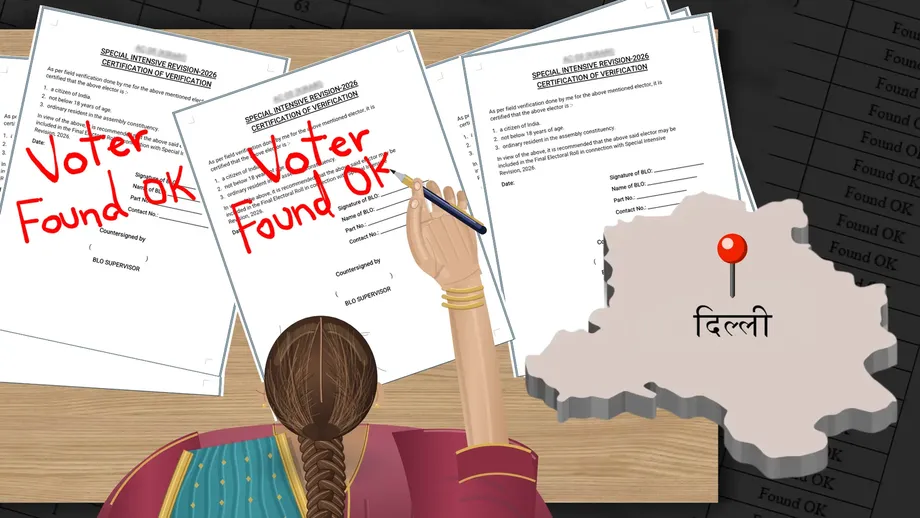
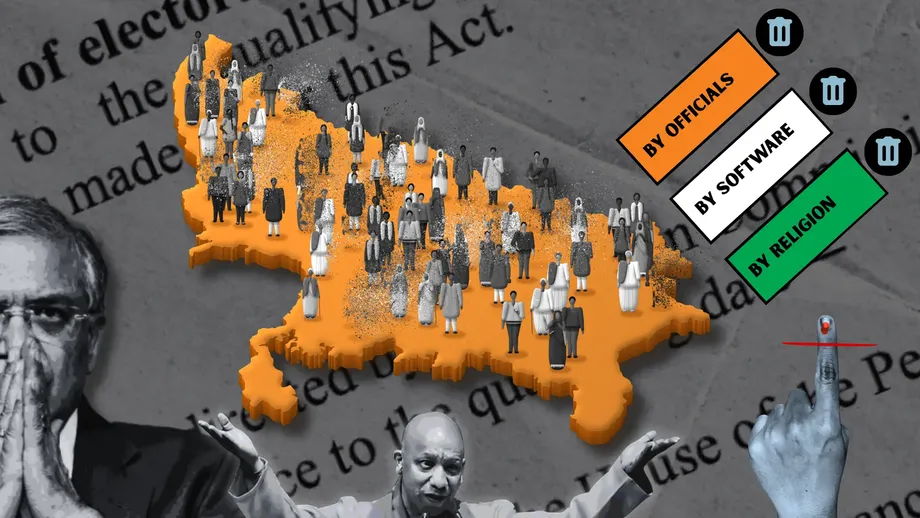
Opposition protests over the Special Intensive Revision (SIR) of electoral rolls and Chief Election Commissioner Gyanesh Kumar form the political setting for the proposed sitting. SIR is an intensive exercise to check and update voter lists. Opposition demands could include Kumar's resignation and a motion seeking his removal.
Disputes over the NEET examination paper leak and the crackdown on student protests disrupted attempts to revive the legislation during the Monsoon Session. Allegations of police brutality during protests could again compete with the government's legislative agenda.
Women considering political careers have their own concerns about how reservation would work. Sushmita Rai, a private school teacher in Noida, welcomed the prospect of women moving beyond voting into making policy, while expressing concern that women from political families might receive most of the opportunities.
Deepti Srivastava, an English literature postgraduate student at Delhi University, said reservation could encourage women such as herself to consider contesting elections. She also stressed the need for elected women to make their own decisions and saw greater representation as an opportunity for more discussion of safety, health services and equality at work.
The government's immediate task is to turn negotiations into enough votes in both Houses. For women awaiting reserved seats and states concerned about their share of representation, the decisive details are the implementation timetable, the census selected and the formula used to distribute seats.
Key Points
- The Centre is considering a parliamentary sitting toward the end of October 2026 to revive delimitation and women's reservation legislation.
- The Constitution (131st Amendment) Bill failed to secure the required special majority on April 17.
- The April package proposed using the 2011 census and raising the Lok Sabha's constitutional membership ceiling from 550 to 850.
- Government outreach includes the DMK and smaller opposition parties, with a possible 50% seat guarantee central to negotiations.
- PRS projections show that states can gain MPs while losing a share of representation in a larger House.
- The existing census and delimitation timetable makes implementation of women's reservation before the 2029 election unlikely, according to PRS.