A national command still waiting to take shape
Pakistan's programmes for polio, HIV, tuberculosis, malaria and hepatitis remain under separate chains of command about five years after the 2021 National Institute of Health reorganisation law required a disease unit to manage them, according to health officials. The gap extends to information: officials say the programmes do not routinely provide the NIH with the integrated data it needs to track infectious disease threats nationwide.
Contents
- A national command still waiting to take shape
- What the legal framework assigns to NIH
- Who runs the programmes now?
- The missing connection between programme data
- Research traces problems across government levels
- Pakistan already has surveillance networks to connect
- The patients and children behind the figures
- How the reform and surveillance efforts developed
- Leadership appointments remain unfinished
- Key Points
The responsibilities involve substantial public spending and large numbers of patients. Pakistan has allocated about Rs68 billion to a nationwide hepatitis C screening and treatment programme. The Global Polio Eradication Initiative estimates that the country's polio programme will need about $639.7 million for 2026 to 2029. Meanwhile, an estimated 369,000 people are living with HIV, according to figures presented to the National Assembly in May.
Federal Health Minister Mustafa Kamal said he was unaware that the Act provided for bringing the programmes under one command. He said he would seek a briefing from officials and examine the law. Several members of the newly appointed NIH Board of Governors also said they needed to read the provision before responding.
A Ministry of National Health Services official described the gap between the law and current practice:
Unfortunately, no effective transfer of these programmes, or their management, to the NIH has taken place. At the moment, these programmes are not even sharing their data or coordinating with the NIH for disease surveillance and control,
The practical issue is whether Pakistan's national public health institute can bring together information and decisions from programmes that currently answer to different administrators. A study published in April 2026 describes related weaknesses across federal and provincial institutions, including unclear responsibilities, limited resources and weak arrangements for sharing data.
What the legal framework assigns to NIH
The legal plan predates the 2021 Act. The 2020 NIH ordinance, dated December 17, 2020, assigns the Centre for Disease Control responsibility for setting Pakistan's strategic agenda on infectious disease surveillance, prevention and treatment. Its Section 12 requires the development of a Diseases Specific Unit.
The ordinance explicitly assigns that unit management of ongoing programmes such as polio, HIV, hepatitis, tuberculosis and malaria. It also covers future programmes identified by experts, including those addressing drug resistant typhoid, COVID-19 and bacteria resistant to important antibiotics.
The 2021 Act is the law officials cite as requiring the current programmes to come under the NIH structure. The earlier ordinance sets out the same central design: a disease control centre with responsibilities spanning individual infections, rather than a collection of programmes operating independently.
Section 12(3) of the ordinance also requires the centre, with assistance from federal and provincial governments and other public authorities, to develop and maintain a surveillance system. Surveillance means collecting and examining information about illness so health authorities can spot outbreaks, identify affected places and decide where action is needed.
Who runs the programmes now?
Pakistan's polio eradication effort operates through the National Emergency Operations Centre. It is headed by a health ministry official at joint secretary level who reports to the Prime Minister's Office.
HIV, tuberculosis and malaria sit within the health ministry's Common Management Unit. That unit has a national coordinator and separate deputy coordinators for the three programmes. Hepatitis C elimination operates separately under a project director appointed by the ministry.
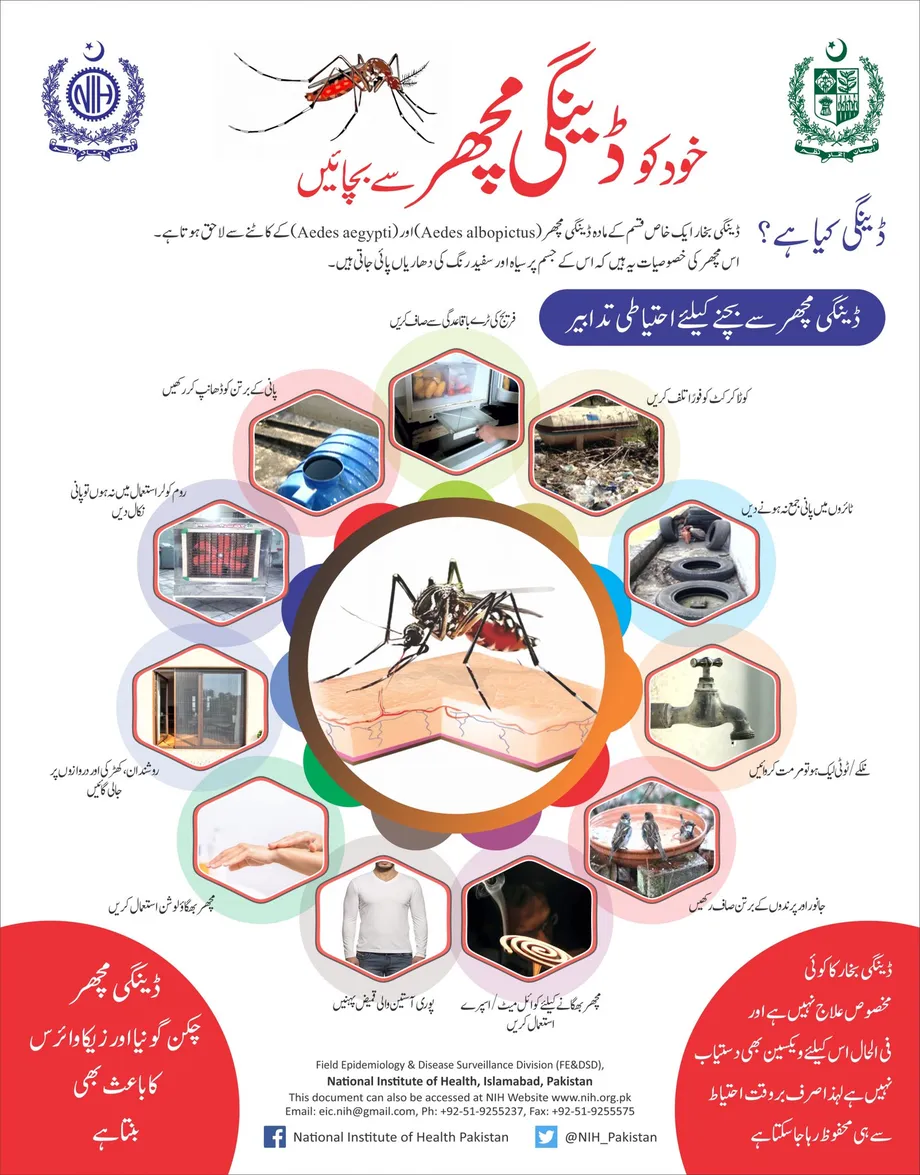
District Health Offices largely handle responses to dengue and other diseases spread by mosquitoes and similar carriers. These arrangements leave responsibilities distributed across national programme offices, ministry administrators and local health authorities.
NIH board member Dr Farhan Essa, an infectious diseases specialist, said he had raised the issue at an earlier meeting and argued for bringing the programmes under the Centre for Disease Control. He also urged the board to appoint interim heads of NIH institutes while permanent leadership is selected.
The missing connection between programme data
The NIH framework gives a second institution a specific information role. Section 16 of the 2020 ordinance makes the Health Data Center the national central repository for health information and data. It assigns the centre responsibility for obtaining information from relevant authorities, storing it, bringing it together and analysing national health and disease data.
Officials say routine reporting from the major programmes has not developed into that integrated national picture. In practical terms, NIH needs information that can show both where infections are occurring and how programmes are responding, including whether patients remain in care and whether vaccination teams reach their targets.
The NIH says its field epidemiology programme has established five sentinel sites for viral hepatitis and shares monthly reports with hepatitis control programmes. Sentinel sites are selected locations that collect information regularly to help track disease patterns.
Officials describe a broader unmet need: bringing together programme operations and disease information from across the country. Monthly reporting from selected hepatitis sites addresses a narrower task than the national collection and analysis responsibilities described in Section 16.
Research traces problems across government levels
A 2026 governance study, published in PLOS Global Public Health on April 1, draws on interviews with 37 stakeholders conducted between May and July 2025. It identifies fragmented governance, resource constraints, decentralisation and gaps in legislation as barriers to disease surveillance and emergency response.
The study describes the 2021 Act as restructuring NIH into seven independent divisions, including the Centre for Disease Control. Interview participants reported weak formal coordination between federal and provincial bodies and called for clearer responsibilities, stronger systems for sharing data and a national surveillance framework.
Provincial responsibilities are central to the problem. The study says disease programmes organised separately by infection were devolved to provincial health authorities after the 18th constitutional amendment, creating difficulties in sharing information. A national system therefore needs working arrangements with provinces as well as decisions about leadership within federal institutions.
The research also records substantial expansion of the Integrated Disease Surveillance and Response System, or IDSRS. It reports that the system reached more than 6,000 primary and secondary healthcare facilities and that more than 15,000 healthcare personnel received training.
Funding remains a weakness. The study says IDSRS and the Public Health Emergency Management System lack dedicated national budget allocations protected for their work and depend substantially on development partners. Maintaining a surveillance network requires continuing support for staff, reporting systems and emergency coordination.
Pakistan already has surveillance networks to connect
A 2022 surveillance review documents several systems developed before the current governance debate. The Disease Early Warning System began in 2005 after the earthquake emergency, with the aim of detecting warning signs of epidemics early enough for a rapid response.
Punjab's Disease Surveillance System became operational in July 2013. The review describes reporting from healthcare facilities into a central server, including information related to dengue, polio, hepatitis and tuberculosis. At the time described, it tracked 26 communicable diseases and was being expanded to cover 81.
Khyber Pakhtunkhwa also launched an integrated surveillance pilot in six districts. The review describes plans to connect participants by text message or the internet so information and alerts about diseases such as measles and diphtheria could move quickly.
Viral hepatitis surveillance supported by the United States Centers for Disease Control and Prevention had operated across the four provinces and Islamabad since 2009, according to the review. These earlier initiatives show that Pakistan has reporting networks and institutional experience on which national coordination can build. Their scope and dates also help explain why officials are calling for connections between existing systems rather than simply another reporting project.
The patients and children behind the figures
The National Assembly was told in May that about 84,000 people were registered with HIV services, against an estimated 369,000 people living with HIV. Using those figures, registration covered roughly 23 per cent of the estimated population living with the virus. Nearly 20,000 people who had begun treatment were no longer in follow-up.
Those numbers point to two concrete tasks for programme managers: reaching people who are outside registered services and reconnecting with patients whose continuing care is no longer being tracked. Shared information can help authorities understand where those gaps are concentrated.
The World Health Organization estimates that tuberculosis affects more than 669,000 people in Pakistan and causes about 51,000 deaths annually. Pakistan recorded 1.8 million malaria cases in 2025, a decline of 10 per cent from the previous year.
Polio transmission also continues, with six cases reported in 2026. A September vaccination campaign reached more than 29.3 million children across 113 districts, while 627,776 remained unvaccinated after follow-up efforts. Programme updates identify security restrictions on access and missed children as continuing challenges.
The Global Polio Eradication Initiative estimates that Pakistan needs about $639.7 million for its polio programme during 2026 to 2029, including a direct government contribution of about $154.3 million. That government share is approximately 24 per cent of the projected requirement. The figures put the coordination debate alongside a continuing need to finance vaccination and reach children in difficult locations.
How the reform and surveillance efforts developed
Pakistan's surveillance initiatives began years before the NIH reorganisation. The sequence places the current dispute within a longer effort to connect disease detection, programme management and emergency response.
- 2005: The Disease Early Warning System was established after the earthquake emergency.
- 2009: Viral hepatitis surveillance supported by the United States CDC began across the provinces and Islamabad, according to the 2022 review.
- July 2013: Punjab's Disease Surveillance System became operational.
- December 17, 2020: The NIH reorganisation ordinance set out responsibilities for a Diseases Specific Unit and a national Health Data Center.
- 2021: Parliament passed the NIH reorganisation law that officials cite as requiring unified programme management.
- May to July 2025: Researchers interviewed 37 stakeholders about NIH governance and disease surveillance.
- April 1, 2026: The resulting governance study was published in PLOS Global Public Health.
The sequence shows that the present task involves aligning established programmes and provincial systems with a later national institutional framework. Ministerial and board decisions now concern how that framework will operate in practice.
Leadership appointments remain unfinished
The NIH has had no permanent chief executive officer or institute executive directors appointed under the Act for about five years, officials say. Although its website lists Dr Muhammad Salman as CEO, officials describe the permanent appointment process as incomplete.
The latest attempt to appoint heads of two institutes was rejected over procedural shortcomings, according to officials. Dr Essa's call for interim heads addresses the immediate leadership gap while the board works through permanent selections.
Mustafa Kamal has said he will seek a briefing and examine the law. No timetable was given for transferring programme management, establishing routine integrated reporting or completing the permanent appointments.
For patients and families, the practical priorities are specific: keeping people with HIV connected to treatment, tracking tuberculosis, reaching children missed by polio campaigns and ensuring hepatitis screening leads to care. The legal framework assigns national responsibilities, while the research describes the provincial coordination, staffing and funding arrangements needed to carry them out.
Key Points
- Officials say five major infectious disease programmes still operate through separate commands despite the 2021 NIH reform law.
- The 2020 ordinance assigns a Diseases Specific Unit programme management duties and gives the Health Data Center national information responsibilities.
- A study based on 37 stakeholder interviews identifies weak coordination, unclear roles and funding constraints.
- Existing surveillance networks provide infrastructure, but officials say integrated programme reporting to NIH remains incomplete.
- The health minister will seek a briefing; no implementation timetable has been announced.