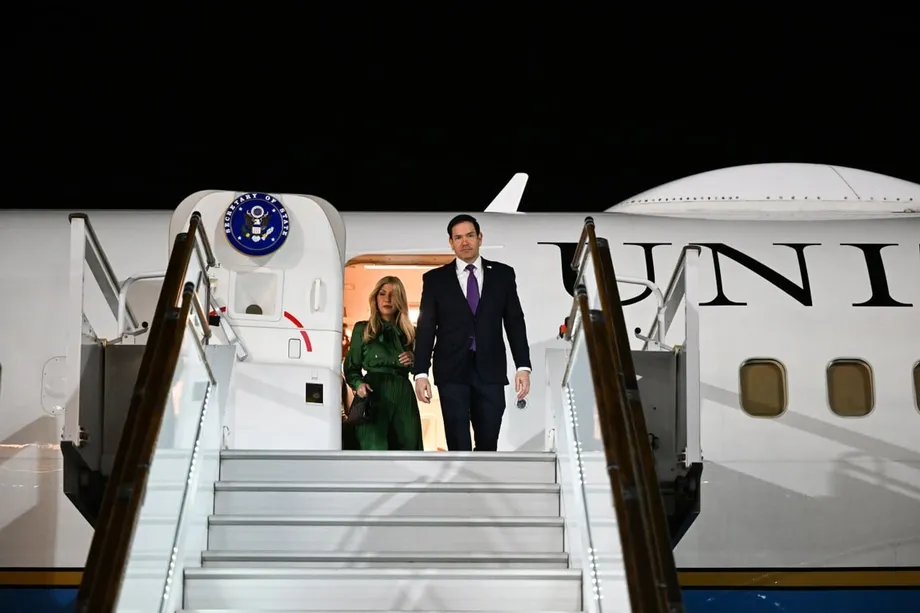
Samarkand talks put business at the centre of US outreach
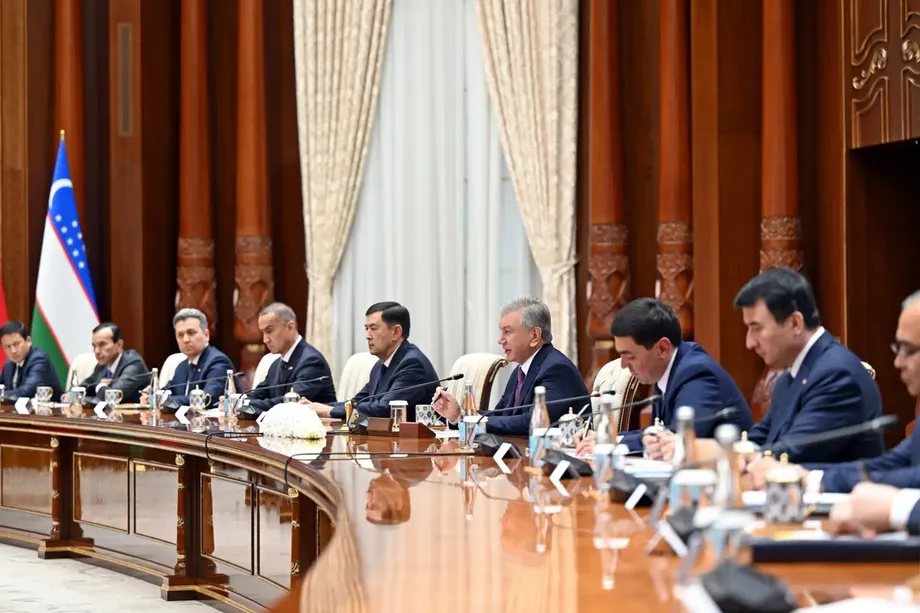
US Secretary of State Marco Rubio said agreements potentially worth billions of dollars were under discussion in Samarkand on October 19, bringing representatives of nearly 300 American companies into talks with Uzbekistan and its Central Asian neighbours. The commercial push coincided with the first US–Uzbekistan Enhanced Strategic Partnership Dialogue and Uzbekistan's accession to the Artemis Accords for peaceful space exploration.
Contents
- Samarkand talks put business at the centre of US outreach
- What the business delegation is working on
- Why critical minerals are a priority
- Uzbekistan's production targets show the scale of its plans
- A new dialogue and a space agreement
- How the regional meetings fit together
- Earlier pledges provide a benchmark
- More partners, without choosing sides
- Investment barriers and the debate over human rights
- Key Points
Rubio appeared at Registan Square alongside Saida Mirziyoyeva, head of Uzbekistan's Presidential Administration, after arriving in the city on the evening of October 18. He described Samarkand's centuries as a crossroads of world trade as a starting point for a larger American economic presence in the region.
The secretary of state said announcements would follow the investment forum. At the time of his remarks, the specific agreements, their final values and their implementation schedules had not been disclosed. Uzbekistan's signing of the space framework was a completed diplomatic step, while the proposed commercial package was still being discussed.
Rubio, explaining what Uzbekistan could expect from the visit, expressed confidence that the meetings would produce business announcements.
I think we'll have some concrete deals to announce.
The visit brought together diplomacy and business across several fields: minerals, energy, transport, digital technology, agriculture, education and finance. For Uzbekistan, the opportunity is to attract capital and technology for domestic development. For Washington, the talks offer access to new customers and additional suppliers of materials needed by American industries.
What the business delegation is working on
Rubio said nearly 300 American businesses were represented in Samarkand. The State Department had earlier described a delegation of more than 200 business leaders. The figures count different things, companies and people, while showing the scale of the commercial mission.
Uzbekistan's Ministry of Investment, Industry and Trade outlined six sessions for October 19: digital technologies; education and healthcare; mineral resources; energy and transport; agriculture and textiles; and finance and investment. Meetings between companies and discussions with government bodies were intended to address individual projects, financing and the conditions needed to proceed.
The programme also included the second meeting of the Uzbekistan–US Business and Investment Council. Saida Mirziyoyeva and Sergio Gor, the US special presidential envoy for Central Asia, co-chair the council, which was established to promote investment and commercial partnerships.
Rubio's schedule included talks with Uzbek Foreign Minister Bakhtiyor Saidov, a document signing ceremony and a meeting and dinner with President Shavkat Mirziyoyev. Bringing executives into the same programme gave companies opportunities to discuss commercial plans alongside the officials responsible for the wider relationship.
Why critical minerals are a priority
Critical minerals emerged as a central subject of Rubio's discussions. These are materials governments consider essential to their economies and industries, especially when reliable supplies are difficult to secure. Rare earth elements, a particular group used in many technologies, form part of that wider discussion.
Rubio argued that countries should avoid depending too heavily on a single supplier. He said the United States wanted to explore cooperation with Uzbekistan on developing mineral deposits and processing capacity, while describing supply diversification as a shared international interest.
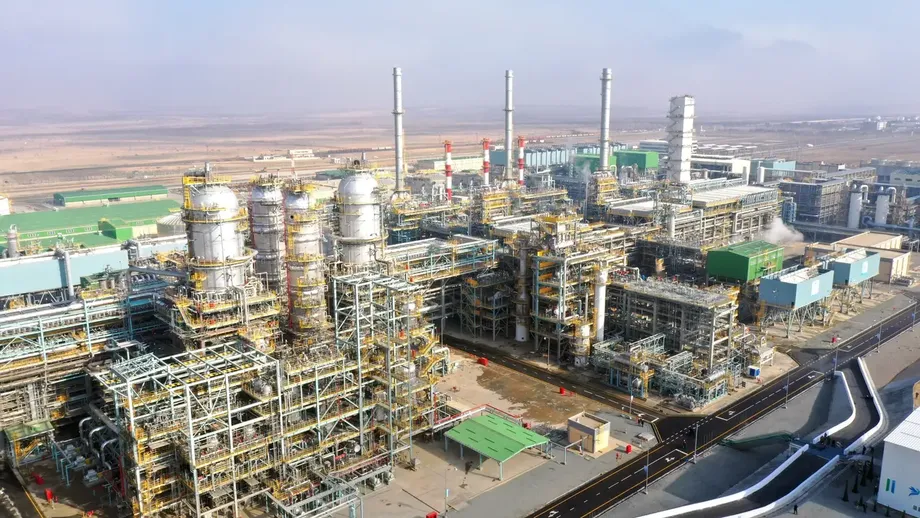
Uzbekistan and its neighbours are seeking investment and technology to develop their resources. Washington wants additional supply routes for industries that depend on those materials. Processing is an important part of the proposed cooperation: it turns extracted material into forms that manufacturers can use, creating industrial activity beyond the mine itself.
The discussions build on a February 4 memorandum signed by Saidov and US Deputy Secretary of State Christopher Landau on supply chain security for critical minerals and rare earth elements. That agreement covered mining and processing. Later that month, the US International Development Finance Corporation signed preliminary commercial terms for an investment framework with Uzbekistan, including a proposed joint holding company to develop projects.
Uzbekistan's production targets show the scale of its plans
Uzbekistan aims to increase annual copper production from 150,000 tonnes in 2024 to 500,000 tonnes by 2030, according to figures attributed to the US International Trade Administration. Reaching that target would mean producing about 3.3 times as much copper, an increase of 350,000 tonnes a year.
Uranium production is targeted to rise from 3,800 tonnes in 2024 to 10,000 tonnes by 2030, roughly 2.6 times the earlier level. The country's other targets for 2030 include annual production of 155 tonnes of gold and 500 tonnes of silver.
The International Trade Administration ranks Uzbekistan 11th globally for proven copper reserves. Its wider resource base includes lithium, tungsten, graphite and molybdenum. Uzbekistan created the Uzbekistan Technological Metals Complex, known as UzTMC, in 2024 to develop activities across the minerals industry, from extraction through processing and further production.
Those plans give the Samarkand talks a concrete industrial setting. Uzbekistan is seeking a larger mining and processing sector, while American officials are looking for additional sources of strategic materials. Turning that shared interest into production requires financing, equipment, infrastructure and workable commercial partnerships.
A new dialogue and a space agreement
Saidov and Rubio held the first meeting of the Enhanced Strategic Partnership Dialogue on October 19. Saidov said the discussions focused on carrying out agreements reached by the two countries' leaders and expanding cooperation in trade, investment, energy, critical minerals and advanced technologies.
Education, cultural exchanges and security were also on the agenda. Rubio identified infrastructure and space cooperation among the subjects discussed, alongside cooperation through the C5+1 platform.
After the bilateral talks, Saidov announced that Uzbekistan had joined the Artemis Accords as the framework's 77th participating country. Established in 2020, the accords set out nonbinding principles for peaceful civilian space exploration, including transparency, sharing scientific information and reducing interference between missions.
Saidov said participation would create opportunities for cooperation with NASA and other participating space agencies, training for Uzbek specialists and access to space technologies. The practical focus for Uzbekistan is therefore on developing expertise and institutional links, alongside joining an international framework covering exploration of the Moon, Mars and other celestial bodies.
How the regional meetings fit together
Rubio met the foreign ministers of Uzbekistan, Kazakhstan, Kyrgyzstan, Tajikistan and Turkmenistan under C5+1. The name means the five Central Asian countries plus the United States. Their agenda covered economic cooperation, trade, investment, energy security and wider regional security.
The Samarkand programme combined that regional meeting with bilateral discussions. Tajik Foreign Minister Sirojiddin Muhriddin was also scheduled to hold talks with Rubio, while the US secretary of state met his Kazakh counterpart to discuss economic and security cooperation.
The latest meetings follow several stages in the development of the partnership:
- September and November 2015: US and Central Asian foreign ministers met in New York and Samarkand as the C5+1 format took shape.
- September 2023: The first meeting at presidential level took place in New York, helping establish a broader business and minerals agenda.
- February 2024: The Critical Minerals Dialogue began.
- November 2025: President Donald Trump hosted the five Central Asian presidents in Washington, where major commercial packages were announced.
- October 18 and 19: Rubio arrived in Samarkand, met regional ministers and held the first Enhanced Strategic Partnership Dialogue with Uzbekistan.
Central Asian governments have also developed their own consultation process, beginning with a meeting of regional leaders in 2018. Cooperation on transport and energy matters to foreign investors because projects often depend on connections that cross national borders.
Earlier pledges provide a benchmark
The November 2025 White House summit provides a measure of the commercial ambitions behind the Samarkand visit. The US Commerce Department's package was described as exceeding $25 billion, while Trump's announcements were also described as exceeding $130 billion. The scope behind the two totals was not explained.
The package included firm orders and preliminary commitments at different stages of implementation. Aviation was a major component: Uzbekistan Airways ordered eight additional Boeing 787 aircraft, while Kazakhstan's Air Astana selected up to 15. Agricultural machinery and advanced computing also featured.
President Mirziyoyev had separately pledged investment of up to $100 billion in the US economy, alongside purchases of American goods. Those plans show that the relationship involves spending in both directions, with Central Asian buyers seeking aircraft, equipment and technology as American companies explore regional projects.
The next concrete developments in Samarkand were expected after the investment forum meetings. Those announcements would give businesses and the public the details needed to understand how the proposed package would be divided among countries, industries and individual projects.
More partners, without choosing sides
Russia and China remain major economic and diplomatic partners for Central Asia. Rubio said the United States wanted opportunities for American companies without asking regional governments to end their relationships with other countries.
Rubio, responding to questions about competition for influence, described the American position in commercial terms.
We have products, we have companies, they make things, and we just want fair competition and an opportunity.
Uzbekistan's broader opening also featured in his comments. Rubio cited annual economic growth of nearly 8% and described the country as Central Asia's most populous nation. With a population of about 37 million, Uzbekistan represents a substantial market as well as a potential production base.
Tourism offered another possible connection. Rubio said he was impressed by the number of visitors and had learned that negotiations were under way for a direct flight from Miami to Uzbekistan. A direct service could make travel easier for tourists and business visitors, although the discussions were still at the negotiation stage.
Investment barriers and the debate over human rights
Daniel Rosenblum, a former US deputy assistant secretary of state for Central Asia and former ambassador to Uzbekistan and Kazakhstan, described the business delegation accompanying Rubio as unusual. He welcomed the combination of diplomatic attention and commercial outreach, while cautioning that companies would still face practical investment problems.
Rosenblum identified distance, logistics, financing and finding suitable local partners as continuing concerns. He said the size of a visiting delegation would not remove those obstacles and expressed doubt that American business activity would suddenly grow tenfold.
Rosenblum, assessing the limits of American influence, said Washington could become a more important regional partner without becoming the dominant outside power.
We're never going to be the major player in Central Asia, is my view.
He identified advanced technology, artificial intelligence and English language education as fields where American cooperation could be useful. His assessment points towards a partnership built around particular strengths rather than an attempt to replace every existing regional relationship.
Human rights formed another part of the debate. Rosenblum said the Trump administration had largely dropped democracy and human rights from its public agenda, while arguing that commercial interests and rights advocacy could coexist. More predictable institutions, he said, could also benefit companies investing in the region.
Galiya Ibragimova, a regional expert born in Uzbekistan and based in Moldova, described the administration's approach as centred on business rather than political reform. Alisher Ilkhamov, head of the London based Central Asia Due Diligence think tank, also expressed concern about the absence of human rights from Rubio's agenda.
The Samarkand visit therefore brought two tests into focus: whether diplomatic attention produces workable commercial projects, and whether the broader relationship can address concerns beyond transactions. For companies, the immediate tasks are specific ones, securing finance, agreeing project terms and organising transport and production. For the governments involved, the new dialogue and business council provide channels to continue that work.
Key Points
- Rubio said agreements potentially worth billions of dollars were being discussed in Samarkand, with nearly 300 American companies represented.
- Final deal values and project details had not been announced when he spoke; announcements were expected after the forum meetings.
- Uzbekistan and the United States held their first Enhanced Strategic Partnership Dialogue on October 19.
- Uzbekistan joined the Artemis Accords as the 77th participating country, according to Foreign Minister Bakhtiyor Saidov.
- Critical minerals and domestic processing are priorities, alongside energy, infrastructure, technology, education and security.
- Uzbekistan targets annual copper production of 500,000 tonnes by 2030, compared with 150,000 tonnes in 2024.
- Rubio said closer US ties could develop alongside Central Asia's partnerships with other countries.