Tashkent talks put transport and investment first
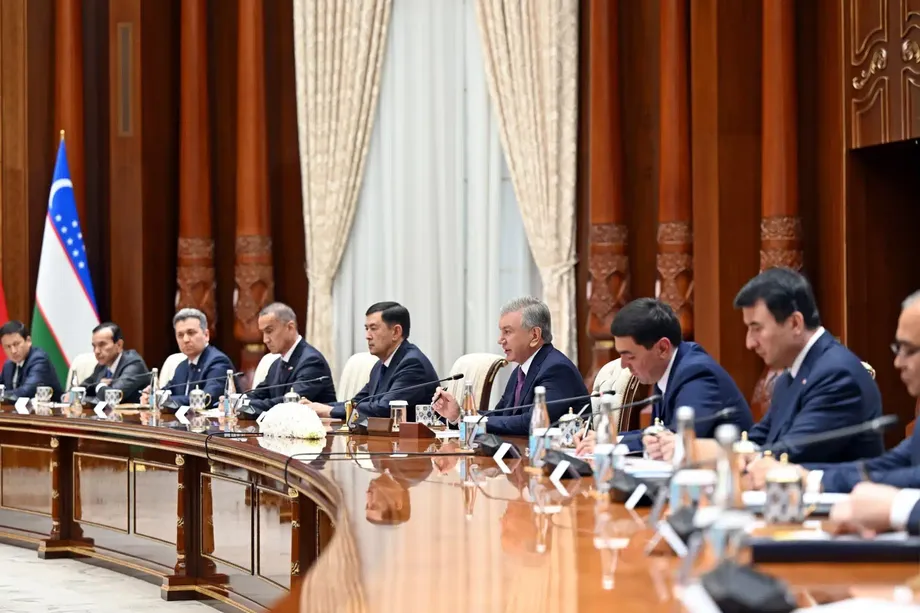
Uzbekistan and China are seeking to turn a project portfolio approaching $60 billion into operating businesses, stronger transport links and wider trade, with a railway through Kyrgyzstan at the centre of their plans. President Shavkat Mirziyoyev received Chinese Premier Li Qiang in Tashkent on October 17, 2026, for talks covering investment, energy, technology and political cooperation.
Contents
- Tashkent talks put transport and investment first
- A railway with a 2030 target
- Trade growth meets a push for more Uzbek exports
- Investment plans reach beyond transport
- A wind project gives the energy agenda a local example
- Technology and public services join the agenda
- Political support accompanies the economic plans
- Flights, visa exemptions and cultural centres
- From earlier commitments to the next milestones
- Key Points
The meeting brought together several measures of an expanding relationship: more than 6,000 joint ventures involving Chinese participation, bilateral trade of $16.1 billion in 2025, and a Chinese share of 23% of Uzbekistan's foreign trade during the first eight months of 2026. The nearly $60 billion figure describes projects backed by firm agreements, with construction and business activity advancing across different sectors.
Li also held talks with Uzbek Prime Minister Abdulla Aripov, after which the leaders witnessed the signing of cooperation documents covering trade, education, customs, health and poverty reduction. Other documents signed during the visit addressed electronic commerce, climate and media.
Mirziyoyev and Li focused on carrying out agreements reached by the Uzbek president and Chinese President Xi Jinping in Bishkek in August. Li conveyed greetings from Xi and called for closer coordination between the two governments.
The presidential meeting and talks with Aripov were dated October 17, although the beginning of Li's visit was also given as October 18. The visit was described as lasting two days. Both meetings placed practical economic cooperation alongside Uzbekistan's renewed support for China's positions on Taiwan and security.
A railway with a 2030 target
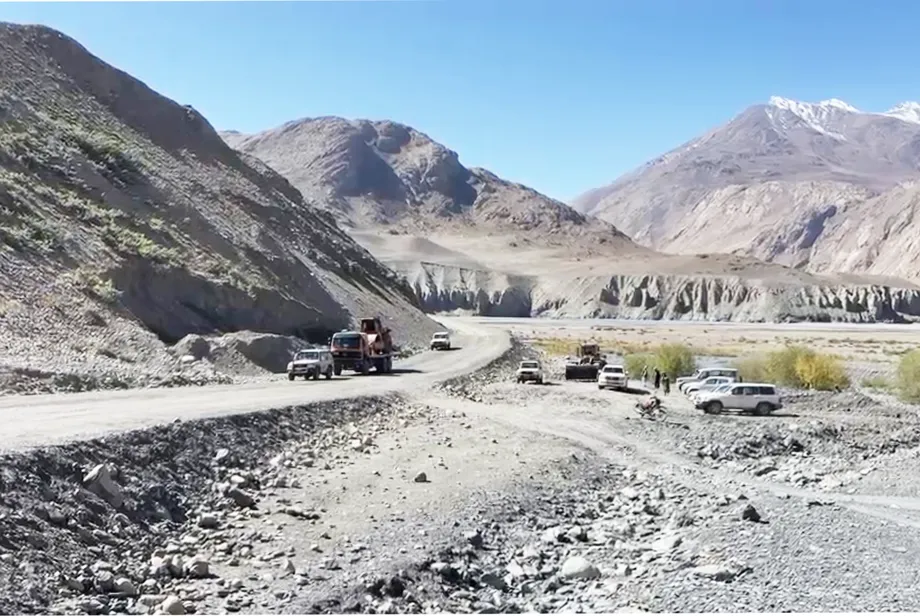
The China–Kyrgyzstan–Uzbekistan railway is the most concrete regional infrastructure project discussed. The planned route is about 532 kilometres long, carries an estimated cost of $4.7 billion and is intended to begin operating by 2030.
Construction was formally launched in December 2024. By September 2026, work had begun on 27 of the 29 planned tunnels on the Kyrgyz section, or about 93% of the total. Those figures describe tunnels where work had started; excavation, bridge building and preparation of the railway bed remained part of the construction programme.
Mirziyoyev said Uzbekistan was ready to accelerate construction. Li expressed China's readiness to ensure that the railway was built to a high standard. Aripov also committed Uzbekistan to advancing the line and other projects under the Belt and Road framework, China's programme for international infrastructure and economic cooperation.
The route would connect China with Uzbekistan through Kyrgyzstan, creating a direct transport link across all three countries. The leaders expect its opening to support regional trade and transport. Businesses along the route could gain opportunities in freight handling, warehousing and other services needed to move goods.
Eldor Tulyakov, executive director of Uzbekistan's Development Strategy Center, described the railway's shared economic purpose:
The railway "links the interests of several countries around a common project," he said.
Trade growth meets a push for more Uzbek exports
Chinese official figures put bilateral trade at $16.1 billion in 2025, an increase of 17.9% from the previous year. That growth rate implies a 2024 total of roughly $13.7 billion, meaning annual trade rose by about $2.4 billion.
Uzbek official figures show that China accounted for 23% of Uzbekistan's foreign trade turnover in the first eight months of 2026, the largest share held by any trading partner. In simple terms, almost one dollar in every four of Uzbekistan's trade in goods involved China during that period.
Li said China was willing to import more Uzbek products, particularly goods valued for their quality or distinctive characteristics. He encouraged Uzbekistan to use the China International Import Expo, a major exhibition where foreign suppliers can present products to Chinese buyers.
China is already a major source of Uzbekistan's imports. A larger market for Uzbek products would give producers another way to benefit from the relationship, alongside investment in factories and infrastructure. The talks covered modern agriculture, customs cooperation and electronic commerce, all relevant to selling and moving goods across borders.
Investment plans reach beyond transport
Uzbekistan's portfolio of projects backed by firm agreements has reached nearly $60 billion. More than 6,000 joint ventures involving Chinese participation provide an existing business base for the broader investment plans.
Li said Beijing supported more capable Chinese companies investing and doing business in Uzbekistan. He also called for favourable conditions for those companies. Mirziyoyev welcomed further Chinese investment, while Aripov expressed appreciation for China's support for Uzbekistan's reforms and development.
The investment agenda includes chemicals, geology, mining, metallurgy, vehicle manufacturing, equipment production and infrastructure modernisation. Finance was also discussed, alongside the physical connections needed to move goods and support business activity.
The leaders proposed aligning their development strategies more closely. In practical terms, that means trying to match Uzbekistan's priorities for industry, energy and infrastructure with the financing, equipment and business capacity that Chinese partners can bring.
A wind project gives the energy agenda a local example
A wind power project supported by China was completed in August in Bostanlyk district, in the Tashkent region. At full operation, it is expected to save about 12 million cubic metres of natural gas and reduce carbon dioxide emissions by roughly 24,000 tonnes each year.
Those projected savings show the local purpose of the wider energy partnership. Electricity generated from wind can reduce the amount of gas needed for power production. The Bostanlyk figures are expectations for full operation.
Solar plants and wind farms built by Chinese companies are already supplying electricity to grids in several Uzbek regions. The talks sought to expand that cooperation while also discussing peaceful uses of nuclear energy, a separate part of the proposed energy agenda.
Tulyakov pointed to electric vehicle manufacturing and green energy as areas where cooperation was contributing to Uzbekistan's development goals. He described the relationship between political agreements and economic activity:
"Political trust creates favorable conditions, and practical work gives it substance," he said.
Technology and public services join the agenda
Artificial intelligence, digital technologies, robotics, aerospace and scientific research were among the proposed areas for closer cooperation. Artificial intelligence uses computer systems to perform tasks such as recognising patterns and analysing information, while robotics applies machines to physical tasks.
The leaders discussed these fields alongside equipment manufacturing and modern agriculture. Their agenda therefore stretches from established industrial activity, such as mining and chemicals, to technologies that could be used in factories, farming and transport.
The signed cooperation documents also reached beyond commercial investment. Health, education and poverty reduction were included in the package witnessed by Li and Aripov, while climate cooperation formed part of the wider visit.
Uzbekistan and China have been exchanging experience in reducing poverty. No detailed implementation timetable, funding breakdown or measurable targets were announced for the individual technology and public service initiatives, leaving those details for subsequent work between the responsible bodies.
Political support accompanies the economic plans
Mirziyoyev reaffirmed Uzbekistan's commitment to the One China policy and support for Beijing in safeguarding what China calls its core interests. Taiwan is central to that position: Beijing regards the island as part of China and opposes its independence.
Uzbekistan's commitment follows a joint statement issued in 2024, in which Tashkent said it would neither establish official relations nor conduct official exchanges with Taiwan. The October talks renewed that political alignment as the two governments discussed expanding economic ties.
Mirziyoyev also expressed readiness to continue cooperation against terrorism, separatism and extremism, the three categories Chinese authorities group under the phrase "three evil forces". Li called for stronger strategic communication and continued support for each country's core interests.
The two governments also discussed coordination through the Shanghai Cooperation Organization, the China–Central Asia framework and the United Nations. China and Uzbekistan were founding members of the SCO in 2001. The organisation now has 10 members, following the admission of India and Pakistan in 2017, Iran in 2023 and Belarus in 2024.
Flights, visa exemptions and cultural centres
Li urged both countries to make greater use of their mutual visa exemption arrangement to increase travel. The leaders also discussed adding flights between Chinese and Uzbek cities, bringing transport capacity into the same conversation as easier entry procedures.
Chinese tourist arrivals in Uzbekistan are increasing. More flights would support that travel while also serving business visitors, students and people taking part in cultural exchanges. Youth exchanges and cooperation between regions and cities were among the areas Li proposed expanding.
Uzbekistan Culture Days were due to take place in China in the days after the meeting. The two governments also planned to open cultural centres in each other's countries, and Li called for those centres to be established promptly.
The exchanges form part of preparations for the 35th anniversary of diplomatic relations in 2027. Li said China wanted to use the anniversary to deepen political trust and practical cooperation. During the visit, he also laid a wreath at Uzbekistan's Independence Monument.
From earlier commitments to the next milestones
The October meetings connected several years of agreements with construction already under way. The most specific future milestones are the diplomatic anniversary in 2027 and the railway's planned opening by 2030.
- 2024: Uzbekistan reaffirmed in a joint statement that it would not establish official relations or hold official exchanges with Taiwan.
- December 2024: The China–Kyrgyzstan–Uzbekistan railway project was formally launched.
- 2025: Bilateral trade reached $16.1 billion, up 17.9% from the previous year.
- August 2026: Xi and Mirziyoyev met in Bishkek. A wind project supported by China was also completed in Uzbekistan's Bostanlyk district that month.
- September 2026: Construction work had begun on 27 of the railway's 29 planned tunnels in Kyrgyzstan.
- October 17, 2026: Li held talks in Tashkent with Mirziyoyev and Aripov, and cooperation documents were signed during the visit.
- 2027: China and Uzbekistan will mark 35 years of diplomatic relations.
- 2030: The railway is planned to begin operating.
For Uzbek producers, the immediate commercial opening is China's stated willingness to buy more local products. For construction companies and communities along the railway, attention turns to continued building work. The energy projects offer another practical measure of progress: electricity delivered, gas saved and equipment put into operation.
Key Points
- Mirziyoyev and Li discussed a project portfolio approaching $60 billion and more than 6,000 joint ventures involving Chinese participation.
- Bilateral trade reached $16.1 billion in 2025, while China held 23% of Uzbekistan's foreign trade in the first eight months of 2026.
- The railway through Kyrgyzstan is expected to cost $4.7 billion, extend about 532 kilometres and open by 2030.
- Cooperation documents covered trade, education, customs, health, poverty reduction, electronic commerce, climate and media.
- A wind project in Bostanlyk is expected, at full operation, to save about 12 million cubic metres of gas and cut carbon dioxide emissions by roughly 24,000 tonnes annually.
- Uzbekistan renewed its One China commitment, while both governments sought wider travel, cultural exchanges and coordination through international organisations.