A vast solar ambition faces a practical test
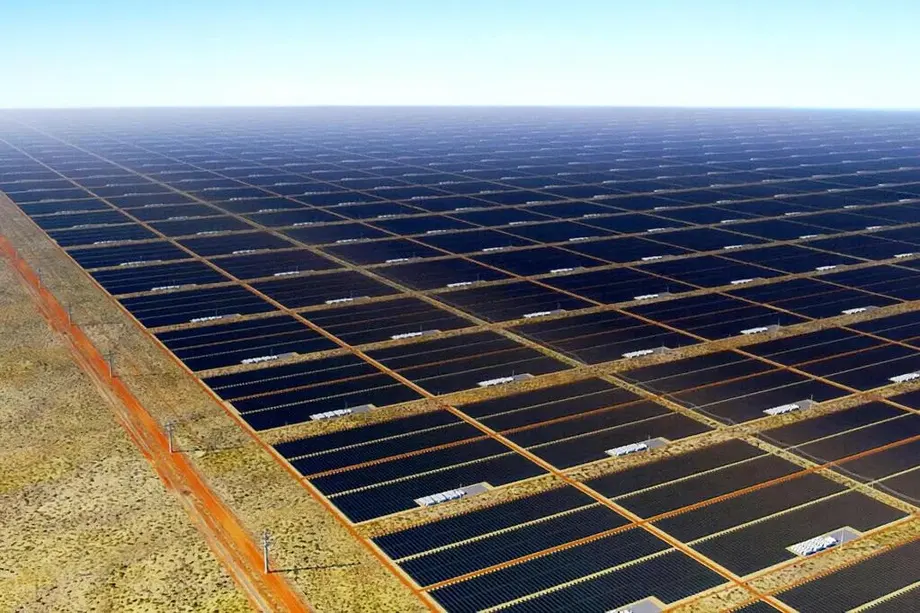
Indonesia is seeking Chinese investment for a solar program estimated to cost Rp1,140 trillion, with state electricity company PLN identifying about 35 gigawatt-peak of projects that could be developed by 2029. That near term pipeline puts land, financing and electricity networks at the center of a national ambition to build roughly 100 GWp of solar capacity.
Contents
- A vast solar ambition faces a practical test
- What the official electricity plan contains
- Where private investors fit
- Why transmission is as important as panels
- Bali shows how solar and batteries could work together
- Can factories keep pace with the target?
- Contracts and currency shape the investment decision
- Earlier delivery problems offer a warning
- Jobs and public money bring scrutiny
- The milestones through 2029
- Key Points
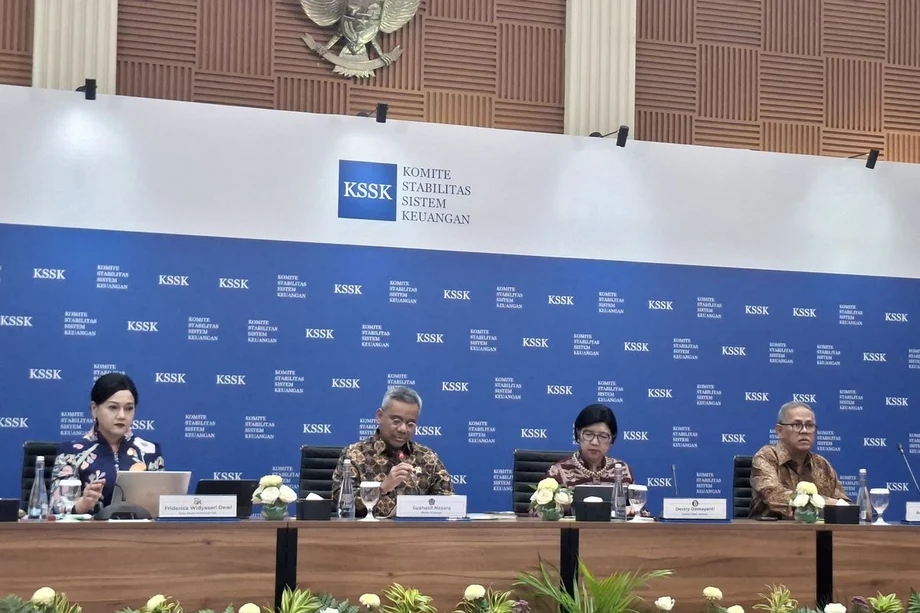
At the China RE Invest Indonesia 2026 forum in Beijing on November 2, PLN representatives met Chinese investors and financial institutions to discuss partnerships covering power plants, transmission and energy storage. The Indonesian Embassy in Beijing organized the event with Tenggara Strategics and CSIS Indonesia.
The opportunity extends well beyond supplying solar panels. Indonesia needs batteries to store electricity generated during daylight, transmission lines to move it to customers, and contracts that make investors willing to finance projects over many years.
President Prabowo Subianto launched the program in Gilimanuk, Jembrana, Bali, on August 25, 2026, seeking completion in under three years. The Center of Economic and Law Studies, known as Celios, describes 2029 as the completion target, while PLN's assessment identifies 35 GWp with development potential by that year, roughly one third of the headline ambition.
Gigawatt-peak measures the maximum rated output of solar panels under standard test conditions. Actual electricity production changes with sunshine, weather and the time of day. For households and businesses, the practical goal is electricity that reaches them when they need it, making storage and grid construction central to the program.
What the official electricity plan contains
The Energy and Mineral Resources Ministry's electricity planning presentation, dated May 26, 2025, sets out PLN's Electricity Supply Business Plan for 2025–2034, known as the RUPTL. It provides a detailed baseline against which the newer solar ambition can be assessed.
The RUPTL plans 69.5 GW of additional capacity: 42.6 GW classified as new and renewable energy, 10.3 GW of storage and 16.6 GW of fossil generation. Renewable energy and storage together account for about 76 percent of the additions. Storage holds electricity for later use, while generating plants produce it.
Solar accounts for 17.1 GW in that plan, alongside 11.7 GW of hydro, 7.2 GW of wind, 5.2 GW of geothermal, 0.9 GW of bioenergy and 0.5 GW of nuclear capacity. The ministry includes nuclear within its new and renewable energy category. Storage comprises 6 GW of batteries and 4.3 GW of pumped hydro, which stores energy by moving water uphill and releases it through turbines later.
The 100 GWp solar initiative extends beyond the RUPTL's solar allocation. PLN describes approximately 89.1 GWp connected to its network and 11.7 GWp outside it. Those components total 100.8 GWp, slightly above the program's headline figure.
Where private investors fit
PLN Executive Vice President for Strategic Generation Planning Parulian Noviandri outlined the investment opening in Beijing. The official RUPTL puts total investment needs at Rp2,967.4 trillion through 2034, including Rp2,133.7 trillion for generation, Rp565.3 trillion for electricity delivery infrastructure and Rp268.4 trillion for other costs.
About 73 percent of generation investment is allocated to independent power producers, or IPPs. These are companies outside PLN that build and operate power plants, typically selling electricity under contracts. The ministry values their planned participation at Rp1,566.1 trillion, including Rp1,341.8 trillion for new and renewable generation.
The solar program's Rp1,140 trillion estimate describes the capital needed to carry out the initiative. The Beijing discussions opened opportunities for partnerships; no total for binding financing commitments was announced. Investors will need projects with suitable sites, workable contracts and a connection to customers before committing funds.
Why transmission is as important as panels
PLN's RUPTL specifies 47,758 circuit kilometers of additional transmission lines and substations totaling 107,950 megavolt-amperes. Circuit kilometers measure the length of electrical circuits, which can include several circuits along the same route. Substations adjust voltage and direct electricity through the network.
Indonesia's island geography makes the location of investment especially important. A solar plant may have abundant sunshine and available land while sitting far from customers or near a local grid that needs upgrading. Generation and network construction must advance together for electricity to reach users when a plant opens.
Zhou Kai, China Energy International Group's general manager for Southeast Asia in its Market Management and Investment Department, identified opportunities in solar, wind, storage, transmission between islands and grid modernization. He also cited fragmented networks, power purchase agreement terms and currency risk as considerations for investors.
The official plan anticipates electricity sales rising from 306 terawatt-hours in 2024 to 511 TWh in 2034. That is an increase of 205 TWh, or about 67 percent. Building networks therefore serves two connected tasks: accepting new renewable generation and supplying a growing market.
Bali shows how solar and batteries could work together
The Bali project associated with the August launch is planned at 198 megawatt-peak, paired with a battery system capable of storing 666 megawatt-hours across approximately 211 hectares. Operations are targeted for 2028.
Megawatts measure power, or how quickly electricity can be delivered. Megawatt-hours measure an amount of energy stored or used over time. The two ratings describe different parts of the system: the panels' generating capacity and the battery's energy storage capacity.
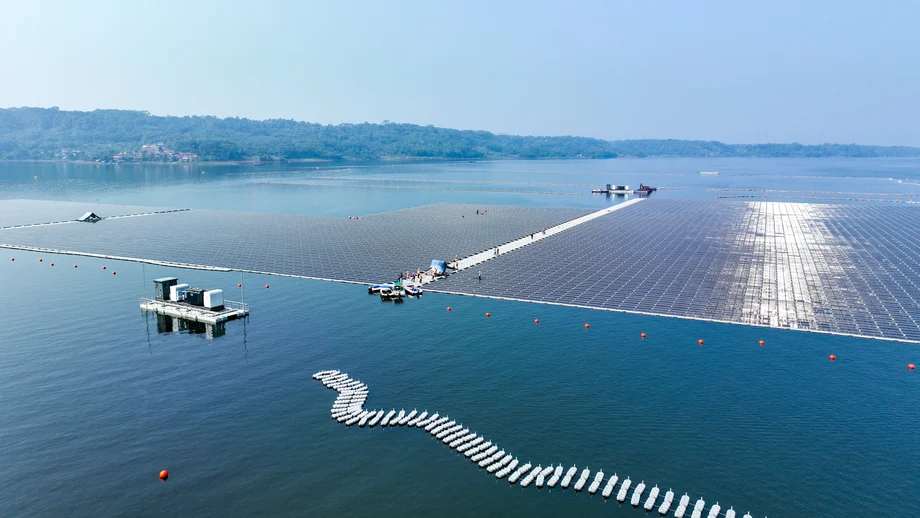
PLN President Director Darmawan Prasodjo said at the launch that the Bali development was designed to begin eliminating fuel oil use from the island's electricity system by combining solar generation with batteries. The launch also included simultaneous events at the Gajah Mungkur floating solar project in Central Java, Sembur village in Batam and Rengit Island in Bangka Belitung.
Energy and Mineral Resources Minister Bahlil Lahadalia put the national program's investment requirement at Rp1,140 trillion and linked its financial benefits to replacing diesel generation. Describing the projected subsidy savings, he said:
From this total project, we can achieve annual subsidy savings of Rp73.9 trillion,
Bahlil also projected a reduction of 140.16 million tons of carbon dioxide emissions. The emissions estimate was presented without a specified period. Both the savings and emissions benefits depend on completing projects and replacing the fuel consumption they are intended to displace.
Can factories keep pace with the target?
Celios Executive Director Bhima Yudhistira argues that Chinese investment alone will be insufficient to fund the program. The institute's assessment, covering October 2025 to October 2026, estimates that Indonesia would need to build at least 30 GW of solar capacity annually to meet the timetable.
Domestic solar module production capacity is only 1.6–3 GW a year, according to Celios. Compared with its estimated annual construction requirement of 30 GW, that represents roughly 5–10 percent of the panels needed. Celios therefore expects most panels to come from China.
The Energy and Mineral Resources Ministry identifies an initial construction phase of 14 projects totaling 5,216 MWp, or 5.216 GWp. That is about 5.2 percent of the headline 100 GWp ambition, illustrating how much construction must follow the opening phase.
Chinese companies could participate through panel and battery manufacturing, construction and financing. Indonesia's broader industrial relationship with China already includes batteries among the sectors covered by January's 16 project investment package, worth $2.19 billion. The solar initiative adds another large potential market for equipment and associated manufacturing.
Contracts and currency shape the investment decision
Rizaldi Indra Janu, director of the Indonesia Investment Promotion Center in Beijing, said project location affects available incentives. Qualifying investments in special economic zones may receive corporate income tax holidays, meaning relief from that tax for a specified period under applicable rules.
Rizaldi also pointed to Indonesia's domestic market and opportunities in green manufacturing and electric vehicle supply chains. For prospective investors, those related industries offer possible customers and business opportunities alongside electricity generation.
Bank Indonesia's Beijing representative Yulian Wihantoro highlighted hedging instruments and the Indonesia–China Local Currency Transaction framework. Hedging uses financial contracts to manage exchange rate movements. Local currency transactions allow eligible business to use the countries' currencies directly.
Currency movements matter when a project's revenue is in rupiah but equipment purchases or loan payments are in another currency. A weaker rupiah can increase the local cost of meeting those obligations. Matching financing arrangements to expected revenue is therefore part of making a project financially workable.
Humphrey R. Djemat, chair of Gani Djemat & Partners, advised Chinese companies to engage legal and business advisers early. He singled out land procurement and labor regulations as areas requiring attention before construction, alongside the need to anticipate disputes and operational difficulties.
Earlier delivery problems offer a warning
The Institute for Essential Services Reform, or IESR, welcomed the larger renewable allocation in the RUPTL but called for stronger implementation in its May 2025 assessment. It said only 1.6 GW of a planned 10 GW under the previous RUPTL had reached commercial operation by the first half of 2025, equivalent to 16 percent.
IESR Executive Director Fabby Tumiwa identified slow renewable power auctions and lengthy power purchase agreement negotiations as obstacles. A power purchase agreement sets the conditions under which a buyer purchases a plant's electricity, including pricing and obligations that lenders examine before providing money.
Fabby also said the RUPTL's renewable target fell below the Just Energy Transition Partnership commitment of 56 GW by 2030. The official plan schedules 12.2 GW of new and renewable generation in 2025–2029 and 30.4 GW in 2030–2034, placing much of its expansion in the second half of the decade.
IESR Energy Transformation System Program Manager Deon Arinaldo recommended clear arrangements for Joint Utilization of Transmission Networks, known as PBJT. Such arrangements would let more participants use transmission infrastructure while PLN retains grid ownership. He described the intended effect:
The certainty of PBJT will expand renewable energy development options and encourage private participation, including energy consumers, so that it can attract renewable energy investment.
IESR estimates 333 GW of renewable potential could provide attractive investment returns, with about 60 percent offering an equity return above 10 percent at benchmark tariffs under Presidential Regulation 112/2022. Turning that potential into operating plants requires procurement, contracts and network access that allow individual projects to proceed.
Jobs and public money bring scrutiny
PLN's presentation of the solar opportunity projects around 2.8 million jobs during construction. The broader program has also been associated with a projection of 5.5 million jobs; the scope and calculation behind the two employment estimates were not explained.
The RUPTL separately estimates more than 1.7 million workers across manufacturing, construction, operations and maintenance for its generation and network program. Its employment forecast covers a different investment plan and a wider range of activities than solar construction alone.
At a November 5 meeting, PLN President Director Suroso Isnandar said the solar program was intended to sustain national electricity supply and potentially reduce generation costs over time. Aris Marsudiyanto, head of the Development Control and Special Investigation Agency, known as Bappisus, said the agency was overseeing planning, implementation and budgets to prevent losses of project funds.
For workers, the immediate opportunities depend on projects reaching construction. For electricity customers and taxpayers, the promised benefits depend on plants supplying usable electricity, reducing expensive fuel consumption and operating at costs the system can support.
The milestones through 2029
Indonesia's investment drive now links a national deadline to separate schedules for power plants, batteries and transmission. The main dates show how quickly those pieces must come together:
- May 26, 2025: The ministry presented the 2025–2034 RUPTL, including 17.1 GW of solar additions.
- August 25, 2026: Prabowo launched the 100 GWp program in Bali and sought completion in under three years.
- November 2, 2026: PLN met prospective Chinese investors and financing institutions in Beijing.
- 2028: The Bali solar and battery project is targeted to begin operating.
- 2029: Celios identifies this as the national completion target; PLN has identified about 35 GWp with development potential by then.
- 2034: The current RUPTL planning period ends.
The immediate measure of progress will be how much of PLN's identified 35 GWp secures financing, land and grid readiness and moves into construction. Chinese investment can supply capital, equipment and technical capacity, while Indonesian procurement, regulation and network delivery will determine how quickly those resources become electricity.
Key Points
- Indonesia estimates the 100 GWp solar program will require Rp1,140 trillion.
- PLN has identified about 35 GWp with potential for development by 2029.
- The existing RUPTL separately plans 17.1 GW of solar additions through 2034.
- PLN plans 47,758 circuit kilometers of transmission and 107,950 MVA of substations.
- Celios says domestic module capacity meets only a small share of the required annual construction pace.
- The Bali project pairs 198 MWp of solar with 666 MWh of battery storage and targets operation in 2028.
- Financing, contracts, land and grid connections are central to turning the investment ambition into operating plants.