A 4,300 km cable moves closer to a settled route
SunCable has largely settled the route for a proposed 4,300 km electricity cable from Australia to Singapore, including about 3,700 km through Indonesian waters, as the developer moves its expected financing milestone to around 2030, roughly three years later than the timetable it disclosed in 2024.
Contents
- A 4,300 km cable moves closer to a settled route
- From Powell Creek to Darwin and Singapore
- What Singapore's approval requires
- Why Indonesia matters along the route
- A regional framework is still taking shape
- Financing moves to around 2030
- Competing cables and the cost of reliability
- Singapore has more proposals than its target, but delivery is uncertain
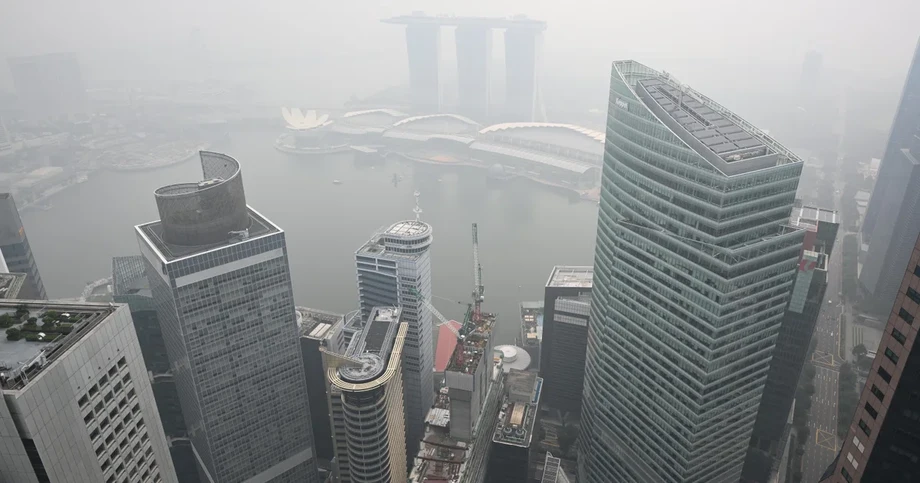
- Why Singapore is pursuing several energy options
- Key Points
The Australia-Asia PowerLink would deliver up to 1.75 gigawatts (GW) of low carbon electricity to Singapore from solar generation in Australia's Northern Territory. SunCable is aiming for deliveries around 2035. Singapore's Energy Market Authority (EMA), however, said in its approval announcement of October 22, 2024 that the proposed commercial operation date was expected to be after 2035.
Mitesh Patel, SunCable's chief operating officer, said only a short stretch of the route within Singapore's busy waters remained to be determined. The company carried out its first surveys in Indonesian waters in 2022 and undertook further studies earlier this year.
The project would be large enough to make a substantial contribution to Singapore's electricity import plans. Its proposed 1.75 GW capacity equals about 29% of the country's target to import around 6 GW of low carbon electricity by 2035. That comparison measures capacity, meaning how much power can be supplied at a given moment.
Singapore has granted conditional approval, while SunCable continues work on surveys, permission from relevant governments, customer agreements and financing. Those remaining steps will determine when construction and electricity deliveries can begin. For Singapore, the attraction is access to Australian solar resources on a scale that its own limited land area cannot accommodate.
From Powell Creek to Darwin and Singapore
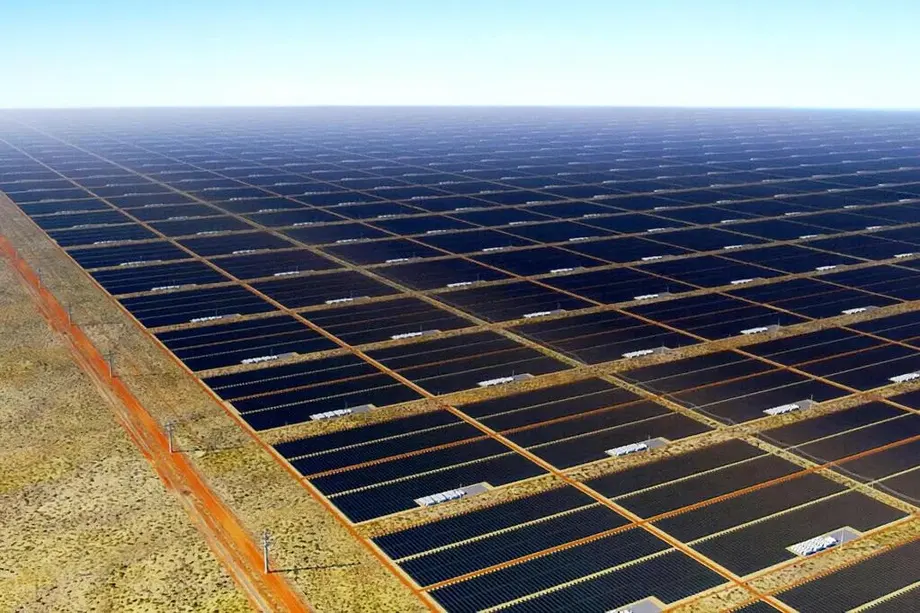
SunCable plans to develop its solar generation at Powell Creek in the Northern Territory, with electricity travelling about 800 km over land to Darwin before entering the submarine transmission system. Some power would support the local grid, while up to 1.75 GW would continue to Singapore.
The development described in project reporting includes up to 10 GW of solar generation across as much as 12,000 hectares, alongside large battery storage facilities. That land area equals 120 square kilometres. Batteries would store electricity for use when solar production falls, including after sunset.
The solar generation figure and the proposed Singapore delivery figure describe different parts of the system. Solar panels produce varying amounts of electricity as sunlight changes, while storage and transmission equipment help organise its delivery. The plan also includes electricity for Australian customers.
Patel said the remaining Singapore route could be surveyed later. Although the surrounding waters are busy, he expressed confidence in the company's close work with Singapore's government. Most of the proposed marine route has now been broadly identified, leaving the company to complete the detailed development work needed for construction.
What Singapore's approval requires
EMA's October 2024 approval was issued to Sun Cable (Singapore) Assets Pte Ltd. The authority said the proposal could be technically and commercially viable on the information submitted at that stage.
The next regulatory step is consideration for a Conditional Licence. EMA said SunCable must update its proposal to show that it can meet technical requirements, achieve a commercially viable price acceptable to customers and secure the necessary approvals from every relevant jurisdiction, including countries through which the cables would pass.
Price is central because Singapore's businesses would ultimately have to buy the electricity. A project can have abundant sunshine at its starting point yet still face substantial expenses for batteries, transmission equipment, marine installation and maintenance before power reaches a customer.
EMA also requires further development milestones before financial close. That term describes the stage when financing arrangements are completed and the conditions for making the money available have been met. For electricity import projects, the authority identifies government permissions, signed power purchase agreements and sufficient financing among those milestones.
Why Indonesia matters along the route
Indonesia accounts for about 86% of the proposed submarine route: approximately 3,700 km out of 4,300 km. SunCable plans to pass through its waters without connecting to the Indonesian electricity grid, making permission for cable transit a central part of the project.
Patel said cooperation with Indonesia's government had been smooth, pointing to the company's ability to undertake further marine surveys earlier this year. SunCable is preparing a report for Indonesian authorities setting out how the development could benefit the local economy. The company has not detailed the value or distribution of those benefits.
Indonesia's wider energy relationship with Singapore has recently become more difficult. Jakarta began reducing gas deliveries on October 24, 2026 to redirect supplies to domestic electricity generation. EMA put the temporary reduction at less than 2% of Singapore's daily gas demand.
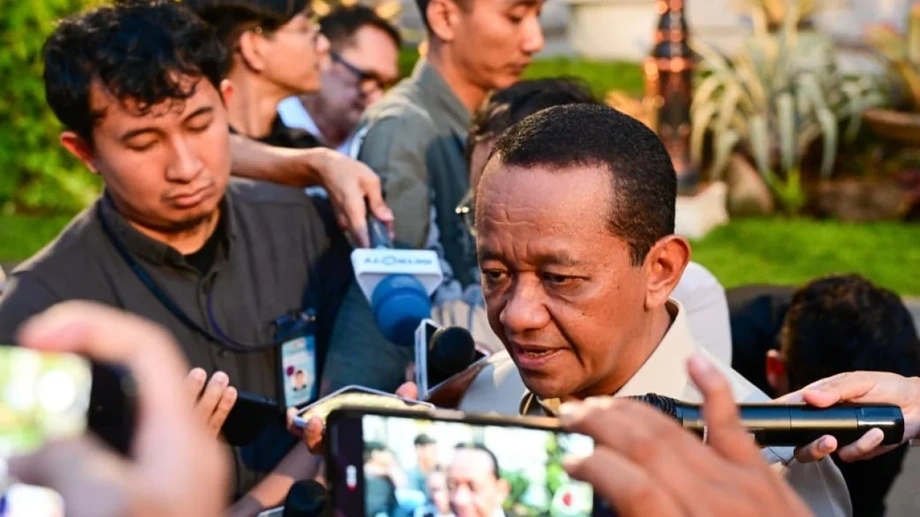
Indonesia has also put domestic electricity needs and acceptable export prices at the centre of negotiations over power generated within its own territory. Energy Minister Bahlil Lahadalia's conditions for electricity exports concern plans to sell Indonesian electricity to Singapore. SunCable's Australian generation would instead depend on Indonesian cooperation as a transit country.
Patel's argument is that clear economic benefits can give governments a reason to support the cable even when diplomatic conditions change. SunCable's planned economic report is intended to make those benefits concrete for Indonesia.
A regional framework is still taking shape
A feasibility study on Southeast Asian energy connectivity, jointly advanced by Singapore and the United States, found in its second phase that submarine cable approvals and permits remain complex across Asia. Countries have different legal systems and administrative procedures, even where rules already exist.
Patel said developers and governments were still working through how existing regulations apply to a cable of this length. Different interpretations can arise, he said, making open communication and agreement on shared benefits necessary parts of development.
ASEAN energy ministers agreed in September 2024 to develop a framework for submarine power cables and work towards an ASEAN Power Grid by 2045. Singapore's official electricity imports overview says the framework is intended to cover surveys, installation, maintenance, repairs and cable protection while respecting international law and national sovereignty.
Those activities extend across the cable's operating life. Permission to survey the seabed is one task; arrangements for laying equipment and returning to repair it are others. Regional coordination would help governments and developers work through those responsibilities.
Financing moves to around 2030
SunCable now expects financial close around 2030, approximately three years later than the schedule it disclosed in 2024. Patel attributed the change to the time needed for submarine cable studies and the project's actual development progress, saying the revised timetable did not reflect a new obstacle.
The company is also talking to potential buyers to clarify demand and support the investment case. Power purchase agreements set out the terms under which customers commit to buy electricity. For lenders and investors, those contracts help show how a project will earn the money needed to cover its costs.
The main milestones span more than a decade:
- 2022: SunCable undertook its first surveys in Indonesian waters.
- September 2024: ASEAN energy ministers agreed to develop a submarine power cable framework.
- October 22, 2024: EMA granted conditional approval for imports of 1.75 GW from Australia.
- August 2026: Singapore's official project portfolio reached 13 conditional approvals totalling 9.25 GW.
- Around 2030: SunCable now expects to complete its financing arrangements.
- Around 2035: SunCable aims to supply Singapore, while EMA's 2024 announcement placed proposed commercial operation after 2035.
SunCable still needs to turn its broadly mapped route into a project backed by the required permissions, electricity buyers and committed capital. Completing those tasks would move it from development towards construction.
Competing cables and the cost of reliability
Shorter electricity links from Indonesia and Malaysia will compete with SunCable for Singaporean customers. Lu Ming Pang, a senior analyst at Rystad Energy, said the economics of shorter transmission routes would be an important competitive factor.
James Bowen, who leads Australian industrial decarbonisation work at the Institute for Energy Economics and Financial Analysis, identified geopolitical exposure, Indonesia's seismic activity and dependence on a single transmission link as risks for the Australian proposal. A lengthy cable also creates an extensive route that must be monitored and maintained.
Singapore's assessment therefore includes security of supply, customer prices and the electricity's carbon performance. EMA chief executive Puah Kok Keong described both the transmission expense and the need to obtain permissions along the route:
The distance, besides increasing the cost of the transmission, also means that the regulatory approvals needed for the path where the cable may come by from Australia through Indonesia to Singapore will need a lot of regulatory approvals.
A broader regional grid would give Singapore access to several kinds of generation. Christophe Inglin of the Sustainable Energy Association of Singapore described a network drawing on hydropower from Laos, wind from Vietnam, and solar from Malaysia and Indonesia. SunCable would add Australian solar to that range of potential supplies.
Singapore has more proposals than its target, but delivery is uncertain
Singapore's official portfolio had reached 13 projects with conditional approvals totalling 9.25 GW by August 2026, covering Australia, Cambodia, Indonesia, Malaysia and Vietnam. Six Indonesian projects had advanced to Conditional Licences.
The total is 3.25 GW above the 6 GW import target, or about 54% more capacity. EMA continues considering credible, competitive proposals while projects progress at different speeds. Each still needs commercial agreements, financing and relevant national permissions.
The portfolio has expanded since October 2024, when EMA listed 2 GW of Conditional Licences from Indonesia and another 3.6 GW of Conditional Approvals from Indonesia, Cambodia and Vietnam alongside the SunCable announcement.
Wood Mackenzie has assessed that Singapore may achieve only about half its 2035 import target, approximately 3 GW, supplying around 15% of its electricity generation mix. The consultancy said the approved projects had yet to begin construction and identified two Malaysian proposals, 900 megawatts from Johor and about 1 GW from Sarawak, as the most likely to operate by 2035.
Indonesian export rules add uncertainty for projects generating electricity there. Export licences require renewal every five years, and quotas can be withdrawn if domestic supplies are affected. Wood Mackenzie identified those conditions as a constraint on Indonesian projects. For SunCable, the Indonesian work centres on permission to cross its waters.
EMA describes the 6 GW objective as an aspirational target whose achievement depends on regulatory approvals in exporting and transit countries, as well as commercial demand from Singapore's electricity consumers.
Why Singapore is pursuing several energy options
Singapore's power sector produces about 40% of the country's carbon emissions, according to EMA. Roughly 95% of its electricity comes from natural gas, making the electricity supply a major part of its effort to reach net zero emissions by 2050.
Puah said industry accounts for as much as 80% of electricity demand. Local solar supplies about 3% of power and, in his assessment, is unlikely to grow to much more than twice that share. Singapore's limited space restricts how much generation it can build within its borders.
Electricity imports would allow Singapore to draw on renewable resources elsewhere while supporting development in exporting countries. A regional network could combine different sources, with solar, wind and hydropower contributing under different weather and operating conditions.
Singapore is also pursuing solar, biomethane, hydrogen and geothermal energy, while assessing whether advanced nuclear technologies would suit the country. EMA says it will continue improving gas import infrastructure and diversifying gas supplies to keep sufficient energy available for economic demand.
For SunCable, the next practical task is to secure buyers willing to pay for Australian electricity delivered across thousands of kilometres. The largely settled route gives that effort a firmer physical plan, while the revised financing schedule leaves substantial development work before electricity can flow.
Key Points
- SunCable has broadly identified its 4,300 km submarine route, with a short section in Singapore waters still to be settled.
- About 3,700 km would cross Indonesian waters without connecting to Indonesia's grid.
- The project proposes supplying Singapore with up to 1.75 GW, about 29% of its 6 GW import target.
- Financial close is now expected around 2030, roughly three years later than the schedule disclosed in 2024.
- SunCable aims for deliveries around 2035; EMA's 2024 approval announcement expected commercial operation after 2035.
- Further government approvals, customer contracts and financing remain necessary.
- Singapore has conditionally approved 9.25 GW across 13 projects, while treating its 2035 import goal as aspirational.