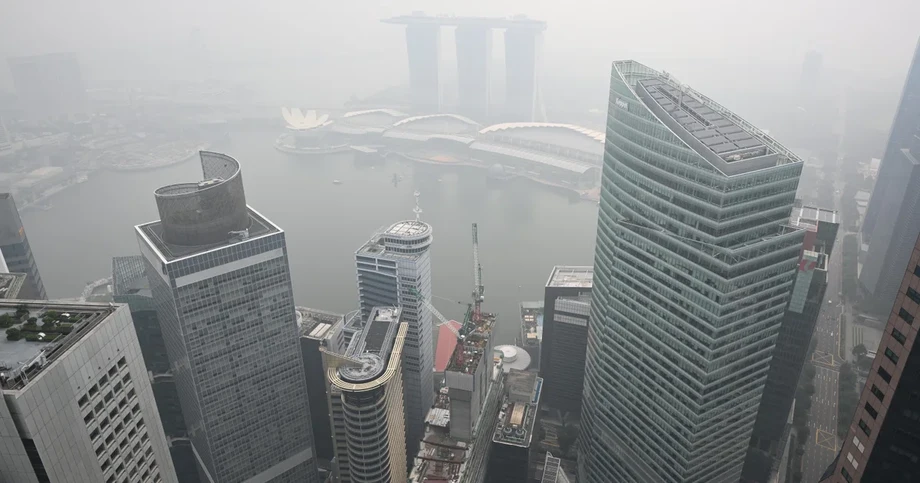
A shorter haze episode brings a larger economic burden
Singapore's 2026 haze episode caused an estimated S$2.32 billion in damage as at October 31, about S$90 million more than the cost of the 2015 crisis after adjusting for inflation, according to a preliminary assessment by Nanyang Technological University Professor Euston Quah and Singapore University of Social Sciences academic Dr Eugene Or.
Contents
- A shorter haze episode brings a larger economic burden
- How the comparison with 2015 works
- Why fewer polluted days can still cost more
- Health costs extend beyond treatment bills
- Tourism losses rise as protection costs fall
- Enforcement and prevention serve different purposes
- Why affected countries might help pay
- How to decide what prevention is worth
- Key Points
The increase of about 4% came despite fewer hazy days and a lower average Pollutant Standards Index (PSI) reading. Higher health and tourism losses pushed the total above the comparable 2015 figure, while losses from illness disrupting daily activities and spending on protective measures fell.
The estimate places a price on several consequences of haze: medical treatment, risks to health, lost visitor spending, time lost to illness, protective purchases and reduced public well-being. For residents and businesses, the burden reaches beyond the days when smoke is most visible.
Quah and Or argue that Singapore should use the findings to identify who needs protection and assess whether helping prevent fires overseas would cost less than suffering their consequences. Their proposal combines accountability for companies responsible for burning with financial support for alternatives to fire, particularly in Indonesia.
Quah, an NTU professor, and Or, a SUSS academic, described the case for combining enforcement with prevention:
"The sheer scale of this damage strengthens the case for funding prevention alongside tougher penalties," they argued.
How the comparison with 2015 works
The researchers put the 2015 haze cost at S$1.83 billion in the prices of that period. Converted into September 2026 prices, the figure becomes S$2.23 billion. Comparing that adjusted amount with S$2.32 billion gives the increase of approximately 4%.
Inflation adjustment puts both estimates on a similar purchasing power basis. Without it, part of the apparent increase would simply reflect the fact that goods and services cost more in 2026 than they did in 2015.
The new assessment builds on a published framework reviewed by other researchers and developed in 2015 by Quah, NTU Associate Professor Chia Wai Mun and SUSS Dr Tan Tsiat Siong. Quah and Or used that framework for the preliminary 2026 calculation, with updated information and assumptions.
The dates connect the economic assessment with the wider response:
- 2015: The earlier haze cost was estimated at S$1.83 billion.
- September 2026: The price basis used to express the 2015 loss as S$2.23 billion.
- October 27, 2026: Singapore and Indonesia agreed to establish a joint task force investigating companies suspected of contributing to haze.
- October 31, 2026: The cutoff for the preliminary S$2.32 billion damage estimate.
Why fewer polluted days can still cost more
Quah and Or attributed the higher bill to a larger population, higher incomes, increased visitor spending, and updated health data and assumptions. Those changes affect the amount of damage associated with a period of polluted air.
A larger population means more people can be exposed. Higher earnings increase the monetary value assigned to time lost through illness. Higher visitor spending also increases the economic value at risk when haze disrupts travel and tourism.
The PSI describes air pollution conditions. An economic assessment asks a different question: how much damage those conditions cause to people and economic activity. Pollution intensity and duration matter, alongside the number of people affected and the activities disrupted.
The 2026 calculation shows those forces pulling in different directions. Shorter exposure helped reduce some costs, while changes in Singapore's population, economy and estimated health burden pushed others upward. The published account gives the total and the direction of changes across categories, but no monetary breakdown for each category or date for a final estimate.
Health costs extend beyond treatment bills
Health was one of the categories with a larger estimated burden than in 2015. The assessment includes medical treatment as well as the value of reducing the risk of illness and premature death.
Putting a monetary value on reduced health risks allows researchers to include benefits that never appear on a hospital invoice. Cleaner air can reduce the chance of becoming seriously ill, alongside saving the cost of treatment when illness occurs.
Indonesia's health figures illustrate the human burden in the country where many fires have occurred. Its Ministry of Health recorded 401,586 acute respiratory infection cases across seven affected provinces by November 2. Children aged nine and younger accounted for 179,617 cases, approximately 44.7%, as detailed in coverage of the respiratory infection surge.
Singapore's estimate also includes public well-being, measured through people's willingness to pay for cleaner air. This approach assigns an economic value to avoiding the discomfort and disruption of polluted conditions, including effects that do not generate a medical bill or lost wages.
Tourism losses rise as protection costs fall
Tourism losses were higher in 2026 than in 2015. The calculation considers visitor arrivals and spending, covering both direct losses and further losses to businesses connected to tourism activity.
Travel disruption provides a concrete example of the regional impact. Indonesia's Transportation Ministry recorded 2,604 domestic flights affected between August 11 and October 19, while haze caused the cancellation of 14 international services involving Singapore. The haze flight disruptions included services connecting Singapore with Pontianak and Palembang.
Illness caused a smaller estimated loss of time in Singapore than in 2015, covering both paid work and other activities. Fewer hazy days and lower average pollution outweighed the effects of higher earnings and population growth in this category.
Spending on protection, including masks, also declined. Although Singapore had more households, the shorter haze duration reduced the period during which protective purchases were needed. Together, the category changes show why the total bill needs to be examined alongside its parts when deciding where assistance would be most useful.
Enforcement and prevention serve different purposes
Singapore and Indonesia have already moved toward closer investigation of corporate involvement. Their agreement on a joint haze task force envisages sharing information, tracing financial activity, gathering evidence across borders and potentially recovering assets connected to wrongdoing.
Singapore also announced plans on October 28 to amend its Transboundary Haze Pollution Act to strengthen enforcement and make suspected corporate involvement easier to investigate. The National Environment Agency had issued preventive measures notices to 10 companies in Indonesia and requested information and documents from 10 companies based in Singapore.
Stronger enforcement aims to change what businesses stand to lose if they contribute to haze. Prevention funding works on another part of the decision: making alternatives to burning more affordable before fires occur.
Quah and Or propose using both approaches. They argue that companies responsible should remain accountable while public funding supports measurable reductions in fire risk. Their proposal therefore links financial assistance to prevention results, alongside continued investigation and enforcement.
Why affected countries might help pay
The researchers call their complementary proposal a "victim-pays" approach. Singapore and other countries affected by haze would help finance practices that avoid burning, including in Indonesia, because preventing smoke can protect their own residents and economies.
Quah and Or explained the economic reasoning behind asking affected countries to contribute:
"If supporting fire-free practices costs less than the damage avoided, contributing can leave these countries better off," they said.
The proposal presents a fairness concern that the researchers acknowledge: people suffering from pollution would help pay to stop it. Their response is to retain company accountability while directing public money toward verifiable reductions in the risk of future fires.
Regional cooperation is also developing through the proposed ASEAN Coordinating Centre for Transboundary Haze Pollution Control. As described in coverage of the ASEAN haze centre, its Jakarta secretariat exists, but the founding agreement requires six ratifications before it can take effect. Only Vietnam had submitted its document at that stage. The centre is intended to coordinate information and assistance while national authorities retain responsibility for the initial response.
How to decide what prevention is worth
Quah and Or recommend assessing each prevention proposal through a cost and benefit analysis, then releasing funding in phases tied to results. In simple terms, decision makers would compare what a measure costs with the damage it is expected to prevent.
The S$2.32 billion estimate provides a measure of the harm at stake. A prevention budget would depend on the likely effectiveness, cost and measurable results of particular projects. A programme that prevents only part of the damage needs to be assessed against that expected benefit.
Phased funding would allow governments to review progress before committing further money. The researchers' approach makes reduced fire risk the practical test for spending, while the damage assessment helps identify where protection and prevention could deliver the greatest benefit.
Key Points
- Singapore's preliminary haze damage estimate reached S$2.32 billion as at October 31, 2026.
- The total was about 4% above the 2015 cost of S$2.23 billion expressed in September 2026 prices.
- Health and tourism losses rose, while illness related time losses and protection spending fell.
- Quah and Or propose funding alternatives to burning alongside accountability for responsible companies.
- They recommend assessing individual prevention projects and releasing funding in phases tied to measurable results.