Domestic gas shortages put export renewals under scrutiny
Indonesia is considering whether to renew gas exports to neighbouring countries as domestic factories struggle with restricted supplies and existing import contracts with Singapore approach their expiry at the end of 2028. Energy and Mineral Resources Minister Bahlil Lahadalia raised the possibility on October 21, 2026, before broadening his warning the following day to countries he accused of failing to respect Indonesia.
Contents
- Domestic gas shortages put export renewals under scrutiny
- A broader warning about respect between countries
- Indonesia has considered redirecting this gas before
- What the contracts running to 2028 contain
- Natuna offers a way to preserve exports and serve Sumatra
- Factories describe shortages in volumes and higher costs
- New East Kalimantan production is central to the plan
- Electricity negotiations add another point of tension
- How the policy reached this point
- Key Points
Singapore received 3.22 million tonnes of Indonesian natural gas in 2025, according to Indonesia's Central Statistics Agency. The commercial relationship includes pipeline contracts with Gas Supply Pte Ltd, known as GSPL, and SembCorp Gas, making decisions about future Indonesian deliveries consequential for both buyers and producers.
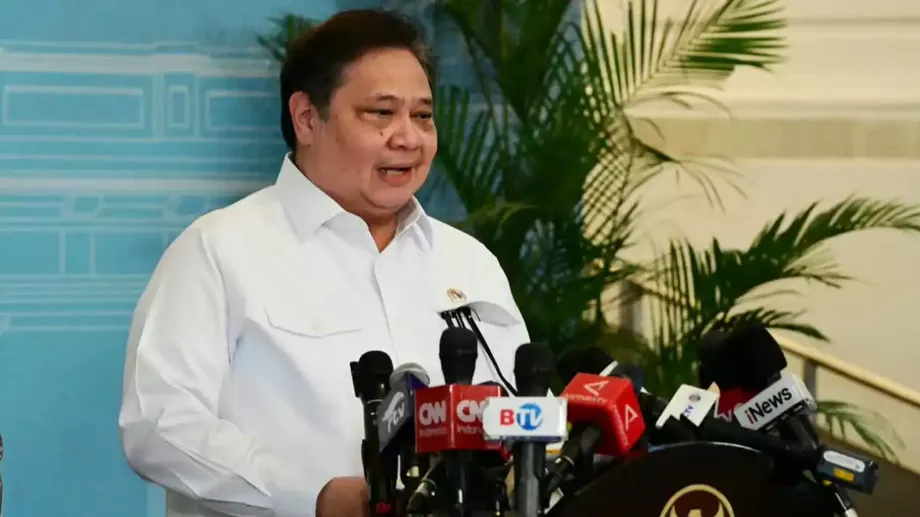
Bahlil, who also serves as coordinating minister for downstreaming and energy transition, spoke after a cabinet meeting in Jakarta. He linked possible changes to President Prabowo Subianto's instruction to protect natural resources and meet domestic needs first.
Bahlil described his thinking after the October 21 meeting:
I am also perhaps thinking of not extending gas exports to neighbouring countries, because we have to survive and meet domestic needs.
No final decision or implementation date was announced, and Bahlil named neither a country nor a specific contract in his October 21 and 22 remarks. The immediate commercial deadline identified by Singapore's Deputy Prime Minister Gan Kim Yong in Parliament in September 2025 is the end of 2028, when existing Indonesian gas import contracts expire.
A broader warning about respect between countries
Bahlil's October 22 comments added a diplomatic condition to the domestic supply argument. Speaking during the inauguration of gas production facilities associated with Jangkrik North East 6 and the Maha field in East Kalimantan, he said energy agreements could face evaluation if partners were uncooperative.
The minister, who is also chairman of the Golkar Party, described the potential response:
I will conduct an evaluation. I will not hesitate to consider stopping exports to countries that do not respect Indonesia.
Bahlil also said disagreements should be resolved through dialogue and mutual respect. Indonesia would remain open to export agreements with countries that treated it as an equal, including countries without existing contracts. His position leaves room for exports while putting greater weight on the government's assessment of each relationship.
Prabowo's cabinet instructions covered a wider economic agenda. He called for major budget savings, national unity and protection against the loss of natural wealth. His remarks addressed smuggling involving narcotics, tin, gold, coal, timber, fuel and fertiliser. Bahlil said ministries should translate that direction into practical programmes and act quickly within the law.
Indonesia has considered redirecting this gas before
Indonesia's Energy and Mineral Resources Ministry announced in February 2020 that pipeline supplies to Singapore would stop in 2023 so the gas could serve domestic customers. The ministry's 2020 gas supply statement identified roughly 300 million standard cubic feet per day from the Corridor Block, then managed by ConocoPhillips.
Fansurullah Asa, then head of the Downstream Oil and Gas Regulatory Agency, known as BPH Migas, said authorities were seeking domestic markets for the diverted supply. Arifin Tasrif, energy minister at the time, had told parliament that gas from Sumatra should be redirected when the Singapore arrangements ended.
The proposal was concrete: send gas through the Duri-Dumai pipelines to industrial estates in Sumatra. The planned industrial price was US$6 per million British thermal units under Presidential Regulation No. 40 of 2016 on natural gas pricing. A British thermal unit measures energy, so this price describes the cost of the energy contained in the gas.
The ministry also identified supporting infrastructure, including the Dumai-KEK Seimangke transmission pipeline and distribution networks. Businesses had proposed 193 distribution network areas. Officials expected replacing oil fuels with gas to support industrial production and reduce the trade deficit.
The government subsequently chose an extension rather than the planned 2023 termination. That history puts the current discussion in context: Jakarta has repeatedly sought to reserve more gas for domestic users while continuing some exports.
What the contracts running to 2028 contain
Indonesia announced in 2022 that sales to Singapore would be extended for five years beyond 2023. Arifin said Indonesia still had supplies available and Singapore had requested continued deliveries. By 2023, SKK Migas, the agency overseeing upstream oil and gas activities, recorded the GSPL extension through 2028.
SKK Migas listed GSPL deliveries at 160 billion British thermal units per day in 2023 and 180 billion per day for 2024 through 2028. Those figures measure daily energy content. Other contracts use million standard cubic feet per day, abbreviated MMSCFD, which measures gas volume under standard conditions.
During the 2022 negotiations, then SKK Migas chief Dwi Soetjipto said the renewed volume would be about 30 to 40 percent below the previous contract. He attributed the reduction to rising demand from fertiliser producers and industrial estates in West Java. He also said the new selling price was better because global demand for gas was strong.
SKK Migas's 2020 contract records described at least three arrangements supplying Singapore, with combined volumes of about 700 MMSCFD. The records put Indonesia's contribution at nearly 60 percent of Singapore's gas supplies at that time.
The GSPL arrangement drew on fields managed by ConocoPhillips Grissik, now Medco E&P Grissik, and PetroChina. SembCorp Gas contracts involved fields associated with Medco Natuna, Premier Oil and Star Energy, including a separate Premier Oil agreement. The SembCorp arrangements were also listed as running to 2028.
Natuna offers a way to preserve exports and serve Sumatra
SKK Migas chief Djoko Siswanto outlined another approach in April 2025: reduce gas sent from Sumatra to Singapore and increase deliveries from Natuna instead. The aim was to release Sumatra's production for domestic customers while maintaining Singapore's contracted supply.
Djoko identified state gas distributor PGN and state electricity company PLN as recipients of the redirected gas. He said the minister had signed the arrangement. A reduction of around 30 MMSCFD from the Sumatra export stream was planned from June 2025.
At the time, Djoko said domestic needs were covered for April and May and imports of liquefied natural gas were not yet required. LNG is natural gas cooled into a liquid so it can be transported by ship. Possible purchases from the United States remained under evaluation while Indonesia prioritised domestic LNG supplies.
Natuna's export infrastructure has a long history. SembCorp Gas first received about 100 MMSCFD from the West Natuna Sea in July 2001 under a sales agreement covering up to 325 MMSCFD. Supply fields included South Natuna Sea Block B, Kakap and Natuna Sea Block A.
The network has also faced operational interruptions. An unexpected shutdown at Anoa on July 21, 2021, followed by scheduled maintenance at Gajah Baru on July 23, reduced pipeline pressure and deliveries to Singapore. Anoa restarted on July 28, and SKK Migas said on July 29 that the full contracted flow of about 300 MMSCFD had returned.
Factories describe shortages in volumes and higher costs
Indonesian manufacturers have provided a more immediate explanation for the pressure to reserve gas at home. Yustinus Gunawan, chairman of the Industrial Natural Gas Users Forum, said PGN restricted supplies from September 14, 2026, to around 78 percent of minimum contracted volumes. The control period covered September 1 to 30.
A delivery level of 78 percent means customers received about 22 percent less than the minimum volume specified in their contracts. Yustinus said industrial capacity use was constrained to 80 percent, with some manufacturers reducing production and beginning to dismiss workers.
Ceramics and glass businesses are particularly exposed because they use furnaces and processes that run continuously. Abrupt interruptions can damage equipment as well as reduce output, according to Yustinus. Reliable deliveries therefore matter alongside the price paid for each unit of energy.
Yustinus said supplies under the designated industrial gas price programme in western Java reached only about 88 to 90 percent of allocations under Energy Ministry Decree No. 281.K/2026. He also described higher costs in August: 40 percent of gas was priced at US$13 per million British thermal units and 60 percent at US$15.60.
PGN corporate secretary Fajriyah Usman said upstream supplies were insufficient to meet customer needs fully. She described distribution controls as temporary measures to protect network reliability and maintain deliveries across customers. Restrictions varied with the supply available in each period, she said.
Saleh Husin, the Indonesian Chamber of Commerce and Industry's deputy chairman for industry, welcomed consideration of an export halt. He said domestic gas users struggled to secure supplies and argued that prioritising them could support manufacturing, production with greater added value and employment.
New East Kalimantan production is central to the plan
Bahlil paired his export warning with plans to increase gas production from developments in East Kalimantan. The Jangkrik additions were cited at about 290 MMSCFD, with further flows targeted for late October 2026. The inauguration covered the Jangkrik North East 6 well and production facilities associated with Maha and South Hub.
Bahlil cited roughly 750 MMSCFD of current output while discussing the developments. The longer term target for fields operated by Eni and its partners was about 3 billion standard cubic feet per day, equivalent to 3,000 MMSCFD, by 2029. He also used 2028 to 2029 as the target period.
The target is four times the 750 MMSCFD figure cited in the project discussion. Reaching it would give Indonesia more gas to allocate, although domestic users would receive priority before a share was assigned to exports, according to Bahlil.
The government also plans a petrochemical processing centre in East Kalimantan using gas as a raw material. In that setting, gas helps make industrial products rather than serving only as fuel. The proposal connects new production to Bahlil's downstreaming portfolio, which focuses on processing resources into products with greater value.
Electricity negotiations add another point of tension
Indonesia and Singapore are negotiating electricity trade alongside their gas relationship. On October 19, Bahlil said electricity export talks had not reached agreement because of pricing differences. On October 7, he had called for reviewing arrangements so Indonesia received greater economic benefits and a say in pricing and project development.
Singapore's Energy Market Authority has granted conditional licences to six Indonesian electricity import projects with a combined capacity of 3 gigawatts. The two countries are working towards at least 3.4 gigawatts of electricity projects connecting them by 2035.
The capacity covered by the six conditional licences is about 88 percent of that 3.4 gigawatt goal. Conditional approval is a step towards development; electricity deliveries still depend on projects advancing and commercial terms being settled.
Indonesia's gas business also extends well beyond Singapore. Central Statistics Agency figures for 2025 put exports to Japan at 3.8 million tonnes, China at 3.79 million tonnes and South Korea at 2.27 million tonnes. Thailand received around 291,000 tonnes and the Philippines about 138,000 tonnes.
Those destinations explain why Bahlil's broader language about energy agreements matters across the region. Singapore's 2028 contract deadline gives its buyers a specific planning horizon, while Indonesia weighs export income against the requirements of factories, power producers and new processing industries.
How the policy reached this point
Indonesia's decisions have moved between proposed termination, reduced contract volumes and changes in the fields supplying exports. The main dates show how domestic demand has remained part of the discussion:
- February 2020: The Energy Ministry announced plans to end pipeline supplies to Singapore in 2023 and redirect gas to domestic industry.
- 2022 to 2023: Indonesia instead arranged an extension through 2028, with reduced volumes for the renewed GSPL contract.
- April 2025: SKK Migas outlined plans to redirect Sumatra gas to PGN and PLN from June, while increasing Natuna supplies to Singapore.
- September 2026: Industrial users described restricted deliveries, and PGN acknowledged insufficient upstream supply.
- October 21, 2026: Bahlil raised possible nonrenewal of gas exports after Prabowo's cabinet instructions.
- October 22, 2026: Bahlil expanded his warning to energy partners he considered uncooperative, while keeping the door open to new agreements.
- 2028 to 2029: Existing Singapore contracts reach expiry and major East Kalimantan production increases are targeted.
For Indonesian manufacturers, the practical priority is receiving enough gas consistently to keep production running. For Singapore's buyers, the approaching contract expiry brings renewal negotiations into focus. Indonesia's production plans and its ability to move gas to domestic customers will shape how much room there is to meet both demands.
Key Points
- Indonesia is considering gas export nonrenewals, with domestic supply given priority.
- Bahlil named no country in his October 21 and 22 warnings.
- Existing Indonesian gas import contracts with Singapore expire at the end of 2028.
- Industrial users reported restricted supplies in September 2026; PGN described its controls as temporary.
- Earlier plans sought to replace Sumatra exports with Natuna gas while redirecting Sumatra supplies to domestic customers.
- East Kalimantan developments target about 3,000 MMSCFD by 2029, alongside plans for domestic petrochemical processing.
- Electricity export negotiations with Singapore remain unsettled over pricing.