A Jakarta secretariat waits for five more approvals
Indonesia is pressing ASEAN to activate a regional haze coordination centre whose secretariat already exists in Jakarta but cannot begin full operations. Only Vietnam has submitted its ratification document, while six member states must do so before the founding agreement can take effect.
Contents
- A Jakarta secretariat waits for five more approvals
- What is holding up the centre?
- Two agreements, different jobs
- The health and transport costs are already visible
- Investigators turn to companies and financial records
- Why enforcement remains a national responsibility
- Foreign assistance exposed diplomatic friction
- How the response developed
- What Manila and Singapore's chairmanship could deliver
- Key Points
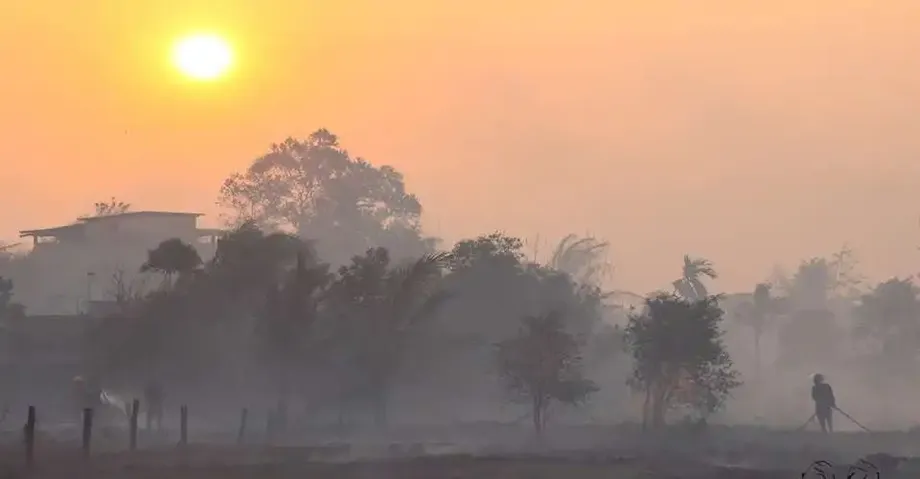
The push ahead of the 49th ASEAN Summit in Manila comes as Indonesian police investigate at least 20 corporations and more than 200 individuals over forest and land fires. Indonesia's Health Ministry recorded 174,694 cases of acute respiratory infections across seven affected provinces between August 18 and September 21, as smoke disrupted daily life and spread to neighbouring countries.
Indonesia itself has yet to complete approval of the centre's founding agreement. That leaves Jakarta seeking faster action from its neighbours while still needing to finish its own procedures. Singapore has promised to submit its ratification document within days.
Foreign Minister Arrmanatha Nasir chaired a coordination meeting on November 3 with Forestry Minister Raja Juli Antoni, Environment Minister Jumhur Hidayat and Finance Ministry representatives. The meeting followed President Prabowo Subianto's instruction to strengthen communication with neighbouring countries and tackle business practices contributing to the fires.
Jakarta's response now has two connected tracks: securing a functioning ASEAN centre to coordinate prevention and assistance, and building cooperation with Singapore to investigate companies linked to burning. The first concerns how governments work together. The second concerns how investigators follow evidence, ownership and money across borders.
What is holding up the centre?
The ASEAN Coordinating Centre for Transboundary Haze Pollution Control, or ACC-THPC, is intended to bring together fire and haze information, coordinate offers of assistance and maintain lists of experts, equipment and potential donors. Its secretariat opened in Jakarta in April and sits within Indonesia's Environment Ministry.
A separate founding agreement governs the centre's leadership, oversight and funding. It takes effect 60 days after six ASEAN members submit instruments of ratification, the formal documents confirming that a country has approved an agreement. With Vietnam alone having completed that step, five more submissions are needed.
Ina Krisnamurthi, the Indonesian Foreign Ministry's director general for ASEAN cooperation, said on November 4 that making the centre operational was a priority. She described the need to turn an existing office into a working regional institution:
We must immediately implement what we envision through the center.
The ASEAN Secretariat is serving as an interim centre. National authorities would remain responsible for the initial response to fires, with the permanent centre coordinating support when governments seek assistance under its arrangements. Ina gave no date for Indonesia's ratification.
Two agreements, different jobs
The ASEAN Agreement on Transboundary Haze Pollution was adopted in 2002 and entered into force in 2003. It commits members to preventing, monitoring and reducing fires and haze. Indonesia became the last member to ratify that agreement in 2014.
The centre's founding agreement is a later arrangement designed to put regional coordination on a more organised footing. Negotiations were completed in 2023, and all signatures were in place by May 2025. Former president Joko Widodo launched the centre at an ASEAN summit in September 2023, before the signing process was complete.
Indonesia also wants to advance a regional monitoring system established in 2013. Ina presented the centre as a way to strengthen those earlier commitments, rather than start regional cooperation from scratch.
The practical task is substantial. A centre could collect information in one place and help match a request for assistance with available equipment or expertise. Decisions about access, investigations and punishment would still sit with national governments and their laws.
The health and transport costs are already visible
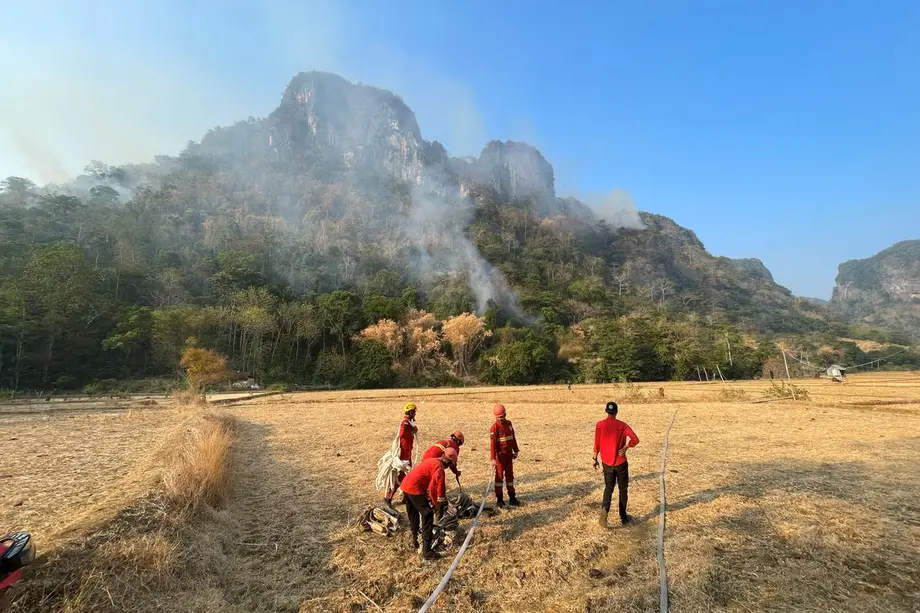
Indonesia deployed more than 60,000 personnel across six provinces in Sumatra and Kalimantan to fight the fires. Thick smoke and difficult terrain restricted operations, including the use of aircraft. The fires also forced school closures and disrupted flights.
South Sumatra's visibility fell to between 500 and 800 metres during the crisis, preventing aircraft from landing in Palembang for several days, according to Coordinating Political and Security Minister Dudung Abdurachman. For residents, the emergency reached beyond the fire zones into classrooms, transport services and access to clean air.
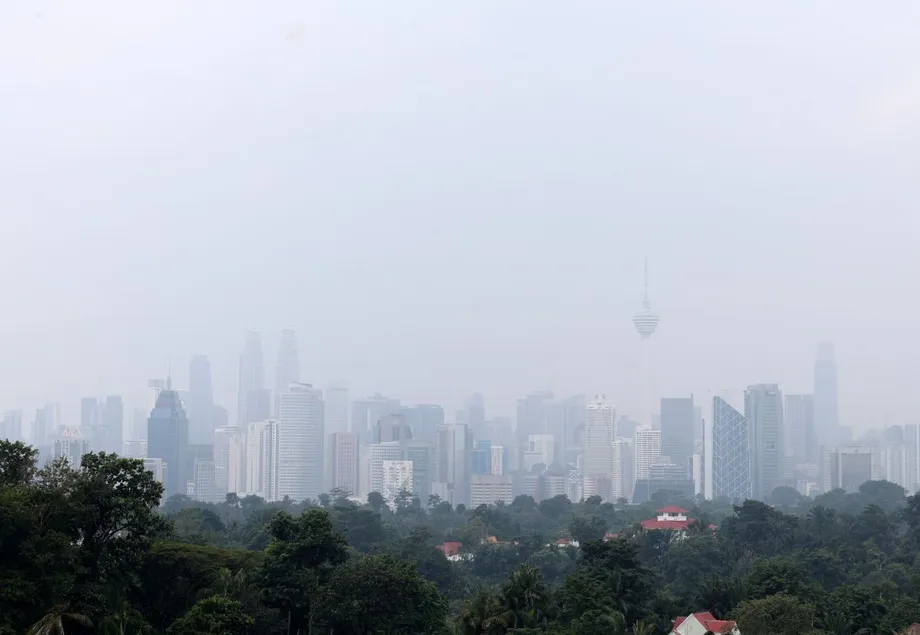
The Health Ministry's figure of 174,694 acute respiratory infection cases covers August 18 to September 21 in seven affected provinces. Such infections affect the breathing system, including the nose, throat and lungs. Parts of Malaysia also experienced poor to hazardous air quality and an increase in reported respiratory complications.
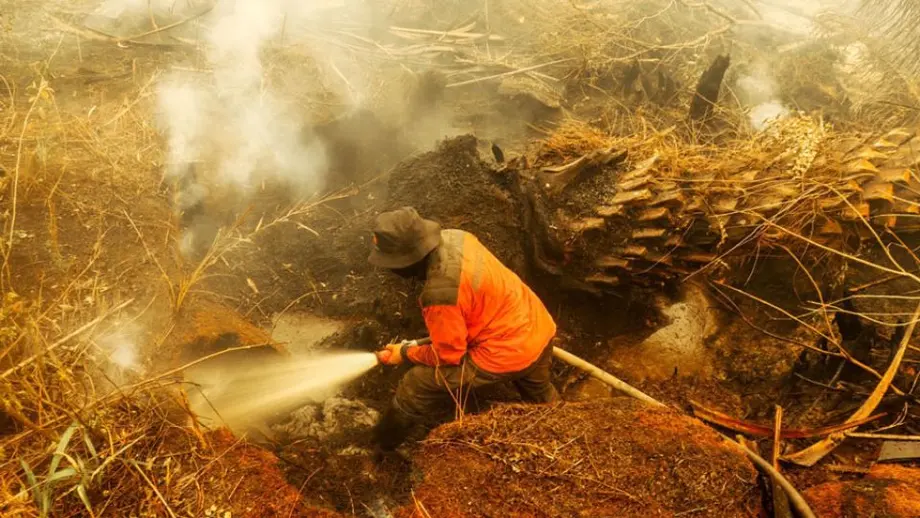
Peatland fires are particularly difficult to extinguish. Home Affairs Minister Tito Karnavian explained that burning can continue beneath the surface, requiring large quantities of water. Indonesia tested a Brazilian suppressant, Realiza Anti Chamas, in Banyuasin, South Sumatra, on October 9 as part of efforts to contain the fires.
Singapore's haze conditions had improved by early November as the southwest monsoon weakened and winds changed. Its meteorological service also expected more rain during November. Singapore's proposed regional work nevertheless focuses on preventing new fires through better land and peatland management.
Investigators turn to companies and financial records
Indonesia's National Police have named at least 20 corporations and more than 200 individuals as suspects in cases involving alleged deliberate burning to clear land or negligence leading to fires. The corporate suspects include 16 domestic firms and four firms with investment from Singapore, Malaysia and South Korea.
The 16 domestic firms account for four fifths of the 20 corporations identified. Foreign investment links make cooperation with neighbouring jurisdictions relevant to the investigations, particularly where company information or financial records are held outside Indonesia.
Arrmanatha and Singaporean Foreign Minister Vivian Balakrishnan agreed on October 27 to establish the Joint Task Force on Strengthening Business Responsibilities. Its planned work includes sharing information, gathering evidence across borders and exchanging financial intelligence about companies linked to the fires.
Arrmanatha described the investigative approach in financial terms:
"breaking the chain of irresponsible business practices requires a 'follow the money' approach".
Financial intelligence can help investigators understand who paid for an activity, where funds moved and who ultimately benefited. Vivian said the task force would support rapid coordination and data sharing as events unfold. Its longer term ambitions include plans to restore land ecosystems and assets damaged by fire.
Why enforcement remains a national responsibility
The haze centre would coordinate cooperation, while national agencies would pursue legal cases. The 2002 regional agreement contains no punitive measures against companies or individuals responsible for burning.
Irawan Jati, an international relations expert at Universitas Islam Indonesia, argues that ASEAN's arrangements rely heavily on consultation and domestic law. He pointed to the scale of existing diplomacy: 20 Conferences of the Parties, 27 ministerial steering committee meetings and 18 ministerial meetings concerning the haze agreement.
Umi Ma'rufah, a forest and plantation campaigner at Indonesian environmental organisation Walhi, said the centre needs political commitment and strong law enforcement alongside information sharing. She identified transparent hotspot data, air quality monitoring, early warnings and emergency assistance across borders as useful functions.
Umi also called for accountability to reach beneficial owners, the people who ultimately own or control a company even when its formal structure contains several layers. She warned that investment interests, limited political commitment and concerns about sovereignty could restrict the sharing of information and action against companies.
Singapore is preparing proposed amendments to its Transboundary Haze Pollution Act that would allow its National Environment Agency to require companies to appoint assessors at their own expense. Those assessors would examine operations and supply chains, and failure to comply would be an offence. No company has been fined or sued under the act since it took effect.
Foreign assistance exposed diplomatic friction
Malaysia offered aircraft, helicopters and personnel, while Singapore offered civilian firefighting assistance and operational support for cloud seeding. Cloud seeding attempts to encourage rain from suitable clouds and depends on weather conditions.
Malaysia's National Disaster Management Agency was also directed to prepare logistical support and coordinate cloud seeding if Indonesia formally requested help. Deputy Prime Minister Ahmad Zahid Hamidi said Malaysia wanted structured diplomacy, preventive measures and technical cooperation with its neighbour.
Indonesia's decisions on assistance became a point of tension. At an October 12 palace meeting, Prabowo ordered stronger firefighting efforts, particularly in Central Kalimantan and South Sumatra. Dudung said foreign offers had not been discussed at that meeting, and the government had not declared a national disaster.
Arrmanatha said on October 15 that Prabowo had approved foreign assistance. On October 19, Indonesia told Singapore it could manage without that help, while Dudung said accepting it depended on a national disaster declaration.
Singapore's Minister for Sustainability and the Environment Grace Fu explained her government's position to Parliament:
Singapore respects Indonesia's sovereignty and its assessment of its needs, including whether the establishment of a joint regional firefighting task force would be helpful.
Fu said Singapore remained ready to assist. She also welcomed Indonesia's focus on prevention, while the new bilateral business task force offered another route for cooperation after weeks of strained exchanges.
How the response developed
September's diplomatic preparations were followed by firefighting orders in October and agreements on business accountability. The sequence shows how the response expanded from emergency operations to investigations and regional institutional reform.
- September 16: Malaysia announced plans to raise haze cooperation during a visit to Indonesia beginning September 17 and prepared assistance if requested.
- October 12: Prabowo ordered stronger firefighting operations and closer coordination with local authorities and communities.
- October 19: Indonesia told Singapore that foreign firefighting assistance was not required.
- October 27: Arrmanatha and Vivian agreed to establish the task force on business responsibilities.
- November 3: Arrmanatha chaired Indonesia's ministerial coordination meeting, while Fu told Singapore's Parliament that ratification would follow within days.
- November 4: Ina said Indonesia would press for the haze centre to become operational.
- November 12: Malaysian Foreign Minister Mohamad Hasan plans to raise the haze agreement at a foreign ministers' meeting in Manila.
Indonesia is also reviewing fire prevention regulations and preparing a National Peatland and Mangrove Management Agency. A previous restoration agency, established in 2016 and later expanded to include mangroves, was dissolved in 2024, with responsibilities divided among ministries.
Prabowo ordered a nationwide public awareness campaign, while Tito instructed regional leaders to enforce a ban on burning during the emergency down to village level. Those domestic measures would operate alongside the proposed regional centre.
What Manila and Singapore's chairmanship could deliver
The Philippines has confirmed that haze management is on the agenda for ASEAN foreign ministers preparing for the summit. Mohamad Hasan argues that haze needs special attention because existing ASEAN mechanisms for natural disasters do not cover it.
The Manila meetings are scheduled for mid-November. Summit dates have been given as both November 15-17 and November 16-18, 2026. Indonesia's Foreign Ministry was still awaiting confirmation of Prabowo's attendance.
Arrmanatha also discussed haze with Philippine Foreign Secretary Theresa P. Lazaro during an introductory visit to Manila. The Philippine Department of Foreign Affairs said both ministers recognised the importance of continuing efforts to address the problem, alongside making progress on Myanmar.
Myanmar's participation in political meetings and negotiations on a South China Sea code of conduct will also compete for attention. Indonesia says its wider objective is a united, capable and resilient ASEAN, with stronger national responses supporting stronger regional cooperation.
Singapore, which takes over ASEAN's rotating chairmanship in 2027, plans work on sustainable land and peatland management and guidance for agricultural burning. Fu has pledged to encourage other members to ratify the centre agreement. If Singapore's promised submission follows Vietnam's, four further ratifications would still be needed to reach six, followed by the agreement's waiting period of 60 days.
For communities living with smoke, the concrete measures are connected: preventing land from burning, acting quickly when fires start, sharing useful information and pursuing those responsible. Manila's immediate opportunity is to move the centre closer to operation while governments continue those tasks at home.
Key Points
- Only Vietnam has submitted ratification of the ASEAN haze centre agreement; six submissions are required.
- Indonesia hosts the secretariat in Jakarta but has not completed its own approval procedures.
- The founding agreement takes effect 60 days after the sixth ratification.
- Indonesian police have named at least 20 corporations and more than 200 individuals as suspects in fire cases.
- Indonesia and Singapore plan to share evidence and financial intelligence through a joint task force.
- Indonesia recorded 174,694 acute respiratory infection cases in seven affected provinces between August 18 and September 21.
- Malaysia plans to raise haze at the November 12 foreign ministers' meeting; Singapore plans further cooperation during its 2027 ASEAN chairmanship.