Three more companies face demands to fight fires
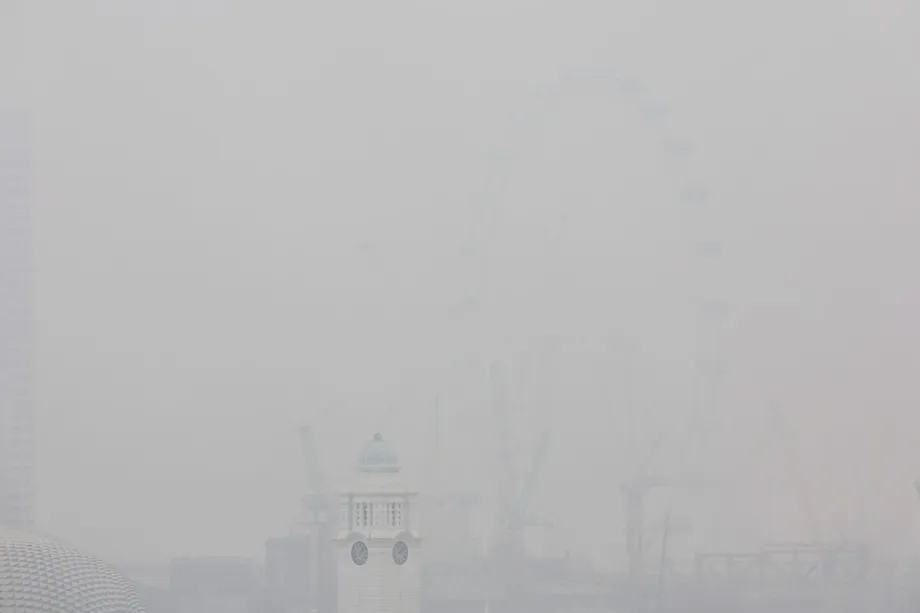
Singapore has extended its haze enforcement to three companies holding land in Kalimantan, bringing to 10 the number of Indonesian firms served with preventive notices since 16 October 2026. The expansion comes after the country's western region recorded a season high Pollutant Standards Index reading of 230 on 18 October, within the very unhealthy range.
Contents
- Three more companies face demands to fight fires
- What NEA requires the companies to do
- How the haze and enforcement developed
- Who is behind the Kalimantan concessions?
- APP faces daily reporting and a threat to its green label
- First Resources offers inspections as investors react
- Singapore looks to banks, investors and government benefits
- Why prosecution remains difficult
- Indonesia is pursuing permits, restoration and owners
- Regional pressure grows as residents seek relief
- When might the air improve?
- Key Points
The National Environment Agency (NEA) named PT Baratama Putra Perkasa, PT Buana Megatama Jaya and PT Mananjung Hayak on 19 October after finding indications that smoke from fires on their land could have reached Singapore. They join seven companies previously targeted over fires in Sumatra.
Singapore is also looking beyond plantation operators to their suppliers, corporate owners, banks and investors. Senior Minister K Shanmugam said the government could examine access to financing and government benefits, and urgently strengthen legislation to secure cooperation.
The immediate demands concern putting out fires and preventing more burning. The larger challenge is turning satellite images, wind records, concession maps and evidence collected in Indonesia into cases that can succeed in court. No company has been fined or sued under Singapore's Transboundary Haze Pollution Act (THPA) since it took effect in 2014.
What NEA requires the companies to do
NEA's 16 October statement describes how the agency tracks fire hotspots and smoke plumes using maps, meteorological data and satellite imagery. It identified indications that smoke from land held through concessions by seven Indonesian companies could have moved towards Singapore. A concession gives a company rights to use or manage a defined area of land.
The seven firms are PT Bumi Andalas Permai, PT Bumi Mekar Hijau, PT Paramitra Mulia Langgeng, PT Sumatera Alam Anugerah, PT SBA Wood Industries, PT Hutan Lestari Raya and PT Bangkanesia.
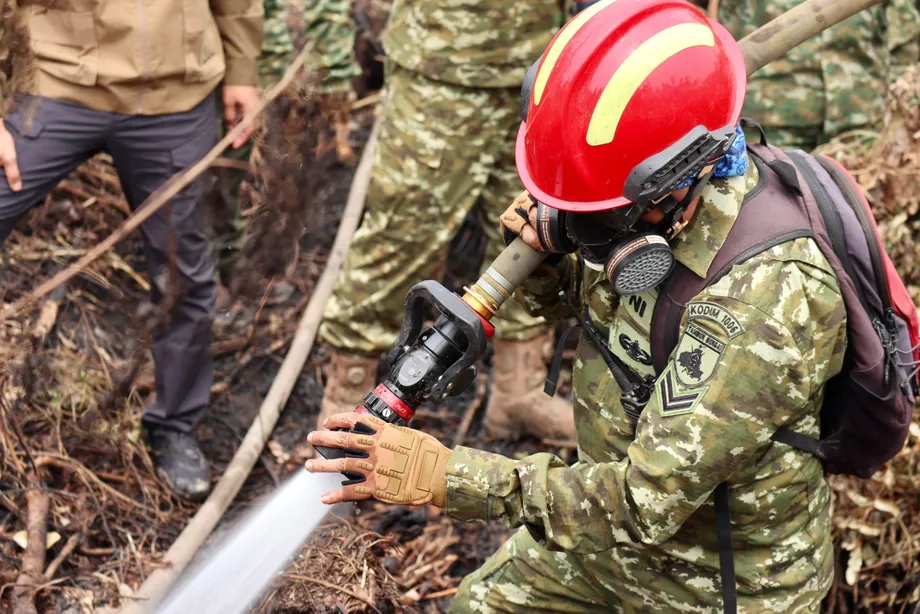
The Preventive Measure Notices, issued under Section 9 of the THPA, require companies to deploy firefighters to extinguish fires or stop them spreading on land they own or occupy. Companies must also stop or refrain from burning and submit plans to put out fires or prevent their recurrence.
Minister for Sustainability and the Environment Grace Fu said NEA combines concession maps, satellite imagery, public information and weather data to trace likely sources. Wind speed and direction help the agency assess whether smoke from a particular fire could travel to Singapore.
How the haze and enforcement developed
Singapore's air quality first entered the unhealthy range on 4 September, its first such reading since October 2023. By early October, NEA's daily advisories were identifying Kalimantan as a source of incoming smoke.
The sequence shows how worsening air quality was followed by wider enforcement:
- 4 September: Singapore's air quality entered the unhealthy range.
- 14 October: The 24-hour PSI reached 203 in the west, entering the very unhealthy range for the first time that year.
- 15 October: NEA forecast that dense smoke from Kalimantan would continue moving towards Singapore on winds from the east southeast.
- 16 October: NEA announced preventive notices for seven companies linked to fires in Sumatra.
- 18 October: The western region's 24-hour PSI reached a season high of 230.
- 19 October: Singapore expanded the notices to three companies in Kalimantan and outlined possible financial and regulatory measures.
- 20 October: First Resources welcomed inspections and reviews of its operations.
The PSI combines information about air pollutants into an index used to describe air quality. The 24-hour reading reflects conditions over a full day, rather than a brief rise or fall in pollution.
Who is behind the Kalimantan concessions?
PT Buana Megatama Jaya supplies pulpwood to Asia Pulp & Paper (APP), having joined its supplier network in 2020. Its concession covers 43,800 hectares in Kendawangan, Ketapang district, West Kalimantan. Indonesia's environment authorities froze its permit in 2015 after finding burned areas within the concession.
Buana Megatama Jaya brings the number of identified APP suppliers among the 10 companies to four. The other three are Bumi Andalas Permai, Bumi Mekar Hijau and SBA Wood Industries, which operate in South Sumatra and also received Singapore notices during the 2015 haze crisis.
AidEnvironment's records identify Batavia Prosperindo as the owner of Baratama Putra Perkasa. Almost 90 percent of shares in Batavia Prosperindo Internasional are held by Singapore based Malacca Trust Pte. Ltd., providing another corporate connection for scrutiny.
Mananjung Hayak is listed under PT Dwi Mitra Adhiusaha, whose operations include 6,000 hectares of oil palm plantations and a mill capable of processing 30 tonnes an hour. In 2025, Indonesia's forest area enforcement task force moved to take control of 1,728 hectares associated with Mananjung Hayak in Central Kalimantan over alleged illegal operations within forest land.
APP faces daily reporting and a threat to its green label
The Singapore Environment Council (SEC) placed temporary restrictions on APP's certification under the enhanced Singapore Green Labelling Scheme for pulp and paper, known as SGLS+. The action was announced as taken on 18 October, while the notice's issuance was also dated 19 October.
APP must provide daily reports on its fire response at concessions operated by Bumi Andalas Permai, Bumi Mekar Hijau and SBA Wood Industries. SEC said certification could be suspended if the reporting fails to demonstrate effective improvements in monitoring, prevention and firefighting. Products covered by a suspended certificate would have to stop carrying the label.
APP said it had contacted the suppliers for updates, urged full cooperation with NEA and would assess whether further action was necessary. It said suppliers had responded to NEA even before receiving formal communications.
An APP spokesperson said the company maintains a strict policy against burning across its operations and supply chain. APP also said it had invested US$300 million in fire management since 2015 and could suspend or terminate supplier relationships where investigations found serious breaches.
The certification risk has a commercial history. Singapore supermarkets withdrew APP paper products during the 2015 haze crisis, and its products lost their green label. SEC introduced the tougher SGLS+ scheme in 2017, adding peatland management, fire prevention and supply chain disclosure requirements. APP received certification under that scheme in May 2019; it now covers about 58 pulp and paper products.
First Resources offers inspections as investors react
First Resources, a palm oil producer listed in Singapore, said in a 20 October exchange filing that it welcomed document reviews, technical assessments and inspections on the ground. It denied clearing land by fire, directly or indirectly, and said its policy against burning applies throughout its operations.
The company manages more than 200,000 hectares of oil palm plantations, including in North Sumatra and West Kalimantan. It proposed examining satellite records of hotspot detection and fire progression, firefighting documents and geographical analysis of conservation areas.
First Resources set out its position in the filing:
We believe that any assessment of the source of fires should be based on verified facts, scientific evidence and a comprehensive understanding of the circumstances on the ground.
Greenpeace had identified more than 30 haze source points on land managed by two First Resources subsidiaries between August and September. Since the company was named in Greenpeace's 5 October report, its shares fell more than 10 percent, closing at S$3.74 on 20 October. First Resources said fire incidents had not materially affected its production targets.
Shanmugam acknowledged the company's statements about its policy and firefighting work, while demanding supporting evidence. NEA's response to the invitation for inspections had not been announced.
Singapore looks to banks, investors and government benefits
The Singapore Exchange has sought information from seven listed agricultural companies: Golden Agri-Resources, Bumitama Agri, First Resources, Wilmar International, Kencana Agri, Indofood Agri and TSH Resources. The questions concern their operations and possible connections to fires and haze.
Kencana Agri said Indonesian authorities had begun a preliminary inquiry into a fire at a subsidiary. Based on information then available, the company said the subsidiary had carried out no land clearing or preparation in the affected area.
Shanmugam, who is also Coordinating Minister for National Security and Minister for Home Affairs, said Singapore would examine large corporate groups and people who ultimately control concession holders. He also identified possible smoke source connections involving First Resources, Bumitama Agri and First Borneo Plantations.
At Woodlands Checkpoint on 19 October, Shanmugam described how Singapore could apply pressure:
If companies refuse to cooperate, regardless of whether they have a presence in Singapore or do not have a presence in Singapore, we will use every legal and regulatory lever at our disposal to exert pressure where it matters, including on their bottom lines, including on their access to financing, and including on their standing with investors.
Singapore will examine whether companies connected to the haze receive government grants or incentives. Shanmugam also said banks must assess environmental and legal risks associated with agricultural borrowers, with the Monetary Authority of Singapore supervising how banks manage those risks. He gave no timetable for possible legislative changes.
Why prosecution remains difficult
The THPA allows fines of up to S$100,000 for each day a company causes or contributes to haze pollution in Singapore, and up to S$50,000 for each day it fails to comply with a preventive notice, subject to a total cap of S$2 million. People in Singapore who suffer injury, damage or economic loss can also bring civil claims, with no cap on damages.
Alan Tan, a law professor at the National University of Singapore, said access to evidence in Indonesia is central to enforcement:
There is no way Singapore can investigate and prove facts on the ground without the Indonesian authorities' direct involvement and co-operation.
Tan expected Singapore to focus on companies Indonesian authorities had themselves identified and charged. A criminal case must prove guilt beyond reasonable doubt, requiring evidence strong enough to meet that demanding legal standard.
The 2015 experience shows the difficulty. NEA served notices on six companies, closed two investigations in 2017 and left four open. A court warrant obtained in 2016 for a director who failed to attend an interview prompted Indonesia's environment minister to say cooperation with Singapore would be reviewed.
Access to mapping evidence has become harder. Since September, Indonesia's forestry ministry has made its Sigap forest mapping platform available for viewing only. Extracting data without written approval can carry penalties of up to nine years in prison. Shanmugam also said the Attorney-General's Chambers had advised that the latest notices could raise technical and legal issues.
Indonesia is pursuing permits, restoration and owners
Indonesia's enforcement campaign has sanctioned 32 companies over fires affecting approximately 12,927 hectares across seven provinces. Nineteen face permit suspensions and ecosystem restoration orders, eight face restoration orders alone, and five have had permits revoked.
An earlier enforcement announcement listed 26 licence suspensions. The latest breakdown includes several different forms of action, from restoring damaged land to losing permission to operate.
Criminal proceedings involve 125 individuals and corporate entities, with 12 individual suspects and one corporate suspect identified. Dwi Januanto Nugroho, director general of forestry enforcement, said investigators were examining accountability among beneficial owners, the people who ultimately own or control businesses.
Earlier court cases show the potential cost of environmental damage. In July 2025, Indonesia's Ministry of Environment announced awards exceeding Rp721 billion across four fire cases. One judgment also ordered restoration valued at Rp1.79 trillion. Those cases are separate from the current enforcement campaign.
Restoration orders, permit losses and regulatory penalties can also expose gaps in corporate insurance. A policy covering some pollution cleanup or legal defence costs may leave a company paying for statutory restoration or income lost during a permit suspension.
Regional pressure grows as residents seek relief
Indonesian residents are pursuing their own cases. Eleven people in South Sumatra filed a lawsuit in 2024 against three pulpwood companies over recurring smoke. Groups in Pontianak, West Kalimantan, have also brought a class action against the government and President Prabowo Subianto, alleging negligence and seeking a national disaster declaration that could support recovery measures, including healthcare costs.
Presidential Staff Office head Dudung Abdurachman said on 19 October that the fires had not been declared a national disaster. Indonesian authorities maintained that the country could handle the crisis.
Malaysia faces pressure over corporate accountability too. Greenpeace identified 19 haze source points on land managed by Kuala Lumpur Kepong subsidiary PT Menteng Jaya Sawit Perdana. Kuala Lumpur Kepong said most fires originated outside its concession and had been extinguished. Malaysian Communications Minister Fahmi Fadzil said government inspections found burned areas outside Malaysian companies' concessions.
Shanmugam welcomed Prabowo's directives against burning vegetation on peatland and his approval of foreign assistance. Singapore has offered help, while Indonesia said discussions with neighbouring countries had reached the technical stage.
When might the air improve?
Grace Fu said relief was more likely during the transition between monsoon seasons in late October or early November. Lighter, more variable winds would be less likely to carry smoke from Sumatra and Kalimantan towards Singapore.
The Asean Specialised Meteorological Centre expects El Niño conditions to strengthen through October and November, bringing below normal rainfall across much of southern Southeast Asia. El Niño is a climate pattern that changes rainfall and temperatures; drier vegetation can make fires easier to spread. Showers towards the end of October could begin easing the haze.
The World Meteorological Organization expects El Niño to peak towards the end of 2026 and continue into 2027. United Nations Development Programme advisers Stanislav Kim and Sooin Bang warned that water stress, crop losses, fires and extreme heat could persist even as the climate pattern weakens.
Economist Euston Quah's preliminary estimate puts Singapore's haze costs at S$3.2 billion to S$3.9 billion, compared with S$1.83 billion in 2015. That is roughly 1.7 to 2.1 times the earlier figure. The S$2 million maximum fine per company is equivalent to about 0.05 to 0.06 percent of the estimated national cost, helping explain Singapore's interest in civil claims, financing and commercial pressure alongside prosecution.
Key Points
- NEA has targeted 10 Indonesian companies, including three newly named firms with land in Kalimantan.
- The notices require firefighting, an end to burning and plans to prevent recurring fires.
- Four identified APP suppliers received notices; three South Sumatra suppliers are covered by daily reporting tied to APP's green certification.
- First Resources denies clearing land by fire and has welcomed inspections and technical reviews.
- Singapore is examining corporate control, financing, investor exposure and government benefits alongside possible legal action.
- Indonesian cooperation and access to evidence remain central to prosecutions under Singapore's haze law.
- Weather changes in late October or early November could bring relief, while enforcement is set to continue after the smoke clears.