Ten familiar figures, one very modern conversation
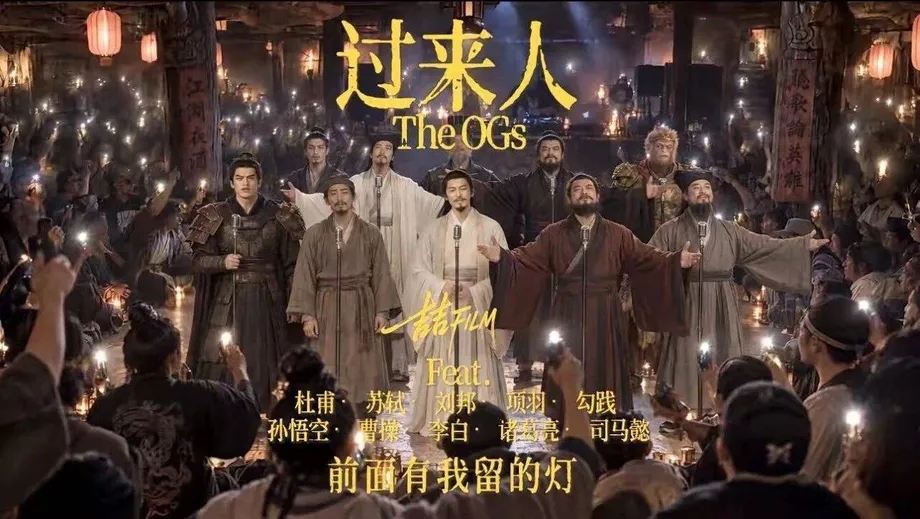
A rap video featuring Du Fu, Li Bai and eight other figures from Chinese history and mythology drew more than 1 million likes within a day of release, as its characters exchanged stories of hardship around a microphone. The AI music video Guolairen spread across Weibo, Douyin and WeChat Channels during October 13 to 15, 2026, bringing an unusual message to listeners under pressure: people remembered for greatness also struggled to get through ordinary days.
Contents
- Ten familiar figures, one very modern conversation
- Why the characters talk about getting by
- A rap performance with room to breathe
- The Wuhan filmmaker behind the voices
- How the song reached its audience
- Why listeners responded to companionship
- What the industry figures actually describe
- Human choices remain at the centre of this song
- Key Points
By October 20, the song had attracted nearly 100,000 comments and more than 2.3 million shares on social platforms. Its creator, Wang Kunzhe, a director and photographer from Wuhan who works online as ZheFILM, belongs to a generation born in the 1990s. His route to this viral moment began in television, continued through films about his home city and later moved into content made with generative artificial intelligence.
The title Guolairen describes someone who has already been through an experience. In everyday conversation, such a person might offer advice to someone facing the same difficulty. Wang gives that familiar role a gentler purpose: his characters offer companionship rather than instructions for success.
The cast includes poets, rulers, military strategists and Sun Wukong, the Monkey King of Chinese fiction. Their shared stage resembles an open microphone comedy performance more than a grand historical drama. The setting brings celebrated names down to conversational scale, allowing their disappointments to become the subject rather than a brief interruption before their achievements.
The central appeal is concrete. Rent, earning a living, rejection and a stalled career give contemporary listeners a way into stories usually encountered through poetry, literature or accounts of political power.
Why the characters talk about getting by
Du Fu, Su Shi, Liu Bang, Xiang Yu, Goujian, Sun Wukong, Cao Cao, Li Bai, Zhuge Liang and Sima Yi take turns in the video. Grouping them together allows the song to move between different kinds of difficulty without requiring one character to carry the entire story.
Du Fu's segment draws on the image of a poet still renting accommodation and trying to earn a living in Chang'an at around 40. Su Shi's story turns to his banishment to Huangzhou at 43 and his work farming to support himself. Liu Bang is presented as a minor local official at 47, before the rise that made him an emperor.
Those ages give the song much of its emotional force. For listeners who feel they should have achieved security by a certain birthday, the characters represent lives whose public achievements came alongside long periods of uncertainty. The song selects moments of difficulty and places them beside present concerns about housing costs, unemployment and being pushed aside at work.
Modern mortgage anxiety supplies a comparison for the audience; the characters themselves speak from imagined versions of their own circumstances. Du Fu's struggle to secure shelter, for example, becomes a bridge to a listener worried about the next rent payment.
Guolairen's fictional speakers express that approach in a widely shared lyric. Translated into English, the line says:
I'm not here to teach you. I'm here to walk this stretch with you. The nights you stayed up, the words you swallowed, the battles you didn't win, I've had my share of them all.
A rap performance with room to breathe
The song's delivery supports its message. Its generated voices include breathing pauses, small hesitations and quiet sighs, details that listeners described as sounding natural. Instead of filling every available beat with dense rhymes, the performance leaves space between thoughts.
In rap, flow means the way words, rhythm and pauses fit against the beat. Guolairen uses that space to give the impression of someone thinking before continuing. A brief pause can make a line about exhaustion sound like a confession rather than a speech.
The characters also have different vocal temperaments. Liu Bang comes across as swaggering, Zhuge Liang as measured and Sun Wukong as restless. Those contrasts help listeners follow a performance with ten speakers and give each segment its own mood.
The visual production attracted less praise than the emotional delivery. The images were described as relatively unpolished, while audience responses focused on the writing, arrangement and voices. That balance helps explain the video's circulation: viewers had a particular line or feeling to share, even when the pictures were not its strongest feature.
The song makes space for sentences that sound plain or unfinished. Its approach fits the lives it portrays. A character who admits frustration in ordinary language can feel closer to an exhausted listener than one who delivers a polished lesson at every turn.
The Wuhan filmmaker behind the voices
Wang's background helps explain the emphasis on character and setting. He joined Wuhan Radio and Television Station in 2013, then left three years later to establish his own studio. His earlier work included the Wuhan themed short films Cixin Anchu Shi Jiangcheng and Qinjian Shang de Jianghu.
His work has been selected for a national photography art exhibition. He is also identified as a leader among Hubei's new literary and artistic groups, and as a collaborating director and contributing photographer for Planet Research Institute.
Before Guolairen, Wang had already brought historical characters into contemporary situations through AI. His earlier project Qiannian Paotuan, roughly translated as Millennium Running Group, placed Li Bai on the Wuhan Marathon course and used the military commander Yue Fei in a running narrative.
That earlier project and the new song share a storytelling method: take a familiar cultural figure, put the character in a recognisable modern setting and build a connection through an everyday struggle. Running through fatigue became one version; talking through disappointment became another.
Wang, the director and AI creator behind ZheFILM, has described his creative principle in a short phrase. Translated into English, he said:
Technology is the surface; the human heart is the core.
The reported Chinese wording is "技术为表,人心为核". It was described as Wang's own summary and as having been quoted verbatim in media coverage, but no link to its first publication was provided.
His account of the work places his experience in storytelling at the centre. AI supplies new ways to produce voices and images, while the choice of characters, situations and emotional tone gives those elements a common purpose.
How the song reached its audience
Guolairen circulated across several platforms in a concentrated period. Douyin offered the short video setting, WeChat Channels carried it into social circles and Weibo helped extend the public discussion. The reported milestones show both rapid initial attention and continued sharing.
- 2013: Wang joined Wuhan Radio and Television Station.
- 2016: He left the broadcaster and established a personal studio.
- Before Guolairen: His AI projects included Qiannian Paotuan, featuring historical figures in a marathon story.
- October 13 to 15, 2026: Guolairen's release and rapid circulation concentrated across social platforms.
- Within a day of release: The video reportedly passed 1 million likes.
- By October 20: Reported engagement included nearly 100,000 comments and more than 2.3 million shares.
The figures describe different actions. A like records a reaction, a comment adds a response and a share passes the work onward. The large sharing count matters to the story because the song's language of companionship gives viewers a reason to send it to someone else.
A more specific reported snapshot puts the original Douyin video's likes at more than 2.85 million, shares at more than 2.33 million and saves at nearly 670,000 by the evening of October 20. An earlier reported snapshot, dated October 18, put likes and shares at more than 2 million each. Neither snapshot came with a counting method. On Bilibili, the version uploaded on October 16 reportedly exceeded 350,000 views within three days, with virtual coin contributions approaching 90% of the like count; absolute like, comment and share totals were not supplied for that platform.
The available reporting does not provide a platform by platform breakdown or counting method for the nearly 100,000 comments, nor does it establish how the original cross-platform totals were compiled. Separate like, comment and share counts for Weibo and WeChat Channels were not supplied. The AI tools, production budget, time spent making the video and detailed division of work between human composition and AI generation were also not disclosed.
Why listeners responded to companionship
Listeners repeatedly focused on the experience of feeling understood. Comments described moments of tears, particularly among people in middle age, and appreciation for hearing AI music used in this way. The response centred on adulthood's accumulated pressures rather than surprise at the technology alone.
The song's choice of a companion's voice is central to that reaction. A lecture about perseverance asks the listener to improve. A character describing a similar disappointment offers recognition first. Guolairen repeatedly chooses the second approach.
Historical fame gives that approach an extra twist. Du Fu and Su Shi are often encountered as accomplished poets whose work has lasted for centuries. Turning attention to their insecure or painful periods makes those finished reputations feel less distant from a life still being worked out.
The audience also knew the voices were generated. Emotional responses and worries about the consequences for musicians appeared together in the discussion. For some listeners, enjoying the performance made the industry's changing tools feel more immediate.
What the industry figures actually describe
The wider discussion around Guolairen included a striking figure: AI music's share of new songs in an unnamed major Chinese music library reportedly rose from 5.2% in 2024 to 21.4% in 2025. That is an increase of 16.2 percentage points, bringing the later share to just over four times the earlier one.
The library was not identified, and the criteria used to classify a song as AI music were not specified. The figures describe the reported change within that catalogue. They offer a narrower view than a count of all music released in China.
The same industry discussion described much AI music as material produced in bulk, with relatively few breakout hits. Guolairen attracted attention within that growing supply because it combined a recognisable concept with a particular audience need: reassurance for people tired of being told to succeed.
Generative AI refers to software that produces new material, such as audio or images, using patterns learned during training. In music production, such tools can help generate singing voices and explore different sounds. A director can then select and arrange results around a story, although Wang's precise production process has not been made public.
Human choices remain at the centre of this song
Li Xiaobing, head of the Music Artificial Intelligence Department at the Central Conservatory of Music, has described AI as capable of presenting precise emotional structures without depending on human experience. He also argues that it lacks an understanding of a work's emotional core and spiritual direction.
That distinction helps explain the creative work visible in Guolairen. The production has to sound convincing, but its most consequential decisions concern what the characters say: choosing hardship over triumph, a shared microphone over a grand historical setting and companionship over advice.
For Wang, the new tools extend a practice rooted in film and photography. For musicians, the video's popularity brings attention to generated performances that audiences will willingly hear and share. For listeners, the immediate result is simpler: familiar names speak about experiences that feel close to their own.
The song's strongest connection runs between those choices. Its characters have survived the chapters that trouble them, while its listeners are still living through theirs. The comfort comes from making that distance feel smaller.
Key Points
- Guolairen spread rapidly during October 13 to 15, 2026, reportedly passing 1 million likes within a day.
- By October 20, reported engagement included nearly 100,000 comments and more than 2.3 million shares; a separate snapshot of the original Douyin video that evening put likes above 2.85 million and shares above 2.33 million, without a counting method.
- Ten figures from Chinese history and mythology rap about adversity in a setting resembling an open microphone performance.
- Creator Wang Kunzhe, known as ZheFILM, worked in Wuhan television before founding a studio in 2016.
- The song connects historical hardship with present concerns about housing, work and disappointment.
- Its reception has brought fresh attention to the relationship between AI production tools and human storytelling.