Ship 3102 Enters Restricted Waters Near Pratas
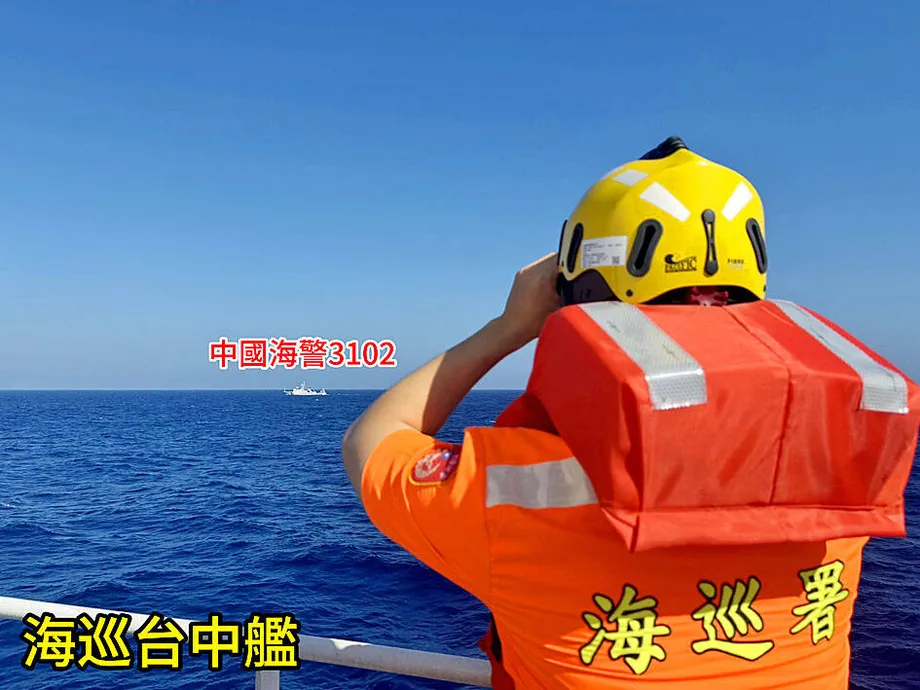
Taiwan's Coast Guard Administration said it had conducted 12 operations involving 15 Chinese coast guard vessel expulsions around the Pratas Islands this year, as another confrontation unfolded on October 20, 2026. The latest encounter involved China Coast Guard ship 3102, which Taiwan said approached with its automatic identification system switched off before entering restricted waters northeast of Pratas.
Contents
- Ship 3102 Enters Restricted Waters Near Pratas
- A Radio Exchange Over Who Has Authority
- What Switching Off AIS Changes
- Repeated Encounters Around the Atoll
- How the Encounters Developed
- Why Patrols East of Taiwan Alarm Officials
- Blockade Concerns and a Patrol of 27 Aircraft
- A Proposed $14 Billion Arms Package Waits
- Key Points
The agency's Dongsha command detected the Chinese vessel southeast of the islands at about 5 a.m. and sent the Taiwanese patrol ship Taichung to intercept it. At about 8 a.m., ship 3102 entered the restricted area, according to the coast guard. The Taichung sailed alongside, monitored its movements and repeatedly broadcast orders in Chinese and English for it to leave.
The confrontation also became a dispute over sovereignty conducted by radio. According to Taiwan's coast guard, the Chinese crew denied the existence of the Republic of China, Taiwan's official name, while the Taiwanese crew asserted that Taiwan was a sovereign and independent country.
The encounter remained unresolved when the coast guard issued its account. No departure time for ship 3102 was given.
Pratas, also known as Dongsha, is controlled by Taiwan in the South China Sea. The confrontation there came as officials in Taipei were also warning about regular Chinese coast guard patrols east of Taiwan's main island. The two locations are geographically separate, but Taiwan's officials describe a common concern: Beijing using patrols presented as law enforcement to assert authority in waters Taipei says China has no right to control.
A Radio Exchange Over Who Has Authority
The Taichung's task was to challenge the Chinese vessel's presence while keeping it under observation. Taiwan's coast guard said the Chinese ship addressed it using language that placed Taiwan under China, including the phrase "China Taiwan Taichung ship."
Taiwan's Coast Guard Administration attributed this statement to the Chinese vessel during the exchange:
The so-called Republic of China does not exist.
The agency said the Taichung responded by asserting Taiwan's sovereignty. It attributed the following words to the Taiwanese ship:
The Republic of China, Taiwan, is a sovereign and independent country.
The Taiwanese response also said the Republic of China and the People's Republic of China were not subordinate to one another. The crew ordered the Chinese vessel to turn away and leave, saying its entry without permission affected maritime order and safety.
Those messages show why the encounter involved more than navigation. Each crew was asserting which government could exercise authority in the area. Taiwan's coast guard said Beijing was using purported enforcement activity to create the appearance of Chinese jurisdiction, meaning the power to apply and enforce laws.
What Switching Off AIS Changes
Ship 3102 was operating without its automatic identification system, or AIS, according to Taiwan's coast guard. AIS normally broadcasts information such as a vessel's identity and position, helping other ships and shore authorities follow maritime traffic.
Switching off that signal makes a vessel harder to follow through AIS tracking. Taiwan's coast guard described the approach as a "dark ship" tactic intended to conceal the vessel's movements.
The Dongsha command nevertheless detected ship 3102 at about 5 a.m., roughly three hours before the reported entry into restricted waters. The agency did not identify the detection method in its account. Its response was to move the Taichung forward before the Chinese vessel reached the restricted area.
The sequence illustrates the practical demand placed on Taiwan's patrol crews: identify an approaching ship, assess its course, position a vessel to respond, and maintain observation while issuing warnings. In this case, the warnings were accompanied by competing statements about sovereignty.
Repeated Encounters Around the Atoll
The October 20 confrontation followed an earlier encounter involving two Chinese coast guard ships, numbered 3301 and 3303. Taiwan's coast guard said those vessels were first detected southwest of Pratas at about 2 p.m. on a Friday and entered restricted waters at 3:34 p.m.
The Taiwanese patrol ship Cijin and patrol boat PP-10032 responded. They flanked one Chinese vessel and broadcast warnings in Chinese and English ordering it to leave. That confrontation was also continuing when the coast guard released its statement that evening.
The coast guard's count at that earlier stage was 11 expulsion operations involving 14 Chinese coast guard vessel encounters. The later October 20 figure rose to 12 operations involving 15 vessel expulsions. The figures track repeated deployments, with some operations involving more than one Chinese vessel.
An April 12 operation involved a broader group: Taiwan's coast guard escorted 16 Chinese vessels away from waters near Pratas, including coast guard ships, research vessels and fishing boats. The vessels left without incident. That mixed group covered more vessel types than the October tally specifically concerning Chinese coast guard activity.
Taiwan's coast guard says recent Chinese operations around Taiwan have combined coast guard vessels, research ships and fishing boats at several locations. Its concern is that different types of ships can support a shared effort to establish a continuing Chinese presence.
How the Encounters Developed
The reported events span several months and include both individual confrontations and a more persistent patrol pattern:
- April 12: Taiwan's coast guard escorted 16 Chinese vessels, including coast guard, research and fishing ships, away from waters near Pratas.
- Since June: China has conducted regular coast guard patrols east of Taiwan's main island.
- A Friday before the October 20 confrontation: Chinese coast guard ships 3301 and 3303 entered restricted waters around Pratas at 3:34 p.m., prompting a response by the Cijin and PP-10032.
- October 20, about 5 a.m.: Taiwan detected ship 3102 southeast of Pratas with its AIS switched off.
- October 20, about 8 a.m.: Ship 3102 entered restricted waters northeast of Pratas, according to Taiwan's coast guard.
- October 20: Officials at a Taipei forum discussed Chinese patrols east of Taiwan; Taiwan's defence ministry later reported a Chinese military patrol involving 27 aircraft.
The sequence puts the latest standoff within a pattern of recurring maritime encounters, while also showing the different vessels and locations involved.
Why Patrols East of Taiwan Alarm Officials
Randall Schriver, chair of the US Congress' US-China Economic and Security Review Commission, told a forum in Taipei on October 20 that a persistent Chinese coast guard presence east of Taiwan was among the most troubling recent developments he had observed.
Schriver, a former US assistant secretary of defence, said a vessel appearing to perform civilian law enforcement duties could still serve Beijing's sovereignty claim. He described the political purpose behind that presence:
This is an extension of legal warfare and political and information warfare. This is highly destabilizing if they continue to operationalize this law enforcement role.
His warning concerned the use of routine patrols and enforcement language to make Chinese authority appear established. Repeated activity can become part of a political argument about who governs an area, even when the ships involved belong to a coast guard rather than a navy.
National Security Council Secretary-General Joseph Wu, speaking at the same event, said China had no legal claim to the waters east of Taiwan.
China's Foreign Ministry took the opposite position, asserting that the waters belonged to China. The ministry described Chinese activity there as follows:
Therefore legitimate, lawful and beyond reproach for China to carry out activities
Beijing views Taiwan as its territory and rejects Taiwanese claims of sovereignty, including over surrounding seas. Taipei rejects Beijing's territorial claim. That disagreement shapes both the radio exchanges near Pratas and the dispute over patrols east of Taiwan.
Blockade Concerns and a Patrol of 27 Aircraft
Taiwanese officials say they believe China may be practising for a possible maritime blockade by combining military, paramilitary and civilian assets. A blockade would seek to restrict ships reaching or leaving Taiwan, putting pressure on the movement of people, supplies and goods.
The different vessel types matter to that assessment. Military forces, coast guard ships and civilian vessels can operate in overlapping areas, requiring Taiwan to monitor several kinds of activity at once. Taiwan's coast guard is a civilian law enforcement agency under the Ocean Affairs Council and the Executive Yuan, although it can be mobilised as part of the armed forces during emergencies.
Taiwan's defence ministry later reported a Chinese "joint combat readiness patrol" near the island involving 27 military aircraft, including H-6 bombers capable of carrying nuclear weapons. The aircraft activity added a military dimension to a day already marked by maritime confrontation and warnings about Chinese patrols.
For Taiwan's authorities, the immediate operational burden is sustained surveillance and response across different locations. Around Pratas, that means maintaining patrols and challenging entry into restricted waters. Around the main island, officials are also watching the relationship between coast guard deployments and military activity.
A Proposed $14 Billion Arms Package Waits
The maritime pressure coincides with uncertainty over a proposed $14 billion US arms package for Taiwan. President Donald Trump had not approved it at the time of the October 20 discussions. He approved $11 billion in arms for Taiwan in December.
The proposed package is $3 billion larger than the December approval, or about 27 percent more. The United States remains Taiwan's most important international backer and arms supplier despite the absence of formal diplomatic relations.
Trump said in May, after meeting Chinese President Xi Jinping in Beijing, that arms sales to Taiwan were a "very good negotiating chip." Schriver nevertheless said Trump had a good record of approving weapons sales and providing military training to Taiwan.
Schriver expected movement on the new package probably the following year, after possible further Trump-Xi meetings at the APEC summit in China and the G20 in Florida. That was his forecast; no approval date was announced.
He suggested the package might be divided or arranged through different sales channels. Direct commercial sales involve purchases from US companies under US government authorisation, while foreign military sales are handled through the US government.
The pending decision leaves two separate processes running at once: Taiwan's coast guard is responding to ships already operating near its islands, while officials await decisions on additional weapons intended to support its defence.
Key Points
- Taiwan said China Coast Guard ship 3102 entered restricted waters northeast of Pratas on October 20, 2026, after approaching with its AIS switched off.
- The Taichung monitored the Chinese ship and issued warnings in Chinese and English. The confrontation was continuing when Taiwan released its account.
- Taiwan's coast guard reported 12 operations involving 15 Chinese coast guard vessel expulsions around Pratas during the year.
- Regular Chinese coast guard patrols east of Taiwan since June have prompted warnings from Taiwanese officials and US commission chair Randall Schriver.
- China describes its maritime activities as lawful; Taiwan rejects Beijing's claimed authority.
- Taiwan reported a Chinese military patrol involving 27 aircraft, including H-6 bombers, on the same day.
- A proposed $14 billion US arms package remained unapproved, with Schriver expecting possible movement the following year.