Earlier help for residents, with construction still further away
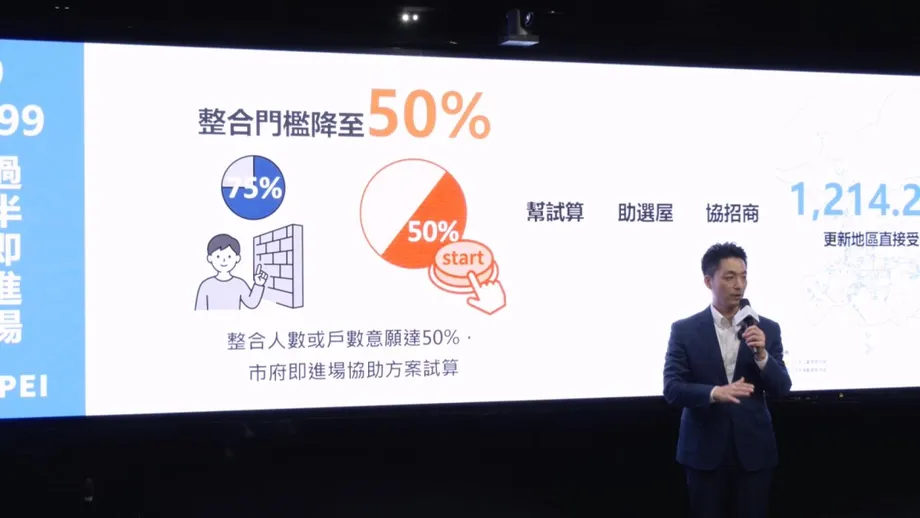
Taipei Mayor Chiang Wan-an proposed lowering the threshold for initial city assistance with urban renewal from 75 percent to 50 percent on October 16, 2026, saying officials should help residents work out redevelopment options before agreement becomes overwhelming. The city estimates that 1,214.26 hectares of designated renewal areas would benefit.
Contents
- Earlier help for residents, with construction still further away
- What changes under the 5099 proposal?
- What the existing program has achieved
- Why Shen is focusing on stalled projects
- Chiang promises more reviewers and points to advancing projects
- How much more could qualifying sites build?
- Administrative centers become demonstration projects
- Waterfront renewal and the needs of older residents
- Airport policy and an October 31 debate
- Kaohsiung campaigns prepare major rallies
- Key Points
The proposal would turn Taipei's existing 7599 program into 5099. Chiang also announced plans to add 105 permanent staff positions to speed reviews and conditionally increase permitted building floor space on qualifying sites near MRT stations or waterfronts.
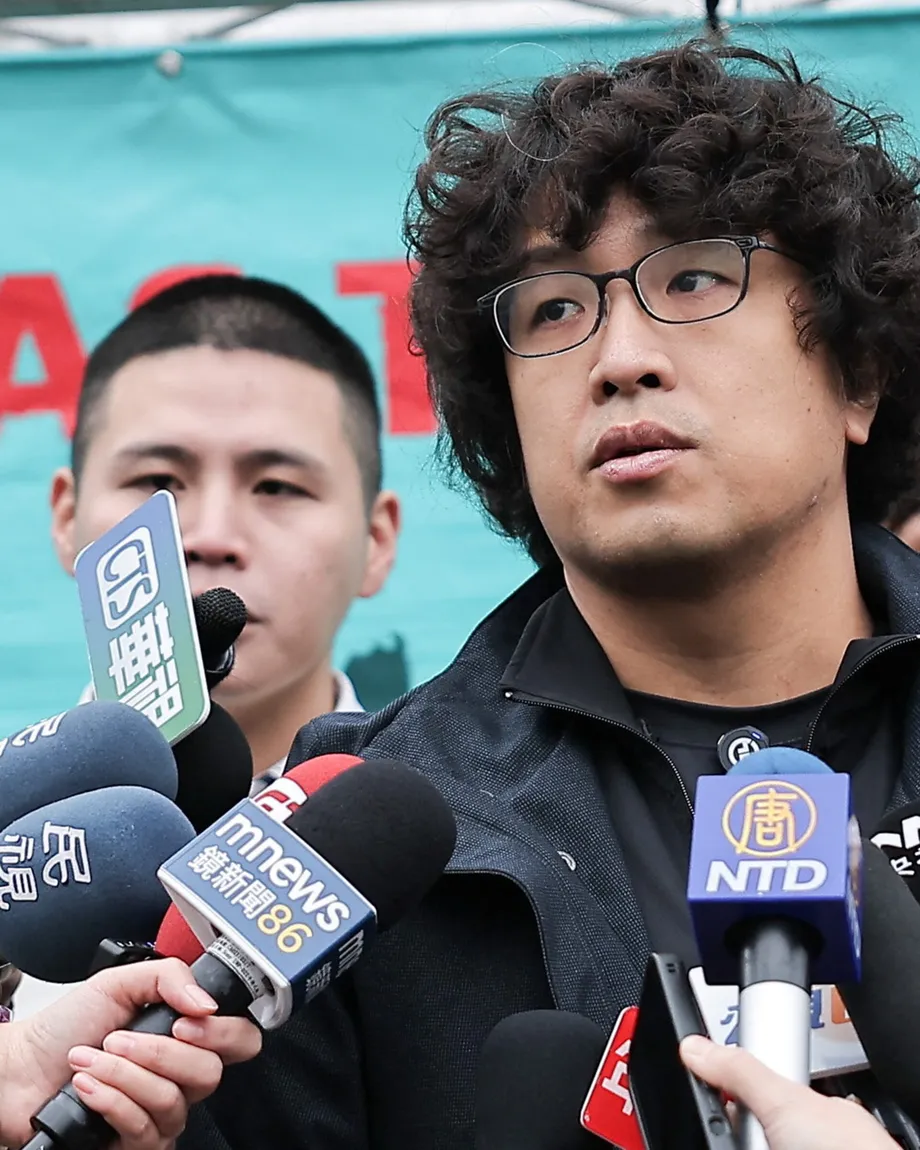
His election challenger, Democratic Progressive Party legislator Puma Shen, argued that admitting more projects would accomplish little unless the city also tackled the difficulties of attracting investors and beginning construction. Their disagreement centers on where government intervention can make the greatest difference: helping neighbors agree at the beginning, or getting stalled projects through their final stages.
The proposed 50 percent threshold concerns entry into municipal assistance. Later stages would retain separate requirements, including 90 percent participation or agreement milestones before investment solicitation. Construction would still require the project to complete the remaining redevelopment procedures.
What changes under the 5099 proposal?
Chiang said the city would step in once more than half of the relevant residents or households expressed interest. Officials would help calculate what redevelopment could mean for them, including the property they might receive and whether they would need to contribute money.
Residents often hesitate because those answers are uncertain, Chiang said. A household may support replacing an aging building while worrying about receiving a smaller apartment or facing an unaffordable payment. Earlier calculations are intended to make that decision more concrete.
The subsequent stages would remain demanding. Once willingness reaches 90 percent, the city would help assess property rights and values before and after redevelopment and simulate apartment choices. A further 90 percent agreement or selection milestone would lead to public investment solicitation.
Property rights calculations determine how the value contributed by each owner translates into a share of the finished development. Simulated apartment selection lets residents consider possible homes before the project advances further.
Chiang described 50 percent as Taiwan's lowest threshold for this initial assistance. He said the relevant procedures were being processed, without giving an implementation date. The same announcement set out staffing and development incentives intended to support the larger workload.
What the existing program has achieved
Taipei's Urban Regeneration Office records that the 7599 program began on March 3, 2023, lowering the first stage threshold to 75 percent. Its urban renewal program overview says 10 projects had passed the initial review by the middle of August that year, covering 1,620 households and 46,164 square meters.
Those figures provide an early measure of participation: an average of 162 households per project. They describe projects entering the process, while Chiang's current argument concerns how earlier intervention can help more communities move through it.
Chiang said the average number of urban renewal cases during his nearly four years in office was 2.4 times the level before he took office. He also said Taipei's case volume was 1.3 times the combined total of Taiwan's other five special municipalities.
The mayor credited the earlier reduction from 90 percent to 75 percent with helping projects advance. Shen's challenge is whether further growth in participation will be matched by more projects reaching construction.
The policy has developed through several stages:
- March 3, 2023: Taipei introduced the 7599 program with a 75 percent initial threshold.
- March 7, 2023: The city announced five urban renewal measures covering thresholds, regulations, reviews, obstacles and incentives.
- By the middle of August 2023: Ten projects had passed the program's first stage.
- October 16, 2026: Chiang proposed 5099, additional permanent staff and greater floor space for qualifying developments.
Why Shen is focusing on stalled projects
Shen said urban renewal succeeds when a project reaches construction. He identified investment solicitation and the transition to building work as major difficulties that a lower initial threshold would leave unresolved.
The challenger compared the situation to a hospital accepting more registrations while patients needing urgent treatment still struggled to receive care. His criticism targets the gap between entering a process and receiving its intended benefit.
Shen said he would propose an exit mechanism for stalled projects, faster redevelopment and additional incentives. Such an exit mechanism would address projects that remain stuck rather than continuing indefinitely under an arrangement that is failing to advance.
His detailed proposals had yet to be announced. For residents already waiting on a redevelopment project, the practical issue is whether the next policy package changes their project's prospects, rather than simply increasing the number of communities seeking assistance.
Chiang promises more reviewers and points to advancing projects
Chiang responded that the city was working on both early coordination and later reviews. He said 105 permanent positions would be added, nearly doubling staffing for the renewal work, so that more applications could be reviewed faster.
The mayor cited the Xinyi Weijai residential complex, which had reached investment solicitation after decades of difficulty. He also pointed to Nanjichang units 3 and 4, saying investment solicitation and contracts had advanced and developers would move toward demolition and renewal.
Other projects he named included Shuiyuan phases 2 and 3, Siwenli phase 2 and Hulinfang Street Lane 60. His response was that earlier agreement, administrative review and developer participation all needed to move together.
The Urban Regeneration Office's earlier record gives a dated milestone for Shuiyuan phases 2 and 3: a contract signing on September 14, 2023. The office described it as Taipei's first successful public investment solicitation for renewal of this category of residential complex, with more than 600 homes planned.
Staffing addresses the government's capacity to review projects. Investment solicitation and agreements with developers remain additional steps between residents receiving an initial assessment and seeing replacement homes built.
How much more could qualifying sites build?
Chiang's second proposal would conditionally raise the base floor area ratio from 225 percent to 300 percent for qualifying sites of at least 3,000 square meters in Taipei's Residential Zone 3. Deputy Mayor Chang Wen-te said sites must also be within 500 meters of an MRT station or directly along a waterfront.
Floor area ratio describes how much counted building floor space is permitted relative to the size of the land. A ratio of 225 percent means 2.25 square meters of counted floor space for every square meter of land.
On a site measuring exactly 3,000 square meters, the proposed change would raise base permitted floor space from 6,750 to 9,000 square meters. That is an increase of 2,250 square meters, or one third.
Chang said a site of 1,000 square meters would remain at 225 percent. Giving larger qualifying sites a higher ratio is intended to encourage developers to bring neighboring properties into a single project, despite the extra negotiations that requires.
The increased capacity would come with public service requirements. Chiang and Chang listed childcare, care for older people, libraries, sports centers and social or other designated housing among the possible uses. The precise mix would depend on the development.
Administrative centers become demonstration projects
Taipei has identified two demonstration areas for renewal across larger urban blocks. One is the proposed Zhongshan administrative complex on the former First Funeral Parlor site near Xingtian Temple MRT Station, covering about 1.5 hectares.
The plan would move administrative functions into the new complex and make the existing district office site available for another round of public urban renewal. Chiang said the area could connect with the Yuanshan innovation cluster and Songnan AI industrial park.
The second demonstration concerns a new Nangang administrative center associated with Nangang Vocational High School. Chang described about 0.7 hectares beside the school for the new center, followed by redevelopment of the existing district office site; Chiang also described 0.7 hectares at the original administrative center as part of the renewal plan.
The intended sequence is to relocate public offices, then use the released land for further development, including commercial buildings or company headquarters. That would allow the city to reorganize public facilities while assembling sites for new investment.
Chang said the proposed 300 percent ratio might be incorporated into revisions to TOD 3.0. TOD means transit oriented development, an approach that places homes, workplaces and services around public transport connections. In Nangang, officials linked the renewal plans to the wider transport corridor.
Waterfront renewal and the needs of older residents
Chang said Taipei also wanted to encourage renewal in older waterfront districts, particularly Datong and Wanhua. He contrasted their aging buildings with newer developments across the rivers in New Taipei's Banqiao, Sanchong and Xinzhuang districts.
The waterfront condition would cover sites directly facing rivers such as the Tamsui and Xindian. Chang said larger developments could help connect neighborhoods inside the flood embankments with improvements along the riverbanks. He cited the approaching completion of Dunhuang Pier and further work along the Xindian River.
The Urban Regeneration Office says more than 70 percent of Taipei's buildings are over 30 years old and identifies earthquake resistance and safety as central concerns. The city's earlier five measure package also covered buildings that would need improvements while awaiting, or instead of undergoing, complete redevelopment.
One measure raised the maximum subsidy for adding elevators to eligible older buildings from NT$2.5 million to NT$3 million. The office estimated that Taipei had more than 80,000 apartment buildings over 30 years old without elevators, a daily concern for older residents and people with limited mobility.
The office also describes a separate 150 day review program for qualifying, relatively straightforward renewal cases, including projects with full owner agreement and no disputes. That targeted review period sits alongside the broader effort to process more complicated cases.
Airport policy and an October 31 debate
Chiang and Shen also clashed over the mayor's proposal to relocate Taipei Songshan Airport and develop an AI industrial park. Medical transfers from Taiwan's outlying islands became a specific point of disagreement.
Chiang suggested that arrangements could include retaining helicopter services and using transfers through other airports, dedicated transport channels or high speed rail. Shen argued that Songshan's proximity to medical care would be difficult to replace, saying nine major hospitals were within a drive of 10 to 15 minutes.
Transport Minister Chen Shih-kai said most airport relocation responsibilities rested with the central government and called for formal professional discussion. Defense Minister Wellington Koo said the military would provide professional advice if the central government undertook planning, with the aim of maintaining defense resilience.
A debate between the Taipei candidates was scheduled for October 31, from noon to 2 p.m., with cross questioning and questions from the media. It provides the next scheduled opportunity for both candidates to explain how their proposals would work.
Kaohsiung campaigns prepare major rallies
Campaign activity was also gathering pace in Kaohsiung. Kuomintang mayoral candidate Ko Chih-en was scheduled to hold a rally in Gangshan District on Friday, October 16, with Taichung Mayor Lu Shiow-yen and New Taipei Mayor Hou Yu-ih expected to attend.
Legislative Speaker Han Kuo-yu was scheduled to join a temple campaign event in Siaogang District on Saturday. Democratic Progressive Party candidate Lai Jui-lung planned to open his campaign headquarters with a rally in Fongshan District that day.
Former president Tsai Ing-wen, Vice President Hsiao Bi-khim and Kaohsiung Mayor Chen Chi-mai were expected at Lai's rally. Lai also unveiled fundraising T-shirts and towels developed with Kaohsiung illustrators and a local screen printing studio.
Key Points
- Chiang proposed reducing the initial threshold for city urban renewal assistance from 75 percent to 50 percent.
- The city estimates that 1,214.26 hectares of renewal areas would benefit; later agreement requirements would remain.
- Taipei plans 105 additional permanent positions to accelerate reviews.
- Qualifying sites of at least 3,000 square meters near MRT stations or waterfronts could receive a base floor area ratio of 300 percent, with public service requirements.
- Shen said investment and construction delays need attention and promised proposals for stalled projects.
- The Taipei candidates' debate was scheduled for October 31, from noon to 2 p.m.