Repeated warnings put protection failures under scrutiny
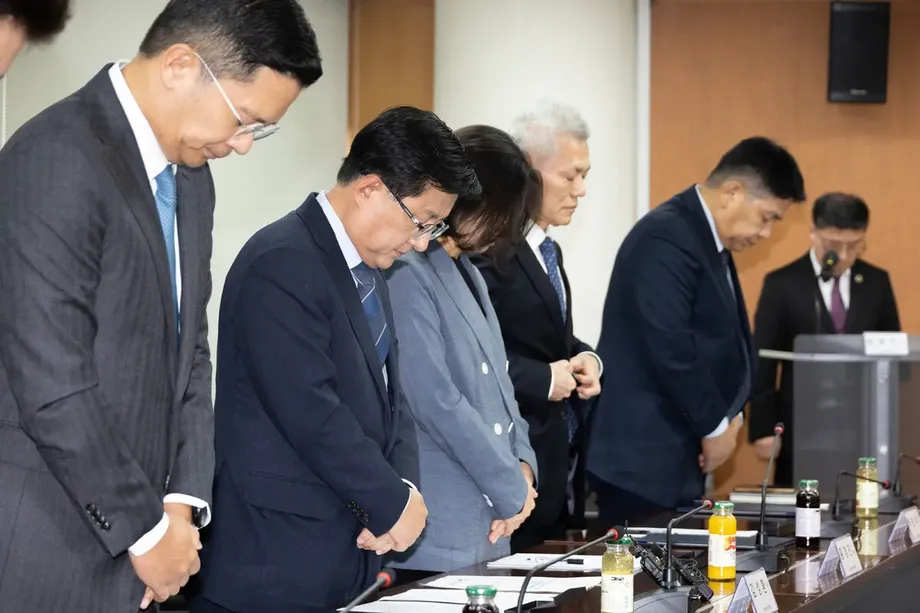
South Korean police are considering electronic monitoring for domestic violence offenders after a series of killings exposed gaps between restraining orders, emergency devices and the response victims received. At an interagency meeting at the Blue House on October 15, 2026, police presented proposals to expand electronic anklets, make preventive detention easier to request and replace administrative penalties for some protection order violations with criminal punishment.
Contents
- Repeated warnings put protection failures under scrutiny
- What electronic monitoring would change
- Earlier detention and criminal penalties
- The dangerous interval between orders
- Eight complaints and an unanswered safety call
- What the smartwatch figures reveal
- Prosecution and reviews of fatal cases
- A warning from an earlier monitoring experiment
- Wider policing plans need coordination
- Key Points
The proposals follow attacks in Seoul, Jeju and Jeonju involving people who had already sought police protection. In Jeonju, a woman had reported her estranged husband eight times between April and September. Police classified him as presenting a high risk and checked her safety by telephone once a week, yet he later killed her.
A Korean National Police Agency dataset submitted to Democratic Party lawmaker Yang Bu-nam records 17 murder cases involving people issued protective smartwatches between 2022 and October 12, 2026. Another tally cited in the debate puts killings of the same victim by someone previously booked for a relationship crime at about 150 over three and a half years.
Police and the Ministry of Gender Equality and Family want domestic violence protections brought closer to those used in stalking cases. Much of the package requires legislation. No implementation date or final text for the proposed changes was announced.
What electronic monitoring would change
Courts can already order electronic monitoring as a provisional measure in stalking cases. Police are reviewing amendments to the Act on the Attachment of Electronic Devices to create a comparable legal basis for domestic violence cases, including protection before a final court ruling.
An electronic anklet tracks the person wearing it. A protective smartwatch serves a different purpose: it lets a victim send an emergency alert and location to police. Under the proposed approach, authorities would place more of the monitoring burden on the person posing the threat, rather than relying mainly on the victim to call for help.
The Ministry of Justice manages electronic anklets, while police manage protective smartwatches. Authorities are discussing whether the systems could measure the distance between an offender and a victim, allowing warnings as either person moves. Putting that into practice would require the two agencies to coordinate device management and share location information.
Oh Yoon-sung, a professor of Police Administration at Soonchunhyang University, described a possible automatic warning system:
For example, when they enter within a 100-meter radius of the victim, it can automatically alert the relevant police station and the victim....
His example addresses a practical weakness in monitoring only a home or workplace: victims also travel, shop and visit other places. A warning tied to the distance between two people could follow those movements. Police response would then have to turn the warning into physical separation before an attack.
Earlier detention and criminal penalties
Police also want to ease the requirements for requesting Temporary Measure No. 5 under the Domestic Violence Punishment Act. This measure allows an alleged offender to be held in a police holding cell or detention center while the case proceeds.
Under the current requirements described by police, an application depends on a breach of an existing temporary measure, such as an order to leave the home or stay away, together with a risk of further violence. The proposed change would allow an application based on the danger of repeated violence even before such a breach.
Emergency temporary measures cover another urgent stage. Police can issue orders requiring someone to leave a residence or stay away when violence may recur and waiting for a court decision would take too long. Violating those domestic violence measures currently carries an administrative penalty of up to 3 million won.
By comparison, violating an emergency measure in a stalking case can bring up to one year in prison or a criminal fine of up to 10 million won. Police are considering criminal sanctions for domestic violence violations too. The stalking fine ceiling is more than three times the current domestic violence administrative penalty, and stalking violations can also lead to imprisonment.
The dangerous interval between orders
The October 11 attack in Seoul's Songpa district illustrates how protection can lapse during the process of renewing an order. A man in his 20s allegedly killed his mother-in-law and abducted his wife, who was seeking a divorce.
The restraining order against him expired on September 30. Police reapplied for temporary measures on October 6, six days later, but the attack occurred before the court decided. Police had not immediately pursued an extension because there had been no particular threatening behavior during the preceding month.
The main dates show how the protection debate developed:
- September 30, 2026: The Songpa suspect's restraining order expired.
- October 6: Police applied again for temporary measures.
- October 11: The Songpa killing and abduction occurred before a court decision.
- October 12: A woman in her 40s was killed in Jeju after previous complaints about her former partner.
- October 13: President Lee Jae-myung called at a Cabinet meeting for changes to the conditions forcing victims to abandon daily life and hide.
- October 15: Police presented their proposals at the interagency crime response meeting, and the family ministry discussed legal changes at a briefing.
The Jeonju killing was dated October 14 in the account detailing the police proposals and October 13 in the account detailing the victim's protection history. Both describe a woman killed by her estranged husband despite repeated complaints and restrictions on his contact with her.
Eight complaints and an unanswered safety call
The Jeonju victim's eight complaints concerned repeated contact and visits by her husband. He was subject to restrictions on approaching and contacting her, including a prohibition on coming within 100 meters.
Police said they recommended a protective smartwatch and relocation, but she declined. They also said her wish not to have him punished affected the use of stronger measures, including detention and electronic monitoring in the circumstances of her case. Her history involved complaints about both domestic violence and stalking, which have different legal protection routes.
On the day of the killing, police could not reach her by telephone. They did not visit to check on her. Police said there was no manual setting out what to do when a protected person did not answer, and officers thought she was working and planned to contact her again on their next working day.
Park Hyun-ho, a professor of Police Administration at Yong In University, called for criteria governing visits when victims cannot be reached and alternative protection arrangements when someone declines a smartwatch. The Jeonju case puts those everyday decisions alongside the proposed legal reforms: who makes the next call, when officers go to a home and what happens when the usual safety check fails.
Other cases exposed similar weaknesses at different stages. In Bucheon in March, police separated a woman from her partner after a domestic violence complaint two days before he killed her. Police cited the absence of physical assault and her wish not to seek punishment. In Seongnam in July, a woman killed by her former boyfriend had obtained an approach restriction, but he had not been classified as presenting a high risk for additional measures.
What the smartwatch figures reveal
The National Police Agency's dataset, titled Status of Murder and Attempted Murder Cases After Smartwatch Issuance, was submitted to Yang Bu-nam for the National Assembly's Public Administration and Security Committee. It records five murders in 2022, one in 2023, one in 2024, five in 2025 and five from the start of 2026 through October 12.
The same dataset records 10 attempted murders: two in 2022, four in 2024 and four in 2025. Grounds for protection included 14 domestic violence cases, 10 stalking cases, eight dating violence cases and one sexual violence case. Those categories overlap because a person may face more than one kind of abuse.
Seventeen murders and 10 attempted murders amount to 27 recorded cases after smartwatch issuance. The total number of people issued the devices was not given, so a rate for all recipients cannot be calculated from these figures.
The Jeju victim had made four complaints involving stalking and sexual violence against a former partner in his 60s. Police said some complaints ended with warnings or were closed after she declined investigation and evidence was insufficient. She received a smartwatch, but the attacker tore it off during the crime.
Earlier killings also involved several layers of protection. A woman killed in Ansan in June 2022 had a smartwatch, registration in the 112 emergency system and tailored patrols. Domestic violence victims killed in Seoul in June 2023 and Ilsan in April 2024 had protective measures in place as well. The practical issue running through these cases is how an alert or court order leads to intervention quickly enough to keep the victim safe.
Prosecution and reviews of fatal cases
The Ministry of Gender Equality and Family said at its October 15 briefing that domestic violence and stalking protections contain mismatches. It planned to press other ministries on electronic monitoring and on rules governing prosecution when a victim does not want punishment.
For offenses subject to such a rule, a victim's expressed opposition can prevent prosecution. The ministry identified the continued application of that rule in domestic violence cases as an issue for reform, contrasting it with stalking. The proposed direction would allow prosecution to proceed independently of that objection for the offenses covered by a legal change.
Kim Sang-kyun, a professor at Baekseok University, warned that tougher punishment could also make some victims hesitate to report abuse. Money, children and continuing family ties may influence the decision to seek police help. His concern puts victim support alongside stronger sanctions, since reporting is often the first route into protection.
The ministry is also preparing a system to examine deaths involving violence in intimate relationships case by case. A pilot study is underway, with findings intended to guide the design of the system. Such reviews would focus on the history leading to a death and the changes needed to prevent another.
A warning from an earlier monitoring experiment
Electronic warnings for domestic abuse have a long history. A February 4, 1994 Connecticut legislative research report examined small pilot programs in Arapahoe County, Dover, San Diego and Norfolk County. The Connecticut General Assembly's Office of Legislative Research described devices that alerted a monitoring center when an offender approached equipment installed at a victim's home.
In Dover, New Hampshire, protective orders generally required offenders to stay 500 feet from the home, while alarms triggered at 125 feet. The program cost about $12 a day at the time and had involved 10 participants and two violations. Police did not arrest either violator at the home, but both were later arrested and convicted of contempt.
Dover police prosecutor George Wattendorf identified documenting violations as an advantage. He also described limits: the equipment protected only the area around the home, and the bracelet could be tampered with. San Diego's program, used after conviction, cost $15 a day and required willing participants who could pay for monitoring and counseling. Only one person had completed it.
Denver decided against proceeding because of concerns including the new technology, tampering and selecting suitable participants. A Minnesota advisory committee also recommended against setting standards for the technology then available, citing telephone connections, warnings limited to the home and devices vulnerable to interference.
Those findings concern technology from 1994. South Korea's discussion centers on location tracking and possible warnings based on the distance between moving people. The operational tasks remain concrete: detect an approach, deliver a usable alert and get help to the victim.
Wider policing plans need coordination
The October 15 package also addressed violence in public places. Police plan to map the places and times with concentrated reports of weapons possession, deploy officers accordingly and increase visible patrols at busy facilities. They are considering more frequent checks on people assessed as presenting a high risk, including some released after violent convictions.
An October 13 knife attack at a large commercial facility in Incheon injured 10 people. The suspect had previously received a prison sentence of four years for attempted murder and was wearing an electronic anklet during the attack. His case places rapid response and supervision procedures at the center of the wider monitoring debate.
Kim Sang-kyun said concentrated patrols in areas with frequent violent crime could have a preventive effect over a short period, while questioning deployment based narrowly on weapons possession reports. Bae Sang-hoon, a professor at Woosuk University, said stronger fixed patrols after the 2023 Sillim and Seohyeon station attacks had displaced crime to other places. He also pointed out that people can travel beyond the police district responsible for monitoring them.
Bae called for police and probation officers to respond jointly to assessed risks while legislation is being developed. President Lee also requested a government body to coordinate the response and checks on protective equipment and the management of people presenting a high risk.
Police separately asked relevant ministries to expand administrative hospitalization for people with mental illnesses, establish a public transport service for those needing such care and strengthen emergency mental health services. The Ministry of Health and Welfare presented plans concerning mental health management and emergency response. These were separate elements of the broader crime response discussions.
Key Points
- Police proposed extending court ordered electronic monitoring to domestic violence cases at an October 15, 2026 interagency meeting.
- Other proposals would ease applications for preventive detention and introduce criminal penalties for violating emergency domestic violence orders.
- The Songpa suspect's order expired on September 30; police reapplied on October 6, but the October 11 attack occurred before a court decision.
- A Jeonju victim had complained eight times, and police did not visit after an unanswered safety call on the day she was killed.
- Police data record 17 murders and 10 attempted murders after protective smartwatch issuance from 2022 through October 12, 2026.
- The family ministry is pursuing changes to prosecution rules and preparing reviews of deaths involving violence in intimate relationships.
- Key reforms require legislation, while police and probation coordination and clearer safety check procedures are immediate priorities raised by named specialists.