Way Kambas crews battle fires that keep returning
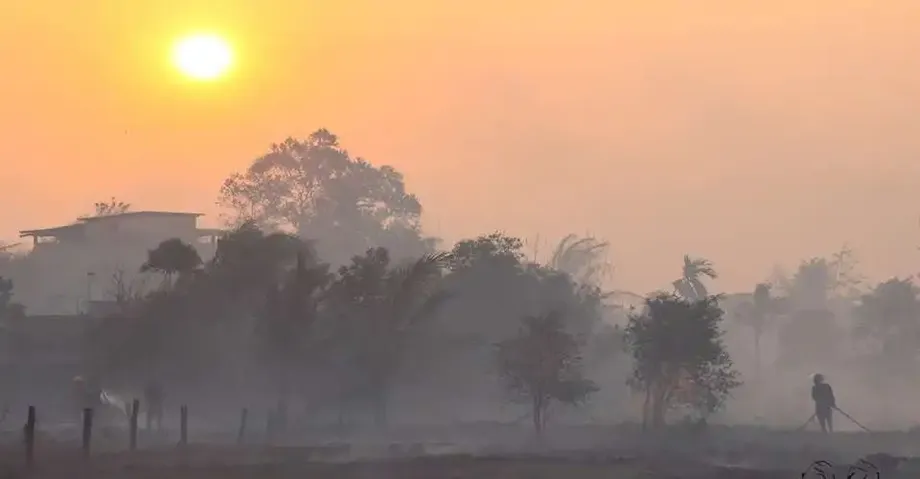
About 350 personnel have been deployed to fight fires in Indonesia's Way Kambas National Park, where peat continued to smoulder beneath the surface after weeks of firefighting. As of October 26, 2026, operations remained focused on two locations, and authorities had yet to publish a total for the area burned.
Contents
- Way Kambas crews battle fires that keep returning
- Why the fire in Way Kambas is difficult to extinguish
- Protected areas face losses across the archipelago
- Wildlife loses food, shelter and space
- Walhi challenges the national park funding task force
- Company investigations widen beyond park boundaries
- Drought, land management and duties to prevent fire
- Smoke and displacement add to the human cost
- Key Points
Way Kambas is among 14 national parks identified in accounts of fires across Indonesia this year. The reported damage includes 8,708 hectares in Wasur between January and August, 6,532 hectares in Lorentz by August and 3,531 hectares in Bromo Tengger Semeru by the end of September.
A broader assessment by MapBiomas Fire Indonesia recorded 82,400 hectares burned across 210 conservation areas through August, including 46 national parks. The relationship between that dataset and the narrower list of 14 parks was not explained. Their different coverage leaves no single agreed count of affected national parks.
Uli Artha Siagian, a forest and plantation campaigner with the Indonesian Forum for the Environment, known as Walhi, described this year's national park fires as more extensive than those during the major fire years of 2019 and 2023. She called for investigations and accountability from the people responsible for managing protected areas.
The damage extends beyond park boundaries. Indonesia's Health Ministry reported 314,124 cases of acute respiratory infection across seven provinces on October 21, while police announced that 11 companies had been named as suspects in forest and peatland fires. Together, the figures show a crisis affecting conservation, public health and the enforcement of environmental law.
Why the fire in Way Kambas is difficult to extinguish
Fires have broken out at several locations in Way Kambas since August. In the northern Cabang area, fire detected around September 19 had still not been fully extinguished more than a month later because it was burning in peatland.
Peat consists of accumulated, partly decomposed plant material. When it dries out, fire can burn below the surface, where water sprayed from above may fail to reach every hot spot. At Way Kambas, smoke sometimes returned only hours after crews had soaked an area.
New fires appeared on October 22 around Resort Susukan Baru and Resort Rawa Bunder, near the boundary between the park and PT Great Giant Pineapple. Residents described flames at the largest fire reaching about four metres and spreading across a river that had dried during the prolonged dry season.
Park authorities said the fire near the company boundary had been extinguished, with rain helping the operation. Crews continued soaking and monitoring the ground to prevent remaining embers from reigniting. Authorities reported no elephants affected at Way Kambas.
The sequence shows why a declaration that visible flames have been put out can be followed by days of further work:
- August: Fires began occurring at several locations in Way Kambas.
- Around September 19: Fire was detected in the northern Cabang area, where burning peat prolonged the operation.
- October 22: New fires appeared near Resort Susukan Baru and Resort Rawa Bunder.
- October 26: Firefighting and monitoring remained concentrated on two locations.
Protected areas face losses across the archipelago
The list of 14 affected national parks stretches from Sumatra to Papua. It names Bromo Tengger Semeru, Kerinci Seblat, Gunung Ciremai, Tambora, Manusela, Bukit Baka Bukit Raya, Gunung Gede Pangrango, Rawa Aopa Watumohai, Manupeu Tanah Daru and Laiwangi Wanggameti, Way Kambas, Bantimurung Bulusaraung, Tanjung Puting, Wasur and Lorentz.
Reported burned areas range from a few hectares to several thousand. Alongside the losses in Wasur, Lorentz and Bromo Tengger Semeru, Tambora recorded 1,956 hectares burned by October, while Tanjung Puting recorded about 1,234 hectares by October 20.
Those five park figures add up to 21,961 hectares. Wasur and Lorentz together account for 15,240 hectares, about 69 percent of that subtotal. The figures have different reporting dates, so they describe the scale already recorded at each park rather than a synchronized national assessment.
Deaths among people fighting the Bromo Tengger Semeru fire underline the danger of these operations. The account covering the 14 parks gives a toll of at least six volunteers killed; another account gives four people killed while fighting a wildfire there. The circumstances behind the different totals were not specified.
Wildlife loses food, shelter and space
MapBiomas Fire Indonesia recorded at least 20,360 hectares burned in habitat used by tigers, orangutans, rhinos and Sumatran elephants. That area is equivalent to almost a quarter of the 82,400 hectares it recorded as burned across conservation areas through August.
Fire can harm animals immediately through burns and smoke. Its effects also continue after the flames disappear. Destroyed vegetation means less food and shelter, while damaged forest can leave animals with smaller areas in which to move and breed.
Animals searching for food may enter plantations or settlements, increasing the chance of encounters with people. For species with small populations or limited ranges, repeated habitat loss can increase the risk of extinction.
The Forestry Ministry said 290 wild animals had received treatment by October 8. Orangutan rescue centres in Borneo reported more admissions, including animals found burned, stranded or struggling to breathe. Those cases show the rescue needs created by fires beyond any single national park.
Way Kambas authorities' statement that no elephants had been reported affected concerns that park's immediate response. The wider conservation task includes checking habitat damage and whether surviving animals can still find enough food and suitable space.
Walhi challenges the national park funding task force
Walhi has directed particular criticism at the Task Force for Innovation in National Park Financing and Management, led by Hashim Djojohadikusumo. The body was established to seek alternative funding for national park management.
Siagian said the scale of the fires exposed shortcomings in protection and questioned whether money raised through the task force was reaching conservation work. She called for the body to be dissolved. An attempt to obtain a response from its deputy chairman, Raja Juli Antoni, received no reply.
Walhi identified practical weaknesses behind the damage: too few forest supervisors for the areas they oversee, limited use of technology to detect and tackle fires, and insufficient recognition and involvement of communities living near national parks.
Each concern relates to a different stage of prevention. Staff need to detect a fire, reach it and have enough people and equipment to contain it. Residents near a park can also contribute local knowledge and early warnings when they have a meaningful role in protecting the area.
Walhi wants police to investigate fires inside national parks and hold those responsible for their management accountable. Its criticism places a concrete question before the funding task force: how much protection is being delivered on the ground as new sources of money are sought?
Company investigations widen beyond park boundaries
National Police Chief General Suyudi Ario Seto announced on October 21 that police had named 11 companies as suspects after investigating 98 reports of suspected corporate involvement in fires. Three of the companies had foreign investment, he said, without naming them.
Suyudi described the status of the investigation at the presidential palace in Jakarta:
"We have named 11 corporate suspects. Three of them are foreign-invested companies and the process is continuing," he said.
Police said they were examining company ownership and gathering evidence to identify owners and shareholders who could be held responsible. Indonesia also announced administrative sanctions against dozens of firms and criminal proceedings against 125 individuals and corporations.
Walhi has highlighted fires in and around concessions held by PT Arara Abadi and PT Sekato Pratama Makmur in Riau. It estimated about 616 hectares burned around the Arara Abadi concession and 115 hectares around Sekato in March. Both companies are affiliated with Asia Pulp & Paper and Sinar Mas Group.
A concession is an area where a company has permission to operate, such as growing timber or oil palms. Walhi said its mapping of NASA fire data placed about half of Indonesia's hotspots with a high level of detection confidence inside concessions. Its assessment ranked 40 timber and palm oil concessions by the number of hotspots detected.
Investigators still have to determine how particular fires began and who bears legal responsibility. Nusantara Atlas founder David Gaveau said satellite images can sometimes show whether a fire started inside a concession or spread into it from elsewhere. Establishing whether ignition was deliberate or accidental requires further investigation.
Drought, land management and duties to prevent fire
Nusantara Atlas estimated that nearly two million hectares had burned across Indonesia this year, linking the severity to a strong El Niño and drought. El Niño is a climate pattern involving warmer water in the tropical Pacific that can bring drier conditions to Indonesia.
Deforestation and drainage of peatland for cultivation leave landscapes more vulnerable to fire. Dry weather then makes it easier for an ignition to spread. Walhi forest and plantation campaigner Umi Ma'rufah linked recurring fires to company practices and pressed the government to enforce penalties.
Some companies have challenged claims about their responsibility. First Resources, a palm oil company listed in Singapore, said fires that began outside its boundaries later spread onto land it managed. Asia Pulp & Paper also disputed the assumption that a fire within a supplier concession meant the holder had deliberately started it.
ClientEarth lawyer Azam Hawari explained that companies can retain civil responsibilities when ignition comes from outside their land or during extreme weather. Civil liability concerns legal obligations such as compensation or restoration. He said companies must maintain sufficient firefighting personnel and equipment and may face liability where activities, including peatland drainage, pose a serious environmental threat.
Singapore has issued 10 companies with preventative measure notices under its Transboundary Haze Pollution Act. The notices call on them to fight fires on their land, prevent burning and submit action plans. Failure to comply can lead to legal action, including fines.
Smoke and displacement add to the human cost
Children younger than five accounted for 70,890 of the 314,124 acute respiratory infection cases reported by Indonesia's Health Ministry on October 21. That is about 23 percent of the total across the seven provinces. Acute respiratory infections affect the breathing system and can involve the nose, throat or lungs.
The ministry said it had opened 477 oxygen facilities and deployed more than 2,600 health workers. Those measures reflect the pressure on health services as smoke spread across affected regions.
In South Bangka, flames reached a residential area in October, destroying 305 houses, affecting about 1,800 people and forcing roughly 500 to evacuate. Families there faced the loss of homes as well as exposure to smoke.
Religious and student organisations have joined calls for investigations. Indonesian Catholic Students Association chairman Yohanes Tola urged reviews of permits, land planning, peatland protection and concession oversight.
Tola argued that firefighting must be accompanied by action against those responsible:
"The fires must be extinguished, but the source of the ecological crime must also be exposed. We should not put out the same fires every year without ever finding who started them," he said.
The Synod of the Javanese Christian Churches also called on national and local governments to conduct an objective, transparent investigation and enforce the law regardless of the status or economic power of those involved. Its October 19 appeal extended that responsibility to restoration after the fires.
For Way Kambas crews, the immediate work remains soaking peat and watching for returning smoke. Across Indonesia, the longer task is to repair damaged habitat, support affected communities and carry investigations through to enforceable decisions.
Key Points
- Way Kambas deployed about 350 personnel, with operations still focused on two locations as of October 26.
- A list of 14 affected national parks sits alongside a broader MapBiomas assessment recording fires in 46 national parks through August.
- Five parks with published area figures recorded a combined 21,961 hectares burned, using different reporting dates.
- MapBiomas recorded at least 20,360 hectares burned in habitat used by tigers, orangutans, rhinos and Sumatran elephants.
- Police named 11 companies as suspects after investigating 98 reports of suspected corporate involvement.
- The Health Ministry reported 314,124 acute respiratory infection cases across seven provinces, including 70,890 among children younger than five.
- Walhi called for investigations, stronger protection of national parks and the dissolution of the national park financing task force.