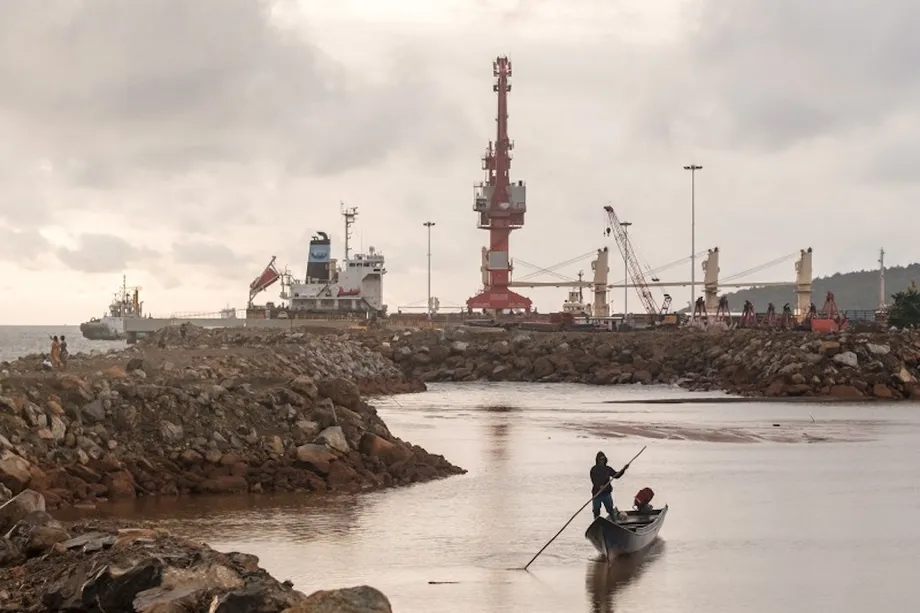
A bribery conviction puts a global nickel supplier under scrutiny
A director jailed over $60,000 in bribes, at least $389,000 in other planned or approved payments, and drinking water tests above Indonesia's legal limits have brought scrutiny to Harita Group's nickel operations on Obi island in North Maluku. The allegations reach across the business, from mining permits and village employment to the water families drink.
Contents
- A bribery conviction puts a global nickel supplier under scrutiny
- What the bribery case involved
- Payments reached village leaders and military projects
- In Kawasi, jobs and land passed through a powerful gatekeeper
- Internal records describe shortcuts around permits
- Water tests traced a problem lasting more than a decade
- How mining, pollution warnings and prosecution unfolded
- Battery supply chains bring Chinese partners and coal power
- Accountability now reaches beyond one executive
- Key Points
In 2024, a court in Ternate sentenced Stevi Thomas, a former external relations director at Harita's listed nickel business, PT Trimegah Bangun Persada, to one year and ten months in prison for bribing North Maluku Governor Abdul Gani Kasuba. The payments were intended to ease permits and technical recommendations for Harita companies.
Leaked company emails, spreadsheets and internal memoranda describe a wider network of planned or approved payments between 2013 and 2023. Recipients included politicians, village officials, religious leaders and military projects. Whether every payment was made, and the precise purpose of some payments, remain unconfirmed.
Harita has supplied up to 8% of the world's nickel in recent years. Its operations connect a small Indonesian island to manufacturers making materials for electric vehicle batteries, making the company's conduct relevant to buyers far beyond Indonesia.
Harita said it respected the verdict against Thomas and cooperated with the legal process. The group and executives involved did not respond to requests for comment on the wider payment allegations. Harita has previously rejected allegations of water pollution, saying its tests met national standards.
What the bribery case involved
Prosecutors alleged that Thomas paid Abdul Gani Kasuba $60,000 between June 11 and November 24, 2023. His trial began at the Ternate Corruption Court on March 6, 2024. The indictment described requests concerning forest use, a proposed bridge and changes to the route of the Obi ring road.
Technical recommendations are official assessments needed before some projects can move through the approval process. In this case, prosecutors described recommendations supporting applications to use forest areas for nickel mining and related infrastructure.
The indictment identified nine Harita companies within Thomas's responsibilities. It also described an Obi mining permit covering 4,247 hectares, valid from February 8, 2010, until February 8, 2030. Those details place the payments within a substantial industrial operation rather than a single permit application.
Abdul Gani Kasuba faced a much broader corruption case. At an August 22, 2024 hearing, prosecutors sought nine years in prison, a fine of 300 million rupiah and replacement payments of 109.56 billion rupiah plus $90,000. Prosecutor Rony Yusuf said the governor was suspected of receiving about 100 billion rupiah in bribes and gratuities between 2019 and 2023. Those figures were prosecution demands and allegations at that hearing.
Indonesia's Corruption Eradication Commission, known as the KPK, also examined alleged payments involving other mining interests. Investigators described 7 billion rupiah in suspected bribes linked to projects and permits, including proposals for mining areas involving at least 37 companies during 2021 to 2023. Harita chief executive Roy Arman Arfandy was summoned in January 2024, and investigator Asep Guntur Rahayu said the commission was examining Harita's licensing and exploration activities.
Payments reached village leaders and military projects
A 2013 spreadsheet earmarked about $2,300 for Kawasi village leader Arifin Saroa and at least 11 other people. Approximately $400 was designated for Saroa. For perspective, the average monthly salary in Indonesia was approximately $200, putting the proposed payment at around two months of average earnings.
A confidential email chain from July 2014 listed about $13,500 in incentives for community figures, including imams and pastors. Managers discussed the influence of recipients, including a religious leader credited with helping stop a threatened interruption to production.
Military related payments totaled just over $200,000. The largest individual item was approximately $140,000 approved in 2019 from a disaster relief fund to renovate buildings at a military academy in Magelang, Java.
Harita also booked six flights for South Halmahera Regent Bahrain Kasuba over five years, sometimes including his wife. Tickets typically cost about $140. A 2017 draft proposed hiring Muhammad Kasuba as a consultant for at least $3,700 a month, although it is unknown whether he signed the agreement.
The documents also describe money directed toward public messaging. Thomas approved approximately $6,000 for favorable stories in more than 40 outlets between August 2022 and January 2023.
In Kawasi, jobs and land passed through a powerful gatekeeper
Kawasi residents described Saroa as a gatekeeper for jobs and supply contracts. Four residents said people seeking work with Harita or opportunities to sell supplies to the company needed his recommendation.
A 2020 internal security memorandum described a more troubling role. It said Saroa would identify residents suspected of organizing or joining protests so that the company could exclude them and their families from employment opportunities.
Saroa earned approximately $304,000 from selling land to Harita or farming land subsequently sold to the company, mainly between January 2020 and August 2022. Two companies understood to belong to him also received port loading contracts. He could not be reached for comment.
For families living beside the industrial complex, access to employment and the ability to challenge its effects were closely connected. Residents alleged intimidation when people resisted land sales. Most Kawasi residents have since moved to a village built by the company, while those who stayed have faced power cuts and flooding when a mine sediment pond overflows.
Internal records describe shortcuts around permits
Harita began mining on Obi in 2010 and started building its first smelter in 2015. A smelter processes ore into metal or an intermediate material for further refining. Kawasi residents challenged the construction, saying they had not been properly consulted and requesting a new environmental impact assessment.
A senior director wrote in 2016 that construction was proceeding without a building permit because of close relations with local officials. Harita obtained its smelter construction permit on November 15, 2016.
Company records also describe an executive drafting a government decision concerning hazardous waste storage and removing a provision requiring a field inspection. Aryanto Nugroho, national coordinator of the transparency organization Publish What You Pay Indonesia, described government decision making as a public responsibility.
Drafting government decisions is a state function, not something delegated to the party the decision is meant to regulate.
A 2018 technical review by engineering consultancy Hatch said Harita had used hazardous waste in smelter construction without government permission and had not completed crucial environmental and social impact assessments. Such assessments examine likely damage before development proceeds and identify measures needed to protect nearby communities.
Water tests traced a problem lasting more than a decade
Harita's internal monitoring recorded chromium-6 concentrations of 350 and 130 parts per billion in 2012, above Indonesia's 100 parts per billion limit for mining wastewater. Internal correspondence identified mining activity and runoff as sources of contamination reaching the Tugaraci River.
Chromium occurs naturally in soil, but its hexavalent form, commonly called chromium-6, is toxic and can cause cancer. Mining exposes rock and soil to air and water, which can accelerate processes that create and release it. Parts per billion describe how much of a substance is present in water.
Company staff recorded contamination affecting community farmland in 2014, and a manager asked an official to delay informing residents. A Harita study in 2018 warned that mine development could disrupt Kawasi Spring, a main source of drinking water.
Tests at the spring exceeded Indonesia's stated drinking water threshold of 50 parts per billion on every day tested during 30 days in August 2022. Another test in 2022 recorded a concentration 19 times that threshold. In February 2023, internal testing recorded 173 parts per billion, about 3.5 times the threshold.
Residents said they continued drinking spring water because bottled water was unaffordable. Nurhayati Jumadi, a Kawasi resident, described the choice facing her household.
The water tastes different now and sometimes there are bubbles. It gives us stomach aches," she said. "But I can't afford bottled water, so we still drink from the spring.
Harita's public position has been that water quality met national standards. During preparations for its 2023 stock market listing, the company also told banks that its water complied with legal requirements. Internal tests around that period recorded excessive chromium-6, while an environmental audit identified treatment problems, incomplete data and chemical readings above groundwater standards. The listing raised $660 million.
How mining, pollution warnings and prosecution unfolded
Obi's expansion and the warnings recorded inside Harita developed over many years. The chronology shows how environmental concerns accumulated while processing capacity and commercial financing grew.
- 2010: Harita began extracting nickel on Obi through PT Trimegah Bangun Persada.
- 2012: Internal testing recorded chromium-6 readings above the wastewater limit.
- 2015 to 2016: Construction of the first smelter began, followed by a building permit on November 15, 2016.
- 2018: A company study warned of risks to Kawasi Spring, while a technical review identified environmental assessment and waste management problems.
- 2021: Harita and Chinese partner Lygend launched Indonesia's first high pressure acid leaching plant.
- 2022: Testing recorded chromium-6 above the drinking water threshold throughout 30 days of monitoring at Kawasi Spring in August.
- 2023: Harita's listing raised $660 million; prosecutors later alleged that Thomas paid the governor $60,000 between June and November.
- 2024: Thomas was sentenced to one year and ten months in prison.
High pressure acid leaching uses acid, heat and pressure to extract nickel and cobalt from ore. It allows ore with lower nickel content to become material suitable for further processing into battery ingredients, while requiring careful management of chemicals, wastewater and solid waste.
Battery supply chains bring Chinese partners and coal power
Lygend, based in Ningbo and listed in Hong Kong since 2022, helped Harita build its battery material refineries. The leaked payment records contain no allegation that Lygend participated in those payments. China's 2022 guidelines for overseas projects ask Chinese companies to consult affected communities and gather their views.
Electric vehicle production is only one use for Obi nickel, which also feeds stainless steel manufacturing. Within battery supply chains, nickel passes through several processors, often mixing with material from other mines before reaching a carmaker.
Mercedes-Benz confirmed that its electric vehicles contain nickel from Obi. The company said it knew about water contamination issues identified in 2022 and had taken action with results it described as solid, without providing further details. Other carmakers described supplier checks and responsible sourcing requirements without confirming an Obi connection.
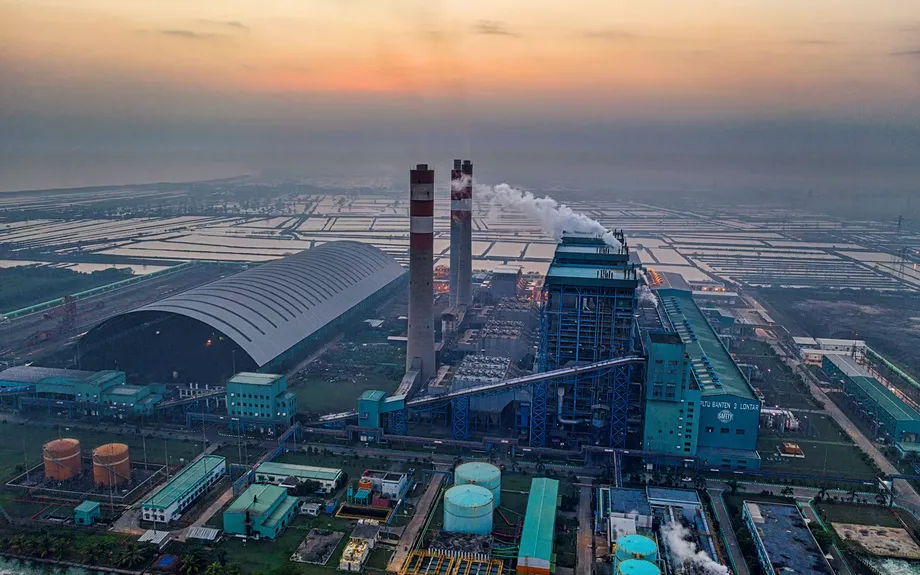
Coal supplies much of the energy behind Obi's processing operations. Climate group Market Forces estimated that Harita operated about 890 megawatts of dedicated coal power on the island, with another 1.2 gigawatts under construction. That additional capacity equals 1,200 megawatts, more than the operating capacity cited in the estimate.
Market Forces estimated the operation's emissions at 10.87 million tonnes of carbon dioxide equivalent in 2024, close to 1% of Indonesia's national emissions. Carbon dioxide equivalent combines different greenhouse gases into a common measure of their warming effect.
In 2022, Chinese contractor Tianjin Electric Power Construction secured a contract for four coal units of 380 megawatts each for the Harita and Lygend projects. The agreement followed President Xi Jinping's 2021 pledge that China would stop building new coal power plants abroad.
Accountability now reaches beyond one executive
Harita's growth has coincided with a sharp rise in North Maluku's nickel trade. Provincial nickel exports reached $1.42 billion in the first half of 2024, up from $770.8 million in the same period of 2023, an increase of about 84%. Most went to China. The province also attracted about $1 billion in foreign investment during the first quarter of 2024.
Economic gains sit beside substantial health concerns. A 2024 study by the Centre for Research on Energy and Clean Air and Indonesian research institute CELIOS estimated at least 3,800 deaths annually from health damage associated with nickel processing in Indonesia. Its estimate covered the industry rather than Obi alone.
Laode M. Syarif, a former KPK commissioner and an environmental law trainer at Indonesia's Supreme Court, said the pollution evidence supported action against both the company and executives. He called for enforcement under mining laws.
"The government must act—whether through civil, administrative, or criminal enforcement under Indonesia's mining laws," he said.
Public records described in the investigations show a conviction against Thomas, but no corporate prosecution of Harita over his payments. Indonesia's new national criminal code, in force from January 2, 2026, provides for corporate liability where an offense benefits a company or reflects its policy. Applying criminal liability to particular conduct requires investigators and courts to assess the relevant law and evidence.
Harita has pointed to an ongoing assessment by the Initiative for Responsible Mining Assurance. Its executive director, Aimee Boulanger, described the purpose of that process.
We're not here to give green stars," she said. "We're here to shift industry expectations.
For Kawasi households, the practical priorities are safe drinking water, protection from flooding and the freedom to raise complaints without losing access to work. For regulators and nickel buyers, the records put permit decisions, environmental testing and company oversight at the center of the case.
Key Points
- Former Harita director Stevi Thomas received a prison sentence of one year and ten months for paying $60,000 in bribes to North Maluku's governor.
- Leaked records describe at least $389,000 in other planned or approved payments between 2013 and 2023; some disbursements remain unconfirmed.
- Internal testing recorded chromium-6 above legal thresholds in wastewater and Kawasi's drinking water spring.
- Harita has rejected water pollution allegations and said it cooperated with the legal process involving Thomas.
- Obi nickel reaches international battery supply chains, while the island's processing industry relies heavily on coal.
- A responsible mining assessment and calls for corporate accountability extend scrutiny beyond the convicted executive.