A trade target tied to investment and skilled workers
India and Russia are working toward $100 billion in bilateral trade and $50 billion in mutual investment by 2030, Indian Ambassador to Russia Vinay Kumar said in an interview published on October 24, 2026. His account links the economic targets to a practical proposal: training Indian workers for jobs needed by Russian industry.
Contents
- A trade target tied to investment and skilled workers
- How the commitments developed
- Why India wants more balanced trade
- What the $50 billion investment goal involves
- Payments and market access need practical agreements
- Transport routes are part of the trade plan
- India proposes training workers for Russian industry
- Which industries could carry the expansion?
- What officials must deliver by 2030
- Key Points
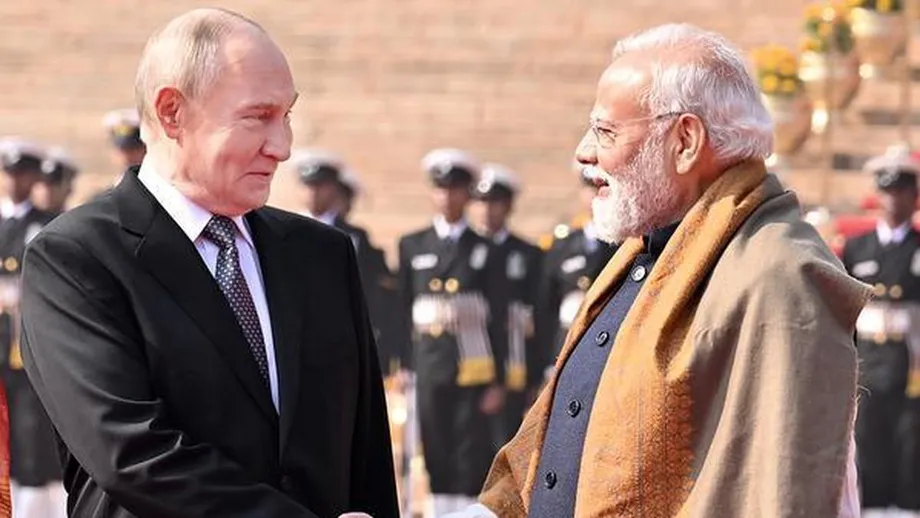
Prime Minister Narendra Modi and Russian President Vladimir Putin instructed their ministries and agencies to expand cooperation after reviewing relations during the BRICS summit in New Delhi on September 12 and 13, Kumar said. The leaders also participated in the BRICS business summit and visited Innoprom-India, described by the ambassador as the first Russian industrial exhibition held in New Delhi.
The $100 billion ambition builds on commitments made in Moscow in July 2024 and reaffirmed during Putin's visit to India in December 2025. Those official agreements explain what the governments want to change: increase Indian exports, make payments easier, improve transport routes and encourage companies to invest in each other's markets.
For businesses, the central challenge is turning political instructions into goods delivered, payments received and projects operating. For Indian workers, the proposal could create employment opportunities connected to training designed around Russian industrial needs.
How the commitments developed
Modi and Putin set out nine economic priorities following their July 8 and 9, 2024 summit in Moscow. Their 2030 economic statement sought trade exceeding $100 billion, increased Indian supplies to Russia and renewed investment activity.
The December 2025 summit statement then referred to a revised trade target of $100 billion and welcomed the adoption of the Programme for the Development of Strategic Areas of India–Russia Economic Cooperation till 2030. Kumar's October 2026 remarks describe further instructions to carry that agenda forward.
- July 8 and 9, 2024: The Moscow summit set out nine priorities and an ambition for trade exceeding $100 billion by 2030.
- December 4 and 5, 2025: The New Delhi summit reaffirmed the $100 billion target and welcomed agreements concerning skilled worker mobility.
- September 12 and 13, 2026: Modi and Putin reviewed bilateral cooperation at the New Delhi BRICS summit, according to Kumar.
- October 24, 2026: Kumar's interview outlined the trade, investment and workforce plans.
Why India wants more balanced trade
Indian exports are central to the official plan. Both the 2024 and 2025 statements call for a more balanced trading relationship, with India supplying more goods to Russia alongside stronger industrial and technological cooperation.
Trade between the countries expanded after Russia's war in Ukraine and Western sanctions against Moscow, particularly through India's increased imports of Russian crude oil. The new economic programme seeks a broader relationship, giving Indian producers more opportunities to sell into Russia while maintaining cooperation in energy and other established sectors.
The two governments' December 2025 annual summit statement describes their shared ambition in these terms:
including by increasing India's exports to Russia, strengthening industrial cooperation, forging new technological and investment partnerships
Companies will need access to customers and workable trading conditions to deliver that ambition. The same statement identifies customs duties, other trade restrictions, transport problems, payment arrangements and insurance as areas requiring action.
What the $50 billion investment goal involves
Kumar put the mutual investment target at $50 billion by 2030. Investment means putting money into businesses or projects, such as a factory, an energy development or a jointly owned company. Trade measures purchases and sales across borders. The two targets describe different kinds of economic activity.
The 2024 economic statement proposed helping companies enter each other's markets through subsidiaries and industrial clusters, where related businesses operate near one another. It also called for favourable tax arrangements for new joint companies and investment in digital technology, research and education.
Modi and Putin instructed officials in December 2025 to intensify negotiations on an agreement for the promotion and protection of investments. Such an agreement would set rules intended to give investors greater confidence when committing money abroad.
The practical agenda includes resolving concerns affecting existing energy investments as well as encouraging new projects. A company considering a major commitment needs workable operating conditions throughout a project's life, from its initial investment to production and the receipt of income.
Payments and market access need practical agreements
India and Russia agreed in December 2025 to continue developing bilateral settlements using their national currencies. In simple terms, settlement is the process through which a buyer's payment reaches a seller and completes a transaction.
The governments also agreed to continue consultations on connecting national payment systems, financial messaging systems and central bank digital currency platforms. Payment systems move money, while financial messaging systems carry the instructions banks need to process transfers. Making systems interoperable means enabling them to work together.
Insurance is another item on the official list. Businesses transporting goods need protection against losses, while insurers may themselves seek coverage from other insurers, a practice called reinsurance. The December statement calls for mutually acceptable solutions in both areas.
India and the Eurasian Economic Union are also working toward a free trade agreement covering goods. Such an agreement can reduce duties and other trading restrictions between participating economies. The December statement recorded continuing negotiations, alongside work on investment protection, rather than an agreement ready for businesses to use.
Transport routes are part of the trade plan
Three transport connections appear in both the 2024 economic priorities and the December 2025 summit statement: the International North-South Transport Corridor, the Chennai–Vladivostok maritime corridor and the Northern Sea Route.
The governments want stronger logistics links and enough infrastructure capacity to support these routes. A trading corridor connects the ports, railways, roads and handling facilities needed to move cargo between markets. Its usefulness depends on how well those separate stages work together.
The July 2024 statement also called for digital customs systems to make the movement of goods easier. Customs procedures determine how shipments are declared, checked and cleared at borders. Delays at that stage can affect delivery schedules even when ships and trains are available.
Russia's Far East and Arctic regions have a separate cooperation framework covering 2024 to 2029. The December statement identifies agriculture, energy, mining, labour, diamonds, pharmaceuticals and maritime transport as areas for cooperation there. The leaders also welcomed an agreement on training specialists for ships operating in polar waters.
India proposes training workers for Russian industry
Indian nationals account for about 25 to 30 percent of Russia's quota for foreign workers, Kumar said. Expressed another way, that is roughly one quarter to three tenths of the quota. He gave no total quota figure or number of Indian workers covered by it.
India is prepared to supply qualified workers according to Russia's requirements, the ambassador said. New Delhi has proposed that Russia establish educational centres in India or work with existing institutions to train specialists for Russian industries.
Kumar linked the proposal to India's population of nearly 1.5 billion and its young workforce. He cited an average workforce age of 29 and described workers as accounting for about 69 percent of the population. India trains skilled personnel for employment at home and overseas, he said.
The proposal connects training with demand: Russian employers would identify the skills they need, and institutions in India could prepare people for those roles. The December 2025 summit statement already recorded the signing of agreements related to skilled worker mobility, providing a government framework for this area of cooperation.
For prospective workers, the next practical details would concern the institutions involved, qualifications required and jobs available. Kumar's proposal places training before recruitment at the centre of that process.
Which industries could carry the expansion?
Energy remains a major part of the partnership. The December 2025 statement lists cooperation in oil and oil products, refining, petrochemical technologies, oilfield services, liquefied natural gas and liquefied petroleum gas infrastructure, coal technology and nuclear projects.
Fertilizers connect that industrial relationship directly to Indian agriculture. The leaders welcomed steps toward reliable supplies to India over the longer term and discussed possible joint ventures. The 2024 priorities also called for increased trade in agricultural products and food, alongside work to remove animal and plant health restrictions affecting shipments.
Manufacturing plans cover transport engineering, automobile production, shipbuilding and space. The governments also want closer approaches to standards, measurement and conformity assessment, the checks used to show that a product meets required specifications. Greater compatibility can make it easier for manufacturers to supply another market.
Healthcare has a place in the programme as well. The July 2024 statement proposed cooperation on medicines and advanced medical equipment, studying branches of Indian medical institutions in Russia, and recruiting qualified medical personnel. Its technology agenda includes joint research, educational exchanges and internships for employees of companies working with advanced technologies.
What officials must deliver by 2030
The Russian-Indian Intergovernmental Commission on Trade, Economic, Scientific, Technical and Cultural Cooperation was assigned a coordinating role in the July 2024 statement. Modi and Putin instructed it to study the nine priorities and assess progress at its next meeting.
The December 2025 statement subsequently welcomed the results of the commission's 25th and 26th sessions, along with business forums held in New Delhi in November 2024 and Moscow in August 2025. Kumar's account of the September 2026 discussions adds another instruction to ministries and agencies to broaden cooperation.
The official agenda provides several concrete measures of progress before the 2030 deadline: increased Indian exports to Russia, fewer trading restrictions, smoother payments, stronger transport links and new investment projects. Agreements on worker mobility and proposed training partnerships add a human dimension to those commercial goals.
Businesses need those changes to work together. A producer may find a buyer yet still need a reliable route, suitable insurance, product approval and a payment channel. The governments' own list of tasks reflects that chain of requirements.
Russia and India have carried the trade ambition through successive summit commitments since 2024. The immediate task is to turn the adopted economic programme and renewed political instructions into arrangements that exporters, investors, training institutions and workers can use.
Key Points
- India and Russia are targeting $100 billion in bilateral trade by 2030, a goal reaffirmed in their December 2025 summit statement.
- Ambassador Vinay Kumar also outlined a $50 billion mutual investment target for 2030.
- The governments want increased Indian exports, stronger industrial cooperation and fewer obstacles involving payments, transport and insurance.
- Negotiations cover a goods trade agreement with the Eurasian Economic Union and an agreement on investment protection.
- Kumar said Indians account for about 25 to 30 percent of Russia's foreign worker quota.
- India has proposed training partnerships with Russian institutions to prepare specialists for Russian industry.