Public Funding to Share the Risk of Offshore Drilling
India will cover up to half the cost of 56 exploratory oil and gas wells and potentially the full cost of four scientific wells under Samudra Manthan, an offshore exploration programme with an approved outlay of Rs 84,084 crore. The operational rules cap support at Rs 675 crore for each exploratory well and Rs 1,350 crore for each scientific well.
Contents
- Public Funding to Share the Risk of Offshore Drilling
- How Much Will Each Well Receive?
- Who Qualifies, and When Does Money Arrive?
- When Will the Government Recover Its Contribution?
- Seismic Surveys Come Before the Drill Bit
- Shared Facilities Could Connect Stranded Discoveries
- Manufacturing Zones Extend the Programme Beyond Wells
- What Could Change for India's Energy Supply?
- Who Oversees Delivery, and What Happens Next?
- Key Points
The Union Cabinet, chaired by Prime Minister Narendra Modi, approved the National Offshore Exploration Scheme on July 31, 2026. Its Cabinet approval statement sets an implementation deadline of financial year 2030-31 and describes a programme combining seismic surveys, drilling, shared production infrastructure and domestic manufacturing.
The Ministry of Petroleum and Natural Gas has now set out how companies can receive assistance, when payments will arrive and when the government will begin recovering its contribution. Financial year 2026-27 is designated for preparation, with Phase I spending scheduled from 2027-28 through 2030-31.
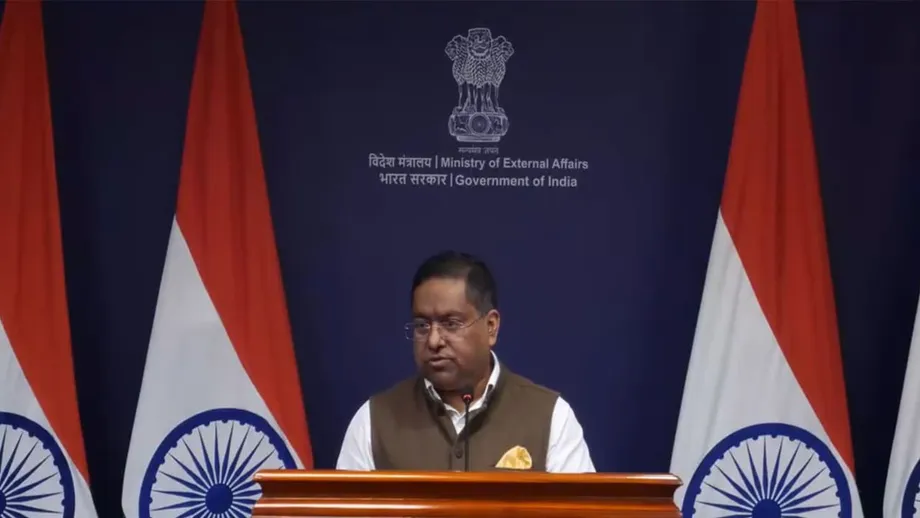
Petroleum Secretary Neeraj Mittal described the scale of the intervention in his preface to the operational guidelines:
the most ambitious upstream oil and gas intervention undertaken in recent times
Mittal said the programme could add more than 600 million tonnes of oil equivalent to India's reserves. Oil equivalent expresses the energy contained in oil and gas using a common measure, allowing the two fuels to be counted together.
The central bargain is straightforward: public money will absorb part of the expensive search for offshore resources, while operators remain responsible for costs above the limits. Successful projects will eventually trigger recovery of government support. Discoveries, production and repayment will depend on what drilling finds and whether those resources can be developed commercially.
How Much Will Each Well Receive?
The guidelines define deepwater areas as waters deeper than 400 metres and ultra-deepwater areas as waters deeper than 1,500 metres. Drilling in these locations requires specialised vessels, equipment and technical services, while companies face uncertainty about the rocks and fluids below the seabed.
Some wells in the Krishna-Godavari, Cauvery, Mahanadi and Andaman basins can cost between $125 million and $150 million. An exploratory well searches for oil or gas before a company commits to developing a field. A well that finds too little usable fuel can leave the operator with a substantial bill and no production revenue.
For the 56 exploratory wells, assistance will cover up to 50 per cent of actual costs, with a maximum payment of Rs 675 crore per well. For example, an eligible well costing Rs 1,000 crore could receive up to Rs 500 crore. A well costing Rs 1,600 crore would reach the Rs 675 crore ceiling, leaving the operator responsible for Rs 925 crore.
The four stratigraphic wells serve a different purpose. They primarily examine underground rock layers and geological structures, helping establish where future exploration may be promising. These wells can receive support covering up to 100 per cent of costs, capped at Rs 1,350 crore each.
At the maximum permitted amounts, the 56 exploratory wells could receive Rs 37,800 crore and the four stratigraphic wells Rs 5,400 crore. Together, that is Rs 43,200 crore, or about 51.4 per cent of the programme's Rs 84,084 crore outlay.
Who Qualifies, and When Does Money Arrive?
Only state owned companies, or consortia led by them, can apply for the drilling support. Eligibility is also restricted to blocks awarded under the Revenue Sharing Contract regime, in which operators share revenue with the government under their contracts.
Blocks governed by production sharing contracts and coal bed methane arrangements are excluded unless the government specifies otherwise. Development wells, which are drilled to produce from an established discovery, are also outside the support framework.
Payments will follow drilling milestones rather than arrive entirely before work begins. Operators will receive 40 per cent of approved assistance once drilling reaches 40 per cent of the sanctioned well depth. The remaining 60 per cent becomes payable after the well is completed and its report approved.
For a well approved for the maximum Rs 675 crore in exploratory support, those instalments would be Rs 270 crore and Rs 405 crore. Companies will therefore need financing to start work and carry it through the required stages.
Operators remain responsible for spending above the approved limits. Cost overruns do not automatically qualify for extra assistance, and failure to fulfil drilling commitments can put eligibility at risk. Paying a penalty instead of completing committed drilling can also affect access to support.
When Will the Government Recover Its Contribution?
Government recovery will begin after seven years of commercial production or once the operator has recovered 50 per cent of its exploration and development costs, whichever happens first. Commercial production means the project has moved beyond exploration and is producing fuel for sale.
The timing gives operators room to develop a discovery and earn revenue before repayment begins. A project that recovers half its exploration and development costs relatively quickly would reach the recovery trigger before the seven year point.
The amount recovered will not be adjusted for inflation. That keeps the recovery amount in nominal rupees, rather than increasing it to reflect changes in the value of money during the intervening years.
Public funding therefore reduces the company's initial financial exposure while preserving a route for the state to recover money from successful projects. Operators still need to manage geological uncertainty, finance their remaining costs and complete the work required by their contracts.
Seismic Surveys Come Before the Drill Bit
The Cabinet's programme includes acquiring, processing and interpreting seismic data across offshore basins. Seismic surveys use sound waves and their echoes to build a picture of rock formations beneath the seabed, helping companies choose where to drill.
The government says almost the entire offshore acreage has been opened for exploration and the National Data Repository has been strengthened. Samudra Manthan adds public investment in geological information and drilling to those changes in access and data management.
A reported budget breakdown assigns Rs 28,534 crore to seismic data, Rs 43,200 crore to 60 wells, Rs 10,000 crore to common infrastructure hubs and Rs 2,000 crore to manufacturing and services zones. The operational guidelines themselves do not give an allocation for each component. The four reported amounts total Rs 83,734 crore, leaving Rs 350 crore of the approved outlay outside that breakdown.
The programme can consequently be described as four main investment components, with seismic work counted separately, or as three operational intervention areas covering drilling, shared facilities and industrial zones. The Cabinet statement includes all four activities, alongside digital programme management, training, technology adoption and international outreach.
Shared Facilities Could Connect Stranded Discoveries
The Mahanadi basin is the initial focus for assistance to shared offshore production infrastructure, while Kutch is due to receive token funding. This support is intended to help connect several small or stranded discoveries to a common production system.
A stranded discovery contains oil or gas that cannot yet be developed economically under existing conditions. A small field may struggle to carry the cost of its own processing equipment and export pipeline, even after drilling has found fuel.
Shared facilities allow several discoveries to use the same equipment. Eligible assets include subsea manifolds, which gather flows from multiple wells; trunk pipelines that carry those flows onward; central processing platforms; and shared floating production units.
The government will use viability gap funding for this infrastructure. In simple terms, that means public assistance intended to close the financial gap preventing an otherwise useful project from proceeding. Proposals must pass through the Public Investment Board before the minister sanctions spending.
The drilling and infrastructure components address different stages of the same commercial problem. Exploration support helps pay for the search. Common facilities can then reduce the cost of bringing several discoveries into production.
Manufacturing Zones Extend the Programme Beyond Wells
One or more oil and gas manufacturing and services zones will provide common utilities, testing and certification facilities. The aim is to support domestic equipment makers and service businesses alongside the expansion of offshore activity.
The Cabinet statement says Samudra Manthan is expected to generate substantial employment and stimulate investment across exploration and production. It also provides for skills development, technology adoption, engagement with industry and international outreach, extending the programme beyond payments for physical assets.
The industrial zones may be developed alongside BHAVYA, a separate infrastructure scheme run by the Commerce Ministry's trade promotion department. The guidelines place a boundary between the two budgets: a funding shortfall under BHAVYA will not create an additional liability for Samudra Manthan.
The government has also changed performance measures for Oil and Natural Gas Corporation, known as ONGC, and Oil India to place greater weight on exploration. The Oilfields (Regulation and Development) Amendment Act, 2025 forms part of the wider legal changes accompanying the offshore push.
ONGC signed a technical services contract with bp in June for its Western Offshore Basin fields, covering 43 blocks on India's western continental shelf. The arrangement adds a separate technical partnership to the broader effort to improve offshore performance.
What Could Change for India's Energy Supply?
The petroleum ministry estimates that successful exploration could help lift annual domestic oil and gas output from 454.46 million barrels of oil equivalent to 586.40 million. That would be an increase of 131.94 million barrels of oil equivalent, or about 29 per cent.
The ministry also projects an increase in the hydrocarbon resource base from 11.73 billion to 16.13 billion barrels of oil equivalent. The difference is 4.40 billion barrels, about 37.5 per cent. A resource base describes the estimated quantity of hydrocarbons, while annual output measures how much is actually produced during a year.
The Cabinet's expectation of more than 600 million tonnes of oil equivalent in reserve additions uses tonnes rather than barrels. Reserves refer to quantities assessed as recoverable under specified conditions, so the reserve ambition and the broader resource estimate describe different measures.
The government estimates that the programme could reduce the annual crude import bill by approximately Rs 1 trillion, equivalent to Rs 1 lakh crore. India is the world's third largest oil consumer, with a crude import bill of roughly $144 billion a year.
Existing domestic fields face natural production declines of 6 to 7 per cent annually, according to the government. New discoveries must therefore help replace falling output from older fields as well as support growth. The projected production gains and import savings depend on exploration results and subsequent development.
Who Oversees Delivery, and What Happens Next?
The Cabinet Secretary will chair an empowered steering committee, while an executive committee chaired by the petroleum secretary will carry out final appraisal. A programme unit led by a joint secretary will handle daily monitoring.
The Directorate General of Hydrocarbons will serve as the implementing and nodal agency, tracking progress through a digital monitoring system. Its work will connect the programme's spending decisions with drilling milestones, completed reports and other delivery requirements.
The main sequence runs from the political announcement to preparation and then spending:
- August 15, 2025: Modi outlined a modern Samudra Manthan to develop India's offshore energy potential.
- July 31, 2026: The Union Cabinet approved the scheme with an outlay of Rs 84,084 crore.
- Financial year 2026-27: Preparatory work is scheduled.
- Financial years 2027-28 to 2030-31: Phase I spending is scheduled, with implementation running through 2030-31.
The immediate task is to turn the framework into eligible drilling proposals, approved infrastructure projects and work that meets the payment conditions. For companies, the practical benefit is a smaller initial exploration bill. For the government, the return depends on discoveries becoming productive fields and supporting a stronger domestic supply industry.
Key Points
- Samudra Manthan has an approved outlay of Rs 84,084 crore through financial year 2030-31.
- Support covers up to half the cost of 56 exploratory wells, capped at Rs 675 crore each.
- Four stratigraphic wells can receive full cost support, capped at Rs 1,350 crore each.
- Maximum assistance for all 60 wells totals Rs 43,200 crore, about 51.4 per cent of the scheme's outlay.
- Drilling payments depend on progress and completion, with operators responsible for costs above approved limits.
- Recovery starts after seven years of commercial production or recovery of half the operator's exploration and development costs, whichever comes first.
- Seismic surveys, shared offshore facilities and manufacturing zones form the other main investment areas.
- The government expects reserve additions exceeding 600 million tonnes of oil equivalent, with results dependent on successful exploration and development.