A wider picture of how India works
India plans to survey 14 households in each selected village or urban sampling area from January 2027, up from 12, while setting aside two household places specifically for families with digital platform workers. The changes would accompany new questions on cooking, caregiving, volunteering and other unpaid activities that the Periodic Labour Force Survey (PLFS) has not measured separately.
Contents
- A wider picture of how India works
- Why platform workers get a separate category
- Where the platform approach has limits
- Cooking and care enter annual reporting
- Goods, volunteering and unpaid training
- A larger sample built on an updated map
- How rural selection rules would change
- What happens during the 2027 handover
- What is still under examination
- Key Points
The Ministry of Statistics and Programme Implementation released the proposals on October 23, 2026, inviting public and expert feedback within 15 days of publication. The National Statistics Office (NSO) plans to introduce them with its 2027–2028 survey cycle, known as Panel 6.
The ministry's October concept note identifies two gaps: too few digital platform workers in the existing sample, and limited annual information about work done without pay for households and communities. It also proposes experimental questions on labour underutilisation, which concerns people whose available labour is not being fully used.
The PLFS, conducted since 2017, is India's principal source of official information on employment, unemployment and participation in the labour force. Its findings depend on which households are selected and what people are asked. The proposed revisions address both parts of that process.
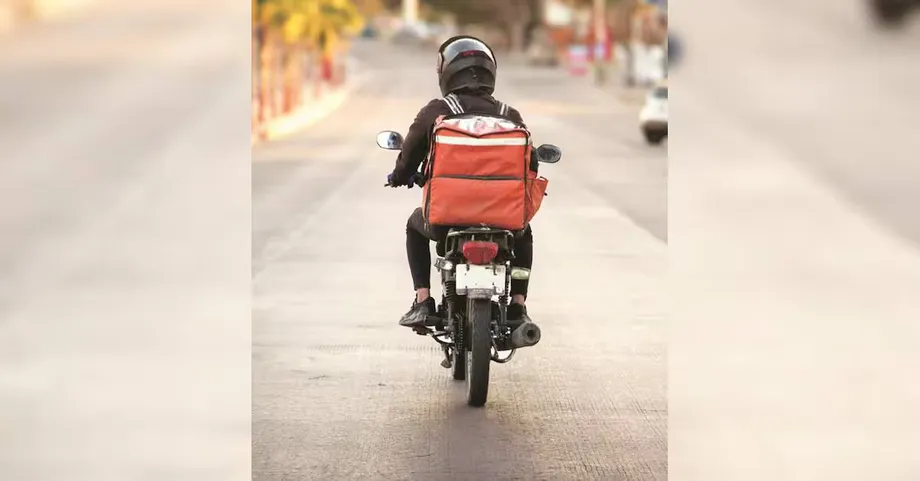
For a driver taking bookings through an app, the change means a dedicated route into the survey sample. For someone caring for an elderly relative or preparing meals without pay, it means questions about activities and hours that would support annual reporting. The proposal also updates the geographical framework used to choose households as towns expand and administrative boundaries change.
Why platform workers get a separate category
The NSO began collecting information on digital platform workers experimentally in January 2026. Its experience that year showed that the existing sampling arrangement captured too few of them to provide adequate representation.
Survey teams would now ask every household being listed whether any member had done digital platform work during the previous 365 days. The concept note names Ola, Uber, Zomato, Amazon and Urban Company as examples. Asking about a full year allows the screening question to identify households where someone did this work occasionally or stopped before the survey visit.
Eligible households would enter a dedicated Second Stage Stratum, or SSS. A stratum is a group used when selecting a sample. Instead of relying on platform workers appearing often enough among other households, the survey would deliberately select households from this group.
Rural areas would have four such household groups and urban areas five. Two of the 14 households selected in each First Stage Unit, such as a village, urban block or designated subdivision, would come from the platform category. Selection would use simple random sampling without replacement, meaning a household cannot be picked twice in the same selection.
Where fewer than two eligible households are available, unused places would move to other groups according to stated priorities. Rural redistribution would go first to SSS 3, then SSS 1; urban redistribution would go first to SSS 4, then SSS 3. This keeps the household sample filled while allowing for places with little platform work.
Where the platform approach has limits
Digital platform workers are one part of the wider gig workforce. People can also take temporary assignments or individual jobs through personal contacts and other arrangements outside an app.
Labour economist KR Shyam Sundar described the proposals as a partial response to that broader measurement problem:
half a step
Sundar argued that gig workers operating outside digital platforms may remain difficult to capture. The new household category is specifically organised around platform work, so the treatment of other gig arrangements remains a separate concern within the wider employment survey.
The dedicated category also changes how households are selected. Published estimates will therefore depend on the survey's estimation procedure as well as the number of platform households interviewed. The ministry has invited feedback on sampling design, estimation and the questionnaire together.
Cooking and care enter annual reporting
The proposed additions to Schedule 10.4, the survey questionnaire, would cover people aged 15 and above during the first household visit in both rural and urban areas. They would measure production of goods for household use, unpaid domestic services, caregiving, volunteering and unpaid trainee work.
The ministry identifies women's unpaid work as a central reason for the change. Its concept note says a substantial proportion of women spend considerable time cooking, cleaning and caring for children or relatives who are elderly, sick or disabled. Those activities support household well being and enable other members to take paid jobs.
India's Time Use Survey already provides detailed information about these activities, but it is not conducted annually. Adding questions to the PLFS would provide a regular annual account alongside the country's main labour statistics.
The household services questions would ask about the previous day, defined precisely as 4 a.m. yesterday to 4 a.m. on the interview day. Activities include preparing and serving food, washing dishes, cleaning, laundry, minor repairs, shopping, paying bills and organising household duties.
Caregiving would be recorded separately. The questions cover feeding and bathing children, helping them learn, reading or playing with them, attending their activities, and providing physical care or emotional support to adults with illness, disability or frailty. Respondents would report hours spent on domestic services and caregiving in whole numbers.
Goods, volunteering and unpaid training
Production for a household's own use would use a different reference period: the previous seven days. The proposed questions include gathering wild food, catching fish or hunting for food, preparing preserved products for storage, and making goods such as mats, baskets, furniture or clothing for household use.
Construction and major repairs to the household's buildings would also be covered, along with collecting firewood, fetching water from natural or public sources, and gathering other natural products. Respondents who report these activities would be asked whether they spent at least one hour on them during the week and, if so, how many whole hours.
Volunteer questions would ask about unpaid help to another household in producing goods or carrying out construction and major repairs. They would also cover help given to organisations, associations, communities or businesses during the previous seven days.
Unpaid trainee work would be recorded where someone spent at least one hour producing goods or providing services for others to gain workplace experience or occupational skills. The questionnaire names traineeships, apprenticeships and internships where participation in production is unpaid, then asks how many hours the person spent.
The different recall periods matter for respondents: platform screening looks back 365 days, household services and care cover one day, and own use production, volunteering and training cover seven days. Annual findings would be built from interviews conducted across the survey year.
A larger sample built on an updated map
The previous allocation comprised 12,504 rural and 10,188 urban First Stage Units, a combined 22,692. The ministry says both counts would rise slightly with the updated geographical frame and revised allocation rules. The final new counts are not specified in the concept note.
Within each selected unit, the increase from 12 to 14 households amounts to two additional households, or about 16.7% more. The total expansion would also depend on the final number of selected units.
The sampling frame, essentially the geographical list from which areas are chosen, would incorporate Urban Frame Survey updates, places becoming urban or being reclassified as rural, and the creation, division or merger of districts and other administrative units. The rural frame based on Census 2011 would receive follow up updates.
Population figures used to allocate sampling areas would move from Ministry of Health and Family Welfare projections for October 1, 2024, to projections for October 1, 2026. State population growth rates would be applied to each village.
These adjustments affect where survey effort goes. A newly developed urban area needs a place in the selection framework, while an expanding district may need more sampling areas to reflect its population. Updating boundaries and population figures is intended to make the selected households more representative of where people live.
How rural selection rules would change
Rural sampling would lose one layer of grouping that caused practical problems in the 2025–2026 panel. Villages were divided within each stratum into those with fewer than 500 people and those with at least 500, using census populations. The NSO proposes ending that division because too few villages in some groups repeatedly required groups to be merged during sample selection.
Another rule concerns Rural Stratum 1, which groups eligible villages within five kilometres of a district headquarters or a city or town with more than 500,000 people. The minimum number of villages needed to form this category within a basic stratum would rise from 50 to 100.
For allocation in basic stratum I, the design would use eight population classes rather than six. The maximum population gap between successive classes would narrow from 30 lakh, or three million, to 20 lakh, or two million.
The ministry says the finer population classes would allow relatively more sampling areas to be allocated to larger districts, while keeping the national monthly allocation below 2,000 First Stage Units. District and National Sample Survey region estimates would use first visit interviews and the full year of data.
What happens during the 2027 handover
The new panel follows a January 2025 redesign that enabled monthly national estimates for rural and urban areas and extended quarterly estimates to rural areas. Questions on education and skilling were also added as the survey became more frequent and detailed.
The next transition would overlap the outgoing and incoming samples for three months to maintain continuity in published labour market estimates. The timetable is:
- January 2025: The redesigned PLFS began supporting monthly national estimates and broader quarterly coverage.
- January 2026: Experimental collection of digital platform work data began.
- October 23, 2026: The proposed 2027 changes were released for feedback.
- December 2026: The current Panel 5 cycle ends.
- January to March 2027: Monthly and first quarter estimates use pooled data from Panels 5 and 6.
- April 2027 onward: Monthly estimates use Panel 6 alone, with quarterly estimates using the new panel from the second quarter.
The NSO would not publish Relative Standard Errors, or RSEs, for monthly estimates during January, February and March 2027. An RSE expresses the estimated sampling uncertainty relative to the size of an estimate. Smaller values generally indicate greater precision.
The concept note explains that part of the incoming panel's contribution in the first month, and the outgoing panel's contribution in the third month, rests on only one sampled First Stage Unit. That prevents calculation of the relevant component of sampling variance. Monthly figures would still be published during the transition, without that accompanying precision measure.
What is still under examination
Labour underutilisation would be measured experimentally through additional questions. The term describes unused labour capacity more broadly than unemployment alone, including situations where people have some work but their available working capacity is not fully used.
The concept note says estimates and related data from these questions would be considered for publication after further examination and consultation. A release timetable for those experimental results has not been set.
Sundar also said that measuring unpaid work could eventually affect how national income is calculated. The immediate proposal concerns collecting and reporting information through the PLFS; any future change to national income accounting would require further decisions.
Public and expert feedback is invited in the prescribed format within 15 days of the document's publication on the ministry website. The listed submission addresses are [email protected] and [email protected].
For people using the results, January 2027 would bring several changes at once: a new geographical frame, revised household selection and additional questions. Comparisons with earlier years will need to account for those design changes when describing employment trends, platform work and unpaid activity.
Key Points
- India proposes introducing the revised PLFS design in January 2027 for the 2027–2028 panel.
- Each selected sampling area would cover 14 households instead of 12, including two places reserved for households with digital platform workers where available.
- New first visit questions for people aged 15 and above would support annual reporting on unpaid domestic work, care, own use production, volunteering and unpaid training.
- Population projections, geographical boundaries and rural selection rules would be updated.
- January to March 2027 estimates would combine the outgoing and incoming panels; monthly RSEs would be omitted during those three months.
- Experimental labour underutilisation results would undergo further examination and consultation before publication decisions.