November ballot reopens debate after Taiwan's last reactor closed
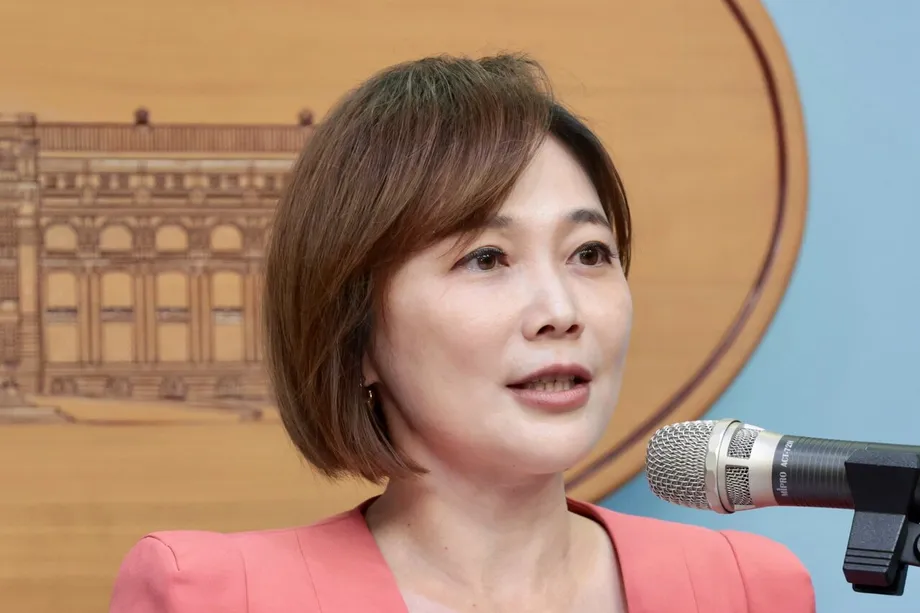
Taiwan will vote on November 28, 2026, on whether to abandon its Nuclear-Free Homeland policy, reopening an energy debate more than a year after its final operating nuclear reactor shut down. Presidential Office spokesperson Karen Kuo said on October 22 that Taiwan had already achieved the policy's goal in 2025 and currently faced no electricity shortage.
Contents
- November ballot reopens debate after Taiwan's last reactor closed
- What voters will be asked to decide
- What the presidency means by a completed policy
- Three conditions and two required steps
- Why a majority of votes may still fall short
- Four nuclear votes, different decisions
- Industry demand meets the presidency's supply assurance
- Imported fuel creates a separate security concern
- Renewables and waste remain central to the choice
- Key Points
The referendum, designated national referendum No. 22, will take place alongside elections for mayors, county leaders, local councils and other public offices. The Central Election Commission approved the proposal on August 28 after lawmakers backed it earlier that month.
President Lai Ching-te remains open to different energy options, Kuo said. His administration nevertheless requires three conditions for a nuclear restart: safe operation, a clear solution for nuclear waste and public agreement. She also said environmental sustainability should not be sacrificed for short term benefits.
The political stakes extend beyond whether voters favour nuclear electricity. The Kuomintang (KMT), which proposed the referendum, argues that nuclear power can support industry and economic growth. The presidency says electricity supplies are secure while maintaining that any restart must pass technical and regulatory checks.
For households and businesses, the debate brings together several practical concerns: dependable electricity, prices, the growing power needs of technology companies and the safety of storing radioactive waste. The ballot asks voters to choose a policy direction. Decisions about individual reactors would then require further work.
What voters will be asked to decide
The final referendum question asks whether voters support the government using nuclear power to revitalise the economy and abolish the Nuclear-Free Homeland energy policy. Its wording is broader than the August 2025 referendum, which focused specifically on continued operation of the Third Nuclear Power Plant after safety clearance.
The KMT's earlier proposal listed public health, stable electricity supplies, cheaper power, national defence resilience and artificial intelligence development as reasons for abandoning the policy. Lawmakers revised that wording before approving the proposal, leaving the final question centred on nuclear power and economic growth.
KMT and Taiwan People's Party (TPP) lawmakers, who together hold a legislative majority, moved the proposal directly to a second reading on July 14, bypassing committee review. The legislature approved the nuclear proposal on August 14 and sent it to the election commission on August 18.
The opposition parties originally pursued six referendum proposals covering nuclear policy and several other subjects. Only the nuclear proposal ultimately qualified for the November ballot. Voters eligible to participate will receive a separate referendum ballot alongside any local election ballots for which they qualify. Polling is scheduled from 8 a.m. to 4 p.m.
What the presidency means by a completed policy
The Maanshan Nuclear Power Plant in Pingtung County, also known as Nuclear Plant No. 3, stopped producing electricity when its second reactor reached the end of its operating licence on May 17, 2025. The reactor had completed 40 years of service and was Taiwan's last operating nuclear unit.
Kuo described that shutdown as the point at which Taiwan formally achieved its Nuclear-Free Homeland goal. Ending generation begins a much longer process of decommissioning, which involves managing fuel, dismantling equipment and dealing with radioactive materials.
The Basic Environment Act, enacted in 2002, directs the government to make plans to achieve a nuclear free homeland gradually. Kuo said the policy had originally been agreed across party lines, rather than belonging solely to the governing Democratic Progressive Party (DPP).
She also pointed to the suspension of the Fourth Nuclear Power Plant project during the presidency of Ma Ying-jeou, a KMT leader. That unfinished plant and Maanshan are different facilities, a distinction that matters because earlier referendums addressed different projects and legal questions.
Three conditions and two required steps
Lai's administration has set out both political conditions and a technical process for considering Maanshan's return. The three conditions concern nuclear safety, a solution for radioactive waste and social consensus. Each addresses a different decision: whether a reactor can operate safely, where its waste will go and whether society accepts the arrangement.
Kuo gave a more detailed explanation on November 7, 2025. The Nuclear Safety Commission must establish safety review procedures under the law. Taiwan Power Company, the state electricity utility known as Taipower, must then conduct its own safety checks under those procedures.
Taipower's assessment would examine the conditions for restarting, the time required and the costs and benefits. The government would respect a professional review if the company submitted a plan through the legal process, Kuo said.
The spokesperson also rejected claims at that time that Lai had instructed officials to abandon green electricity or resolve the Maanshan restart issue before 2027. She said the president had set no restart timetable. No confirmed restart date has been announced in the statements discussed here.
For an individual plant, a favourable referendum would therefore be followed by questions about equipment, safety inspections, operating permission and regulatory approval. A national policy decision and permission to generate electricity are separate stages of the same debate.
Why a majority of votes may still fall short
Taiwan's referendum rules require both a majority of valid votes in favour and a minimum number of affirmative votes. The published framework for the 2026 ballot puts that minimum at 4,887,133, calculated as one quarter of the 19,548,531 electors in the 2024 presidential election, rounded up to a whole vote.
That minimum makes participation crucial. Even if more people vote yes than no, the proposal fails when the affirmative total falls below the required number. A proposal also fails if it reaches the minimum but receives more opposing votes.
The August 23, 2025, referendum demonstrated how the rule works. The Asia Pacific Foundation of Canada, in its September 5 referendum analysis, recorded about 4.3 million votes for restarting Maanshan and 1.5 million against. The affirmative vote fell short of the roughly five million required.
Using those rounded totals, about 74 per cent of people casting a yes or no vote supported the proposal: 4.3 million out of 5.8 million. The result nevertheless failed because the law measures support against a minimum tied to the electorate, as well as against opposing votes.
The Referendum Act requires authorities to take the necessary measures to implement a successful major policy referendum and generally protects the resulting policy from administrative reversal for two years. The same issue also faces a two year restriction on being submitted again. The approved 2026 question addresses the wider energy policy, while the 2025 question concerned a particular plant.
Four nuclear votes, different decisions
The November referendum will be Taiwan's fourth nuclear energy referendum since 2018. Earlier votes help explain why the issue keeps returning: voters have been asked about a statutory deadline, an unfinished plant, an existing plant and now the broader national policy.
The main milestones are:
- 2018: Voters approved removing the Electricity Act requirement that nuclear generating facilities cease operation by 2025. Nearly 60 per cent supported the proposal.
- 2021: Voters rejected restarting the Fourth Nuclear Power Plant project.
- May 17, 2025: Maanshan's final reactor stopped operating after completing 40 years of service.
- August 23, 2025: The Maanshan referendum failed to reach the required affirmative vote total.
- July 14, 2026: Opposition lawmakers advanced the broader nuclear policy proposal without committee review.
- August 28, 2026: The election commission approved referendum No. 22.
- November 28, 2026: Voters are scheduled to decide the proposal alongside local elections.
The 2018 result led to removal of the electricity law's shutdown deadline. Taiwan's reactors subsequently stopped operating as their licences expired. The separate Nuclear-Free Homeland provision in the Basic Environment Act remained part of the policy framework.
Holding the latest vote with local elections places it within a larger day of political participation. The referendum result will be counted separately from votes for local candidates, with its own legal requirements for passage.
Industry demand meets the presidency's supply assurance
KMT legislator Ko Ju-chun argues that artificial intelligence data centres, semiconductor production and other advanced manufacturing need dependable, predictable electricity. Supporters of the referendum want nuclear power considered alongside renewable generation rather than excluded by national policy.
The Asia Pacific Foundation of Canada cites projections that Taiwan's electricity demand could grow by 12 to 13 per cent by 2030. Its analysis also places Taiwan Semiconductor Manufacturing Company's electricity use at about 9 per cent of the island's total output, illustrating how closely industrial production and energy planning are connected.
Kuo's October 22 statement addressed current conditions, saying Taiwan had secure supplies and no electricity shortage. The industrial argument concerns the capacity needed as consumption grows. Both present supply and future demand influence decisions about new generation, fuel purchases and grid investment.
Nuclear power's contribution has already changed substantially. It supplied around 52 per cent of Taiwan's electricity at its peak in 1985, according to historical Taipower figures cited in the nuclear debate. By 2024, its share was below 5 per cent. Restarting an older reactor would therefore concern one part of a much larger electricity system.
Imported fuel creates a separate security concern
Taiwan imports more than 95 per cent of its energy, according to the foundation's analysis. Liquefied natural gas (LNG), gas cooled into liquid for transport by ship, supplied more than 40 per cent of electricity generation in 2024.
The foundation cites an estimate that LNG supplies could be exhausted within about 10 days during a blockade. That scenario links electricity planning to port access, shipping and fuel storage, as well as to the amount of generating equipment available.
Nuclear supporters argue that restoring reactors could reduce dependence on frequent fuel deliveries. KMT legislator Weng Hsiao-Ling has also argued that nuclear generation produces less air pollution than power stations burning fossil fuels.
National Taiwan University professor Lin Tze-luen, who opposed the 2025 restart proposal, raised concerns about ageing equipment, the need to obtain replacement parts abroad, earthquakes and the possibility of nuclear facilities becoming military targets. The competing arguments focus on different vulnerabilities: disruption to fuel imports and the safety of fixed generating sites.
The No Nukes Action Platform has said electricity supplies remained stable and air quality improved after the last reactor closed. Its position supports continued development without nuclear generation, while the opposition presents nuclear power as another option for managing industrial and security risks.
Renewables and waste remain central to the choice
Lai's administration continues to back renewable energy while leaving nuclear options conditional. Kuo said in November 2025 that the government planned to invest NT$900 billion before 2030 to accelerate green energy and other parts of the energy transition.
She cited Lai's October 18, 2025, address to a small hydropower industry forum and his November 6 meeting with a Japanese delegation as examples of that direction. Lai expressed interest in combining Taiwan's green energy experience and technology with those of the government led by Japan's Sanae Takaichi.
The foundation puts renewable electricity at 13 per cent of generation in 2024, below the government's 20 per cent target. That gap is seven percentage points. Expanding renewable output, improving the grid and meeting growing demand remain practical tasks regardless of the referendum result.
Radioactive waste presents another lasting obligation. Environmental campaigner Tsai Chung-yueh argues that final disposal cannot keep being postponed. DPP legislator Chuang Jui-hsiung has similarly called for decisions grounded in safety, waste management and a complete institutional assessment.
Kuo's three conditions place waste alongside reactor safety and public agreement, rather than treating it as a matter to settle after a restart. National Tsing Hua University professor Yeh Tsung-kuang, a supporter of the referendum, argues that a public vote can help the government understand the level of support for nuclear power.
The November choice will give voters another opportunity to shape energy policy. A successful proposal would require government action to carry out its direction, followed by the legal and technical decisions needed for any particular reactor. A failed proposal would leave the government facing the same concrete tasks of supplying growing demand, reducing dependence on vulnerable fuel routes and managing existing nuclear waste.
Key Points
- Taiwan will hold referendum No. 22 on abolishing the Nuclear-Free Homeland policy on November 28, 2026, alongside local elections.
- Presidential Office spokesperson Karen Kuo says Taiwan achieved the policy's goal in May 2025 and currently has no electricity shortage.
- The presidency requires nuclear safety, a solution for radioactive waste and social consensus before a restart.
- The published passage threshold is at least 4,887,133 affirmative votes, with yes votes also exceeding no votes.
- The August 2025 Maanshan referendum drew about 4.3 million yes votes and 1.5 million no votes but failed to reach the required minimum.
- A successful policy referendum would require government action; individual reactors would still need safety, equipment and licensing reviews.