A campus post ends an exchange visit
Taiwan deported a Chinese exchange student on October 16, 2026, and barred him from applying to return for five years after he posted footage that made it appear he was pinching President Lai Ching-te between his fingers. The National Immigration Agency said the post included language advocating the elimination of Taiwan's sovereignty.
Contents
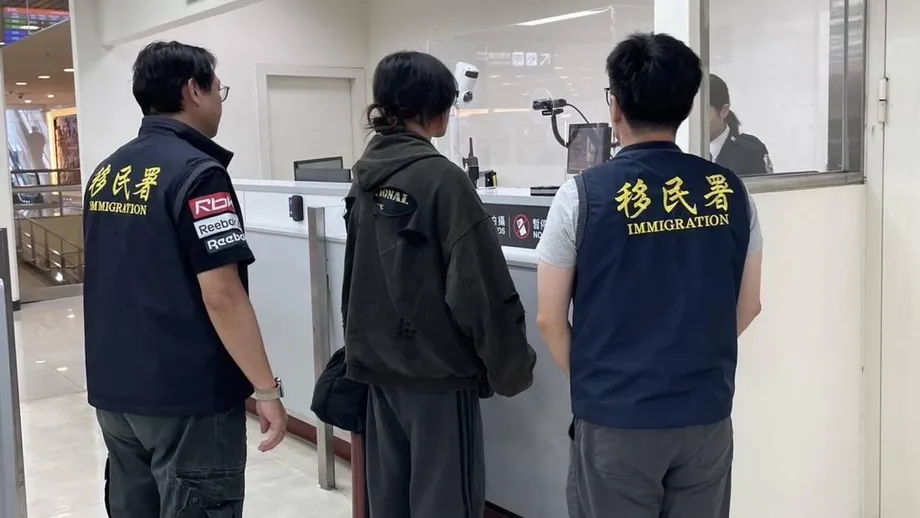
The student, identified by his surname Wang, had been attending National Taiwan University through an exchange agreement with an overseas university. Immigration officials said he was deported at 3 p.m., four days after Lai addressed the closing ceremony of the Taiwan Bridge Program on the university's campus.
The agency said it investigated the incident and consulted the Ministry of Education, the Mainland Affairs Council and other authorities before revoking his entry permit. It cited rules allowing permits for people from mainland China to be withdrawn over conduct that violates the principles of equality and dignity.
The National Immigration Agency described the consequences in its announcement:
Wang's behavior resulted in the revocation of his entry permit and deportation. He will also be barred from entering Taiwan for five years.
Wang deleted the post and apologized as criticism spread online. He said he had no intention of physically harming anyone. The decision nevertheless ended an exchange visit that had been scheduled to continue until December.
National Taiwan University said it accompanied Wang during questioning, provided assistance and notified his home university. Meanwhile, Straits Exchange Foundation Secretary-General Luo Wen-jia urged authorities and the public to preserve student exchanges, describing them as one of the few remaining channels for contact across the Taiwan Strait.
What Wang posted about Lai
Lai attended the Taiwan Bridge Program closing ceremony on October 12. Wang recorded him from the audience and used the distance between his hand and the president to create an image in which his fingers appeared to pinch Lai's head.
Wang uploaded the footage to Douyin, the Chinese video platform. The post included the caption, "Lai Ching-te is right in front of you. Could this be the only chance in your lifetime?" He also wrote, "Got the little Lai Ching-te."
The accompanying text opposed Taiwan independence and supported unification. Hashtags included references to unification across the Taiwan Strait, Taiwan being part of China and upholding the one China principle. The immigration agency described the text as advocating the elimination of Taiwan's sovereignty.
Images of the post circulated beyond Douyin, including on Threads. People who viewed the gesture and wording as threatening sent screenshots to government agencies and called for Wang's removal. Comments beneath the video also included calls for harm against Lai.
Mainland Affairs Council Deputy Minister Liang Wen-jie confirmed on October 15 that the council had received complaints. He said the relevant agencies were discussing how to handle the case under the entry regulations governing people from mainland China.
An apology before the removal
Wang removed the post and issued an apology after the criticism grew. He said reading the comments and reflecting on them had made him recognize that the post was inappropriate. He expressed willingness to accept criticism and suggestions and apologized to those affected.
Wang also said he had no plan to cause physical harm. During the process of receiving the immigration decision, he reportedly told officials that he thought Lai looked cute and believed Taiwan allowed a degree of freedom of expression. Those remarks were relayed from his interaction with immigration personnel.
The immigration agency based its announced decision on Wang's conduct, the wording accompanying the footage and the resulting public disturbance. Its stated legal basis was the rule concerning equality and dignity.
How the four days unfolded
The case moved from a presidential appearance to a completed deportation within four days. The decision was made on October 15, and National Taiwan University confirmed Wang's departure the following day.
- September 2026: Wang arrived in Taiwan for an exchange visit scheduled to last until December.
- October 12: Lai spoke at the Taiwan Bridge Program closing ceremony at National Taiwan University. Wang recorded footage used in the disputed post.
- Before October 16: Wang deleted the post and apologized after it drew complaints.
- October 15: Liang Wen-jie confirmed that the Mainland Affairs Council had received complaints. Authorities decided to revoke Wang's entry permit, and Wang went to the immigration agency's Taipei special operations unit to receive the decision.
- October 16: Immigration officials escorted Wang through departure procedures. The agency said he was deported at 3 p.m.; the university confirmed he had left Taiwan.
- October 17: Public debate continued over the punishment, freedom of expression and the treatment of Chinese visitors.
Wang flew to Shanghai. His departure brought the university exchange to an early end, roughly two months before its planned conclusion.
The rule behind the five years of restrictions
The National Immigration Agency cited Article 12 of the Regulations Governing Permission for People of the Mainland Area to Enter the Taiwan Area. The relevant provision, Article 12, paragraph 1, subparagraph 15, permits action against improper conduct that violates the principles of equality and dignity.
Article 14 provides for a period of one to five years during which an application may be refused for this category of conduct. Wang received the maximum period described under that provision.
An entry permit is the government's authorization for a person to enter and stay under specified conditions. Revoking it removes that authorization. In Wang's case, the authorities combined revocation with deportation and a restriction on new applications for five years.
The agency also said any later applications would receive strict scrutiny. No date for an appeal or further hearing was announced.
Immigration officials said Taiwan respects differing opinions and ordinary exchanges as a democratic, free, open and diverse society. They also said visitors from mainland China must follow Taiwanese laws and regulations, framing enforcement as part of protecting national security, social stability and orderly exchanges.
What changes for Wang and his university
Wang was described as 19 years old and enrolled in a degree related to life sciences at the University of British Columbia in Canada. National Taiwan University identified him more broadly as an exchange student from an international partner institution.
His route to Taiwan matters to the immediate consequences. Wang was temporarily studying at National Taiwan University while remaining enrolled at his home institution. His removal ended the Taiwan exchange early, while his degree studies were expected to continue.
National Taiwan University said staff accompanied him when authorities questioned him and provided necessary assistance. It also informed the partner university about the incident and his departure.
The university said it respected the government's enforcement of the rules while affirming its commitment to freedom of expression and an open, diverse campus. It said differing views and criticism of public policy and government performance should be respected, and that rational discussion is a foundation of democratic society.
The university's response placed student welfare alongside compliance with the immigration decision. It also said exercising freedom of expression should take account of respect for other people.
Luo urges Taiwan to keep exchanges open
Luo Wen-jia, secretary-general of the Straits Exchange Foundation, said he contacted National Taiwan University after the incident and expressed concern for Wang. The foundation handles practical matters involving relations across the Taiwan Strait.
Before the deportation was announced, Luo said a student's preference to finish an exchange should receive respect. Asked about Wang remaining in Taiwan to complete his planned visit, he said:
I think we should respect his choice.
Luo said the foundation was neither responsible for the case nor involved in the discussions among the agencies deciding it. After the removal was announced, he said he respected the competent authorities and hoped one case would not affect Chinese students coming to Taiwan.
Chinese student exchanges, Luo said, were among the few remaining forms of interaction across the strait. He welcomed opportunities for young people from China to learn about Taiwan's democratic institutions and daily life, and said the foundation's support for exchanges had not changed.
A wider argument about speech and immigration
The punishment prompted criticism from some opposition figures who argued that a democratic president should accept criticism and mockery. Their objection focused on whether the government had imposed an excessive penalty on political expression.
Journalist Akio Yaita responded by accusing a Kuomintang legislator of applying inconsistent standards. He said the legislator's team and the party's Keelung branch had sought his deportation after he spoke at a recall campaign event in May 2025, even though he had already obtained Republic of China citizenship.
Yaita also referred to an assault against him in Taichung on July 6, 2026. He said the same legislator had urged people to avoid assumptions about the attacker. The suspect was later indicted, with prosecutors describing an organized attack involving planning and payment, according to the account of the case.
Yaita's intervention added a dispute about political consistency to the argument over Wang's punishment. The central practical issue remained the government's use of immigration powers in response to a visitor's online political conduct.
Taiwan has used restrictions lasting five years in other cases. Former Chinese state television journalist Wang Zhian received such a restriction in January 2024 after authorities found that his participation in an online program did not match his permitted tourism activities. The Taipei High Administrative Court dismissed his administrative lawsuit in 2025.
Authorities also revoked the family residence permits of two Chinese spouses known as Yaya and Xiaowei in March 2025 over statements supporting forcible unification or the elimination of Taiwan's sovereignty. Both received restrictions lasting five years. In July 2026, a university student from Guangdong had his entry permission revoked before arrival after posting an altered entry document in which Taiwan's flag had been replaced with China's flag.
For universities and exchange students, Wang's case brings the consequences of these rules directly onto campus: a social media post can trigger an immigration investigation, interrupt a term of study and prevent a return for years. Luo's response points to a different institutional priority, keeping the remaining opportunities for students to meet and study together open.
Key Points
- Taiwan deported Wang, a Chinese exchange student at National Taiwan University, on October 16, 2026.
- His Douyin post used perspective to make it appear he was pinching President Lai Ching-te and included language supporting unification and opposing Taiwan independence.
- Wang deleted the post, apologized and said he had no intention of physically harming anyone.
- The National Immigration Agency revoked his permit under Article 12 and imposed restrictions on applications for five years.
- National Taiwan University assisted Wang during questioning and notified his home institution.
- Straits Exchange Foundation Secretary-General Luo Wen-jia urged that the case not disrupt wider student exchanges.