7,645 Flats Sold as Prices Edge Lower
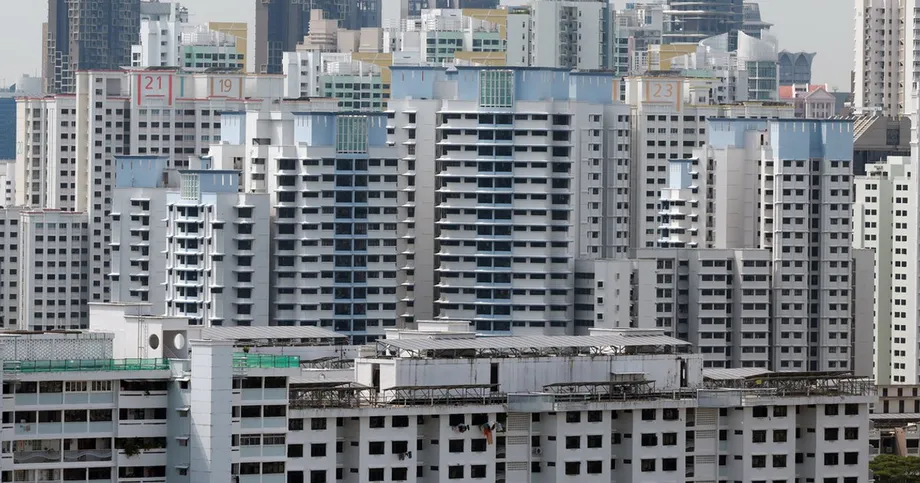
Singapore's Housing and Development Board (HDB) resale price index fell to 202.5 in the third quarter of 2026, down 0.1%, even as transactions jumped 19.5% to 7,645. Meanwhile, 596 flats sold for at least S$1 million, a quarterly record that shows how expensive homes can keep attracting buyers while prices across the wider market ease.
Contents
- 7,645 Flats Sold as Prices Edge Lower
- A Small Price Decline Alongside a Strong Sales Recovery
- What Changed for Former Private Home Owners?
- Larger Flats Account for More Transactions
- Million-Dollar Sales Reach a New Peak
- Private Prices Rise as New Launches Slow
- Suburban Tenants Face the Largest Rent Increase
- More Homes Are Moving Through the Pipeline
- November Flats and New Launches Shape the Next Quarter
- Key Points
Figures released on October 23 showed a widening contrast between public and private housing. HDB resale prices declined for a third consecutive quarter, while private home prices rose 1.4%, their fastest quarterly increase in nearly two years. Private residential rents also climbed 1.3%, the largest increase in more than three years.
The HDB sales rebound followed the July 28 removal of a rule requiring private property owners and former owners to wait 15 months after selling their property before buying a resale flat without subsidies. HDB said it had observed no significant increase in either prices or purchases by that group since the change.
For households, the quarter brought more activity without a broad rise in public housing prices. Buyers seeking large flats or homes in particular estates still faced strong competition at the expensive end. Private home buyers and tenants, meanwhile, encountered rising prices despite fewer properties changing hands.
Both HDB and the Urban Redevelopment Authority (URA) urged households to be cautious about purchases and mortgages, citing uncertainty in the economy and in global and domestic interest rates.
A Small Price Decline Alongside a Strong Sales Recovery
HDB resale prices fell 0.1% in the first quarter, their first decline in close to seven years, followed by a 0.3% drop in the second quarter. The latest 0.1% decline means prices have continued to soften, although the pace of the fall has slowed.
HDB's earlier third-quarter flash estimate, with index data in Annexes A1 and A2, put the resale price index at 202.4, down 0.2% from the second quarter. As of September 29, it recorded 7,528 resale transactions, 5.2% above the 7,157 recorded over the same period in 2025. Those preliminary figures preceded the October 23 figures.
Transactions moved in the opposite direction. The third quarter's 7,645 sales were 1,249 more than the 6,396 recorded in the previous quarter. They were also 5.9% above the 7,221 transactions in the same period of 2025.
Mohan Sandrasegeran, head of research and data analytics at Singapore Realtors Inc (SRI), said this was the highest quarterly resale volume since the third quarter of 2024. He described demand as relatively healthy as prices entered a more measured adjustment.
Sandrasegeran said buyers were continuing to participate where the price and characteristics of a flat matched their needs:
This could indicate that buyers are continuing to participate actively in the resale market, particularly where flats are appropriately priced and offer attributes that align with their housing needs and financial considerations,
The figures show why sales volume and prices need to be considered together. More completed purchases mean more households found homes they were willing and able to buy. The price index, which tracks changes across the market, shows that this increase in activity occurred alongside a slight decline in prices.
What Changed for Former Private Home Owners?
The government introduced the waiting period on September 30, 2022, as a temporary measure to moderate housing demand and prioritise access to public housing for first-time home buyers. Before the rule was removed, buyers aged 55 and above were exempt when purchasing a resale flat with four rooms or fewer.
HDB's flash release stated that the "15-month wait-out period for PPOs and ex-PPOs buying non-subsidised HDB resale flats was removed on 28 July 2026", referring to private residential property owners and former owners. It said the removal followed several quarters of price moderation in the HDB resale market and an expected larger number of new flats entering the resale market after meeting the Minimum Occupation Period over the next few years.
National Development Minister Chee Hong Tat said the easing followed improved market conditions and more moderate HDB resale prices. The key developments were:
- September 30, 2022: A waiting period of 15 months was introduced for private property owners and former owners buying resale HDB flats without subsidies.
- First quarter of 2026: HDB resale prices recorded their first quarterly decline in close to seven years.
- July 28, 2026: The government removed the waiting period.
- August 2026: The monthly household income ceiling for Build-to-Order flats rose from S$14,000 to S$16,000.
- October 23, 2026: HDB released third quarter figures and said it had seen no significant increase in purchases or prices involving former private property owners.
The policy change gave affected households more freedom over when to move into public housing. HDB's assessment concerns purchases by that specific group, while the 19.5% increase in transactions covers all resale buyers.
Larger Flats Account for More Transactions
Sales of five room flats rose 26.7% to 1,867 in the third quarter. Executive flat transactions increased even faster, by 41.6% to 545. Together, the two categories accounted for 2,412 transactions, or about 31.5% of all HDB resale sales.
Lee Sze Teck, senior director of data analytics at Huttons Asia, said former private home owners likely contributed to the increase in larger flat purchases. The previous exemption for buyers aged at least 55 had applied only to flats with four rooms or fewer, making the removal of the waiting period particularly relevant to those seeking more space.
Lee described the combined sales total for larger flats:
This is the highest number of five-room and larger flats sold since the third quarter of 2022,
Prices in some estate and flat categories remained above S$1 million. Executive flats in Serangoon had a median resale price of S$1.13 million, while the median for four room flats in Queenstown was S$1.065 million, up from S$1.035 million in the previous quarter.
A median is the middle price when transactions are arranged from lowest to highest. It helps describe the typical sale within a particular category. These estate figures show the cost facing buyers looking for those specific homes, alongside the slight decline in the nationwide index.
Million-Dollar Sales Reach a New Peak
ERA's analysis of public transaction data counted 596 HDB resale deals worth at least S$1 million in the third quarter, up 21.6% from 490 in the previous quarter. Such transactions made up about 7.8% of all resale sales.
Eugene Lim, key executive officer of ERA Singapore, described the size of this segment:
Despite the growing number of million-dollar deals, the segment remains niche,
The first nine months of 2026 recorded 1,497 million-dollar transactions. That was already about 45% above the estimated 1,035 recorded throughout 2024, when million-dollar flat sales expanded to about 3.7% of resale activity. The latest quarterly share of 7.8% is more than twice that earlier annual share.
Lim said about half of the million-dollar transactions involved flats aged 15 years or less. Twenty-six flats sold for at least S$1.5 million, comprising five room and executive flats in Bishan, Bukit Merah, Clementi, Kallang/Whampoa, Queenstown, Toa Payoh and the central area.
The quarter therefore contained two simultaneous developments: a small decline in the broad resale price index and a larger number of very expensive purchases. Most buyers still transacted below S$1 million, while particular homes continued to command substantial premiums.
Private Prices Rise as New Launches Slow
Private residential prices increased 1.4% in the third quarter, compared with 0.5% in the second quarter. URA's final figure matched its preliminary estimate. Christine Sun, chief researcher and strategist at Realion (OrangeTee & ETC) Group, said it was the fastest quarterly rise since the 2.3% increase in the fourth quarter of 2024.
Landed home prices rose 2.9%, following a 2.5% gain in the previous quarter. Prices of apartments and condominiums increased 1%, reversing a 0.1% decline. Within that segment, suburban prices rose 2.3%, prices in the core central region increased 0.3%, and those on the city fringe were unchanged.
Marcus Chu, chief executive officer of ERA Singapore, said landed homes and suburban apartments supported the increase:
This suggests that demand remained firm for certain segments and locations, even as fewer homes changed hands overall,
Total private residential transactions fell 16.3% to 5,146 from 6,148. Developers sold 1,183 homes, excluding executive condominiums, down 44.7% from 2,141. Their launches also declined, to 1,140 units from 1,783.
Sun attributed part of the slowdown to developers pausing launches during the seventh lunar month. Sandrasegeran also linked weaker sales mainly to the quieter launch calendar. Private resale transactions were almost unchanged at 3,801, against 3,813 previously, and accounted for 73.9% of private residential sales.
URA said private prices rose an average of 0.9% per quarter over the first three quarters of 2026, similar to the pace during the same period in 2025.
Suburban Tenants Face the Largest Rent Increase
Private residential rents rose 1.3% in the third quarter, up from 0.7% in the previous quarter. Apartment and condominium rents increased 1.2%, while rents for landed homes rose 2.1%.
Location made a substantial difference. Apartment rents outside the central region climbed 3.1%, compared with 1.5% on the city fringe. Rents in the core central region fell 0.3%. Suburban households therefore faced the strongest rental increase as well as the largest price rise within the apartment market.
HDB's rental figures showed a different pattern of activity. The board approved 9,381 applications to rent out flats, down 6.2% from 10,002 in the second quarter. Yet the number of HDB flats being rented at the end of the quarter increased 0.9% to 59,378, from 58,855.
Rental approvals count applications processed during a quarter, while the total rented stock counts flats being rented at a particular date. Existing tenancies can continue even when fewer new applications are approved. HDB's figures describe those changes in activity; no corresponding HDB rental price figure was given.
More Homes Are Moving Through the Pipeline
URA said 3,559 private residential units, including executive condominiums, were completed in the third quarter, up from 1,212 in the second quarter. This was the highest quarterly completion total since the third quarter of 2024.
At the end of September, 20,300 of the 44,738 units with planning approval remained unsold. Another 12,508 unsold units were awaiting planning approval. Together, about 32,800 units could become available for sale over the next one to two years.
About 57,200 private homes, including executive condominiums, are expected to be completed in the coming years, based on dates reported by developers. Around 22,300 are expected by 2028, with approximately 34,900 from 2029 onward.
The Government Land Sales programme will also offer sites capable of providing 4,745 private homes in the second half of 2026. This brings the year's confirmed supply to 9,320 units, more than 50% above the average annual supply over the past decade.
These figures describe different stages of development: land made available for future construction, homes that could be offered for sale, and homes expected to be completed. For households needing to move soon, the completion schedule determines when more properties will actually be ready to occupy.
November Flats and New Launches Shape the Next Quarter
HDB plans to offer about 7,960 Build-to-Order (BTO) flats in November across Bedok, Geylang, Sembawang, Tengah, Toa Payoh and Yishun. Community care apartments in Toa Payoh will include fittings suitable for older residents, such as bathrooms accessible to wheelchairs, alongside health and community services.
The increase in the BTO monthly household income ceiling to S$16,000 could steer more eligible buyers toward new flats, Lim said. He and Sandrasegeran also pointed to a growing supply of existing flats reaching their minimum occupation period, after which eligible owners can sell them.
Buyers comparing new flats with resale homes must also consider the new public housing conditions. Under HDB's Standard, Plus and Prime framework, new BTO projects launched from October 2024 are classified as Standard, Plus or Prime. The new classification does not apply to existing flats or flats launched before the October 2024 sales exercise; Prime flats include Prime Location Public Housing flats sold before that exercise. Standard flats have a minimum occupation period of five years, while Plus and Prime flats require 10 years. Those conditions affect how soon an owner can sell.
Owners selling or transferring a Plus or Prime flat bought from HDB must return a percentage of the resale price to HDB as subsidy recovery. The percentage reflects the additional subsidy provided and is announced when the project is launched. Where HDB requires a valuation, recovery is calculated on the valuation or resale price, whichever is higher. This affects how much of the proceeds owners retain. Subsidy recovery does not apply to buyers who purchase a resale Plus or Prime flat on the open market, but the 10-year minimum occupation period, prohibition on renting out the whole flat and buyer eligibility restrictions still apply. Standard flats have no subsidy recovery and may be rented out as a whole after the minimum occupation period. Short-lease 2-room Flexi flats and Community Care Apartments cannot be sold on the open market or rented out, whether by bedroom or as a whole flat.
In the private market, Sun expects fourth quarter activity to pick up with the planned launches of Lucerne Grand, Thomson Reserve and The Serra, offering about 2,000 units in total. A project with 1,268 units was also expected to go on sale at the end of October.
SRI forecasts private residential price growth of 3% to 3.5% for 2026 and between 7,000 and 8,000 developer sales, excluding executive condominiums. It expects HDB resale prices to finish the year between a 1% decline and a 1% increase. ERA projects about 26,000 HDB resale transactions by year end, barring unforeseen circumstances.
HDB and URA's advice to households remains practical: allow for uncertainty when deciding how much to borrow. Higher interest costs or a change in household income can make mortgage payments harder to meet even when a property's price is stable.
Key Points
- HDB resale prices fell 0.1% in the third quarter of 2026, their third consecutive quarterly decline.
- Resale transactions rose 19.5% to 7,645, the highest quarterly total since the third quarter of 2024.
- HDB observed no significant increase in purchases or prices involving former private property owners after the waiting period was removed.
- A record 596 flats sold for at least S$1 million, representing about 7.8% of resale transactions.
- Private home prices rose 1.4% and rents increased 1.3%, while total private sales fell 16.3%.
- About 7,960 BTO flats are planned for November, while more private housing supply is moving toward sale and completion.