Fifty inspection teams target five provinces
Thailand is sending 50 teams to inspect more than 1,500 waste factories across five provinces, while pursuing heavier dumping penalties and possible asset seizures after investigations uncovered thousands of tonnes of electronic waste and suspected pollution offences.
Contents
- Fifty inspection teams target five provinces
- What the factory licences cover
- Rayong searches uncovered at least 2,500 tonnes
- Prachin Buri runoff prompts a police complaint
- Heavier fines and a push to seize assets
- Removing dangerous waste before cases finish
- Investigators follow ownership and money
- Import checks extend to scrap shipments
- Floodwater and the demand for faster action
- How the crackdown developed
- Key Points
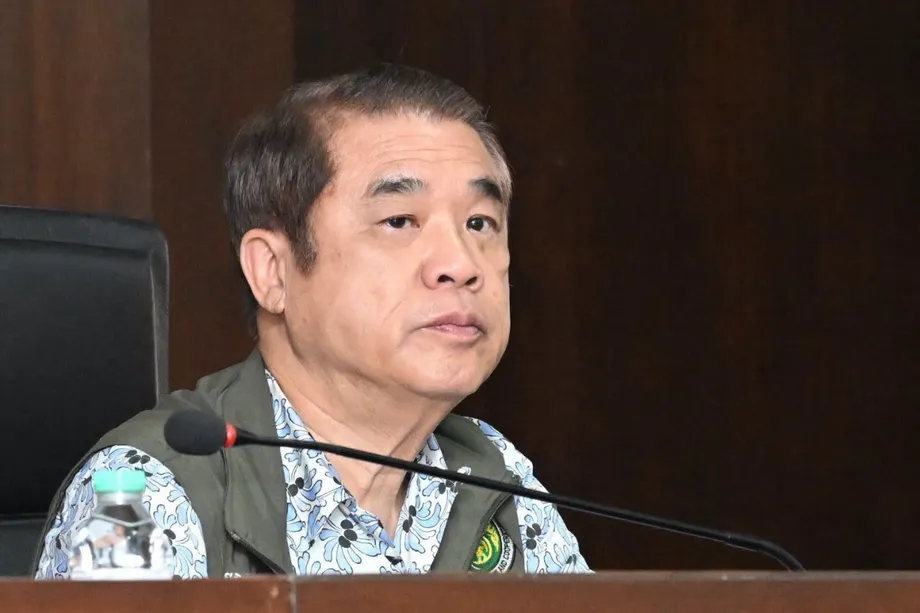
Industry Minister Varawut Silpa-archa told the House of Representatives on October 22, 2026, that inspectors would examine factories in Rayong, Chon Buri, Chachoengsao, Samut Prakan and Prachin Buri. Each province will have 10 teams. Together, the five provinces contain roughly half of Thailand's 3,049 factories licensed under waste management categories 105 and 106.
Varawut said details of offending factories should emerge within one to two months, placing the expected findings around November or December 2026. Factories found breaking the law could face closure, licence revocation and orders addressing the waste on their premises.
The campaign brings together three investigations that affect different parts of the waste business: what enters Thailand, what happens inside processing sites, and who actually controls the companies involved. For residents near contaminated land and waterways, the most immediate issue is whether dangerous material can be removed while criminal cases continue.
Varawut, explaining his opposition to illegal waste imports, told lawmakers:
Thailand is not the world's rubbish bin.
People's Party MP Watcharapong Sirirak, who represents Rayong, pressed the government over allegations that imported waste was crushed, mixed with soil and sometimes chicken manure fertiliser, then supplied for filling farmland at lower cost. He called for stronger inspections, prosecutions, compensation and environmental restoration without waiting for cases to finish.
The figures Varawut cited explain the financial incentive behind illegal disposal: proper treatment can cost 800,000 to 1 million baht, compared with fines of 200,000 to 300,000 baht. Those figures put lawful disposal at roughly 2.7 to five times the cited fine, making the penalty proposal central to the government's response.
What the factory licences cover
The Department of Industrial Works' waste factory dataset explains the categories at the centre of the inspections. Category 105 covers sorting or landfilling waste and discarded materials under Ministerial Regulation No. 2 of 1992, issued under the Factory Act.
Category 106 covers factories that turn discarded industrial products or factory waste into new raw materials or products through industrial processing. In simple terms, the inspection campaign covers both businesses handling unwanted material and businesses processing it for reuse.
The government's national catalogue entry also lists category 101, covering central waste treatment plants. The department describes the underlying database as covering factories outside industrial estates, a relevant boundary when comparing these records with broader company statistics.
Varawut acknowledged gaps in earlier enforcement, including facilities operating as sorting warehouses and inspections that had not reached every site. He asked local administrators and village leaders to flag unusual warehouses or activity so officials could investigate premises beyond the licensed factories already on their lists.
Rayong searches uncovered at least 2,500 tonnes
A warehouse complex belonging to Rayong Industrial Co in Nikhom Phatthana district illustrates the scale and complexity of the task. Checks covering 15 buildings on October 12 identified six classified under categories 105 and 106 and nine without factory operating licences, according to officials' findings.
Inside five buildings, officers found shredding and sorting machinery alongside mixed wire, copper and aluminium waste occupying at least 3,000 cubic metres. The Rayong Provincial Industry Office impounded material in those buildings on October 14 under the Factory Act 1992.
Officers returned with a Rayong Provincial Court search warrant on October 16 to examine the remaining 10 buildings. They found machinery for shredding, sorting, extracting and smelting metals, together with electrical equipment, metal components and shredded electronic waste weighing at least 2,500 tonnes.
Pollution Control Department officials collected 14 material samples, one soil sediment sample and one water sample during the later search. Preliminary screening using portable X-ray fluorescence equipment suggested material falling within Type 3 hazardous substances under List 5.2, covering chemical wastes, in the Industry Ministry's 2013 notification.
X-ray fluorescence, usually shortened to XRF, helps identify elements in a sample. Officials sent samples for further examination and coordinated complaints to Nikhom Phatthana police over alleged factory operations and possession of hazardous substances without permission. Waste and machinery were held as evidence.
Prachin Buri runoff prompts a police complaint
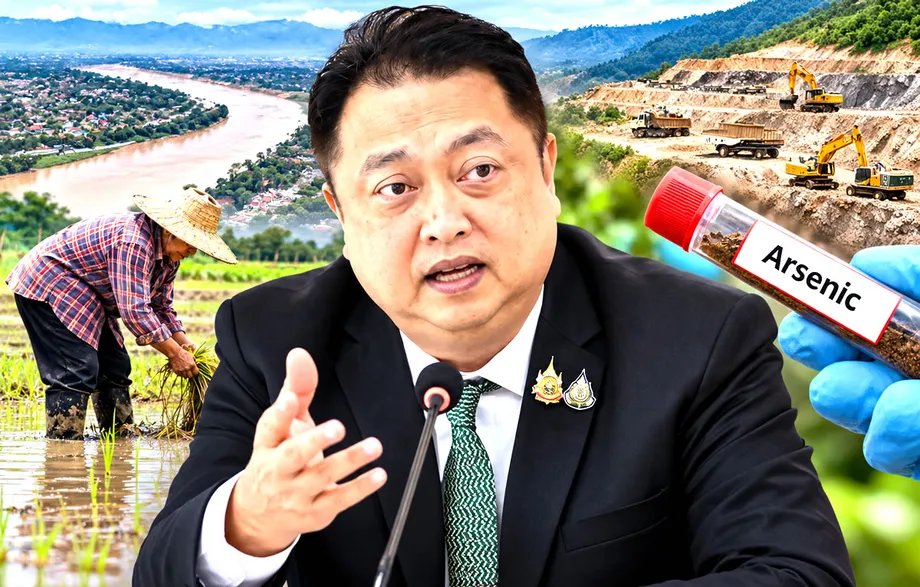
In Prachin Buri, Natural Resources and Environment Minister Suchart Chomklin said on October 20 that a company's retaining embankment had broken, releasing chemical runoff in Sri Maha Phot district. The discharge was described as having rainbow colours.
Suchart said Pollution Control Department inspectors examined an area within one kilometre of the target factory and found large quantities of substances associated with petroleum. Officials filed a complaint at Sri Maha Phot police station.
The minister said an operator had contacted him to argue that the factory held a valid licence and was not responsible. Suchart said drone observations showed the company's embankment had broken, and he ordered legal action. He also backed permanent licence revocation for repeat offenders rather than repeated temporary closures for improvements.
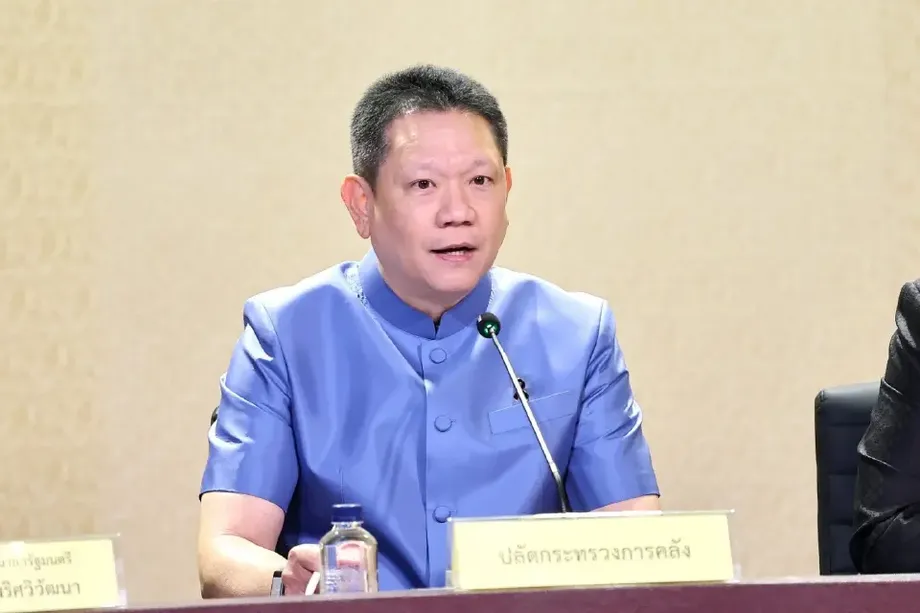
Prime Minister Anutin Charnvirakul convened agencies to coordinate the response. The work involves the industry, environment, finance and commerce ministries, the Department of Special Investigation, the Anti-Money Laundering Office and provincial authorities. Pollution inspectors identify substances and assess contamination, while other agencies bring powers over factories, imports, corporate ownership and criminal investigations.
Heavier fines and a push to seize assets
Varawut said legislation concerning the Department of Industrial Works was under consideration by a House committee. He proposed increasing penalties because the fines he cited were substantially lower than the cost of lawful waste treatment.
Using the minister's figures, an operator comparing a fine with proper treatment could face a difference of 500,000 to 800,000 baht. The government's proposed response aims to change that calculation by increasing punishment and pursuing the money behind illegal operations.
The Industry Ministry is coordinating with the Anti-Money Laundering Office on a legal route that could make unlawful industrial waste dumping subject to financial investigations and asset seizure. Suchart also wants the Department of Special Investigation to take suitable cases as special investigations, particularly where networks operate across national borders.
Asset seizure would extend enforcement beyond a fine or a closed processing site. Investigators would seek to trace money and property connected to offences, reaching the businesses and people financing the activity.
Environmental officials are also examining land documents linked to a Prachin Buri operation. Suchart said officers found three Nor Sor 3 Kor land certificates for an area believed to have been national reserved forest in 1987. Authorities would examine their issuance under Section 61 of the Land Code, with revocation sought if the documents were issued unlawfully.
Removing dangerous waste before cases finish
Watcharapong asked whether waste could be removed and damaged areas restored during court proceedings, rather than leaving residents exposed while evidence remained at the site. He also sought compensation for affected people before final judgments.
Varawut said the Industry Ministry could ask police for permission to move seized waste when leaving it in place threatened the public. The Department of Industrial Works would first need funding, potentially from central funds or the state budget, and would seek recovery from operators when cases were final.
Waste location also determines which agency takes action. Varawut said waste remaining inside a factory falls within the Industry Ministry's responsibilities. When an operator dumps material in a field or pond, the ministry can seek legal action requiring the factory to take it back.
The Pollution Control Department can pursue environmental damages under the Enhancement and Conservation of National Environmental Quality Act. Physical removal and claims for environmental harm therefore run through related but different responsibilities. No firm timetable was given for cleanup or compensation, and the precise scope of the proposed penalty and import rules remained under consideration.
Investigators follow ownership and money
Department of Business Development Director General Kittiwat Patchimnan said preliminary checks in Prachin Buri identified four companies suspected of using Thai nominee shareholders. Information was sent to law enforcement agencies for investigation, including examination of the Thai shareholders' financial transactions.
A nominee arrangement means a person appears on company records as a shareholder while acting for someone else who supplies the funds or exercises control. Investigators are examining company formation, investment sources, ownership structures, actual management powers and links with other businesses.
Deputy Prime Minister and Commerce Minister Suphajee Suthumpun ordered the inquiry expanded to waste businesses in Prachin Buri with foreign shareholdings. The department's Intelligence Business Analytics System identified 44 such companies: 41 handling waste classified as nonhazardous and three handling hazardous waste.
Foreign investors held less than 50% in 39 of those companies and at least 50% in five. The inquiry focuses on who supplied the investment and who controls decisions, alongside the ownership recorded in company documents.
Nationally, department figures dated September 30, 2026, counted 2,863 waste companies with foreign shareholders. Of these, 2,568 were in nonhazardous waste businesses and 295 in hazardous waste, meaning the hazardous category represented about 10.3% of that company total.
The 2,863 figure counts companies by business activity and shareholding. Varawut's 3,049 figure counts factories under categories 105 and 106. Keeping companies and licensed sites separate allows readers to follow the two investigations accurately: one examines business control, while the other examines waste operations.
Import checks extend to scrap shipments
Varawut told the House that Thailand had prohibited electronic waste imports since 2020 and that the Department of Industrial Works had barred its use as raw material that year. He argued that customs officers needed the ability to inspect every container after its contents had been declared.
The minister recalled a container whose front section contained plastic scrap intended as raw material, while waste was concealed behind it. Watcharapong sought X-ray checks for imports considered at risk, and Varawut supported closer scrutiny.
Department of Foreign Trade Director General Arada Fuangtong said her department wrote to the Pollution Control Department on October 22 proposing wider controls on scrap metal and rubber scrap. Customs had proposed making both prohibited imports. Suggested conditions included a transition lasting six to 12 months, imports restricted to factories using the materials themselves, and quantities limited to actual production capacity.
Other proposals included inspection certificates before shipment and making importers pay to return cargo containing hazardous waste. Any resulting Commerce Ministry notification would proceed under the Export and Import of Goods Act 1979.
Arada also described municipal waste, electronic waste, plastic scrap, used tyres and rubber scrap as already prohibited under ministry notifications, while the October 22 proposal sought further controls on rubber scrap and scrap metal. The exact rubber categories affected by the proposed changes were not specified.
The department is discussing joint inspections with customs, pollution officials and industrial regulators, particularly for metal scrap that may conceal electronic waste. It is also asking foreign embassies to warn exporters about Thailand's restrictions, while retaining lawful access to quality scrap needed by industry.
Floodwater and the demand for faster action
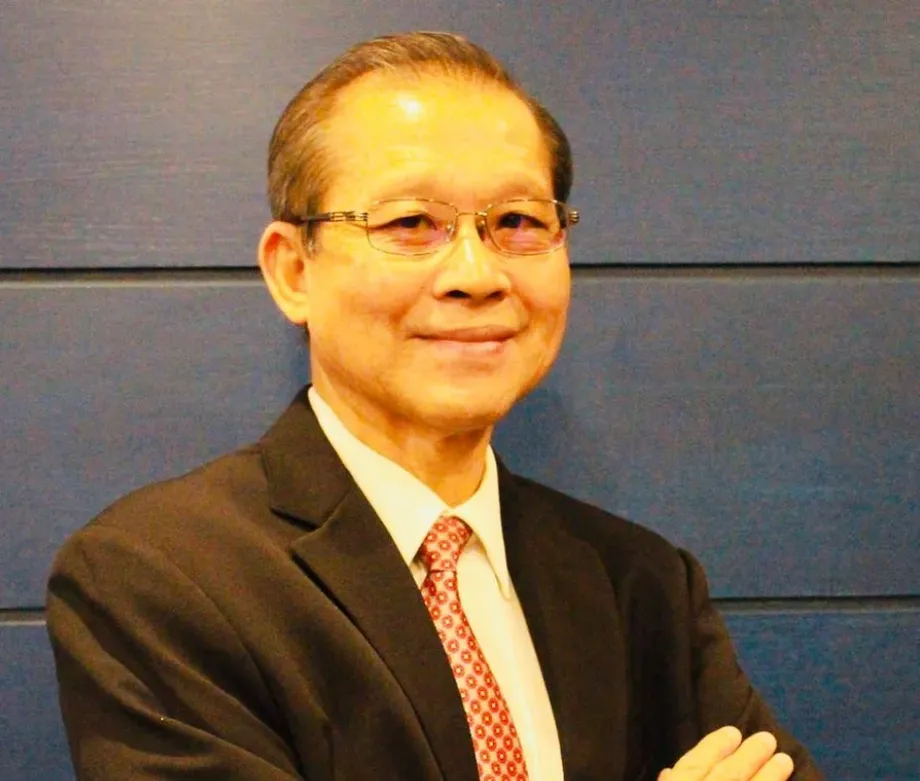
Independent academic Kamol Kamoltrakul called on October 23 for the government to end policies promoting toxic waste disposal businesses, close toxic waste processing plants and ban toxic waste imports. His demands go further than the government's approach of inspections, targeted closures and revised import conditions.
Kamol warned that rain and floodwater could carry chemicals from waste piles into soil, farms and waterways. He linked his concerns about Prachin Buri to downstream Chachoengsao, the Bang Pakong River and the Gulf of Thailand.
He also referred to Ramathibodi Hospital medical information about lead poisoning and damage to peripheral nerves, which carry signals between the brain, spinal cord and the rest of the body. Such damage can cause weakness in arms and legs. His argument centred on removing waste before repeated rain spreads contamination further.
Residents can report suspected illegal waste activity to the Industry Ministry's 1564 hotline, which Varawut said operates around the clock. Suspected nominee businesses can be reported to the Department of Business Development on 0 2547 4419 or 1570.
How the crackdown developed
The October operations moved from individual warehouse inspections to a wider campaign involving factory licences, pollution complaints, ownership inquiries and proposed trade controls.
- September 30, 2026: Business registration figures counted 2,863 waste companies with foreign shareholders nationwide.
- October 12: Officials inspected 15 buildings at the Rayong warehouse complex.
- October 14: Provincial industry officials impounded material in five buildings.
- October 16: A court authorised search of another 10 buildings uncovered at least 2,500 tonnes of electronic waste and scrap.
- October 20: Suchart described the Prachin Buri pollution complaint and plans for stronger enforcement.
- October 22: Varawut outlined the 50 inspection teams in Parliament, while commerce agencies detailed ownership inquiries and import proposals.
- November to December: The Industry Ministry expects details from the inspections within the minister's stated one to two months.
Key Points
- Fifty teams will inspect more than 1,500 waste factories in five provinces.
- A Rayong warehouse search uncovered at least 2,500 tonnes of electronic waste and scrap.
- Prachin Buri pollution findings led to a complaint at Sri Maha Phot police station.
- Four companies face investigation over suspected Thai nominee shareholders.
- Ministers want higher penalties, financial investigations and possible asset seizures.
- Authorities can seek permission to remove dangerous seized waste during proceedings, using public funding first and pursuing operators for costs later.