A 50 Billion Baht Plan Moves Toward Cabinet
Thailand's loan spending screening board has cleared a proposed 50 billion baht programme to help one million households install solar panels, offering up to 50,000 baht per household. The Interior Ministry is expected to seek Cabinet approval on October 26, 2026, with registration potentially opening in November.
Contents
- A 50 Billion Baht Plan Moves Toward Cabinet
- Where the Money Would Come From
- Why Earlier Plans Mentioned 1.5 Million Homes
- Who Could Receive the Subsidy?
- Panels Could Go Beyond the Roof
- How Selling Surplus Electricity Would Work
- What the 1,000 Baht Income Estimate Means
- Three State Banks Would Cover Extra Costs
- Installer Standards and the Cabinet Decision
- Key Points
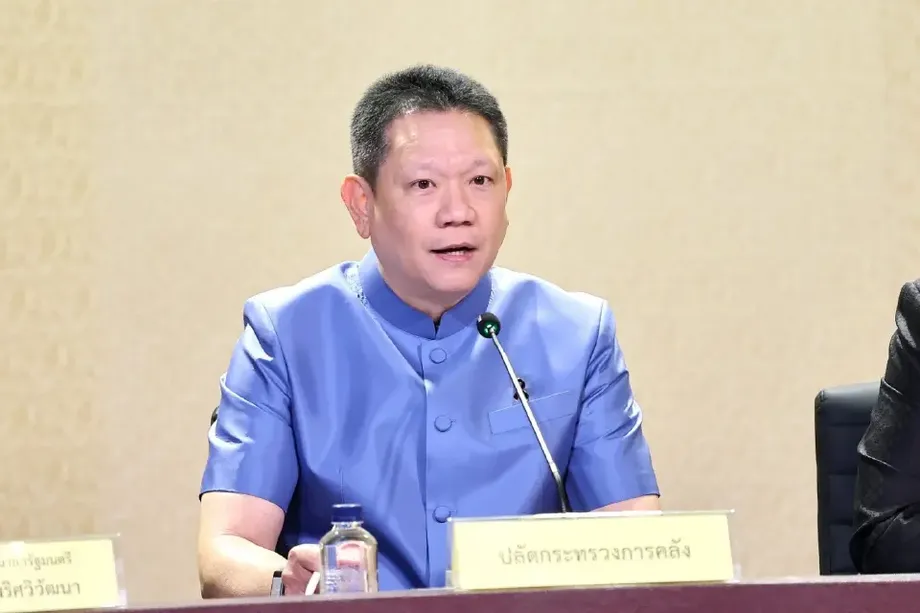
Finance Ministry Permanent Secretary Lavaron Sangsnit, who chairs the screening board, confirmed its approval on October 20. The proposal would help households generate electricity for their own use and sell unused power to the electricity network. Families whose installation costs exceed the subsidy could seek special loans from three state banks.
The next decision rests with the Cabinet. Applications are not open, and the final eligibility rules, registration date, electricity purchase terms and arrangements for directing electricity income toward bank repayments still require confirmation. Earlier Interior Ministry plans pointed to November 1 for registration; the later timetable indicated the middle of November.
For households, the attraction is a combination of help with installation costs, lower electricity purchases and possible income from surplus generation. The financial result would depend on the cost of the system, how much electricity the household uses while panels are producing, how much reaches the grid and any loan repayments.
Where the Money Would Come From
The 50 billion baht package would draw on the energy transition component of an emergency decree authorising the Finance Ministry to borrow 400 billion baht. That component has an allocation of 200 billion baht, making the proposed household subsidy one quarter of the energy transition allocation and one eighth of the wider borrowing authority.
The programme's arithmetic matches its stated target: one million households receiving the maximum 50,000 baht would require 50 billion baht. The subsidy would contribute toward installation rather than set a uniform price for every solar system.
Former energy permanent secretary Kulit Sombatsiri chairs the subcommittee examining energy transition projects. Lavaron said the subcommittee had questioned proposals and checked their details closely to ensure that borrowed money served its intended purpose and delivered benefits.
The public subsidy and household loans would come from different funding sources. The government would finance the subsidy through its borrowing programme, while participating state banks are expected to use their own funds for loans covering costs beyond the subsidy.
Why Earlier Plans Mentioned 1.5 Million Homes
Deputy Interior Minister Phonphir Suwannachuwi described a broader proposal on October 2, with 75 billion baht supporting 1.5 million household entitlements. That design divided registration into two rounds: one million households backed by 50 billion baht, followed by 500,000 households backed by another 25 billion baht.
The package subsequently cleared by the screening board is the 50 billion baht proposal for one million households. The additional 500,000 entitlements belong to the earlier, larger design. Households planning around the programme should use the one million target attached to the package now heading toward Cabinet.
The proposal has developed through several stages:
- October 2, 2026: Phonphir described revised installation rules and a broader programme covering up to 1.5 million households.
- October 20: Lavaron confirmed screening board approval for 50 billion baht to support one million households.
- October 26: The Interior Ministry is expected to submit the programme for Cabinet consideration.
- October 27 to 30: The government has set aside time for an opposition no confidence debate.
- November: Registration is tentatively expected, with November 1 mentioned earlier and the middle of the month indicated later.
Who Could Receive the Subsidy?
The proposed benefit is limited to one entitlement per household. Applicants would need to be registered electricity meter holders or electricity customers, with an existing meter at the installation location under the preliminary criteria.
Phonphir said holders of state welfare cards could participate. He also encouraged households with monthly electricity bills of around 3,000 to 4,000 baht or more to consider joining, because using solar electricity at home could reduce their electricity purchases immediately.
The 3,000 to 4,000 baht figure was presented as an indication of households likely to benefit financially, rather than a minimum bill required for entry. Households using less electricity were also included in the proposed design, with the option of earning money from surplus generation.
A household's daily routine matters alongside the size of its bill. Solar panels produce electricity during daylight hours. A home using appliances during those hours can consume some production directly, while a home using most of its electricity after sunset would have a different balance between electricity used and electricity exported.
Panels Could Go Beyond the Roof
The Interior Ministry's revised criteria expanded the proposed installation options from rooftops to systems on the ground and floating systems on water. Preliminary specifications called for installations of at least five kilowatts and no more than 10 kilowatts.
Phonphir linked the wider choice to practical limits on household roofs. Some roofs lack space or sufficient strength for the panels, while some provincial households and farmers have open land or large ponds that could accommodate another type of installation.
The existing electricity meter requirement would still connect participation to a location already receiving electricity service. Phonphir also said utilities would replace meters with smart meters free of charge, with borrowing funds sought for their purchase as part of a wider plan for a national smart grid.
A smart meter records electricity flows electronically. For a household producing solar power, metering helps account for electricity taken from the network and electricity sent back to it. That accounting is central to calculating both the household's electricity charges and its payment for exported power.
How Selling Surplus Electricity Would Work
The proposed programme builds on arrangements allowing households to sell surplus solar electricity to the Metropolitan Electricity Authority and Provincial Electricity Authority. Under the existing Metropolitan Electricity Authority household arrangement described for comparison, surplus power is purchased at 2.20 baht per unit under a contract lasting 10 years, subject to programme rules.
Phonphir's revised proposal instead described a contract lasting 20 years at the same purchase rate of 2.20 baht per unit. It also limited purchases to the production portion associated with five kilowatts, even where a household installed a larger system of up to 10 kilowatts.
The difference between system capacity and electricity produced is useful here. Kilowatts describe the system's power capacity. Electricity bills and purchase payments use kilowatt hours, commonly called units, which measure energy generated or consumed over time. A system rated at five kilowatts produces different amounts of energy depending on sunlight and operating conditions.
The proposed accounting method is net billing. Electricity bought from the utility and electricity sold to it are valued separately. A household receives payment for exported units at the purchase rate, while electricity it still needs from the network is charged under its applicable tariff.
The proposed purchase limit matters when choosing a system. A household considering 10 kilowatts would need to assess how much of the additional production it could use at home, given the stated purchase terms covering the five kilowatt production portion.
What the 1,000 Baht Income Estimate Means
Officials estimated that a system rated at five kilowatts could earn approximately 1,000 baht a month from surplus electricity sales. The estimate depends on the amount generated and exported; payments would follow electricity sales rather than a fixed monthly allowance.
At 2.20 baht per unit, earning 1,000 baht would require the sale of roughly 455 units in a month. That calculation makes the estimate easier to understand: the household would need enough production left over after its own consumption to export that amount.
Households could also benefit through electricity used directly at home. Those savings would appear as reduced purchases from the utility, while export income would come from selling unused production. The two benefits should be counted separately when comparing expected savings with installation and financing costs.
The proposal describes panel lifespans of about 25 to 30 years. The electricity purchase arrangements have their own contract periods: 10 years under the existing Metropolitan Electricity Authority arrangement and 20 years under the revised proposal. Families assessing costs would need to match their calculations to the purchase contract ultimately offered.
Three State Banks Would Cover Extra Costs
The Government Savings Bank, Government Housing Bank and Bank for Agriculture and Agricultural Cooperatives are expected to offer loans for installation costs beyond the subsidy. The proposed terms include interest of 2.5% a year, repayment over approximately seven years and lending without collateral.
Phonphir said individual banks could develop different incentives. The Government Housing Bank, for example, could offer additional borrowing for a battery. A battery stores electricity for later use, which could help a household use more of its solar production after daylight hours.
The planned repayment mechanism would direct proceeds from electricity sales toward loan instalments. Later descriptions presented this as direct deductions by the electricity utility followed by payment to the state bank.
On October 2, however, Phonphir said using electricity sale income to repay bank or finance debt was still awaiting permission and might require discussions with the Energy Regulatory Commission and National Energy Policy Council during October. The practical effect for borrowers depends on the repayment arrangement approved for the programme.
Export income would be one contribution toward repayment. A household considering a loan would also need its installation price, loan amount and repayment schedule to work out its monthly commitment. The subsidy is a fixed maximum, while the remaining borrowing requirement would vary with the chosen system.
Installer Standards and the Cabinet Decision
The revised criteria would require installers to appear on the vendor list of the Metropolitan Electricity Authority or Provincial Electricity Authority. Households could arrange work through either utility or directly with a registered private company.
Phonphir said vendor screening would cover previous work, engineering staff and financial stability. The stated purpose was to protect households from poor installations and fraud. Those requirements would give the electricity authorities a role in checking which companies could serve participants.
The Cabinet timetable is also linked to parliamentary business. Lavaron, speaking as Finance Ministry permanent secretary and screening board chairman, explained why consideration was expected a day earlier than the usual Tuesday meeting:
"The Cabinet meeting is likely to be brought forward to Monday, October 26, because the opposition parties' no-confidence debate is due to begin on October 27. The government has set aside October 27–30 for the debate," Lavaron said.
For interested households, the immediate milestone is the Cabinet decision, followed by the Interior Ministry's registration announcement and participation rules. Those decisions would turn the proposed subsidy, loan package and electricity purchase arrangements into terms families can use to judge an installation.
Key Points
- A screening board has cleared a proposed 50 billion baht solar subsidy for one million households.
- Each household could receive up to 50,000 baht, with one entitlement per household.
- Cabinet consideration is expected on October 26, 2026. Registration is tentatively expected in November.
- Revised criteria include rooftop, ground and floating installations rated from five to 10 kilowatts.
- Three state banks are expected to offer loans at 2.5% interest over approximately seven years.
- The estimated 1,000 baht in monthly export income would depend on actual electricity sales.
- The earlier proposal covering 1.5 million households was larger than the package now heading toward Cabinet.