Investigators aim to follow the money behind the fires
Indonesia and Singapore have agreed to form a joint task force to investigate companies suspected of contributing to haze, combining evidence from fire sites with information about corporate relationships and financial activity across their borders.
Contents
- Investigators aim to follow the money behind the fires
- The agreement still needs staff and operating arrangements
- Singapore prepares stronger investigative powers
- Indonesia deploys 71,000 personnel as communities breathe smoke
- Burned land figures track the expanding crisis
- Jambi cases show how responsibility is being investigated
- Two days of talks set the next steps
- A hotline will help manage differences
- Haze cooperation comes amid energy disputes
- Key Points
The agreement, announced after talks in Jakarta on October 27, 2026, comes as Singapore's National Environment Agency has issued preventive measures notices to 10 companies in Indonesia and requested information and documents from 10 companies based in Singapore. Indonesian authorities have also pursued hundreds of individuals and more than 50 corporations over forest and land fires.
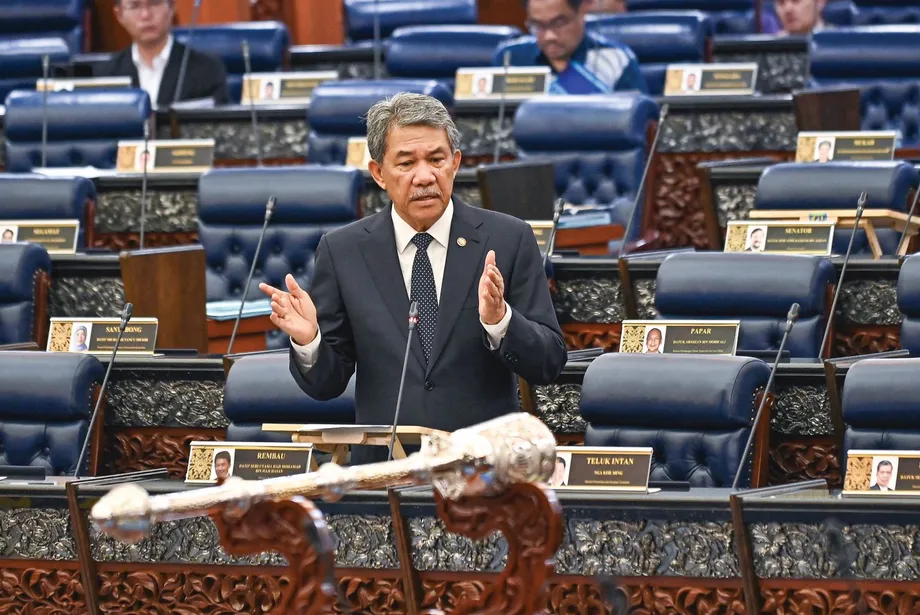
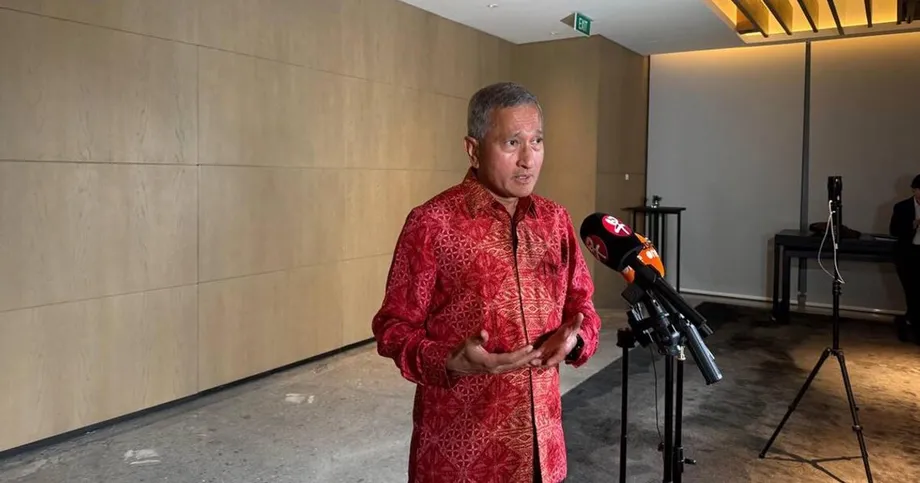
Indonesian Foreign Minister Arrmanatha Nasir and Singaporean Foreign Minister Vivian Balakrishnan want the task force to connect investigations that would otherwise be conducted separately. Its proposed work includes information sharing, financial intelligence, evidence gathering across borders and possible asset recovery.
Arrmanatha said Singapore had offered to share data on companies linked to the fires. He explained why financial investigations would be part of the response:
Smoke can cross borders, so can money. That is why we must follow the money trail these companies have left behind.
For investigators, following that trail means examining how money moves between businesses and people connected to suspected burning. Financial intelligence is information used to understand those movements. Asset recovery means using legal procedures to seek the return or seizure of property or money connected to wrongdoing.
The practical aim is to identify who directed, financed or benefited from activities that caused fires, alongside determining what happened on the land itself. Each country would carry out enforcement within its own jurisdiction, supported by information from the other.
The agreement still needs staff and operating arrangements
Balakrishnan said on October 28 that the task force's composition and staffing had not yet been finalised. Neither government gave an operational start date, although both pledged to move promptly.
The Singaporean foreign minister said senior political support would help turn the agreement into a working mechanism:
Given the commitment at the senior levels of both countries, we will get this done quickly, promptly, and effectively.
The task force is intended to help close gaps that arise when a company, its business partners, its finances and the land under investigation are spread across national borders. Sharing evidence could help authorities connect those parts of a case while continuing to use their respective legal powers.
Singapore has also convened a specialist panel to examine corporate relationships and supply chains. A supply chain is the network of businesses involved in producing and selling a product. Examining it can help investigators understand how companies dealing with land, raw materials and finished goods are connected.
Singapore prepares stronger investigative powers
Singapore announced plans on October 28 to amend its Transboundary Haze Pollution Act to strengthen enforcement and make investigations into suspected corporate involvement easier. The law is already the basis for the National Environment Agency's requests for information and documents from companies based in Singapore.
The agency's action covers two groups: 10 companies in Indonesia suspected of involvement in fires contributing to Singapore's haze, and 10 companies based in Singapore asked to provide information about their activities and corporate links. The requests place business records alongside evidence about where fires occurred.
Balakrishnan said Singapore was prepared to use legal, regulatory and broader economic measures against responsible businesses, including those based in the country. He described the government's intended response as exercising:
every single legal and regulatory power
The planned legal amendments, specialist panel and bilateral task force address different parts of the same investigation: obtaining records, understanding business relationships and sharing evidence across borders. The notices and document requests concern companies under investigation, with responsibility to be determined through the relevant legal processes.
Indonesia deploys 71,000 personnel as communities breathe smoke
Indonesia has mobilised about 71,000 ground personnel and 51 aerial units across priority provinces, particularly in Sumatra and Kalimantan. Arrmanatha said President Prabowo Subianto had made forest and land fire mitigation a national priority.
Firefighting operations include water bombing and weather modification. Water bombing involves aircraft dropping water on fires. Weather modification seeks to encourage rainfall when suitable atmospheric conditions are present.
Hotter and drier conditions associated with El Niño have complicated the response. El Niño is a natural climate pattern that can change rainfall and temperatures across large areas. Forest and peatland fires in western Indonesia are often started to clear land for farming, creating smoke that can travel into neighbouring countries.
Balakrishnan distinguished the weather conditions from the actions that start fires in a joint statement:
El Niño is a natural phenomenon, but the burning of the forest and land is caused by human actions.
Indonesian communities closest to the burning face the greatest pollution exposure. Thick haze has turned skies orange over parts of Indonesian Borneo, while smoke spreading into Singapore, Malaysia and other parts of Southeast Asia has disrupted daily life and prompted school closures.
Arrmanatha described the immediate cost for communities in the affected Indonesian regions:
It is our farmers, our children and our families in Sumatra and Kalimantan who have to breathe the smoke first.
Burned land figures track the expanding crisis
Indonesia's Forestry Ministry recorded more than 2,020 square kilometres of burned land between January and July. The Nusantara Atlas project estimated nearly 8,960 square kilometres by the end of August, and more than 1.9 million hectares during the nine months through September.
The September estimate is equivalent to more than 19,000 square kilometres, because one square kilometre contains 100 hectares. The figures cover different periods and come from different monitoring bodies, so readers need both the dates and the organisation behind each number to understand the scale being described.
Singapore's recent haze caused concern, anxiety and anger among residents, Balakrishnan said. He also pointed to the work of government agencies and community volunteers distributing masks and helping vulnerable people.
The ministers framed enforcement as part of protecting public health on both sides of the border. Fire crews are dealing with the immediate emergency, while investigators are pursuing the people and businesses suspected of contributing to it.
Jambi cases show how responsibility is being investigated
In Jambi province on Sumatra, police are continuing criminal proceedings involving two companies despite administrative sanctions already imposed. Provincial Police Chief Inspector General Widodo said investigators were examining the roles of company officials and possible links with local residents and other parties.
The Jambi police Special Crimes Directorate is investigating Samhutani and PT Restorasi Ekosistem Indonesia, known as REKI. Widodo said investigators would determine individual responsibility within the companies:
All company officials will be questioned, and we will determine who is ultimately responsible. Each person's role will be established, and those responsible will face legal action.
Administrative sanctions are measures imposed by a government regulator. Criminal proceedings follow a separate legal process to determine whether an offence occurred and who should be held responsible. Widodo's statement means the administrative action has not ended the police investigations.
The Forestry Ministry is separately investigating the former PT Lontianakud Kola, known as LKU, and PT Mugitriman International. Ministry spokeswoman Yola Meilisa said investigators had visited the sites of both companies.
Jambi's forest fire task force reported 71 preliminary inquiries, of which 20 had advanced to formal investigations, with 19 individuals named as suspects. That puts the number of formal investigations at about 28 percent of the preliminary inquiry total. Forestry Minister Raja Juli Antoni also led a meeting on fire response and central government assistance at Sultan Thaha Airport on October 27.
Two days of talks set the next steps
The task force agreement was followed by a pledge of support at the highest political level. Balakrishnan said on October 28 that Singaporean Prime Minister Lawrence Wong and President Prabowo had communicated and established a shared commitment to address bilateral challenges, including haze.
The main developments were:
- October 27: Balakrishnan and Arrmanatha met in Jakarta and agreed to establish the joint haze task force and dedicated communication channels.
- October 27: Forestry Minister Raja Juli Antoni led the Jambi meeting on firefighting and central government assistance.
- October 28: Balakrishnan pledged prompt work on the task force, while saying its staffing and composition were still being settled.
- October 28: Singapore announced plans to strengthen the Transboundary Haze Pollution Act.
- 2027: Indonesia and Singapore will mark 60 years of diplomatic relations, and Singapore will chair ASEAN.
The next practical steps are to assign the task force's members, establish working arrangements for sharing information and advance Singapore's proposed legal changes. Those steps will determine how the political agreement becomes coordinated investigative work.
A hotline will help manage differences
Indonesia and Singapore also agreed to create a dedicated hotline for ministers and senior officials. The channel is intended to help them address differences directly, including when an issue affects people and businesses in both countries.
Balakrishnan said direct discussions were necessary to convey concerns and find solutions. He described haze as a problem that had affected Southeast Asia for almost three decades, calling that period far too long.
The hotline and task force have different jobs. The hotline gives senior officials a direct way to manage disagreements and urgent concerns. The task force is intended to support detailed cooperation on companies, evidence and financial activity.
Balakrishnan acknowledged that neighbours can have different priorities and approaches. His discussions with Indonesian leaders, he said, had produced constructive approaches, some already being put into practice. The haze agreement places a shared investigative mechanism alongside that diplomatic communication.
Haze cooperation comes amid energy disputes
The Jakarta talks also took place against disagreements over energy supplies. Indonesia began reducing natural gas exports to Singapore on October 24 by 31 million standard cubic feet per day, about 8 percent of its piped gas exports, to give priority to domestic electricity needs in Batam, Bintan and Sumatra.
Singapore's Energy Market Authority said the reduction amounted to 17 billion British thermal units per day over 18 days, equivalent to less than 2 percent of Singapore's daily gas demand. The authority said supplies were sufficient and its gas importer was ready to obtain more liquefied natural gas if needed.
Wong said on October 25 that parties should honour their commercial commitments. Indonesian minister Bahlil Lahadalia said the reductions were within contractual limits. Balakrishnan subsequently said both countries shared a commitment to honouring contracts. Existing Indonesian gas import contracts expire at the end of 2028.
Indonesia is also reviewing electricity export plans, with pricing negotiations unresolved. Singapore has granted conditional licences to six Indonesian electricity import projects with a combined capacity of 3 gigawatts.
The economic relationship gives both governments substantial reasons to maintain working cooperation. Singapore has been Indonesia's largest source of foreign direct investment since 2014, with US$17.4 billion invested in 2025. At their leaders' retreat in July, Wong and Prabowo witnessed the signing of 26 agreements across areas including energy, defence, digital activity and the environment.
The haze task force therefore sits within a broader effort to manage disputes while maintaining trade and investment ties. For residents breathing smoke, its most direct purpose is narrower: helping authorities identify and act against those responsible for the fires.
Key Points
- Indonesia and Singapore agreed on October 27, 2026, to establish a joint task force investigating corporate involvement in haze.
- The proposed work includes financial intelligence, evidence sharing across borders and possible asset recovery.
- Singapore has issued notices to 10 companies in Indonesia and sought documents from 10 companies based in Singapore.
- Indonesia has deployed about 71,000 ground personnel and 51 aerial units, with major operations in Sumatra and Kalimantan.
- Jambi police are continuing company investigations alongside separate Forestry Ministry cases.
- The task force's staffing and composition are still being settled, while both governments have pledged prompt implementation.
- A ministerial and senior official hotline will support direct communication as the neighbours manage haze and other bilateral issues.