Three helicopters offered, but smoke blocks flights
Malaysia plans to present an informal proposal at an ASEAN ministerial meeting on November 14 to strengthen cooperation against transboundary haze, as visibility of less than 50 metres prevents aircraft from safely reaching fires in Indonesia.
Contents
- Three helicopters offered, but smoke blocks flights
- What Malaysia wants ministers to consider
- The existing treaty already provides for help
- Why firefighting resources cannot always reach the flames
- October diplomacy leads toward November talks
- Schools and households bear the disruption
- What ASEAN has already promised by 2030
- Diplomacy and enforcement follow different tracks
- Where stronger cooperation would have to work
- Key Points
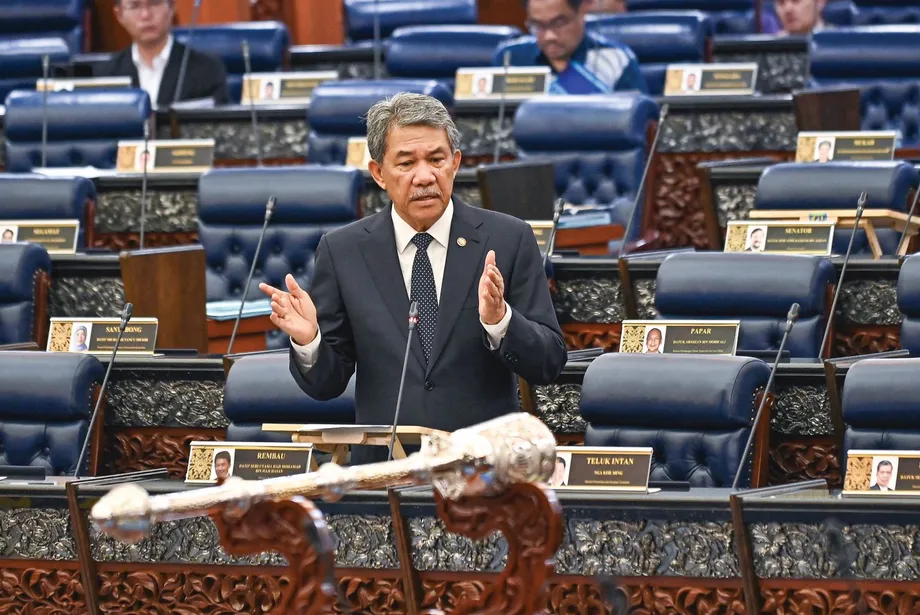
Foreign Minister Mohamad Hasan told the Dewan Rakyat during debate on the Supply Bill 2027 that Malaysia was ready to send firefighters and three helicopters to help Indonesia. Thick smoke and dangerous flying conditions, however, were obstructing that assistance. The immediate problem is therefore both diplomatic and practical: countries must agree on help, and crews must be able to reach the fires safely.
Mohamad intends to submit a non-paper, an informal discussion document that lets governments test proposals before seeking a formal agreement. Because the meeting agenda had already been set, this would allow Malaysia to raise the issue without presenting it as an agreed ASEAN decision. Ministers would discuss the proposal first, with national leaders involved later if necessary.
Malaysia wants haze addressed within ASEAN's natural disaster response framework, ahead of the bloc's 49th summit in Manila in November. Its proposal comes as smoke from fires in Sumatra and Indonesian Kalimantan affects neighbouring countries, closes schools and exposes weaknesses in the region's ability to turn offers of help into action.
ASEAN already has a treaty specifically covering haze, including rules for emergency assistance. Malaysia's initiative would seek clearer cooperation through disaster response arrangements alongside that existing agreement, rather than begin regional action from scratch.
What Malaysia wants ministers to consider
Mohamad has said the proposal will go before ASEAN senior officials and foreign ministers. His aim is a clearer framework through which member countries can help one another when forest fires and haze strike, particularly during the second and third quarters of the year.
Explaining the proposed use of disaster arrangements, Mohamad described the gap he wanted ministers to address:
We already have an ASEAN mechanism for natural disasters, but haze is not included or classified as a natural disaster," he said. "So, this will be one of the issues that I will personally raise at the meeting with my counterparts.
ASEAN's disaster response system has experience coordinating personnel, equipment and humanitarian assistance. Malaysia wants to draw on that experience for haze emergencies, including through the ASEAN Coordinating Centre for Humanitarian Assistance on Disaster Management.
The proposed framework's detailed procedures and any decision date beyond the November discussions have not been announced. Ministers will need to consider how the initiative fits with existing haze institutions and the requirement that an affected country agree to outside assistance.
The existing treaty already provides for help
The ASEAN haze agreement, signed in 2002 and in force since 2003, sets out how countries may request and provide help. Indonesia ratified it in 2014.
Article 12 allows a country facing land or forest fires, or haze arising from them, to request assistance directly from another member or through the ASEAN Centre. It can also approach other countries or international organisations where appropriate. A country receiving a request must promptly say whether it can help and explain the scope and terms of its assistance.
Consent is central. Assistance requires the request and consent of the country seeking it, or acceptance by the receiving country when another government offers help. Aircraft and firefighters cannot simply be dispatched into another country's territory.
Article 5 establishes the haze coordination centre and says national authorities act first to extinguish fires. After declaring an emergency, they may ask the centre for assistance. The treaty's annex also assigns the centre responsibility for promptly relaying assistance requests and coordinating help when requested or offered.
Joanne Lin, senior fellow and coordinator of the ASEAN Studies Centre at the ISEAS – Yusof Ishak Institute, said the same consent requirement applies to the disaster response route Malaysia is considering:
"Under ASEAN's disaster-response framework, assistance can only be deployed at the request or with the consent of the affected country, and this is unlikely to change," she added.
Why firefighting resources cannot always reach the flames
Indonesia has deployed more than 16,000 personnel, aircraft and firefighting helicopters, according to Malaysian Deputy Prime Minister Ahmad Zahid Hamidi. Mohamad separately described an Indonesian fleet of three to four aeroplanes and 34 helicopters whose operations were being restricted by poor visibility.
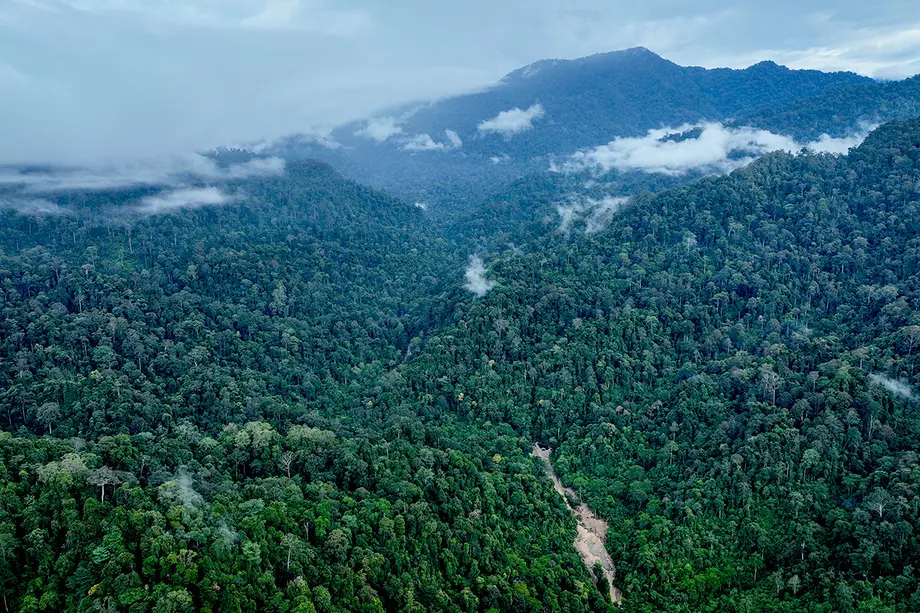
Malaysia's proposed contribution of three helicopters faces the same danger. At visibility below 50 metres, pilots have very little room to identify terrain, obstacles or other aircraft. Mohamad said a Japanese assistance team had also withdrawn because of difficulties accessing fire sites.
Remote locations create further problems. Some fires are deep inland, where water is limited, while others involve peatland. Peat is a thick layer of partly decomposed plant material that can burn below the surface, making fires difficult to reach and extinguish.
Zahid said unsuitable cloud formations were also hindering cloud seeding. That technique attempts to encourage rain from suitable existing clouds; it requires the right weather conditions as well as safe flying conditions. More aircraft alone cannot resolve either constraint.
Malaysia's cabinet discussed assistance before Zahid restated the offer, and communication between the two governments had begun at the highest level. Mohamad also instructed the Foreign Ministry's secretary-general to arrange a coordination meeting on practical support for Indonesia.
October diplomacy leads toward November talks
Malaysia has pursued bilateral discussions while preparing its regional proposal. Prime Minister Anwar Ibrahim discussed the fires with Indonesian President Prabowo Subianto, who agreed to take necessary steps, according to Anwar.
The public sequence shows how offers of assistance, legal measures and regional discussions have developed together:
- October 12: Mohamad said Malaysia would propose using ASEAN's disaster response framework for haze at a November meeting.
- October 15: Mohamad said Malaysia was prioritising diplomacy and was not planning legal action or a diplomatic note.
- October 16: Singapore said it had offered civilian firefighting and cloud seeding assistance. Its National Environment Agency also issued preventive measure notices to seven Indonesian companies.
- October 21: Malaysia said Jakarta had agreed to accept firefighting assistance for Sumatra and Kalimantan, with arrangements still being coordinated.
- October 22: Indonesia's Foreign Ministry said assistance offers were being considered according to conditions on the ground, without confirming acceptance of specific offers.
- November 14: Malaysia plans to raise its informal proposal at the ASEAN ministerial meeting.
Malaysia's announcement of acceptance on October 21 was followed by a more general Indonesian statement the next day. Operational arrangements were still being coordinated, while unsafe flying conditions continued to restrict deployment.
Schools and households bear the disruption
Malaysia ordered school closures in Melaka, Negri Sembilan, Selangor, Kuala Lumpur and Putrajaya as haze worsened. Hundreds of schools in Sarawak had also closed during the preceding month because of pollution from neighbouring Kalimantan.
Sarawak and the Klang Valley lie in the path of smoke from Indonesian hotspots. The wider episode has affected Brunei, Singapore and parts of the Philippines, including worsening air quality in Metro Manila. The consequences extend beyond the location of each fire because winds carry smoke across national borders.
Sarawak Governor Wan Junaidi Tuanku Jaafar warned that the state's Air Pollutant Index could reach 800 in some places. That was a warning about possible deterioration. An index above 500 could trigger emergency measures affecting schools and nonessential government and commercial operations.
Zahid highlighted health concerns, particularly for people with conditions related to allergies. School closures also force families to rearrange childcare and interrupt classroom learning, giving the diplomatic discussions an immediate consequence for daily life.
ASEAN's own roadmap links haze policy to national targets for PM2.5, tiny airborne particles measuring 2.5 micrometres or less. These particles are small enough to travel deep into the lungs, which helps explain why smoke can pose a health concern far from the flames.
What ASEAN has already promised by 2030
ASEAN adopted its Second Haze-Free Roadmap at the 18th Conference of the Parties to the haze agreement in Vientiane on August 23, 2023. It sets a vision of a region free from transboundary haze by 2030, following the missed 2020 target.
The roadmap calls for stronger operation of the haze coordination centre, improved joint emergency response procedures and better national monitoring capacity. It also seeks closer links between haze authorities and the agriculture, forestry and health sectors. These commitments give ministers an existing programme against which to assess Malaysia's new proposal.
The document's headline targets are a sustained reduction in haze episodes and progress toward national PM2.5 air quality targets. Its suggested monitoring measures are more specific: no days at Alert Level 3 for two consecutive years by 2030, annual reductions of at least 5% in hotspots and days at Alert Level 2 or above, and a 10% annual reduction in burned area compared with the average for 2019–2023.
The roadmap uses averages across three years for some measures to account for changing climate conditions. This gives governments a way to assess progress across different dry seasons, rather than judging success from a single wet or dry year.
Environment ministers and the committee supporting the treaty meet at least annually. The southern steering group brings together Brunei, Indonesia, Malaysia, Singapore and Thailand, while a separate Mekong group addresses the northern region's different fire seasons.
The haze centre's institutional rollout has continued through several stages. A centre was inaugurated in Jakarta in April, while an establishment agreement was signed in May 2025. It was still described as not fully operational in June 2026, and later reporting said the underlying agreement had yet to enter into force. Strengthening its practical capabilities remains part of the roadmap's work.
Diplomacy and enforcement follow different tracks
Mohamad has ruled out immediate legal action or a diplomatic note over the current haze, describing the latter as a last resort. Malaysia says it is taking a phased approach that protects public health while preserving relations with Indonesia.
At the same time, Deputy Natural Resources and Environmental Sustainability Minister Syed Ibrahim Syed Noh has said Malaysia could introduce a transboundary haze law, subject to the necessary processes and parliamentary approval. Any legislation would need sufficient evidence to support penalties.
Investigators would have to identify fire locations, landowners, parties operating on the land and the connection between particular fires and pollution across the border. Satellite images can show hotspots, but ownership records and evidence about who controlled activities on the ground may be held in another country.
Singapore's Transboundary Haze Pollution Act, enacted in 2014, allows aggregate fines of up to S$2 million for certain offences. Yet no prosecutions or convictions under it have been publicly confirmed. Of six Indonesian companies issued notices after the 2015 haze, investigations into two had closed and four remained open in 2021.
During the current episode, Singapore issued preventive measure notices to 10 Indonesian companies in stages. On October 23, it also issued notices to 10 companies registered in Singapore, including Wilmar International and Asia Pulp & Paper. Indonesia's Environment Ministry separately said it was investigating 19 companies potentially linked to wildfires.
Syed Ibrahim said diplomacy and evidence based enforcement should work together:
Diplomacy must produce measurable action, while enforcement must be based on evidence and the law.
Where stronger cooperation would have to work
ASEAN's haze agreement creates obligations to cooperate, but it has no regional fines or sanctions. National governments retain responsibility for investigations and prosecutions, while disputes between members are handled through consultation or negotiation.
Simon Tay, chairman of the Singapore Institute of International Affairs, described the limit on ASEAN's enforcement role:
"ASEAN is not a regional policeman. It cannot investigate, prosecute or punish companies," he said.
Indonesia has expressed support for stronger implementation. Its ambassador to Malaysia, Raden Mohammad Iman Hascarya Kusumo, identified early warning, monitoring, information sharing, firefighting coordination, weather modification and capacity building as areas for improvement.
Malaysia's proposal therefore reaches two practical tests. Emergency cooperation must get accepted assistance to fire sites safely and quickly. Prevention must connect warnings about hotspots with action on the ground, supported by land records, corporate information and enforceable national laws.
The November discussions will bring foreign ministers into that effort alongside the environment officials already responsible for the haze treaty. For affected communities, the useful results would be concrete: fewer fires spreading, fewer days of polluted air and fewer school closures.
Key Points
- Malaysia plans to present an informal ASEAN haze cooperation proposal on November 14, ahead of the Manila summit.
- Malaysia has offered firefighters and three helicopters, but visibility below 50 metres has restricted safe flying.
- The existing ASEAN haze treaty already permits emergency assistance, subject to the affected country's request or consent.
- School closures across several Malaysian states and federal territories have disrupted families and education.
- ASEAN's 2030 roadmap already calls for stronger coordination, emergency procedures and measurable reductions in fires and haze.
- Malaysia is prioritising diplomacy while considering possible legislation, with evidence gathering a major enforcement challenge.