Most of the permitted land is still at the exploration stage
Mining permits across 12 regencies and cities in Aceh cover 155,307.50 hectares, with more than three quarters of that area assigned to exploration, according to figures attributed to the provincial Energy and Mineral Resources Agency. The scale has prompted Walhi Aceh to demand a public review of the benefits for residents and the risks to forests, rivers and farmland.
Contents
- Most of the permitted land is still at the exploration stage
- Where the largest permit areas are concentrated
- What the official records allow the public to check
- How Aceh says mining applications are checked
- Why permitting authority matters
- Who receives the gains and who carries the costs?
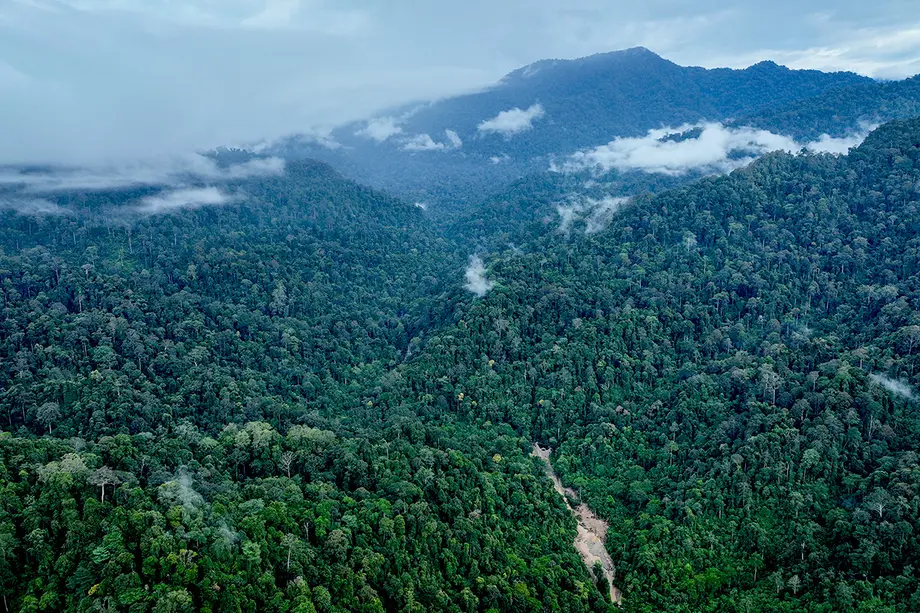
- Why forests and restoration are central to the dispute
- A dispute with roots in earlier permits
- The dates that shape the public record
- Key Points
The figures identify 85 mineral and coal mining permits: 56 exploration permits covering 117,727.67 hectares and 29 production permits covering 37,579.83 hectares. Exploration means investigating mineral deposits and their commercial potential. Production is the stage at which a permit authorizes extraction and related operations.
Aceh Jaya has the largest permitted area, at 48,324.30 hectares. Together with Aceh Barat, Aceh Singkil and Nagan Raya, it accounts for about 78.5% of the total. That concentration places much of the debate over land, water and livelihoods in four regencies.
Aceh officials say applications undergo electronic checks and require recommendations from several levels of government. Walhi, an environmental organization, argues that the discussion must also address who receives the economic gains and who bears the costs when land or water is damaged.
The public records also contain a difference that needs explaining. The Energy and Mineral Resources Agency's June 2025 permit register lists 64 permits, comprising 36 exploration permits and 28 production operation permits. The reason for the difference between that register and the 85 permits attributed to the agency has not been explained publicly in the information accompanying the figures.
Where the largest permit areas are concentrated
Aceh Jaya's 48,324.30 hectares represent about 31.1% of the reported provincial total. Aceh Barat follows with 30,926 hectares, Aceh Singkil with 22,049 hectares and Nagan Raya with 20,648.48 hectares. Their combined permitted area is 121,947.78 hectares.
The June 2025 register gives a closer view of the businesses and commodities involved. Its Aceh Jaya entries are all at the exploration stage, including coal permits held by PT Mas Putih Aneka Tambang and PT Longsunindo Perkasa, covering 4,949 and 4,655 hectares respectively. It also lists gold, iron ore and galena exploration permits in the regency.
Aceh Barat has several permits at the production operation stage. Among them are coal permits for PT Agrabudi Jasa Bersama covering 5,000 hectares and PT Mifa Bersaudara covering 3,134 hectares. In Nagan Raya, PT Mega Multi Cemerlang holds a production operation coal permit covering 7,943 hectares.
These entries show why oversight needs to account for both location and permit stage. Residents near an operating coal mine face a different immediate situation from those living near an area where a company is still investigating deposits. Walhi wants the condition of forests and existing community livelihoods examined in each area.
What the official records allow the public to check
The June 2025 register identifies permit holders, commodities, land areas, locations, permit stages, decree numbers and validity dates. These details allow residents to identify the company associated with a permit and the period covered by its authorization.
The register also includes limestone, clay and other materials used in cement production, alongside metals and coal. Its coverage therefore needs attention when comparing it with figures described specifically as mineral metal and coal permits.
A second government resource, the annual permit dataset, organizes permit counts by regency and city. Its metadata identifies ESDM Aceh as the data producer and Statistics Indonesia's Aceh office as the publisher, with Aceh Dalam Angka named as the source. The dataset was last updated on December 3, 2025.
Permit counts and permitted hectares answer different questions. A count shows how many authorizations are recorded. Area figures show the land covered by those authorizations. For a resident trying to understand a nearby project, the company name, commodity, stage and expiry date provide the next layer of detail.
How Aceh says mining applications are checked
Marwan Nusuf, head of Aceh's Investment and One-Stop Integrated Services Agency, known as DPMPTSP, said the permitting process is electronic from application through approval. His remarks were dated July 9, 2026.
Marwan said applicants and permitting officers do not meet directly during issuance:
There is no face-to-face interaction between applicants and officers during the permit issuance process.
The system records submission, examination and signature dates, according to his explanation. Officials check whether company documents are complete and valid, including supporting documents and signatures.
Applicants must obtain recommendations from village, subdistrict and regency or city governments. Technical recommendations from relevant agencies are also required to assess whether the proposed location is appropriate for mining.
For communities, those recommendations are a concrete point in the approval process at which local land use and conditions enter the government's assessment. Walhi's demand goes further, seeking an open review of environmental conditions, social conflict risks and the benefits residents actually receive.
Why permitting authority matters
Marwan attributes Aceh's authority to issue certain mining permits to Law No. 11 of 2006 on Aceh Governance. He said the province retains particular powers under that special framework despite the broader transfer of mining licensing authority to the central government under Law No. 3 of 2020 on Mineral and Coal Mining.
The administrative issue is straightforward: a company applies to the authority responsible for the permit, and that authority assesses whether the requirements have been met. Marwan said DPMPTSP could face a challenge in the State Administrative Court, known as PTUN, if it rejected an application that satisfied all requirements.
Walhi is directing its call for evaluation to both the Aceh government and the central government. Its proposed review would examine forest conditions, ecological effects, possible social conflicts, economic benefits for residents and company obligations to restore the environment.
The two positions address different parts of the decision. Marwan describes how the government processes an application under its rules. Walhi wants scrutiny of the consequences for people and places covered by the permits, including after extraction ends.
Who receives the gains and who carries the costs?
Afifuddin, head of Walhi Aceh's Advocacy and Campaign Division, said investment and employment figures alone give communities an incomplete picture of mining. His comments were dated October 6, 2026.
Afifuddin said public discussion gives too little attention to residents and the environment:
The government and mine owners always talk about economic growth and job creation. But what is rarely discussed is the impact on communities and the environment.
Mining can create jobs and business activity, he said, while the largest benefits may go elsewhere. Residents near a project may be the people most exposed to polluted water, damaged rivers and declining land productivity.
For households supported by farming, plantations or forestry, water and productive land are economic assets. A reduction in their quality can affect food production and income beyond the period when a mine provides employment. Walhi's demand is therefore also about how the government weighs one source of earnings against existing livelihoods.
The published permit registers provide company and land information. Walhi is asking the government to bring community benefits and rehabilitation responsibilities into the same public examination, so residents can assess what a project means for their own circumstances.
Why forests and restoration are central to the dispute
Afifuddin links forest protection directly to the daily needs of communities rather than treating it as a separate conservation concern. He said:
Forests are directly linked to water availability, food security, protection from ecological disasters, and the continued livelihoods of communities and wildlife.
Walhi wants every permit reviewed transparently and wants the government to stop issuing new permits that could threaten forests and community living spaces. Its request covers the condition of the land before development, possible conflicts during operations and responsibility for repairing damage afterward.
Environmental rehabilitation means work to restore land affected by mining. In the debate described by Walhi, the practical concern is whether residents will have usable land and dependable water once commercial activity has ended.
Afifuddin described the outcome his organization wants the authorities to prevent:
The community must not be left with only mining pits and environmental damage they have to bear for years.
A dispute with roots in earlier permits
Aceh's debate over mining and community interests predates the figures for 85 permits. In December 2018, Walhi Aceh executive director M. Nur said government information showed 37 Contracts of Work and mining business permits covering 156,003 hectares across 10 districts and cities.
At the time, residents and Walhi were challenging a production operation permit issued to PT Emas Mineral Murni for 10,000 hectares in Nagan Raya and Central Aceh. They sought revocation in the East Jakarta State Administrative Court because of concerns about its location in the Leuser Ecosystem, including habitat for Sumatran tigers, elephants and orangutans.
Walhi also reported that illegal gold mining had damaged 7,500 hectares of forest and land through the end of 2018. That figure concerned damage from illegal activity, while the larger hectare totals described areas covered by permits.
Walhi's 2020 mining inventory, published on April 7, 2021, later listed 28 mineral metal and coal permits covering 70,761.10 hectares. It included PT Emas Mineral Murni and several companies that also appear in the June 2025 government register.
The historical records vary in coverage: the 2018 figure included Contracts of Work, the 2020 inventory focused on mineral metals and coal, and the June 2025 register includes industrial materials. Reading them together requires attention to those categories and to changes in individual permits.
The dates that shape the public record
The documents and statements span several years. Their dates help explain which permit picture each describes and when the debate developed.
- December 2018: Walhi described 37 Contracts of Work and mining business permits covering 156,003 hectares, alongside the challenge to PT Emas Mineral Murni's permit.
- April 7, 2021: Walhi published an inventory current through 2020, listing 28 permits covering 70,761.10 hectares.
- June 2025: ESDM Aceh updated its register of 64 permits, split between 36 exploration permits and 28 production operation permits.
- December 3, 2025: The government portal updated its annual dataset of permit counts by regency and city.
- July 9, 2026: Marwan's explanation of electronic permitting and Aceh's authority was dated.
- October 6, 2026: Afifuddin's call for scrutiny of community and environmental effects was dated.
The June 2025 register also contains future permit expiry dates. PT Energy Tambang Gemilang's coal production operation permit in Nagan Raya runs to July 2, 2039, while PT Tripa Semen Aceh's limestone production operation permit in Aceh Tamiang runs to June 12, 2040.
Those periods place the debate over oversight and restoration across many years. For residents, the central issue is how decisions made during approval and operation will affect water, productive land and household income throughout that time.
Key Points
- Figures attributed to ESDM Aceh put 85 mining permits across 12 regencies and cities at 155,307.50 hectares.
- Exploration accounts for 56 permits and 117,727.67 hectares, about 75.8% of the permitted area.
- Aceh Jaya, Aceh Barat, Aceh Singkil and Nagan Raya together account for about 78.5% of the reported total area.
- The official June 2025 register lists 64 permits, a different count requiring clarification alongside the later figures.
- Aceh officials describe electronic processing, document checks and recommendations from local governments and technical agencies.
- Walhi wants an open review of permits, community benefits, forest conditions, social risks and environmental restoration obligations.