A global warning meets a new coal plant in Kokshetau
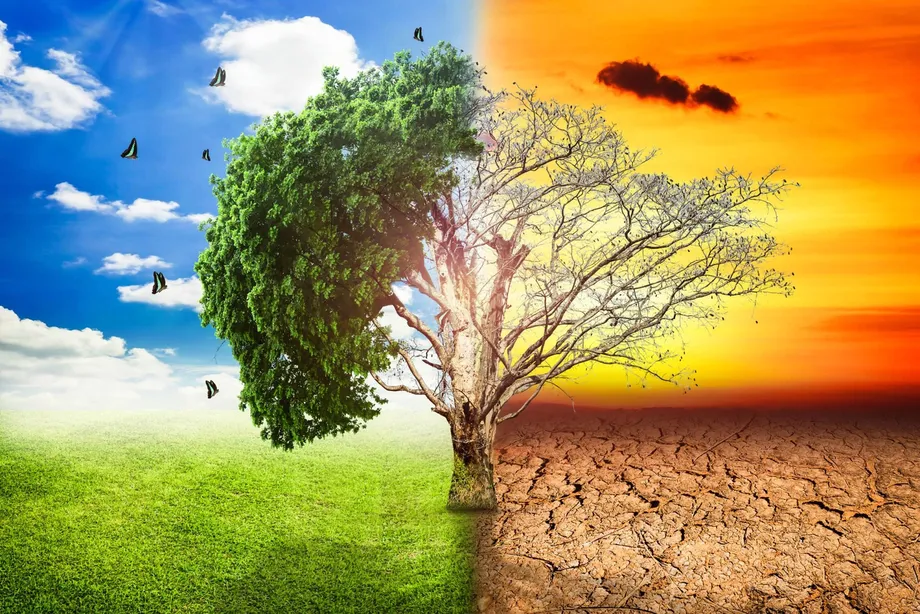
Kazakhstan is planning a coal power and heating station in Kokshetau that could operate until around 2078, nearly two decades beyond its national carbon neutrality deadline. The project brings a concrete challenge into focus as the United Nations Environment Programme says the world must cut greenhouse gas emissions 45% by 2035 from 2025 levels to limit the scale of warming above 1.5°C.
Contents
- A global warning meets a new coal plant in Kokshetau
- What overshoot means for the climate
- Climate promises still leave a large gap
- Returning to 1.5°C requires removing carbon too
- Kazakhstan's targets use a different starting point
- Coal supplies heat as well as electricity
- Kokshetau shows the cost of another generation of coal
- QaJET seeks €18 billion for a different energy system
- What must change before and after COP31
- Key Points
The proposed station would supply 280 megawatts of electricity and 820 gigacalories of heat an hour. Its latest planning documents exclude a switch to natural gas because the area lacks gas infrastructure and a guaranteed supply. Commissioning is now scheduled for the third quarter of 2028.
UNEP's Emissions Gap Report 2026 says the opportunity to keep warming below 1.5°C with no overshoot, or an overshoot smaller than 0.1°C, has been lost. Its central message is that governments can still limit how high temperatures rise and bring warming back to 1.5°C or below by 2100.
Kazakhstan's response involves competing investments: new coal infrastructure to provide electricity and heating, alongside a proposed €18 billion programme for renewable energy, electricity networks and support for communities dependent on coal.
UNEP does not assess Kazakhstan individually, and the country is outside its G20 comparisons. Its global findings nevertheless provide a useful measure of the speed of change required, while Kazakhstan's own strategy shows how heavily its electricity, heating and industrial systems depend on fossil fuels.
What overshoot means for the climate
UNEP's seventeenth annual assessment examines a scenario it calls the lowest possible overshoot. Global warming would peak at around 1.7°C to 1.8°C near the middle of the century, with a 66% probability of staying within that peak range. Temperatures would then have about a 50% chance of returning to 1.5°C or below by 2100.
The temperature figures describe warming above the period before widespread industrialisation. Overshoot means spending time above the temperature limit before bringing warming back down. Both the height of that peak and the years spent above 1.5°C matter for exposure to heatwaves, floods and other climate hazards.
UN Secretary-General António Guterres said the report leaves governments with an urgent task rather than a reason to stop trying.
Overshoot is not surrender. We can still keep it as small and as short as possible and bring temperatures back below 1.5 degrees by the end of the century.
The scenario assumes stringent action beginning in 2025. Global emissions would need to fall 18% by 2030, 45% by 2035 and 69% by 2040, compared with 2025 levels. UNEP puts the average annual reduction at 5.7%.
The report's public release is identified as October 21, while UNEP's publication record dates the Nairobi publication October 13, 2026.
Climate promises still leave a large gap
National climate commitments would deliver much smaller reductions than UNEP's return pathway requires. Full implementation would cut global emissions by 5% to 8% in 2030 and 11% to 15% in 2035, relative to 2025.
For 2035, that leaves a gap of 30 to 34 percentage points between promised reductions and the required 45% cut. Nationally determined contributions, or NDCs, are the climate plans countries submit under the Paris Agreement. Their targets depend on governments turning promises into policies and investment.
UNEP projects warming of 2.8°C this century under current policies, with temperatures continuing to rise afterward. Full implementation of national commitments, followed by similar efforts, would limit warming to around 2.6°C. Including additional promises to reach net zero brings the estimate to about 2.1°C.
The current policy and NDC temperature projections are higher than last year's estimates, largely because of the United States' withdrawal from the Paris Agreement and revisions to historical emissions calculations. By September 1, 2026, 124 countries had submitted their third NDCs, covering 75% of global emissions, but the stronger coverage had produced little improvement in the projected temperature outcome.
Global emissions in 2025 were estimated at 58.4 billion tonnes of carbon dioxide equivalent, a common unit that combines the warming effects of different greenhouse gases. The provisional estimate was close to the 2024 total, with uncertainty large enough that UNEP described the two years as comparable.
Returning to 1.5°C requires removing carbon too
UNEP's pathway depends on removing and permanently storing roughly 320 billion tonnes of carbon dioxide during this century. That is about eight years of global CO2 emissions at 2024 levels.
Carbon removal means taking CO2 already in the atmosphere out of circulation. The required volume would be additional to deep cuts in new emissions. UNEP warns that achieving removal on this scale faces technological and economic uncertainty.
Five more years of CO2 emissions at current levels could add approximately 0.1°C to peak warming, according to the assessment. Delay therefore increases both the temperature peak and the work required to bring it down.
UNEP Executive Director Inger Andersen linked the need for faster action to damage already being experienced around the world.
Every additional fraction of a degree and additional year of warming above 1.5 degrees Celsius increases climate impacts and risks, such as the deadly floods, heatwaves and wildfires that have plagued many nations this year.
Kazakhstan's targets use a different starting point
Kazakhstan's updated NDC 3.0 sets a target to reduce greenhouse gas emissions 17% by 2035 against 1990 levels, or up to 25% with international support. Its earlier commitment for 2030 was a 15% unconditional reduction and a 25% conditional reduction, also measured against 1990.
UNEP's global benchmarks start from 2025, so the percentages require different arithmetic. Kazakhstan's carbon neutrality strategy, approved by Presidential Decree No. 121 on February 2, 2023, records net emissions of 381.69 million tonnes of CO2 equivalent in 1990 and 351.24 million tonnes in 2020.
The 2020 total was already about 8% below the 1990 baseline, partly because the COVID-19 pandemic reduced activity. Using the strategy's 1990 figure as an illustration, a 17% reduction would put emissions near 316.8 million tonnes. Actual progress toward the new target will depend on the accounting rules and emissions inventory used to implement it.
Climate Action Tracker's Kazakhstan assessment rates the country's climate action as "Insufficient" and projects emissions rising until at least 2035 under current policies. That assessment examines the earlier 2030 pledge and identifies new coal generation plans and incentives for fossil fuel exploration and production as forces pushing emissions upward.
Coal supplies heat as well as electricity
Kazakhstan's government strategy records coal as the source of 68.9% of electricity and 99% of thermal power in 2020. Coal accounted for more than 55.7% of national net emissions that year. Figures accompanying the newer climate outlook put its shares at 62% of electricity and 40% of greenhouse gas emissions.
The heating figures explain why replacing coal is also a public service challenge. Power stations and boilers must keep homes and businesses supplied with heat while electricity demand is met. The strategy recorded an average age of 55 years for coal power plants, with 64% of installed generating capacity across the system older than 30 years.
Renewable generation figures also cover different categories. The recent national figure puts renewable energy facilities at 7% of electricity production, while Climate Action Tracker gives around 11%, more than half from existing hydropower. The government strategy recorded 3.6% in 2021 under its renewable energy category.
Kazakhstan aims for renewables to supply 15% of electricity by 2030 and 50% by 2050. Climate Action Tracker records around 2.5 gigawatts of solar and wind capacity, almost three times the 2019 level. Renewable energy still accounts for only around 2% of total primary energy, which includes fuels used beyond electricity generation.
Kokshetau shows the cost of another generation of coal
Kokshetau lacks a large combined heat and power station, leaving residents reliant on other heating arrangements and electric water heaters. The proposed plant is intended to address that need through three coal boilers and two generating units of 140 megawatts each.
The latest planned opening in the third quarter of 2028 replaces the operator's earlier April 1, 2029 date. A government statement in February 2026 had put commissioning around the middle of 2029. Construction and installation are expected to take 26 months.
Gas has been excluded from the plant design because reliable supply is unavailable. A proposed pipeline from Ishim in Russia through Petropavlovsk and Kokshetau to Astana is planned for 2030, after the station's latest scheduled opening.
The station is expected to generate around 2 million tonnes of ash and slag a year. Based on the ash content of Ekibastuz coal, estimated consumption would be roughly 4 million to 5 million tonnes annually; the planning statement does not specify annual coal consumption.
Water withdrawals are planned at up to 5.5 million cubic metres annually. Three reservoirs holding 15,000 cubic metres each would provide approximately three days of backup water. Financing through Samruk-Kazyna has been described at 16.5% annual interest over 10 years.
The proposed operating horizon, extending to around 2078 before reconstruction or retirement, reaches about 18 years beyond the 2060 neutrality target. Kazakhstan's strategy envisages reducing coal generation, retiring capacity older than 30 years and introducing carbon capture and storage at plants continuing after 2035. That technology traps CO2 for storage instead of releasing it into the atmosphere.
QaJET seeks €18 billion for a different energy system
Kazakhstan's proposed QaJET platform aims to attract about €18 billion for renewable power, electricity networks and support for regions dependent on coal. Its official launch is planned for November 2026 at COP31 in Antalya, Türkiye, with backing from the European Bank for Reconstruction and Development.
About €9 billion, half the total sought, would support 10 gigawatts of new renewable capacity by 2035. Another €4.4 billion, roughly a quarter, is intended for grid connections. The remaining funding would support network modernisation, smarter energy systems and electrification across transport and business.
The project portfolio already includes investments worth more than €1 billion. Among them is the Mirny wind farm in Zhambyl region, scheduled for 2028, with 150 turbines, 600 megawatt hours of battery storage and projected annual production of around 4 terawatt hours.
The EBRD is also providing a loan of up to 102 billion tenge, about €194 million, for electricity distribution improvements in Almaty and the surrounding region. Remote controls, automated meters and upgraded networks are intended to help the system handle changing demand and generation.
QaJET includes support for workers and communities facing changes in coal employment. Saule Sabiyeva, director of the climate policy department at the Ministry of Ecology and Natural Resources, identified Karaganda, North Kazakhstan and East Kazakhstan as regions that could face particular difficulties. Regional assessments and retraining plans are part of the platform's work.
What must change before and after COP31
UNEP says renewable electricity capacity has grown three times faster than anticipated in 2015, while solar has grown seven times faster. Yet total energy supplied by coal, oil and gas keeps increasing. Adding clean generation must therefore be accompanied by changes in fossil fuel use.
The report's benchmarks call for renewable electricity capacity to reach at least three times its 2025 level by 2035 and 4.5 times that level by 2040. Energy intensity, the energy required for each unit of economic output, would need to fall at least 30% and 40% over those periods.
By 2035, coal, oil and gas shares in global energy supply would need to fall at least 55%, 15% and 5%, respectively, relative to 2025. Kazakhstan's NDC 3.0 also targets a 42% reduction in fugitive methane emissions from oil and gas by 2035. These are emissions that escape during production and handling.
UNEP's review of more than 220 policy evaluations found average emissions reductions of 9% from electricity policies and reductions of 5% to 13% from economic measures such as carbon taxes and emissions trading. It recommends building evaluation into policies from the start, particularly in developing and emerging economies that receive less research attention.
The next milestones connect global negotiations with Kazakhstan's investment decisions:
- November 2026: COP31 in Antalya is scheduled to begin the second Global Stocktake, while Kazakhstan plans to launch QaJET.
- 2028: Mirny and the Kokshetau station are scheduled to enter service.
- 2030: Kazakhstan's earlier emissions pledge and 15% renewable electricity target fall due.
- 2035: The updated NDC and QaJET's proposed 10 gigawatts of additional renewable capacity reach their target year.
- 2060: Kazakhstan aims to achieve carbon neutrality.
The first Global Stocktake called for tripling renewable capacity, doubling the annual rate of energy efficiency improvement by 2030 and transitioning away from fossil fuels. UNEP identifies renewables as the only mitigation area from that review currently on track for 2030. COP31 offers governments an opportunity to set clearer, measurable benchmarks for 2035 and 2040.
Key Points
- UNEP says warming above 1.5°C is unavoidable, but rapid action could limit the peak and support a return by 2100.
- The lowest overshoot pathway requires global emissions cuts of 18% by 2030 and 45% by 2035 from 2025 levels.
- Kazakhstan targets a 17% emissions reduction by 2035 against 1990, or up to 25% with international support.
- The planned Kokshetau coal station could operate beyond Kazakhstan's 2060 carbon neutrality deadline.
- QaJET seeks about €18 billion for renewable generation, networks and communities dependent on coal.
- Delivering the transition requires reliable heating, stronger electricity grids, worker support and lower fossil fuel use.